Understanding How Space Data Centers Work in the AI Era
The deployment of orbital compute power efficiency marks a transition from terrestrial server farms to solar-powered AI satellites designed to bypass Earth's energy and cooling constraints.
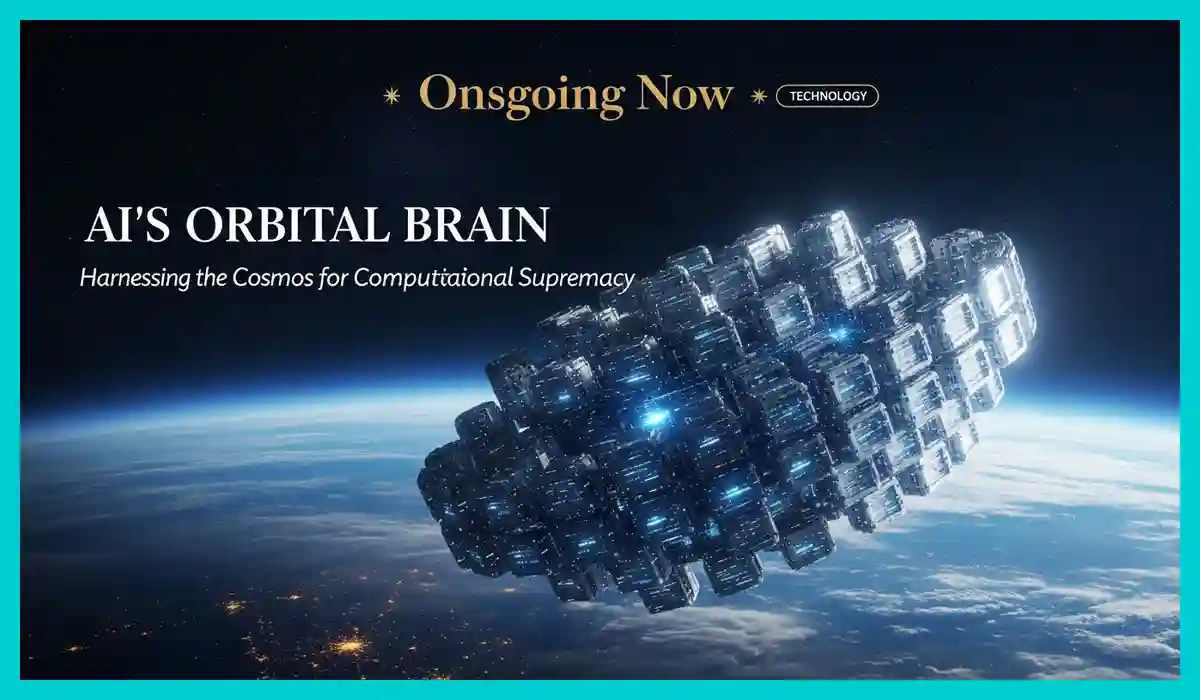
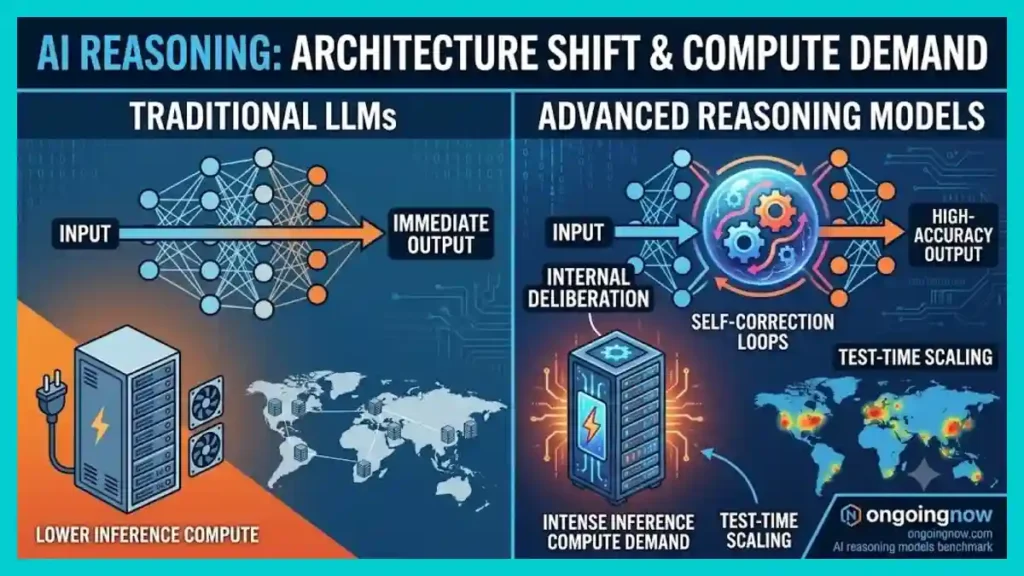
The recent surge in high-performance computing has led industry leaders to evaluate how space data centers work as a viable alternative to traditional ground-based infrastructure. As of February 2026, the strategy focuses on three primary technical pillars: leveraging 24/7 solar-powered AI satellites, utilizing the vacuum of space for orbital compute power efficiency, and implementing advanced radiation hardening for AI chips. Unlike terrestrial facilities that require millions of tons of water for cooling, these orbital nodes use SpaceX liquid cooling technology and passive radiators to dissipate heat into a -270°C heat sink. This shift is driven by the necessity to scale AI models without straining the global power grid, a move recently accelerated by the acquisition of xAI by SpaceX to develop an xAI space-based data center network.
Technical Specifications of Orbital Compute Nodes
The architecture of a space-based data center differs fundamentally from its Earth-bound counterparts. On Earth, data centers face an “energy wall,” where power density is limited by the capacity of local electrical grids. In orbit, specifically in sun-synchronous orbits (SSO), satellites can achieve nearly 100% solar exposure. This environment allows for the deployment of solar-powered AI satellites that generate up to five times more energy than an identical array on the ground due to the absence of atmospheric filtration.
SpaceX liquid cooling technology plays a critical role in managing the thermal output of high-density AI accelerators. While the vacuum of space provides a natural cold sink, it lacks air for convective cooling. Engineers have developed closed-loop systems that circulate specialized coolants through the server blades, transferring heat to large external radiators. These radiators then emit the energy as infrared radiation. According to recent filings, the goal is to achieve a power density of 100 kilowatts of compute power per tonne of satellite mass.
The integration of Starlink AI satellite cooling and connectivity is another vital component. High-speed optical laser links are used to create a “mesh” network in space, allowing petabytes of data to move between satellites at the speed of light. This bypasses the latency and bandwidth bottlenecks of traditional satellite-to-ground radio frequency (RF) links. Companies like Google (Project Suncatcher) and Thales Alenia Space (ASCEND study) have validated that these inter-satellite links can support tens of terabits per second using multi-channel dense wavelength-division multiplexing (DWDM).
Comparative Efficiency: Space vs Terrestrial Data Centers
A critical metric in this emerging industry is the comparison of space vs terrestrial data centers. On Earth, a 40-megawatt cluster can consume over 1 million tons of fresh water annually. In contrast, orbital centers consume zero water, relying entirely on radiative heat dissipation.
| Feature | Terrestrial Data Center | Space Data Center (LEO) |
| Power Source | Power Grid (Fossil/Renewable) | 24/7 Solar Radiation |
| Cooling Method | Evaporative/Chilled Water | Passive Radiative Cooling |
| Energy Cost | $0.06 – $0.15 per kWh | Est. $0.005 per kWh (Solar) |
| Water Usage | High (Millions of Gallons) | Zero |
| Primary Risk | Grid Failure / Land Use | Ionizing Radiation / Debris |
Analysis: The Shift to Orbital Efficiency
The data shows that while launch costs remain a significant barrier, the operational expenditure ($OPEX$) of orbital computing could eventually be 15 times lower than wholesale electricity prices on Earth. This is primarily because space provides “free” cooling and “uninterrupted” power. Dr. Nicholas Patience, a senior industry analyst, recently noted:
“The move to space is not just about avoiding taxes or regulations; it is a thermal necessity. We are reaching the physical limits of how much heat we can extract from a square meter of Earth’s surface without ecological collapse.”
Engineering for Extreme Environments: Radiation and Durability
The most significant technical hurdle for an xAI space-based data center is radiation hardening for AI chips. Standard silicon components are susceptible to Single Event Effects (SEEs) caused by heavy ions and cosmic rays, which can flip bits or permanently damage transistors.
To combat this, manufacturers are moving away from traditional, bulky “rad-hard” chips—which are often generations behind in performance—toward “radiation-resilient” architectures. For example, EdgeCortix recently demonstrated that its Sakura II edge AI co-processor maintained performance under heavy ion testing conducted by NASA. This resilience is achieved through:
Redundancy at the Logic Level: Running the same calculation on three different cores and “voting” on the result.
Shielding Optimization: Using hydrogen-rich materials that are more effective than lead at stopping high-energy protons.
Software-Defined Error Correction: Advanced algorithms that detect and repair memory corruption in real-time.
Furthermore, satellites in low Earth orbit (LEO) must navigate the “horns” of the radiation belts every 95 minutes. This requires a robust hardware lifecycle management strategy, where modular server “pods” are designed to be replaced or de-orbited as their components degrade over a 10-15 year design life.
Real-World Adoption: The xAI and SpaceX Integration
The February 2026 acquisition of xAI by SpaceX represents the most ambitious attempt to operationalize this technology. By merging AI research with satellite infrastructure, the new entity aims to launch up to one million satellites dedicated to AI compute. This “Space Brain” initiative seeks to deploy 100 gigawatts of AI compute annually.
The xAI space-based data center will leverage the Starship launch system to ferry massive solar arrays and server clusters into orbit at a fraction of the cost of current heavy-lift rockets. This vertical integration—owning the rocket, the satellite, and the AI model—allows for a closed-loop development cycle that other hyperscalers like Amazon (Project Kuiper) or Microsoft are currently struggling to match.
“Space-based AI is the only way to scale the next generation of models,” stated Elon Musk in a recent internal memo. “It’s always sunny in space, and the cooling is effectively infinite.”
Why This Matters: The Environmental and Social Impact
The transition to space-based computing has profound implications for global sustainability. Terrestrial data centers currently account for nearly 2% of global electricity consumption, a figure expected to double by 2030. By moving the most energy-intensive “training” phases of AI to orbit, we can significantly reduce the carbon footprint of digital innovation.
Environmental Benefits
Decarbonization: Shifts high-load compute to 100% renewable solar energy.
Resource Preservation: Eliminates the need for billions of gallons of cooling water in drought-prone regions.
Land Reclamation: Reduces the physical footprint of massive industrial data halls.
Ethical and Security Considerations
However, the move is not without controversy. Astronomers have raised concerns about the “cluttering” of the night sky and the potential for increased orbital debris (Kessler Syndrome). Additionally, the placement of sovereign data in international waters—or orbit—creates complex legal questions regarding data sovereignty and cybersecurity. If a data center is in orbit, which nation’s laws apply to the information it contains?
Benchmarks and Future Outlook
Recent tests by Lonestar Data Holdings and Intuitive Machines on the lunar surface have already proven that data can be stored and processed off-planet. Lonestar’s “Freedom” payload successfully met technical milestones for edge processing in cislunar space in late 2025.
Key Metrics for 2026
Compute Density: Targeted 100 kW per tonne.
Network Latency: 30–40ms (comparable to terrestrial fiber for edge tasks).
Data Throughput: 200 Gbps per laser link, scaling to petabit-class meshes.
As we look toward 2027, the focus will shift from “can we do it” to “how fast can we scale.” The entry of sovereign players, such as the European Commission’s ASCEND project and China’s proposed gigawatt-class space infrastructure, suggests that the “orbital cloud” is becoming a matter of geopolitical and economic security.
Stay sharp with Ongoing Now!
Source and Data Limitations: This report is based on 2025–2026 filings from the FCC, technical briefs from the AIAA SciTech Forum 2026, and official acquisition statements from SpaceX and xAI. Benchmarks for radiation resiliency were sourced from NASA’s Electronic Parts and Packaging Program (NEPP). Efficiency comparisons rely on the 2026 World Economic Forum report on sustainable AI. Note that while technical feasibility has been demonstrated, full-scale deployment of one million satellites remains a multi-year project subject to regulatory approval and launch capacity. Reported cost-per-kWh are estimates based on projected solar array lifespan and Starship launch costs.