How Electronic Shelf Labels Work in Modern Retail
A technical details on how electronic shelf labels work, including their integration with retail AI price optimization systems.
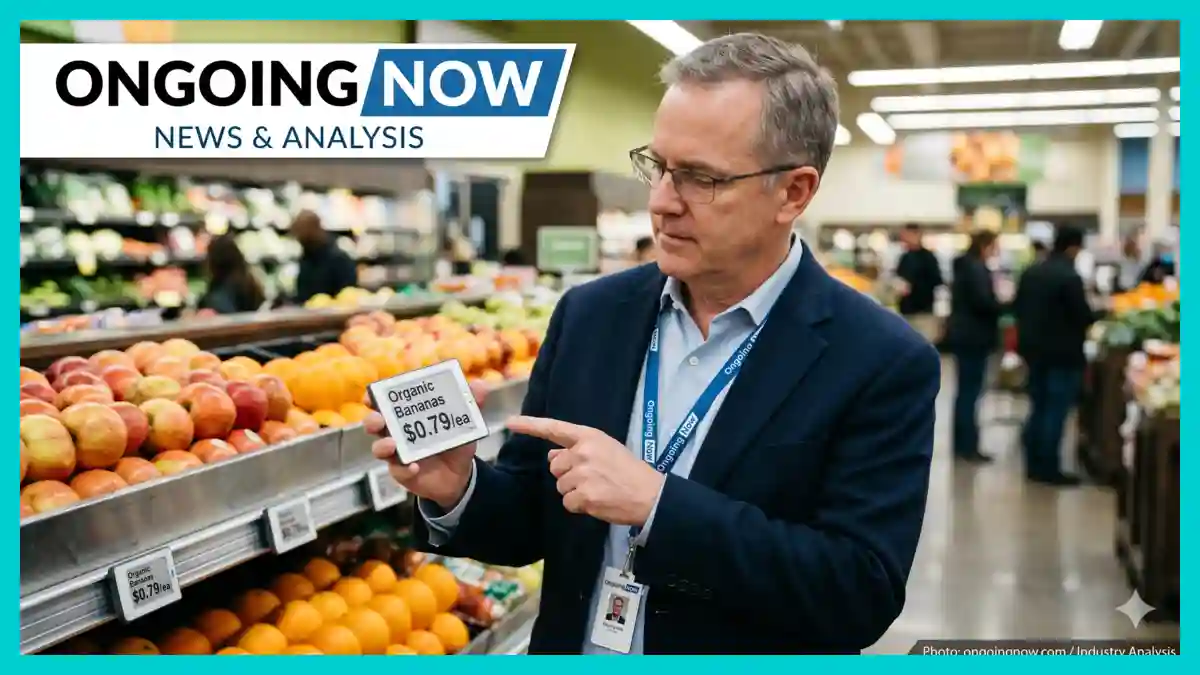
The deployment of digital displays at the retail edge has shifted from a novelty to a logistical standard, as the industry seeks to bridge the gap between e-commerce and physical storefronts. Understanding how electronic shelf labels work requires an analysis of low-power communication protocols, centralized server management, and the integration of retail AI price optimization engines. These systems enable retailers to execute real-time price adjustment software commands across thousands of items simultaneously, a task previously limited by the manual labor of paper tag replacement. Beyond simple price updates, grocery store digital tags explained through a technical lens reveal a sophisticated infrastructure involving E-ink technology, infrared or radio frequency (RF) transmissions, and data analytics. As electronic shelf label manufacturers like SES-imagotag (now VusionGroup), Pricer, and SoluM expand their global footprint, the conversation has expanded to include digital price tag surge pricing risks and a broader retail surveillance technology overview regarding consumer data collection.
The Architecture of Digital Display Logistics
At the core of the system is the Electronic Shelf Label (ESL), a battery-powered device typically utilizing Electrophoretic Display (EPD) technology, commonly known as E-ink. These displays are favored because they consume energy only when the image is altered, allowing for a battery life that often exceeds five to seven years. The hardware communicates with a central store server via a dedicated gateway or access point.
Most modern ESL systems utilize the IEEE 802.15.4 standard, often operating on the 2.4 GHz band, or proprietary infrared (IR) links to ensure minimal interference with customer Wi-Fi. The central server maintains a database linked to the store’s Point of Sale (POS) and Enterprise Resource Planning (ERP) systems. When a price change is initiated in the ERP, the server sends a data packet to the specific gateway corresponding to the product’s location. The gateway broadcasts the update, and the tag updates its display, subsequently sending an acknowledgment back to the server to confirm the change was successful.
Integration with Retail AI Price Optimization
The transition from static to dynamic pricing is driven by retail AI price optimization platforms. These algorithms process vast datasets, including competitor pricing, inventory levels, local weather patterns, and historical demand, to suggest optimal price points. Unlike manual systems, these AI-driven models can calculate the price elasticity of thousands of SKUs in seconds.
The hardware facilitates this by acting as the final mile of the data pipeline. When the AI determines that a specific product’s price should be adjusted to maximize margin or clear expiring stock, it pushes that update through the ESL interface. This eliminates the “price gap” where the price at the shelf does not match the price at the register, a common source of consumer friction and regulatory fines in traditional retail environments.
Performance Metrics and Hardware Standards
Reliability and latency are the primary benchmarks for assessing ESL performance. In a high-volume environment like a hypermarket, the system must be capable of updating thousands of tags within a narrow window—often during opening hours or specifically timed promotional periods.
| Metric | Industry Standard (Low-Latency RF) | Industry Standard (Infrared) |
| Update Speed | 5,000 to 30,000 tags per hour | 10,000 to 50,000 tags per hour |
| Battery Life | 5–10 years (CR2450/CR2032) | 7–12 years |
| Range per Gateway | 25–40 meters | Line of sight (approx. 10m) |
| Bi-directional Comms | Standard (Acknowledge/Battery status) | Standard in modern IR |
| Operating Temp | -25°C to 40°C (Freezer grade available) | 0°C to 50°C |
Note: Performance varies based on the frequency of updates and the use of multi-color (Black/White/Red/Yellow) displays.
Analysis: The Mechanics of ESL Dynamic Pricing Algorithms
The application of ESL dynamic pricing algorithms represents a significant shift in retail economics. Historically, prices remained static for weeks or months due to the cost of physical labor. Now, retailers use “rules-based” or “ML-based” (Machine Learning) triggers to adjust values.
“The true value of ESL isn’t just the digital display; it’s the synchronization of the store with the cloud. When you remove the friction of manual labeling, the shelf becomes an extension of the digital marketplace,” states Philippe Bottine, CEO of North America for VusionGroup.
These algorithms often operate on a “demand-responsive” basis. For example, if a grocery store has an overstock of avocados nearing their expiration date, the AI can trigger a progressive discount that updates on the ESLs every hour until the inventory reaches a target threshold. This reduces food waste and recovers revenue that would otherwise be lost to “shrinkage.”
Addressing Digital Price Tag Surge Pricing Concerns
The ability to change prices instantly has led to public discourse regarding digital price tag surge pricing. While common in the airline and ride-sharing industries, its application in physical grocery stores has faced scrutiny from consumer advocacy groups and legislators.
In the United States, several senators have raised inquiries into whether these tools could be used to increase prices during peak hours or exploit consumer urgency. However, industry analysts note that most retailers currently use ESLs for “downward” dynamic pricing—promotions and clearances—rather than the fluctuating “surge” models seen in other sectors. The primary barrier to aggressive surge pricing remains consumer sentiment; shoppers in physical environments generally expect price stability during a single shopping trip.
Real-World Applications and Global Adoption
The adoption of grocery store digital tags explained through regional trends shows Europe leading the market, driven by high labor costs and strict consumer protection laws regarding price accuracy. In the US, major retailers like Walmart have recently announced large-scale rollouts.
Inventory Management: Some ESLs include LEDs that flash (pick-to-light) to help staff find items for online order fulfillment.
Geofencing: High-end ESL systems can interact with customer smartphones via Bluetooth Low Energy (BLE) to provide personalized coupons or wayfinding.
Nutritional Transparency: Digital tags allow for more information than paper, such as QR codes linking to allergen data or “carbon footprint” metrics.
Security and Retail Surveillance Technology Overview
As ESLs become IoT (Internet of Things) nodes, they enter the scope of the retail surveillance technology overview. From a cybersecurity perspective, the primary risk is “tag spoofing,” where an unauthorized actor attempts to broadcast a signal to change shelf prices. Manufacturers combat this using proprietary encryption and frequency-hopping spread spectrum (FHSS) techniques.
From a privacy standpoint, the integration of ESLs with cameras and BLE sensors allows retailers to track “dwell time”—how long a customer stands in front of a specific display. While the ESL itself is a display device, the infrastructure it requires (gateways and sensors) often forms a secondary network for behavioral analytics. This data helps retailers optimize store layouts but raises questions about the transparency of data collection in a physical space.
Why This Matters: The Efficiency of the Automated Shelf
The implementation of real-time price adjustment software provides an operational efficiency that paper cannot match. In a traditional 40,000-SKU grocery store, a full price reset can take a team of workers several days. With ESLs, the same task takes minutes.
What the Data Shows:
Labor Savings: Retailers report a 70% to 80% reduction in time spent on price-related tasks.
Accuracy: Price discrepancy rates (shelf vs. register) drop to near 0% with synchronized ESL systems.
Waste Reduction: Dynamic discounting of perishables can reduce food waste by up to 30%.
Industry and Regulatory Context
Regulators are beginning to catch up with the technology. In the European Union, the “Omnibus Directive” requires retailers to show the lowest price of an item within the last 30 days when announcing a price reduction. ESLs make this compliance automated by tracking price history in the central database and displaying the required “prior price” on the E-ink screen.
In the United States, the Federal Trade Commission (FTC) monitors “unfair or deceptive acts or practices.” As more stores adopt electronic shelf label manufacturers’ latest offerings, the focus will likely shift to ensuring that “dynamic” does not become “deceptive,” particularly regarding how often prices can change while a consumer is actively in the aisle.
Comparative Analysis: ESL vs. Traditional Paper
| Feature | Paper Labels | Electronic Shelf Labels (ESL) |
| Update Speed | Hours/Days (Manual) | Seconds/Minutes (Automated) |
| Environmental Impact | High (Paper waste/Ink) | Low (Battery waste/E-waste) |
| Initial Cost | Low | High (Hardware + Infrastructure) |
| Operational Cost | High (Labor intensive) | Low (Maintenance/Software) |
| Data Capability | Static text only | QR codes, LEDs, NFC, Multi-page info |
Evidence-Based Technology Insights
The shift toward how electronic shelf labels work in a fully integrated environment suggests that the “shelf edge” is no longer the end of the supply chain, but the beginning of a data feedback loop.
“The shelf is becoming a digital interface,” notes an industry report from Deloitte. “When you connect the physical product to the digital inventory system in real-time, you gain insights into stockouts and consumer behavior that were previously invisible.”
As electronic shelf label manufacturers continue to innovate with solar-powered tags and full-color displays, the barrier to entry—primarily the high initial capital expenditure—is decreasing. This suggests that the presence of digital tags will soon be the baseline expectation for both retail operations and the consumer experience.
Stay sharp with Ongoing Now!
Source and Data Limitations: This article is based on technical specifications from major ESL manufacturers including VusionGroup (SES-imagotag), Pricer AB, and SoluM. Adoption data and labor metrics are sourced from industry reports by Deloitte, IHL Group, and retail case studies from Walmart and Lidl. Regulatory references include the EU Omnibus Directive and FTC guidelines on consumer protection. Technical benchmarks for RF and IR protocols are derived from IEEE 802.15.4 standards and vendor white papers dated between 2023 and 2025. Data regarding “surge pricing” is based on public legislative inquiries and market analysis of current retail implementations; actual consumer-facing surge pricing remains rare in physical grocery retail as of early 2026.