Why a Shocking GOP Backlash Trump Iran Peace Deal is Fracturing Washington
Deep Diplomatic Gaps and Congressional Constraints Shake Washington
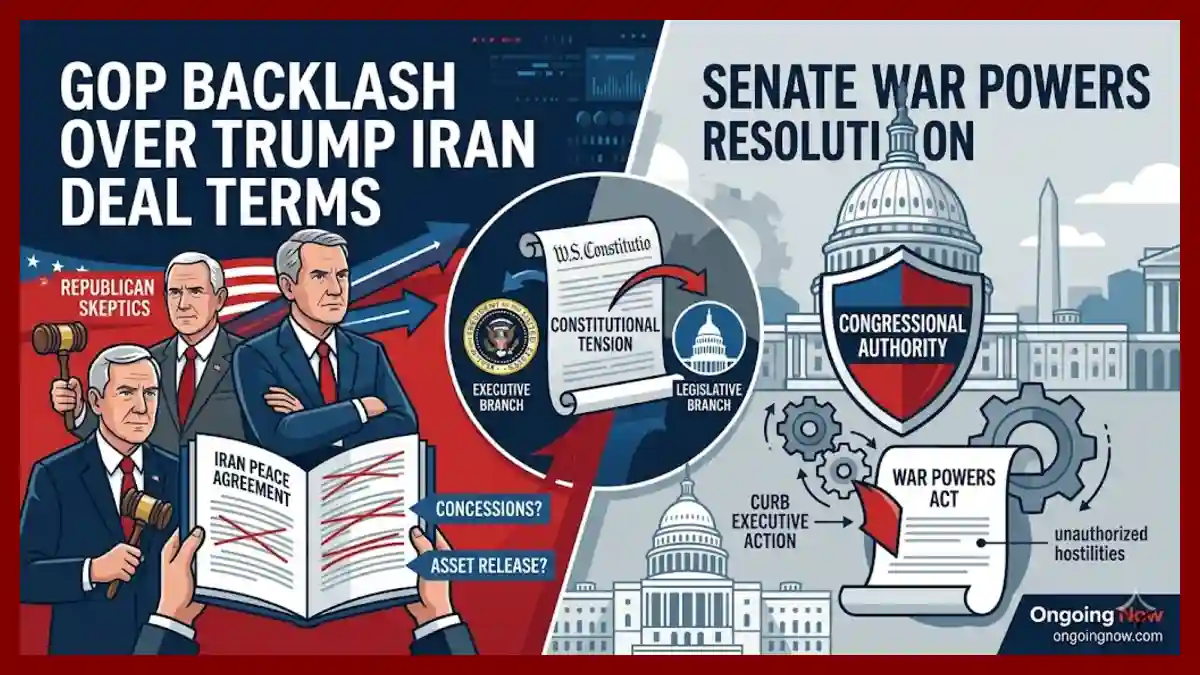
The emerging framework of an agreement to conclude the ongoing conflict has exposed significant fractures within the federal government, driven by a sudden GOP backlash Trump Iran deal terms. President Donald Trump announced that a preliminary memorandum of understanding had been “largely negotiated” via Pakistani mediators in Islamabad, aiming to extend a temporary ceasefire, lift the bilateral maritime blockade, and reopen the critical Strait of Hormuz. However, the revelation of potential U.S. concessions—including the unfreezing of up to $20 billion in Iranian assets and allowing conditional domestic oil sales—has triggered immediate resistance from prominent Republican foreign policy hawks. At the same time, the administration faces intensifying institutional pressure as a bipartisan coalition advances a Senate war powers resolution Iran measure to formally limit independent executive military actions. This confluence of internal party dissent, legislative pushback over Trump military action Iran Congress rules, and the broader foreign policy debate midterms positioning highlights the deep domestic friction over the future of American policy in the Middle East.
Executive Diplomacy Meets Capitol Hill Resistance
The White House and the State Department, led by Secretary of State Marco Rubio, have actively defended the preliminary diplomatic framework against sharp criticism from within their own party. Administration officials emphasize that the draft proposal represents a pragmatic mechanism to secure global energy corridors and prevent further military escalation.
Key administration figures argue that the proposed 60-day ceasefire extension provides a necessary window to negotiate verifiable nuclear constraints without locking the U.S. into permanent structural concessions. Speaking from New Delhi, Secretary Rubio sought to quell concerns by asserting that the administration’s established record of regional pressure guarantees that the final terms will not compromise national security objectives.
“The idea that somehow this president, given everything he has already proven he is willing to do, is going to somehow agree to a deal that ultimately winds up putting Iran in a stronger position when it comes to nuclear ambitions is absurd.” — Secretary of State Marco Rubio
Despite these assurances, senior congressional Republicans remain highly skeptical of Tehran’s long-term compliance. Lawmakers from both chambers have publicly questioned the decision to ease sanctions and allow the resumption of petrochemical sales before obtaining verifiable guarantees regarding the total dismantlement of Iran’s highly enriched uranium stockpiles.
Navigating the Contested Pillars of the Islamabad Draft
The preliminary diplomatic framework, structured during intense multinational mediation in Pakistan, relies on a two-phase architecture designed to transition from an unstable cessation of hostilities to a permanent regional settlement. The immediate focus centers on stabilizing maritime commerce, which has been severely disrupted by naval engagements and mining operations.
| Proposed Agreement Pillar | United States & Allied Framework | Iranian Government Counter-Proposal |
| Maritime Corridors | Immediate reopening of the Strait of Hormuz; comprehensive mine clearance within 30 days under international observation. | Reopening of the Strait under exclusive Iranian sovereign control; rejection of external regulatory oversight. |
| Nuclear Stockpiles | Mandatory disposal or relocation of all highly enriched uranium (HEU) stockpiles under a mutually agreed mechanism. | Nuclear infrastructure excluded from preliminary terms; insistence on maintaining domestic civil enrichment capabilities. |
| Financial & Assets | Conditional unfreezing of up to $20 billion in overseas assets, tied directly to verified compliance benchmarks. | Immediate, unconditional release of all frozen assets; explicit demands for formal economic reparations. |
| Regional Frontiers | Comprehensive halt to hostilities across all active regional theaters, explicitly including Lebanon and Israel. | Enforcement of a localized bilateral ceasefire; reservation of the right to maintain logistical support for regional non-state allies. |
Note: The terms detailed above represent active draft components compiled by regional officials as of late May 2026. Final implementation remains contingent upon formal ratification by both the U.S. Executive Branch and the Iranian Supreme National Security Council.
The divergence in interpretation, particularly regarding whether regional operations in Lebanon are legally bound by the terms, continues to complicate negotiations. While the White House views the package as an interconnected regional stabilization framework, Iranian negotiators have repeatedly sought to decouple maritime access agreements from their broader regional defense posture.
The Legislative Battle to Assert War Powers
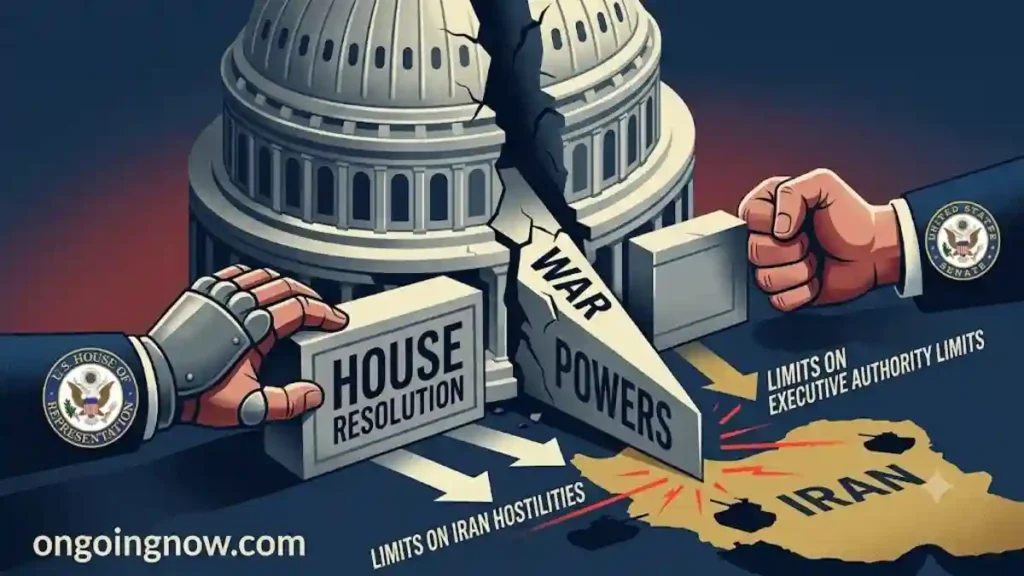
As diplomatic negotiations continue in Islamabad, the institutional struggle over the constitutional division of war powers has intensified inside the Capitol. A cross-party coalition of lawmakers has actively pushed to reassert congressional authority over extended military engagements, utilizing statutory mechanisms to check independent executive initiatives.
Led by Senator Tim Kaine (D-VA) and supported by several high-profile Republicans, the Senate recently voted to advance a formal War Powers Resolution. This legislative vehicle seeks to mandate a total cessation of unauthorized hostilities, reflecting broader congressional concerns over the financial and human costs of the multi-month intervention.
Institutional critics of the administration’s strategy point out that the military campaign, including the high-intensity maritime operations designated as Operation Epic Fury, was launched without an explicit declaration of war or a specific, updated Authorization for Use of Military Force (AAMF). Proponents of the resolution argue that independent executive operations must be subject to strict legislative timelines and budgetary oversight.
Internal Party Disruption and the Hawkish Critique
The primary domestic challenge to the administration’s diplomatic strategy does not stem from traditional partisan opposition, but rather from a concentrated faction of conservative foreign policy hardliners. These lawmakers argue that the proposed terms closely mirror the structural design of previous international agreements that the Republican party spent years opposing.
The Nuclear Verification Imperative: Critics assert that allowing Iran to retain its primary highly enriched uranium stockpile within its domestic borders during the 60-day negotiation window introduces an unacceptable strategic risk.
The Financial Leverage Argument: Senior lawmakers contend that unfreezing billions of dollars in sovereign assets provides immediate economic relief to the Iranian government, effectively reducing their incentive to agree to permanent, verifiable structural limits later.
The Freedom of Navigation Mandate: Congressional defense committees have expressed concern that the draft does not sufficiently guarantee long-term maritime safety, arguing that the U.S. navy should permanently secure the Strait of Hormuz through deterrence rather than negotiated access.
This internal ideological rift has complicated the administration’s legislative agenda, as influential committee chairs openly challenge the White House’s strategic calculations. The public nature of this dissent indicates a significant shift in the internal balance of power regarding conservative foreign policy doctrine.
Historical Precedents and the Legacy of the JCPOA
The current debate over the Islamabad draft occurs within the long shadow cast by the 2015 Joint Comprehensive Plan of Action (JCPOA). The structural mechanics of that previous agreement, which the first Trump administration formally withdrew from in 2018, serve as the primary point of comparison for current congressional skeptics.
[2015 JCPOA Framework] ──> Multi-Lateral / Extended Timelines / Sanctions Relief First
                                 │
[2018 U.S. Withdrawal] ──> Implementation of "Maximum Pressure" Campaign
                                 │
[2026 Islamabad Draft] ──> Bilateral 60-Day Window / Phased Asset Release / Immediate Maritime Mandate
Former senior diplomatic officials have pointed out that while the 2015 agreement relied on a complex multi-lateral verification structure over an extended multi-year timeline, the 2026 draft attempts a far more compressed, bilateral approach focused on immediate maritime de-escalation. However, critics maintain that any framework utilizing phased asset releases as an initial incentive inherently shares the same vulnerabilities as its historical predecessor.
Regional Friction and the Impact on Global Energy Markets
The direct consequences of the ongoing conflict and the subsequent peace negotiations extend far beyond Washington and Tehran, heavily impacting regional allies and global economic networks. The prolonged disruption of commercial shipping lanes has created sustained economic pressure across multiple sectors.
“If it is perceived in the region that a deal with Iran allows the regime to survive and become more powerful over time, we will have poured gasoline on the conflicts in Lebanon and Iraq. I personally am a sceptic of the idea that Iran cannot be denied the ability to terrorise the Strait.” — Senator Lindsey Graham (R-SC)
For coastal communities and international commercial shipping firms, the outcome of the Islamabad talks carries profound practical implications. The closure of the Strait of Hormuz, a conduit for approximately 20% of the world’s petroleum consumption, has contributed to substantial volatility in international energy markets, driving up domestic fuel costs and complicating maritime insurance protocols.
Regional partners, including the member states of the Gulf Cooperation Council (GCC), have engaged in continuous diplomatic consultations with the White House. While some regional leaders have quietly urged the administration to prioritize a permanent diplomatic resolution to avoid broader regional retaliation, others fear that a premature reduction in the U.S. military presence could leave critical energy infrastructure vulnerable to future disruptions.
Documented Positions of Prominent National Figures
The debate surrounding the proposed agreement has produced clear, contrasting public positions from key institutional actors and foreign policy analysts:
“If the result of all that is to be an Iranian regime—still run by Islamists who chant ‘death to America’—now receiving billions of dollars, being able to enrich uranium and develop nuclear weapons, and having effective control over the Strait of Hormuz, then that outcome would be a disastrous mistake.” — Senator Ted Cruz (R-TX)
“The rumored 60-day ceasefire—with the belief that Iran will ever engage in good faith—would be a disaster. Everything accomplished by Operation Epic Fury would be for naught!” — Senator Roger Wicker (R-MS), Chair of the Senate Armed Services Committee
“The deal being floated with Iran seems straight out of the Wendy Sherman-Robert Malley-Ben Rhodes playbook: pay the IRGC to build a WMD programme and terrorise the world… Open the damned strait. Deny Iran access to money.” — Former Secretary of State Mike Pompeo
“After 80 days, there is still no strategy, no clear objectives, and no explanation to the American people as to why they should shoulder the extreme costs of this war—in lives lost, higher prices and long-term damage to our national security.” — Senator Adam Schiff (D-CA)
Institutional Consequences and the Midterm Horizon
The escalating confrontation over foreign policy terms is increasingly influencing the broader political landscape as the federal government approaches the midterm election cycle. The intersection of internal party disagreement and formal war powers challenges has created a complex environment for lawmakers seeking to balance constituent economic concerns with traditional national security doctrines.
With public opinion data reflecting sustained concern over international military commitments and domestic inflationary pressures, the debate over the Islamabad framework is likely to serve as a central touchstone in upcoming congressional primary and general elections. The willingness of senior Republicans to openly challenge the executive branch signals that foreign policy execution will remain a highly contested focal point of institutional power dynamics for the foreseeable future.
Stay sharp with Ongoing Now!
Source and Data Limitations: This analysis is compiled strictly from verified public statements, official congressional records, and authenticated press briefings issued up to May 25, 2026. Data regarding the draft terms of the Islamabad framework is sourced from official statements provided by the U.S. State Department, regional diplomatic officials via CBS News and Axios, and formal legislative filings from the United States Senate. Financial figures regarding frozen assets ($20 billion) and operational war costs ($29 billion) are derived from congressional committee testimonies. This analysis deliberately excludes unverified social media leaks, anonymous speculative forecasting, and unconfirmed claims from state-aligned media outlets regarding final treaty commitments.