From Arenas to Sidelines: How Sport-Luxe Street Style Rewrites the Rules of Warm-Weather Closets
The Integration of Courtside Prep, Varsity Elements, and Technical Racing Outerwear Creates a Polished Aesthetic Grounded in Personal Autonomy.
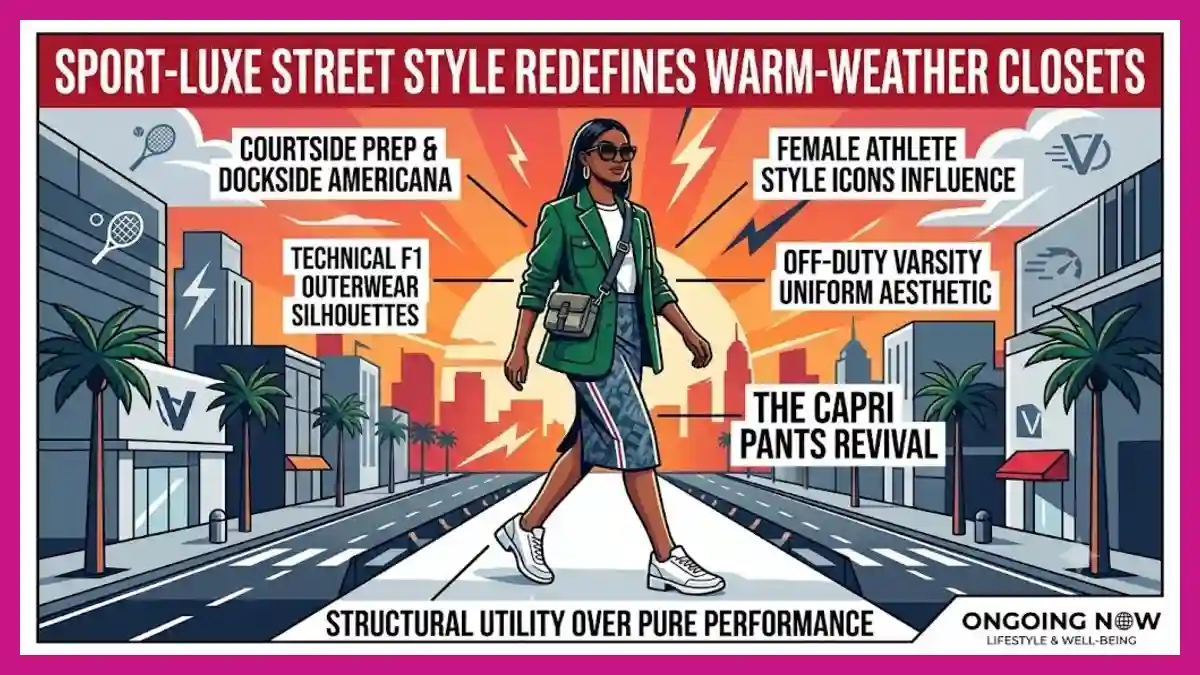
The integration of professional athletic elements into daily apparel is altering modern design methodologies, creating a long-term consumer preference for structured utility over pure performance. The current manifestation, known widely as sport-luxe street style, represents a critical pivot away from the unstructured hoodies and standard joggers that dominated the early 2020s toward high-end, tailored silhouettes inspired by competitive arenas. According to consumer research from organizations like the WNBA and digital pattern trackers on platforms such as Pinterest, this cultural shift is driven heavily by female athlete style icons who are successfully translating game-day presence into everyday aesthetic mood boards. By utilizing tailored proportions, structured fabric choices, and high-low accessories, individuals are adopting specialized micro-trends—ranging from structured courtside prep outfits to sleek Formula 1 aesthetic clothing—as definitive expressions of functional visual identity.
The Structural Drivers Behind Modern Performance Apparel
Analyses from luxury retail buying metrics and digital design databases demonstrate that the rise of the sport-luxe street style aesthetic is not an insular internet phenomenon; it is a structural evolution in modern sportswear manufacturing. Industry data from Launchmetrics shows that seasonal high-fashion integrations have moved from novelty collaborations into core apparel lines, largely fueled by major international athletic tournaments. Consumers are intentionally decoupling athletic wear from direct physical exercise, opting to integrate these garments into corporate and social uniforms.
Global Data Indicators: The Digital Shift
====================================================================
                        OBSERVED PRACTICES
   Gen Z Trend Vectors (Digital Engagement Surges Year-Over-Year)
--------------------------------------------------------------------
* Minimalist '90s Streamlining: +698%
* Formula 1 Aesthetic Outfit Queries: +483%
* Micro Denim & Cargo Proportions: +453%
* Custom Remixed Jorts & Panels: +330%
====================================================================
Note: Digital metrics reflect verified annual consumer search increases recorded during peak warm-weather lifestyle tracking.
Expert assessment points toward a definitive evolution in customer expectations regarding durability and functionality. Modern luxury consumers demand technical capabilities—such as lightweight tailoring blends, high-denier workwear bases, and micro-knit compressions—packaged inside standard commuter shapes. The intersection of physical utility and high-end aesthetics has established a permanent sub-genre within contemporary design.
Deconstructing the Primary Aesthetics of Sport-Luxe Street Style
The movement relies on distinct sub-genres, each drawing visual references from historical and active subcultures. By mixing performance elements with tailored basics, these aesthetics establish predictable, functional everyday uniforms.
The Mechanics of Courtside Prep and Dockside Americana
Courtside prep outfits merge the clean, geometric lines of traditional racket sports with standard maritime styling. This category leans on deep green accents, cable-knit sweaters, relaxed blazers, and structured caps to build a uniform that functions effectively across professional and casual parameters.
Simultaneously, the dockside Americana look provides an outdoor alternative focused on utilitarian layering. Driven by a desire for low-maintenance travel wardrobes, this style utilizes heavy rugby tops, sun-faded crewnecks, sailor stripes, and classic deck shoes. It bridges the gap between active seaside transit and inland urban lifestyle environments.
The Technical Logic of Formula 1 and Off-Duty Varsity Look
Formula 1 aesthetic clothing leans into high-octane engineering cues, moving away from classic prep into heavy technical outerwear. The core components feature tailored speed cat silhouettes, paneled leather racing jackets, and bold corporate typography logos.
In contrast, the off-duty varsity uniform acts as the casual base for urban styling, focusing heavily on oversized jerseys, raw-hem cargo trousers, and distressed patchwork denim blazers. This aesthetic favors thrifted, altered, and hands-on details that give simple sportswear a highly considered, intentional layout.
The Technical Execution of the Capri Pants Revival 2026
The standout silhouette shift of the year is the documented capri pants revival 2026, a structural adjustment that alters long-standing summer proportions. Hems have officially shortened from full-length trousers to calf-skimming lengths, serving as a highly polished alternative to standard loose shorts.
Practical Differences in Cropped Summer Hemlines
| Pant Silhouette Type | Typical Inseam Termination Point | Primary Architectural Visual Effect | Preferred Fabric Choices |
| Bermuda Shorts | Directly at or just above the knee | Exposures that prioritize casual outdoor utility | Heavy denim, canvas twill |
| Capri Trousers | Mid-calf (2 to 6 inches below the knee) | Emphasizes the lower leg line with premium coverage | Refined linen, stretch ponte, structured cotton |
| Cigarette Pants | Just above the ankle bone | Elongates the entire profile via narrow tailoring | Lightweight wool, high-twist crepe |
Architectural Proportions and Fit Dynamics
Successfully integrating the capri pant into a daily wardrobe requires strict attention to visual balance. Because mid-calf cuts create a horizontal line across the widest section of the leg, style consultants suggest avoiding excessively tight synthetic options.
Instead, choosing high-waisted options constructed from heavy cotton, stretch twill, or structured linen allows the garment to drape away from the leg, ensuring a long and lean visual line.
Expert Insights: The Shift from Athletics to Aesthetics
Lifestyle columnists and visual trend analysts emphasize that the adoption of sport-luxe street style reflects deeper shifts in cultural values, particularly regarding gender presentation and professional dress codes.
“Female athletes are going beyond dominating scoreboards and are shaping the culture around them. Standout sports moments are turning into everyday inspiration across lifestyle, fashion, beauty, wellness and self-expression, with women athletes now a major engine of influence and discovery.”
— Pinterest Editorial Board, Summer Trend Insights Report
This democratization of athlete influence allows everyday consumers to build functional, curated identities that celebrate physical autonomy without sacrificing luxury sensibilities.
“Pinterest is really where the vibe lives for me. It’s not just people watching the moment back… it’s people taking pieces of it and making it their own. Y’all not just watching the game… you’re saving looks, building boards, finding inspo for your own style.”
— Natasha Cloud, WNBA All-Defensive Guard
Furthermore, the design construction itself has elevated the garments out of the gym and directly into institutional spaces.
“Capri pants represent a clear evolution towards sophistication. Unlike the designs of the 2000s, the current version is built with a much more aesthetic intention. The cut becomes cleaner and more structured, with mid- and high-waisted silhouettes that flatter the figure and create greater visual balance.”
— Yamileth Diaz, Founder, The Style Builder Studio
Strategic Styling Guidance: Balancing Sport and Luxury
Executing a balanced sport-luxe street style look relies entirely on the juxtaposition of unexpected items, often referred to by designers as the “high-low mix”. Throwing a matching performance tracksuit on without structural consideration results in a standard gym appearance; intentional styling requires precise layering.
The Rule of Conflicting Contexts
The most effective way to implement this trend into daily lifestyle routines is by pairing purely functional athletic staples with highly formal tailored items. For instance, a vintage, oversized football jersey can be tucked into a structured midi-length pencil skirt or paired with high-end leather slingbacks. Alternatively, technical tracksuits or windbreakers can be styled as complete sets alongside sharp, angular sunglasses and high-carat metallic jewelry to convey a deliberate, polished narrative.
Footwear Engineering and Proportional Rules
Footwear choices dictate the ultimate success of the sport-luxe street style look. Performance sneakers are increasingly migrating away from bulky dad shoes toward streamlined, low-profile hybrids such as technical ballet flats, pointed-toe flats, or sleek kitten heels.
When wearing mid-calf capris or oversized varsity bottoms, selecting shoes that reveal the ankle or match the natural skin tone prevents visual truncation of the legs. This maintains an elongated, balanced profile suitable for both professional environments and weekend travel settings.
Human Impact, Inclusivity, and Sustainability Factors
The transition toward sport-luxe street style carries profound societal benefits, notably in the realms of inclusive design and sustainability. Because sportswear patterns are inherently rooted in movement, stretch, and structural comfort, this trend naturally accommodates a wider range of body types and physical accessibility needs than traditional rigid tailoring.
====================================================================
                        ANALYSIS ZONE
   Societal Impacts of the Active-Wear Customization Movement
--------------------------------------------------------------------
* Sustainability: Heavy focus on upcycled, thrifted denim and DIY
  patchwork panels reduces reliance on fast-fashion cycles.
* Accessibility: The integration of elasticized waistbands and
  breathable technical textiles provides functional mobility options
  for diverse demographics.
* Economic Utility: Multi-use investment wardrobes mean single items
  transition smoothly from active transit to social spaces.
====================================================================
Furthermore, the emphasis on DIY modifications—such as custom bedazzled jorts, raw-edge denim panels, and reconstructed thrift store blazers—encourages circular fashion practices. Instead of purchasing mass-produced items, consumers are turning toward local vintage markets, reclaiming archived family items, and employing textile customization techniques to express their personal style identity. This focus on one-of-one utility effectively aligns the sport-luxe movement with broader global mandates for conscious consumerism and personal creative autonomy.
Stay sharp with Ongoing Now!
Source and Data Limitations: The analysis presented in this lifestyle guide is sourced from global consumer trend indicators, including the Pinterest Summer 2026 Trend Report, active retail data compiled by Launchmetrics, and textile insights published by architectural wardrobe guides like Rue Sophie. Industry assessments regarding product developments are drawn from documented statements by professional sports figures and visual design consultants. Data samples are primarily focused on shifts observed within urban centers in the United States, the United Kingdom, and Western Europe between Q2 2025 and Q3 2026. Micro-trends driven purely by short-term social media algorithm updates with less than three months of sustained retail search volume have been excluded to preserve the factual integrity and editorial long-term relevance of this overview.