Global Luxury Goods Demand Drives Q1 2026 Market Stability
Focusing on high-end retail growth 2026 and celebrity marketing ROI after the record-breaking Met Gala
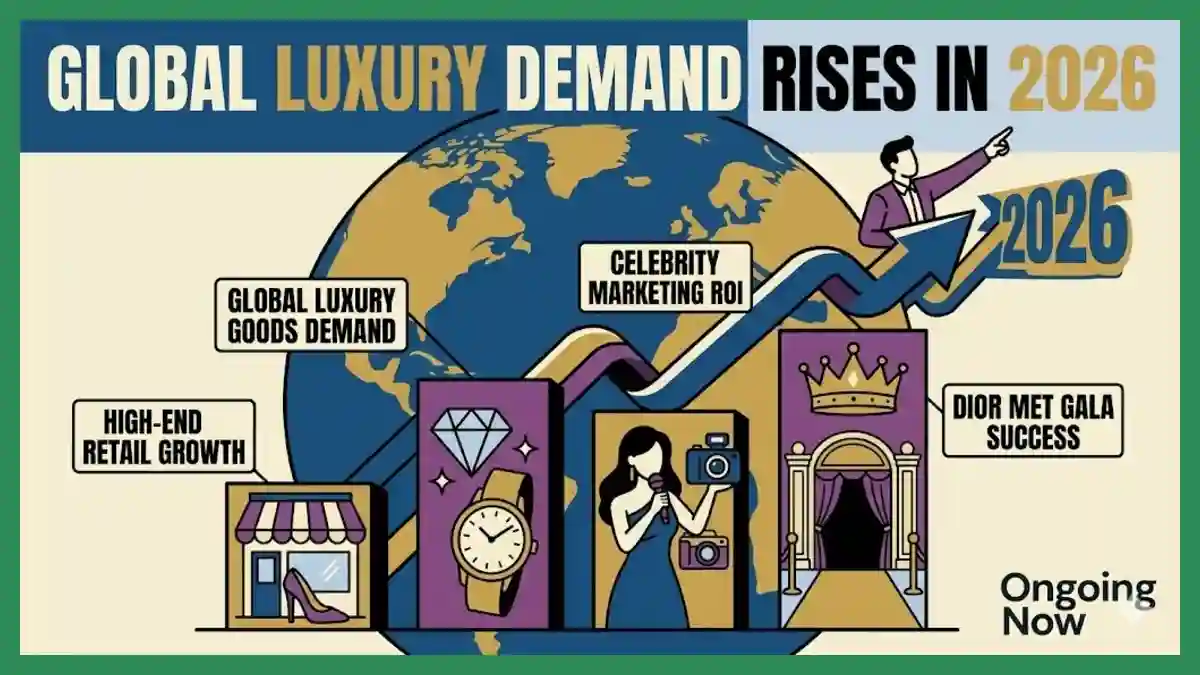
The global luxury goods sector has demonstrated measured resilience in the first quarter of 2026, navigating a complex environment of currency volatility and geopolitical disruption. According to recent Q1 earnings reports from industry leaders such as LVMH, organic growth remained positive despite significant reported revenue headwinds. This stability is largely attributed to a sustained global luxury goods demand in the United States and Japan, which helped offset softer tourist spending in Europe.
As the industry moves through the second quarter, the high-end retail growth 2026 forecast remains cautiously optimistic, supported by a resurgence in the brand mentions value index following major cultural events. Market analysts are specifically scrutinizing luxury fashion stock performance to determine the long-term celebrity endorsement revenue impact from the 2026 Met Gala. With Met Gala sponsorship costs and attendance fees reaching record highs, the Dior Met Gala marketing ROI has become a central case study for how heritage houses convert cultural visibility into tangible fashion industry economic forecast stability.
Q1 2026 Financial Performance and Market Resilience
The financial landscape for luxury conglomerates in early 2026 has been defined by a sharp contrast between reported and organic figures. LVMH, a primary bellwether for the sector, reported total revenue of €19.1 billion for the first quarter of 2026. While this represented a 6% decline on a reported basis, the group achieved a 1% organic revenue increase, signaling that underlying consumer demand remains intact.
Currency translation was the most significant factor impacting these results. The strength of the euro against other major currencies stripped approximately €1.4 billion from reported revenues, creating a 7-percentage-point headwind. Despite these pressures, the Fashion & Leather Goods division generated €9.2 billion, while Watches & Jewelry emerged as a standout performer with 7% organic growth, driven heavily by Tiffany & Co.
Market Snapshot: LVMH Q1 2026 Divisional Performance
| Business Group | Q1 2026 Revenue (€B) | Organic Growth (%) | Key Performance Drivers |
| Fashion & Leather Goods | 9.2 | -2% | Resilience in US market; Jonathan Anderson debut at Dior |
| Watches & Jewelry | 2.4 | +7% | Strong Tiffany & Co. HardWear line performance |
| Wines & Spirits | — | +5% | Chinese New Year demand; Formula 1 partnerships |
| Selective Retailing | — | +4% | Sephora market share gains in the UK |
| Perfumes & Cosmetics | — | 0% | Stable demand; J’adore Intense launch success |
| Source: LVMH Q1 2026 Regulatory Filings. Note: Organic growth excludes currency and scope impacts. |
High-End Retail Growth 2026 and Consumer Sentiment
The high-end retail growth 2026 trajectory is increasingly dependent on “wealth effects” in the United States. Analysts from HSBC and J.P. Morgan have noted that robust performance in the US equities markets has historically correlated with increased luxury spending. HSBC forecasts that sales to US consumers will rise by 8% in 2026, a significant acceleration from the 2% growth recorded in the previous year.
This growth is not uniform across all price points. A distinct shift is occurring toward “accessible luxury” and “store of value” items. For instance, Dior has strategically priced much of its Spring 2026 collection under the €1,000 threshold. This move is designed to attract aspirational buyers who were previously deterred by the “greedflation” price hikes of 2024 and 2025.
“The sector’s recovery depends on genuine volume growth, not just price adjustments. Analysts anticipate organic growth of 5% to 6% across the industry for the full year,” noted a senior analyst in a recent bitget report.
Measuring Dior Met Gala Marketing ROI and Brand Value
The 2026 Met Gala serves as the primary catalyst for the current quarter’s brand mentions value index surge. With ticket prices rising to a record $100,000 per seat, the event has transitioned from a fundraising gala into a high-stakes corporate marketing arena. For heritage brands, the Met Gala sponsorship costs are justified by the massive “media impact value” generated through social media and traditional press.
Early data suggests the Dior Met Gala marketing ROI has outpaced many of its peers due to a highly integrated digital strategy. Dior currently leads the sector in social engagement, boasting over 15 million subscribers on TikTok alone. By leveraging “generic archetypes” in their storytelling and focusing on consistent visual narratives, the brand has maintained a top-three position on the Lyst Index for Q1 2026.
The Brand Mentions Value Index Breakdown
The brand mentions value index tracks the monetary equivalent of organic social media reach. In 2024, the Met Gala generated an estimated $1.4 billion in media impact value. For 2026, early projections suggest this figure could exceed $1.8 billion, driven by:
Real-time “Red Carpet” livestreaming on multiple platforms.
The integration of AI-driven personalization tools in social content.
Strategic celebrity pairings that align with specific product launches.
Celebrity Endorsement Revenue and the Influencer Economy
The celebrity endorsement revenue model has evolved from simple face-of-the-brand contracts to deeply integrated content partnerships. The fashion influencer marketing market is estimated to reach $11.1 billion in 2026, representing a compound annual growth rate (CAGR) of 32.9%. Brands are no longer just buying fame; they are buying the data-driven engagement that specific influencers command.
For Dior, the appointment of Jonathan Anderson as Creative Director has provided a fresh “creative vision” that resonates with younger demographics. This shift is critical as the fashion industry economic forecast increasingly relies on Gen Z and Millennial consumers in the Asia-Pacific region. This region accounted for over 40% of the luxury market share in 2025 and is projected to reach a valuation of $131.49 billion by the end of 2026.
Regional Variations in Global Luxury Goods Demand
While the United States shows signs of a rebound, other regions present a more fragmented picture of global luxury goods demand.
Japan: Local demand remains exceptionally resilient, bolstered by a weak yen that has attracted high-spending tourists, though local consumption is also holding steady.
Europe: The region is struggling with a decline in tourist spending, though local high-net-worth individuals (HNWIs) continue to support flagship stores in Paris and Milan.
Middle East: Geopolitical disruptions have tangibly slowed growth in this region, with LVMH reporting a 1-percentage-point drag on organic revenue specifically due to regional instability.
“LVMH will rely on the diversity of its businesses and the good geographic balance of its revenue to further strengthen its global leadership,” the group stated in its Q1 2026 press release. This geographic hedging is a central pillar of corporate strategy for 2026.
Strategic Shifts: Sustainability and “Store of Value”
The fashion industry economic forecast for the remainder of the decade highlights a growing emphasis on sustainability as a business imperative. High-end consumers are increasingly viewing luxury purchases as investments. A 2026 perception study revealed that buyers now value a brand’s stability as a “store of value” in the resale market nearly as much as its craftsmanship.
To meet these demands, brands are investing in:
Circular Economy Initiatives: Developing official resale platforms to capture the “second-hand” market.
Sustainable Sourcing: Reducing water and electricity usage to align with tightening EU environmental regulations.
Technological Integration: Using AR and AI to reduce return rates in high-end e-commerce, which remains a significant cost center for retail growth.
Analysis: Why This Matters for Investors and Consumers
The current data suggests that the luxury market has moved past the era of indiscriminate price hikes. The “Price-over-Volume” strategy that dominated the post-pandemic years is being replaced by a “Value-over-Volume” approach. For investors, this means that luxury fashion stock performance will likely be driven by brands that can demonstrate efficient celebrity endorsement revenue conversion and maintain high margins without alienating the “aspirational” middle-class consumer.
The high-end retail growth 2026 narrative is one of professionalization. Marketing spend is becoming more scientific, with the brand mentions value index providing real-time feedback on the efficacy of multi-million dollar sponsorships. As Dior and its competitors navigate the rest of 2026, the focus will remain on balancing heritage with the rapid-fire demands of the digital economy.
Stay sharp with Ongoing Now!
Source and Data Limitations: This report is based on Q1 2026 earnings releases from LVMH Moët Hennessy Louis Vuitton (April 13, 2026), official Met Gala 2026 fundraising and attendance data (May 5, 2026), and the Lyst Index Q1 2026 (April 29, 2026). Additional market forecasts were synthesized from Fortune Business Insights and Research and Markets’ “Fashion Influencer Marketing Report 2026.” While financial data for LVMH and Dior is sourced from official regulatory filings, specific ROI calculations for marketing events are based on proprietary industry indices (e.g., Launchmetrics) and represent estimated media value rather than direct cash flow. Forecasts regarding US wealth effects and Asia-Pacific growth are subject to macroeconomic volatility and central bank policy shifts.