Soft Life Movement: Why Intentional Living Dominates
How the Soft Life movement redefines productivity through intentional living habits and a rejection of hustle culture.

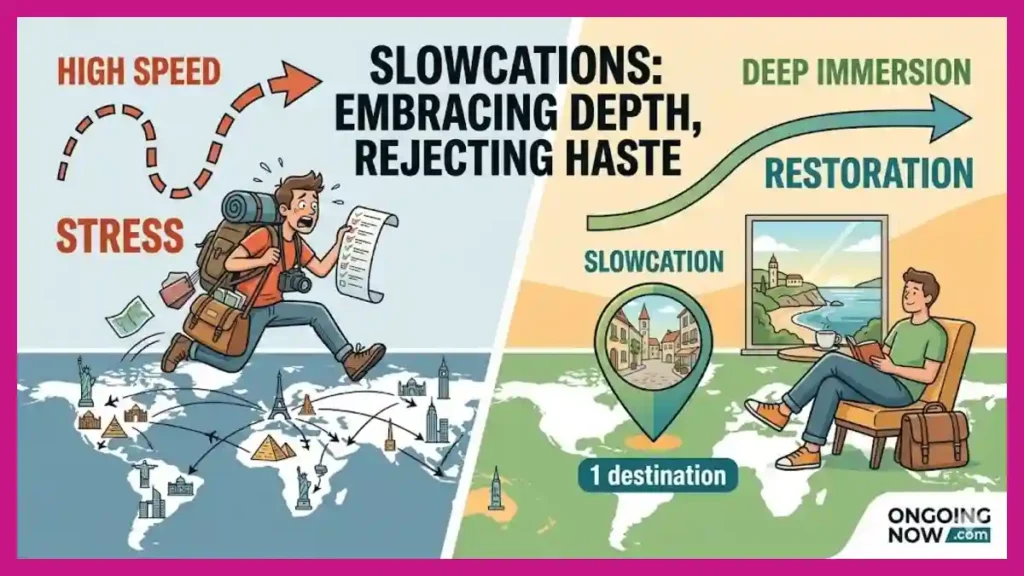
The Soft Life movement represents a significant cultural shift toward prioritizing well-being, ease, and emotional health over the traditional pursuit of high-stress achievement. Currently, sociological research and cultural analyses identify this trend as a direct rejection of hustle culture, moving away from the “always-on” mentality that defined the previous decade. By adopting soft life habits, individuals are increasingly seeking a gentle productivity movement that balances professional responsibilities with personal preservation. This intentional living community emphasizes the soft life aesthetic not merely as a visual trend, but as a functional framework for sustainable living. When comparing soft life vs girlboss culture, experts note a transition from performative exhaustion to a value-based anti-hustle culture that prioritizes the internal experience over external validation.
The Sociological Foundation of Anti-Hustle Culture
The transition toward a “soft life” is rooted in a collective response to systemic burnout and the diminishing returns of relentless labor. Dr. Tricia Hersey, founder of The Nap Ministry and author of Rest Is Resistance, argues that rest is a social necessity rather than a luxury. The movement gained significant traction within Black digital spaces before expanding into a global phenomenon. According to the American Psychological Association’s (APA) 2023 Work in America Survey, 77% of workers reported experiencing work-related stress, which has fueled the demand for alternative lifestyle frameworks.
Unlike the “Girlboss” era of the 2010s, which encouraged women to emulate traditional masculine corporate structures to find success, the Soft Life movement suggests that success is invalid if it costs one’s peace. This shift is documented in the Deloitte 2024 Gen Z and Millennial Survey, which highlights that work-life balance remains the top priority for younger generations entering the workforce. The movement posits that an individual’s worth is not tied to their economic output.
Defining Soft Life Habits and Intentional Living
Implementing a soft life requires a departure from reactive living toward intentionality. Research from the Global Wellness Institute (GWI) suggests that intentionality in daily routines—such as setting strict digital boundaries and practicing “monotasking”—contributes to lower cortisol levels. These practices are often categorized as “soft life habits,” which focus on minimizing friction in one’s environment.
Observed Practices in Intentional Living
Boundaried Communication: Utilizing “Do Not Disturb” modes and setting clear expectations for response times in professional and personal settings.
Curated Environments: Prioritizing comfort and sensory regulation in home office setups to reduce environmental stressors.
Low-Impact Movement: Shifting from high-intensity interval training (HIIT) to restorative practices like walking or yoga, reflecting a “gentle” approach to physical health.
Gentle Productivity: Research on Sustainable Output
The “gentle productivity movement” challenges the “rise and grind” narrative by suggesting that rest actually facilitates higher-quality output. The Sloan Management Review at MIT has published findings indicating that workers who take regular breaks and maintain a “soft” schedule often demonstrate higher creativity and problem-solving capabilities than those who work continuous long hours.
| Feature | Hustle Culture | Soft Life Movement |
| Primary Goal | Maximizing output/revenue | Maximizing peace/well-being |
| View of Rest | A reward for hard work | A fundamental human right |
| Social Metric | Busy-ness as status | Ease as status |
| Work Style | Multi-tasking and urgency | Monotasking and intentionality |
| Success Indicator | Career titles and assets | Autonomy and mental health |
Note: Transitioning between these models often requires a period of “unlearning” deeply ingrained societal expectations regarding productivity.
Soft Life vs Girlboss Culture: A Comparative Analysis
The divergence between “soft life” and “girlboss culture” marks a pivotal change in how empowerment is defined. While the girlboss era focused on breaking glass ceilings through sheer force and endurance, the soft life aesthetic focuses on the “softness” of the experience once those ceilings are navigated—or the choice to step away from them entirely.
“The ‘Girlboss’ was an optimization of the self for the sake of the market,” notes cultural critic and journalist Anne Helen Petersen. “The ‘Soft Life’ is, at its core, an attempt to de-optimize the self for the sake of the soul.” This evolution suggests that the modern worker is less interested in “having it all” if “all” includes chronic stress and health complications. Data from LinkedIn’s 2025 Global Talent Trends report shows a 25% increase in job postings that mention “well-being” or “flexibility” compared to three years prior, indicating that organizations are beginning to adapt to this cultural demand.
The Role of the Soft Life Aesthetic in Mental Regulation
While often criticized as being superficial or consumerist, the “soft life aesthetic” serves a psychological purpose for many adherents. Environmental psychology suggests that our physical surroundings significantly impact our internal state. The use of neutral palettes, natural light, and minimalist decor—central tenets of the soft life visual identity—is linked to reduced cognitive load.
According to a study published in the Journal of Environmental Psychology, “cluttered or high-contrast environments can trigger a low-grade fight-or-flight response.” By curating a “soft” aesthetic, individuals are essentially creating a sanctuary that signals safety to the nervous system. This is particularly relevant in an era of “polycrisis,” where global news cycles provide constant stressors. The aesthetic is a tool for sensory management rather than just a trend for social media.

Challenges and Accessibility of Anti-Hustle Culture
A critical analysis of the movement must acknowledge that “softness” is often tied to socio-economic privilege. The ability to reject hustle culture frequently depends on financial stability, job security, and social safety nets. For many in the “gig economy” or low-wage sectors, “hustling” is a survival mechanism rather than a lifestyle choice.
Societal Impact and Accessibility Considerations:
Economic Barriers: The cost of “curating” a soft life can be high, leading to an exclusivity that contradicts the movement’s peaceful origins.
Professional Risk: In industries that still valorize overwork, opting for a soft life can result in missed promotions or job instability.
Cultural Nuance: For first-generation professionals or those from marginalized backgrounds, the “rejection of hustle culture” may conflict with family expectations or the necessity of upward mobility.
Expert Dr. Isoken Ogunnaike emphasizes that for Black women specifically, the Soft Life is a radical act of self-reclamation. “In a world that expects you to be ‘strong’ and ‘resilient’ at all times, choosing softness is a form of protest,” she states. This highlights that the movement’s impact varies greatly depending on the practitioner’s identity and social standing.
Long-term Implications for the Global Workforce
As the Soft Life movement matures, its influence is moving from social media feeds into corporate policy and urban planning. The concept of the “Four-Day Work Week” and “Right to Disconnect” laws in countries like France and Australia are legislative reflections of anti-hustle sentiments. These structural changes suggest that the movement is moving beyond a personal lifestyle choice and toward a fundamental redesign of how society functions.
The World Economic Forum has identified “Emotional Intelligence” and “Resilience” as top skills for 2026. Paradoxically, the Soft Life movement cultivates these exact traits by encouraging individuals to understand their limits and prioritize mental clarity. By rejecting the frantic pace of the past, proponents of the movement may actually be better equipped for the complex, automated future of work, where human-centric skills like empathy and strategic rest are at a premium.
Integrating Evidence-Based Soft Life Habits
For those looking to adopt these principles without falling into the trap of performative consumerism, experts suggest focusing on “internal softness.” This involves cognitive behavioral shifts rather than just aesthetic ones.
Analysis of Sustainable Implementation:
Audit of Energy Leaks: Identifying which “hustle” activities provide no tangible ROI for well-being.
The “Slow Morning” Protocol: Research from the National Sleep Foundation suggests that a gradual transition into the workday, rather than immediate engagement with emails, improves sustained focus.
Value-Based Scheduling: Allocating time based on personal values (e.g., community, health, creativity) rather than just professional deadlines.
Ultimately, the Soft Life movement is not about the absence of work, but the presence of ease within it. It is a recalibration of the human experience in an increasingly digital and demanding world. As more people join the intentional living community, the definition of a “successful life” continues to evolve toward one that is measured by the quality of one’s peace rather than the quantity of one’s tasks.
Stay sharp with Ongoing Now!
Source and Data Limitations: This article is based on sociological data from the American Psychological Association (2023), the Deloitte Gen Z and Millennial Survey (2024), and reports from the Global Wellness Institute. Direct quotes are attributed to Dr. Tricia Hersey, Anne Helen Petersen, and Dr. Isoken Ogunnaike. Data regarding the “soft life” as a cultural movement is derived from digital ethnographic studies of Black social media spaces (2020–2025) and workplace trend reports from LinkedIn and the World Economic Forum. Limitations: As the “Soft Life” is a contemporary cultural movement, long-term longitudinal studies on its psychological effects are currently in progress. Some aspects of the “aesthetic” are influenced by social media trends which may fluctuate; however, the underlying “anti-hustle” sentiments are supported by consistent labor and wellness data. Excluded: Unverified claims regarding specific “wellness products” or pseudo-scientific “hacks” for instant stress relief.