Bakerl0.0 Line Reveals the Future of Sober Transit
TfL’s Bakerl0.0 line partnership with Heineken 0.0 highlights growing sober living trends and the normalization of alcohol-free spaces.
A Rebranded Commute Intersects with Modern Sobriety Trends
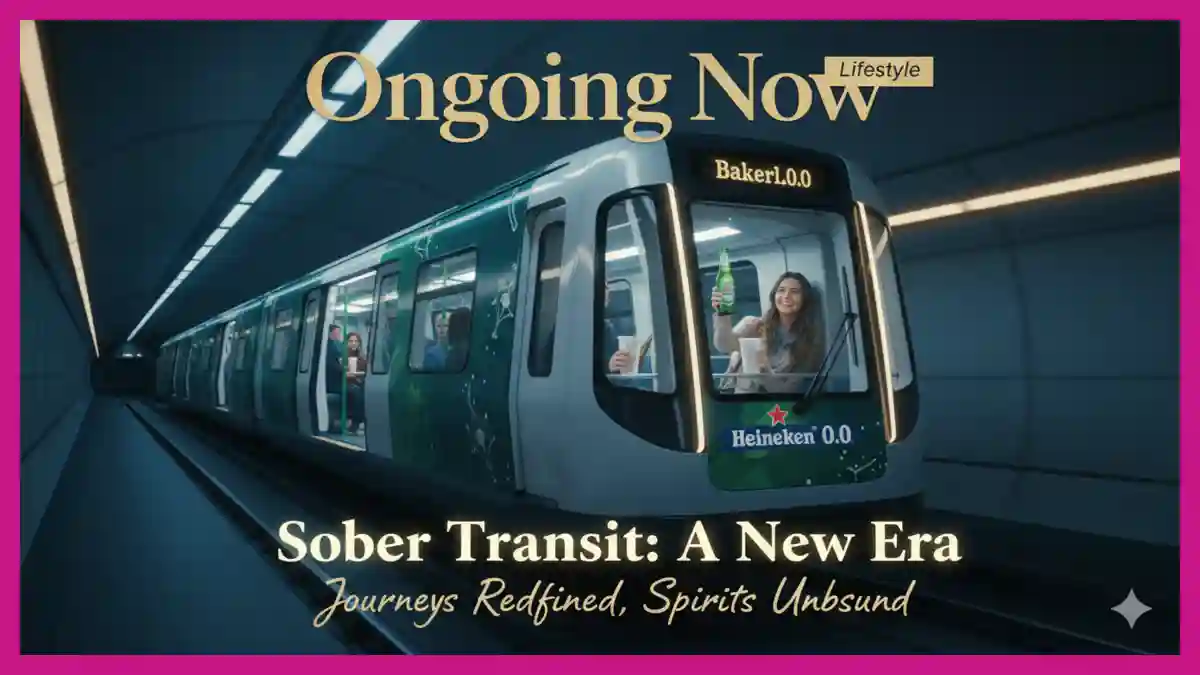
In January 2026, London’s transport network underwent a visible transformation as the Bakerloo line was temporarily rebranded as the Bakerl0.0 line. This initiative, a partnership between Transport for London (TfL) and Heineken 0.0, marks a significant departure from traditional public space management by integrating commercial branding directly into essential wayfinding systems. The campaign coincided with a recorded 17.5 million people in the UK participating in Dry January 2026, reflecting a growing cultural shift toward sober living and the normalization of alcohol-free alternatives in social spaces.
By incorporating the “0.0” nomenclature into station roundels and maps at key hubs like Waterl0.0 and Oxf0.0rd Circus, the project highlights three evolving lifestyle angles: the commercialization of public infrastructure, the health-conscious “nudge” toward non-alcoholic consumption, and the use of transit environments to foster social interaction. While the campaign generated approximately £375,000 in revenue for TfL, it has also sparked discussions among accessibility advocates and urban planners regarding the impact of altered signage on vulnerable commuters.
Infrastructure as a Media Asset: The “Bakerl0.0” Activation
The partnership between Heineken and Transport for London represents the first time branded roundels have been permitted on the London Underground. This two-week activation in early 2026 targeted ten major stations, including Baker Street, Piccadilly Circus, and Paddington. Beyond the visual rebranding of the Bakerloo line, the campaign included experiential elements such as “roundel-shaped” fridges installed at Waterloo Station, which distributed free cans of alcohol-free beer to commuters during peak hours.
TfL’s Customer Director, Emma Strain, stated that the authority is “always keen to work with brands to create new experiences” while generating revenue to be reinvested into the network. However, the commercialization of wayfinding has not been without friction. The modification of “oo” to “0.0” on maps and platform signs led to concerns regarding the clarity of the network.
The Debate Over Transit Accessibility
Signage Consistency: Advocacy groups such as Transport for All noted that for neurodivergent passengers or those with visual impairments, even minor alterations to standard icons can cause significant navigation distress.
Wayfinding Integrity: Emma Vogelmann, a spokesperson for Transport for All, emphasized that “accessibility should not be negotiable,” arguing that essential transit information should remain free from corporate aesthetics.
Operational Continuity: Despite the branding, TfL maintained all standard safety protocols and operational oversight, ensuring that train frequencies and station staffing remained unaffected by the promotional takeover.
Shifting Social Norms: Alcohol-Free Zones and Commuter Interaction
A primary social objective cited by the Heineken 0.0 TfL partnership was the promotion of “social chemistry” on a network where 63% of passengers traditionally avoid speaking to strangers. The campaign sought to leverage the context of Dry January cultural trends to frame alcohol-free beer as a facilitator of conversation. By making a temporary exception to the 2008 ban on alcohol consumption on the Tube—specifically for 0.0% ABV beverages—organizers encouraged passengers to “say cheers” during their journeys.
Observed Commuter Practices (January 2026)
| Behavior Category | Pre-Campaign Data | Campaign Intervention |
| Social Interaction | 63% avoid conversation | Distributed free 0.0% samples to “spark talk” |
| Avoidance Tactics | 16% fake sleep; 14% wear sunglasses | Branding positioned in high-dwell areas (fridges) |
| Digital Engagement | 41% stay glued to phones | Tactile oyster card holders provided as incentives |
Stephanie Dexter, Marketing Manager at Heineken, noted that while conversation does not always come naturally to “seasoned London commuters,” the presence of a cold, non-alcoholic drink provides a low-stakes social lubricant. This aligns with broader sociological research suggesting that shared physical artifacts in “liminal spaces” like trains can reduce the perceived risk of social rejection.
Evidence-Based Benefits of Sober Living in 2026
The Bakerl0.0 passenger reactions were set against a backdrop of increasing health literacy regarding alcohol. Data from Alcohol Change UK indicates that the benefits of a month-long reset extend beyond the immediate 31 days. Research published in the British Medical Journal and supported by studies at the Royal Free Hospital highlights several physiological improvements associated with temporary abstinence.
Verified Health Outcomes
Cardiovascular Health: Significant reductions in blood pressure and cholesterol levels were observed in participants who completed a dry month.
Metabolic Recovery: Lower levels of cancer-related proteins in the blood and a reduction in Type 2 diabetes risk factors.
Neurological Clarity: 67% of participants reported better concentration, while 70% experienced improved sleep quality.
The sober living benefits are further bolstered by the Try Dry program, which utilizes behavior change science. According to the Institute of Alcohol Studies, users of guided cessation tools are twice as likely to maintain reduced consumption levels six months after the initial challenge compared to those who “go it alone.”
Market Evolution: Best Alcohol Free Beer Reviews
As the demand for alcohol free zones London 2026 grew, so did the sophistication of the non-alcoholic beverage market. Long-term editorial testing and consumer reports from early 2026 suggest that the “thin and watery” reputation of early alcohol-free beers has been largely overcome by new brewing technologies, such as vacuum distillation and restricted fermentation.
Leading Non-Alcoholic Options (2026 Market Analysis)
Guinness 0: Frequently cited as the top-performing non-alcoholic stout for its ability to replicate the creamy nitrogen-driven mouthfeel of the original.
Heineken 0.0: Recognized for its consistency and “crisp, pale lager” profile, making it a versatile choice for mainstream adoption.
Asahi Super Dry 0.0%: A preferred option for those seeking a highly carbonated, dry finish with minimal residual sweetness.
Athletic Brewing Free Wave: A leader in the “craft NA” segment, focusing on hop-forward Hazy IPAs that appeal to traditional craft beer enthusiasts.
“The real magic happens when Dry January is over,” notes research from the University of Sussex. “It shows us that we don’t need alcohol to have fun or relax, providing the skills needed to manage drinking year-round.”
Why This Matters: The Societal Impact of Normalized Abstinence
The London transport lifestyle news regarding the Bakerl0.0 line is more than a marketing curiosity; it reflects a “normalization” of abstinence in urban environments. Historically, public transit bans on alcohol were implemented to curb anti-social behavior. By introducing a “dry zone” that still permits the act of drinking (via 0.0% beverages), the initiative suggests a shift from prohibition to substitution.
Analysis: Commercial vs. Public Interest
The revenue generated—£375,000 for a three-week stint—is a drop in the ocean for TfL’s multi-billion pound budget, but it signals a willingness to experiment with “High-Impact Roadworks” coordination and “Vision Zero” safety goals by promoting sober alternatives. However, the cultural tension remains: should a public utility be used to promote a specific commercial brand, even if that brand aligns with public health goals like Dry January?
The Bakerl0.0 experiment serves as a case study for future “healthy” commercial partnerships. It demonstrates that while the public may accept branding in exchange for frozen fares, the integrity of essential infrastructure (like maps and signage) remains a protected value for the community.
Evidence-Based Lifestyle Guidance for Navigating “Dry” Trends
For individuals looking to integrate the lessons of the Bakerl0.0 campaign into their own lives, experts recommend focusing on environmental cues. Just as TfL used station branding to “nudge” behavior, individuals can curate their “personal zones” to support well-being goals.
Environment Design: Stock non-alcoholic options in the same locations where you would normally keep alcohol to maintain the “ritual” without the ethanol.
Social Scripting: Prepare for social interactions in “wet” environments by having a preferred NA brand in mind, reducing the cognitive load of decision-making.
Incremental Shifts: You do not need a city-wide rebrand to change habits; studies show that even “Sober Spring” or “Cut Back” challenges provide significant metabolic resets.
Stay sharp with Ongoing Now!
Related Coverage:
Source and Data Limitations: This report is based on verified news events from January and February 2026, including Transport for London (TfL) press releases and Freedom of Information (FOI) request FOI-3960-2526, which confirmed the £375k partnership fee. Data regarding health benefits is sourced from the Institute of Alcohol Studies (February 2026) and the Royal Free Hospital (longitudinal data). Accessibility critiques were attributed to Transport for All and the London Evening Standard. Excluded from this report are unverified social media claims regarding permanent station name changes and speculative medical advice not supported by the British Medical Journal or University of Sussex research. Market reviews of beverages are based on 2026 consumer satisfaction aggregates from the Washington Beer Blog and Upside Drinks.