Florida Auto Insurance Rate Drop Reveals Market Shift
New legislative reforms aim to lower car insurance premiums and stabilize the Florida market through increased competition.
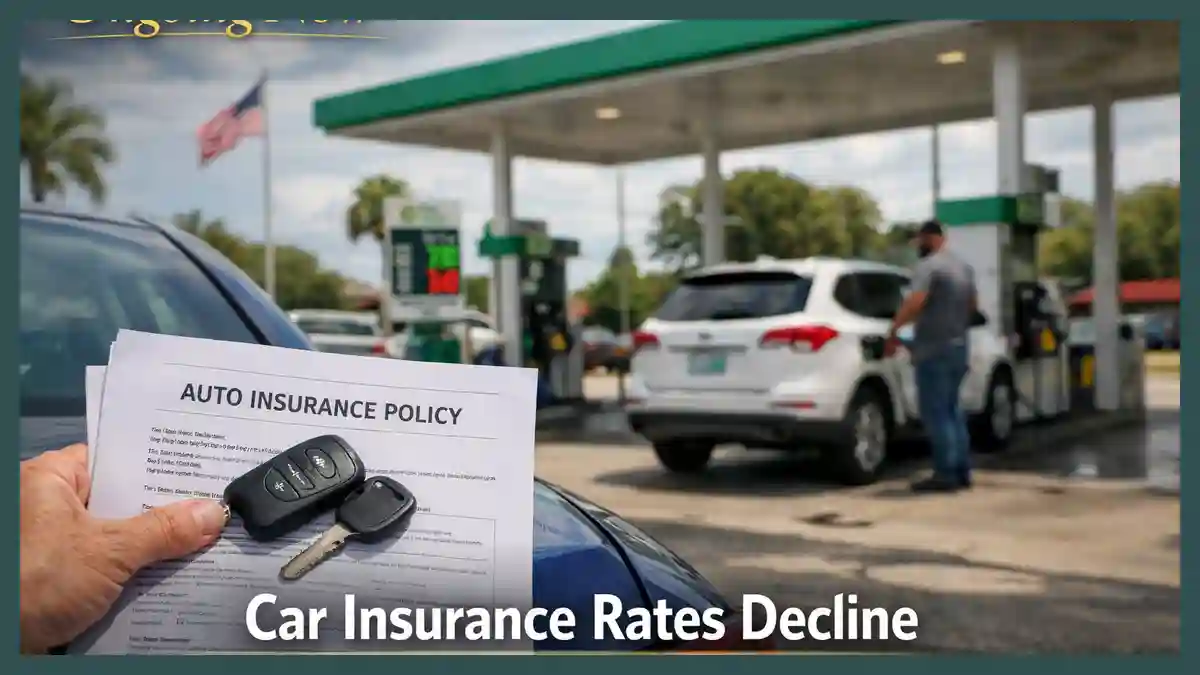
The landscape of Florida auto insurance is shifting as a Florida auto insurance rate drop becomes a central focus for state regulators and policyholders. Recent legislative reforms, specifically House Bill 837, were designed to curb litigation costs and provide a pathway for reducing car insurance premiums across the Sunshine State. For many residents, understanding how to lower car insurance now involves navigating these new legal protections, utilizing a car insurance discount guide, and monitoring a Florida insurance commissioner rate announcement for finalized filings. While the market remains complex, recent entries and rate stability from major carriers suggest a gradual move toward lowering auto premiums after reform.
The Regulatory Shift Behind Florida’s Market Stabilization
The primary catalyst for the current market shift is the Florida legislative reform insurance savings expected to materialize following significant tort reform. For years, Florida led the nation in litigation frequency, which directly inflated the cost of every policy sold in the state. By addressing “one-way attorney fees” and shortening the statute of limitations for negligence claims, the Florida Legislature has attempted to create a more predictable environment for actuarial projections.
In early 2024, the Florida Office of Insurance Regulation (OIR) noted an uptick in the number of companies filing for rate stability or slight decreases. This trend is a departure from the double-digit increases seen in previous years. Insurance Commissioner Michael Yaworsky has frequently highlighted that these reforms are intended to attract more capital to the state, which naturally pressures prices downward through increased market competition.
Major Carrier Responses: State Farm and GEICO
Recent filings show that the State Farm Florida rate decrease and the GEICO Florida price drop are among the first tangible signals of a cooling market. State Farm, the state’s largest private passenger auto insurer, filed for a rate reduction that impacts hundreds of thousands of policyholders. Similarly, reports of a Progressive Florida insurance savings trend have surfaced as the company adjusts its risk models to account for the reduced threat of frivolous lawsuits.
| Carrier | Recent Action | Impact Area |
| State Farm | Approved Rate Decrease | Personal Auto Liability |
| GEICO | Filed Rate Reduction | Comprehensive & Collision |
| Progressive | Modified Underwriting | New Policyholders |
| Allstate | Rate Maintenance | Renewals |
Note: Individual savings vary based on driver history, credit score, and vehicle type. These figures represent aggregate filing data submitted to the OIR.
How to Lower Car Insurance Through Policy Optimization
While the macro-market improves, consumers often ask how to lower car insurance on an individual basis. Beyond statewide trends, policyholders can take proactive steps to ensure they are not overpaying. This includes auditing current coverage levels to ensure they align with the actual cash value of the vehicle, especially as cars age.
Increasing a deductible is one of the most direct methods for reducing car insurance premiums. By moving a deductible from $500 to $1,000, a driver can often see a 15% to 25% reduction in the physical damage portion of their premium. However, this requires the policyholder to have sufficient liquid savings to cover that higher cost in the event of a claim.
A Comprehensive Car Insurance Discount Guide
Every major carrier offers a suite of “hidden” savings that are often overlooked during the digital checkout process. Utilizing a car insurance discount guide can help identify which credits apply to your specific household. Common discounts in the Florida market include:
Telematics Programs: Programs like Progressive’s Snapshot or State Farm’s Drive Safe & Save track driving habits in exchange for potential discounts of up to 30%.
Safety Features: Vehicles equipped with autonomous emergency braking, lane-departure warnings, and advanced anti-theft systems often qualify for lower comprehensive rates.
Multi-Policy Bundling: Combining auto insurance with homeowners or renters insurance remains the single most effective way to trigger a “loyalty” discount.
Professional Affiliations: Many insurers offer affinity discounts for educators, first responders, military members, and alumni of specific universities.
Understanding the Florida Insurance Commissioner Rate Announcement
The Florida insurance commissioner rate announcement serves as the official barometer for the state’s insurance health. When Commissioner Michael Yaworsky issues a memorandum regarding rate filings, it signals whether the OIR believes the requested rates are “excessive, inadequate, or unfairly discriminatory.”
Under Florida law, insurers must provide actuarial justification for every penny they charge. The recent push for transparency has forced companies to demonstrate exactly how the 2023 tort reforms are being passed back to the consumer. If a company fails to show that they are lowering auto premiums after reform, the OIR has the authority to reject their filing and demand a downward adjustment.
Analysis: Why the Reform Impact Takes Time
There is often a lag between the signing of a law and the actual Florida auto insurance rate drop appearing on a monthly bill. This is due to the nature of “earned premiums” and “unearned premiums.”
“Insurance is a backwards-looking industry that must price for future unknowns. While the legal environment in Florida has improved, carriers must wait for old claims—those filed before the reform—to clear the system before they can fully realize the savings.” — Excerpt from the 2024 NAIC Market Conduct Report.
This means that while the Progressive Florida insurance savings might be visible in new quotes today, existing policyholders may not see the full benefit until their next two or three renewal cycles.
How to Switch Auto Insurance Florida: A Step-by-Step Process
If your current carrier has not yet mirrored the GEICO Florida price drop or similar market moves, it may be time to move. Knowing how to switch auto insurance Florida involves more than just finding a lower number; it requires a seamless transition to avoid a “lapse in coverage,” which is a major red flag for future underwriting.
Compare Quotes: Obtain at least three quotes with identical coverage limits to ensure an “apples-to-apples” comparison.
Verify the Carrier: Check the OIR’s “CHOIR” portal to ensure the company is in good standing and has a solid claims-paying history.
Purchase the New Policy: Ensure the start date of the new policy is the same as the end date of the old one.
Cancel the Old Policy: Notify your previous insurer in writing. In Florida, you are entitled to a pro-rated refund of any unused premium.
Notify the DMV: Florida’s Department of Highway Safety and Motor Vehicles (FLHSMV) tracks insurance electronically. Ensure your new carrier has your correct VIN to prevent registration suspension.
Essential Car Insurance Renewal Tips
When your policy comes up for its six-month or annual review, use these car insurance renewal tips to capture any new Florida auto insurance rate drop benefits:
Review Annual Mileage: If you are working from home more often, your “commute mileage” may have decreased, qualifying you for a lower risk tier.
Check Credit Scores: In Florida, insurers use a “credit-based insurance score.” Improving your credit can lead to a lower premium at renewal.
Ask About “Legacy” Discounts: Some companies introduce new discounts that aren’t automatically applied to old policies. A five-minute phone call to an agent can often trigger these updates.
Human and Societal Impact of Lowering Premiums
High insurance costs act as a regressive tax on Florida’s workforce. When the cost of commuting becomes prohibitive due to insurance spikes, it limits geographic mobility and economic growth. Reducing car insurance premiums through legislative reform isn’t just a win for the individual; it’s a stabilizer for the state’s economy.
Lower premiums also reduce the number of “uninsured motorists” on the road. When insurance is affordable, more drivers comply with state mandates, which in turn lowers the “Uninsured Motorist” (UM) coverage costs for everyone else. This creates a positive feedback loop that strengthens the overall safety net for Florida families.
Evidence-Based Insurance Insights
Data from the Insurance Information Institute (Triple-I) suggests that while Florida remains one of the most expensive states for auto insurance, the rate of inflation in the sector is finally beginning to plateau. The influx of new residents into Florida—averaging over 1,000 people per day—initially caused a spike in “density-related” accidents. However, improved vehicle safety technology and the Florida legislative reform insurance savings are beginning to counteract these demographic pressures.
What the Data Shows: Florida vs. National Trends
While the national average for auto insurance continues to climb due to the rising cost of parts and labor, Florida’s specific legal changes have decoupled its market from some of those national stressors.
| Metric | Florida Trend (Post-Reform) | National Trend |
| Litigation Volume | Decreasing (-20%) | Stable/Increasing |
| Average Premium | Stabilizing | Increasing (+14%) |
| Carrier Participation | Increasing (New Entries) | Contracting in High-Risk States |
The data indicates that Florida is currently an outlier in a positive way, as it works to correct a decades-long trend of runaway legal costs.
Final Thoughts on the Florida Insurance Market
The current Florida auto insurance rate drop is a signal that the regulatory “medicine” is beginning to work. While premiums remain higher than the national median, the trend line has shifted from vertical to horizontal, with some carriers finally dipping into the negative. By following a car insurance discount guide, staying informed on the Florida insurance commissioner rate announcement, and applying car insurance renewal tips, Florida drivers can position themselves to benefit from this new era of market stability.
Stay sharp with Ongoing Now!
Source and Data Limitations: This report is based on public rate filings from the Florida Office of Insurance Regulation (OIR) as of early 2026, legislative summaries of House Bill 837 (2023), and market analysis reports from the National Association of Insurance Commissioners (NAIC) and the Insurance Information Institute (Triple-I). Quotes and specific rate decrease data are sourced from official company filings (State Farm, GEICO) and public statements by Commissioner Michael Yaworsky. Data regarding individual savings is aggregate; personal premiums are subject to individual underwriting factors including driving history, vehicle type, and location. This article is for informational purposes only and does not constitute financial, legal, or insurance advice. No unverified third-party “leak” data was used.