The legacy of poor air safety: Achieving clean air with wildfire smoke protection
Assessing respiratory safety, filtration methods, and clinical approaches to mitigate fine particulate exposure during regional brush fires
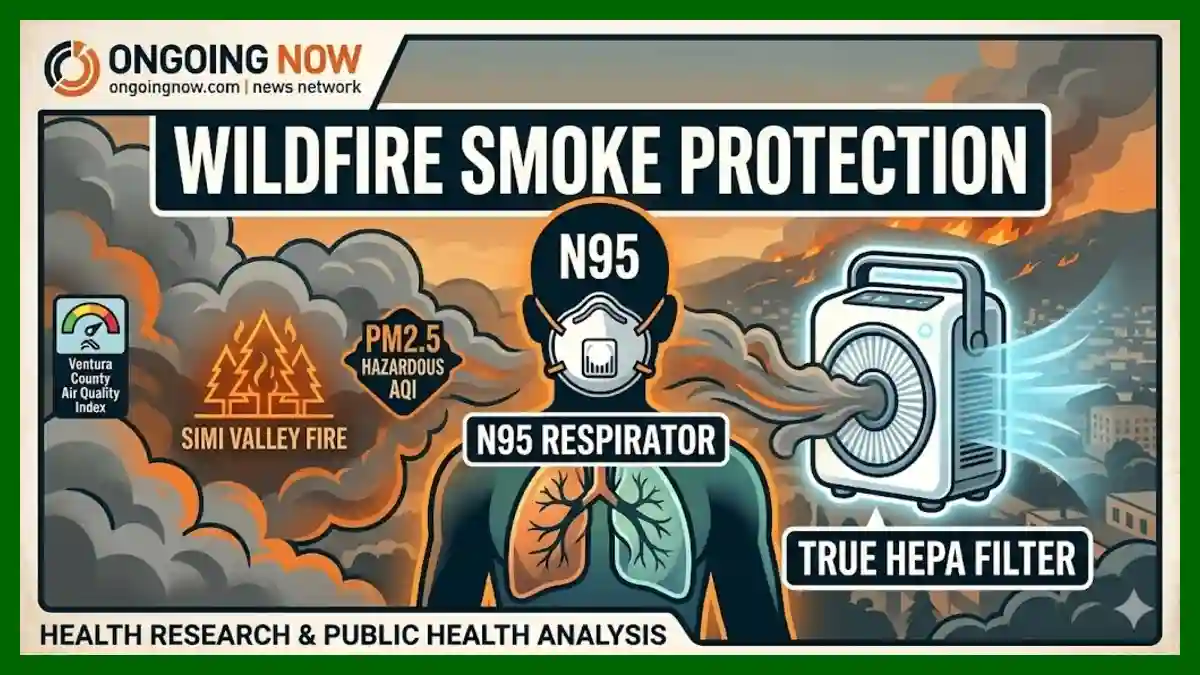
The health implications of wildfire smoke inhalation are a growing concern for public health agencies, particularly as changing climate patterns accelerate the frequency and intensity of regional brush fires. When a major blaze erupts—such as the fast-moving Sandy Fire in Simi Valley, which quickly burned over 180 acres and triggered mandatory evacuations—the immediate impact extends far beyond the perimeter of the flames. Mass clouds of gray smoke can quickly blanket nearby communities, causing a rapid shift in the local Ventura County air quality index today and challenging standard respiratory defenses. Understanding how to mitigate exposure through validated filtration systems, protective masks, and early recognition of clinical symptoms is vital for preserving long-term pulmonary health.
According to the U.S. Environmental Protection Agency (EPA) and the California Air Resources Board (CARB), wildfire smoke is a complex mixture of gases and fine particulate matter, specifically $PM_{2.5}$ (particles with a diameter of 2.5 micrometers or smaller). These micro-particles are small enough to bypass the upper respiratory tract’s natural filtration mechanisms, penetrating deep into the lung alveoli and potentially entering the bloodstream. Public health officials at the Ventura County Air Pollution Control District (VCAPCD) monitor these shifts carefully, using the Air Quality Index (AQI) to guide community interventions. When conditions deteriorate, institutions in neighboring areas, such as Pepperdine University Calabasas air safety compliance teams, rely heavily on real-time data to protect student and faculty populations from regional plumes.
Tracking Local Atmospheric Threats and Plume Trajectories
Evaluating the immediate respiratory risk during a brush fire requires a precise analysis of wind patterns, fuel loads, and real-time atmospheric tracking. The Simi Valley smoke forecast map serves as an essential tool for public health officials to project where the highest concentrations of fine particulate matter will migrate. Because brush fires involve the combustion of diverse materials—including chaparral, dry grasses, and structural elements—the resulting smoke contains a toxic blend of carbon monoxide, volatile organic compounds (VOCs), and nitrogen oxides, alongside heavy particulate loads.
[Clean Newsroom Grid: Regional Air Pollution Monitoring Metrics]
+------------------------------------+----------------+---------------------------+
| Region / Monitoring Zone           | Primary Source | Key Tracking Pollutants   |
+------------------------------------+----------------+---------------------------+
| Simi Valley and Moorpark           | Sandy Fire     | PM2.5, Carbon Monoxide    |
| Conejo Valley (Thousand Oaks)      | Plume Drift    | PM2.5, Coarse Particulates|
| Coastal Plain (Ventura/Oxnard)     | Marine/Smoke   | Ozone, PM2.5 Intercept    |
| Calabasas / Western LA County      | Corridor Draft | PM2.5, Volatile Organics  |
+------------------------------------+----------------+---------------------------+
*Note: Data tracking is subject to sudden shifts in low-level marine layer boundaries and wind velocity.*
The migration of these plumes means that communities miles away from the active containment zone can experience sudden, dangerous spikes in their localized air quality index. When a fire spreads with a rapid rate of advance, the thermal column pushes ash and fine particulates high into the atmosphere, where mid-level winds transport the debris across valley corridors. For residents in close proximity, tracking these patterns via official agency tools is the first line of defense against severe environmental exposure.
Clinical Analysis of Fine Particulate Inhalation Pathology
The physiological response to smoke exposure is swift and can escalate from acute irritation to severe respiratory distress if intervention is delayed. A comprehensive understanding of wildfire smoke inhalation symptoms treatment requires identifying how different particle sizes interact with human tissue. Coarse particles ($PM_{10}$) generally settle in the upper airway, causing immediate discomfort such as throat irritation, coughing, and nasal congestion. In contrast, the much smaller $PM_{2.5}$ fractions escape these barriers completely.
“Smoke and ash from wildfires contain very small particles that can harm the lungs and heart. The particles can cause coughing, wheezing, breathing difficulty, chest pain, nausea and, in severe instances, premature death,” states the formal clinical guidance from the Ventura County Air Pollution Control District.
For individuals with pre-existing conditions—such as asthma, chronic obstructive pulmonary disease (COPD), or cardiovascular disease—this exposure can provoke profound inflammatory responses. The fine particulates cause localized oxidative stress in the lung tissues, which can trigger bronchospasms, suppress the pulmonary immune system, and increase vulnerability to secondary bacterial or viral infections. Clinical treatment protocols prioritize removing the individual from the smoke source, administering supplemental oxygen if needed, and utilizing bronchodilators to alleviate acute airway constriction under medical supervision.
Evidence-Based Strategies for Internal Air Preservation
When external conditions reach hazardous levels on the AQI, public health agencies recommend sheltering in place and establishing a dedicated “clean-air room” within the home. Learning how to protect lungs from brush fire smoke involves isolating indoor environments from the highly polluted outdoor atmosphere. This process requires sealing windows and doors tightly while avoiding any internal activities that could add further particulates to the air, such as cooking with gas, burning candles, or vacuuming without specialized filtration.
To maintain safe indoor air quality during prolonged smoke events, building mechanics and home ventilation systems must be adjusted. If central HVAC systems are present, they should be set to “recirculation mode” to prevent pulling smoky air from the outside. Additionally, upgrading residential HVAC filters to a Minimum Efficiency Reporting Value (MERV) rating of 13 or higher can substantially improve the system’s ability to trap fine particulates, provided the system’s fan is kept running continuously rather than on an automatic cycle.
Mechanical Air Filtration Options for Domestic Environments
Portable air cleaning devices are highly effective tools for reducing indoor particulate concentrations during a wildfire crisis. Identifying the best HEPA filters for wildfire smoke involves selecting units that feature authentic, True HEPA certification, which guarantees the mechanical removal of at least 99.97% of airborne particles as small as 0.3 micrometers. These systems rely on a dense mat of randomly arranged fibers to capture particles through interception, impaction, and diffusion mechanisms.
[Clean Newsroom Grid: Portable Filtration Performance Comparison]
+-----------------------------------+-------------------+-------------------------+
| Filter Classification             | Efficiency Rating | Targeted Pollutants     |
+-----------------------------------+-------------------+-------------------------+
| True HEPA Certified               | 99.97% at 0.3 µm  | PM2.5, Ash, Fine Smoke  |
| MERV 13 (HVAC Integration)        | >85% (1.0-3.0 µm) | Dust, Smoke Residue     |
| Standard Carbon Pre-Filter        | Gas Adsorption Only| Volatile Gases, Odors   |
| Low-MERV Fiberglass Filter        | <20% (<3.0 µm)    | Large Dust, Lint Only   |
+-----------------------------------+-------------------+-------------------------+
*Caveat: Performance depends heavily on proper room sizing, regular filter replacement, and sealed boundaries.*
When deploying an indoor air purifier for ash and smoke, the clean air delivery rate (CADR) must match or exceed the square footage of the room it is intended to safeguard. For maximum efficacy against wildfire smoke, a dual-stage system is optimal: a True HEPA filter to capture the solid particulate matter and an activated carbon stage to adsorb the accompanying toxic gases and odors. Devices that rely solely on ionization should be avoided, as they can produce ozone, a secondary respiratory irritant that can worsen pulmonary symptoms.
Validated Personal Protective Equipment for Outdoor Mobility
Standard surgical masks, paper dust masks, and cloth face coverings offer virtually no protection against the hazardous $PM_{2.5}$ particles found in wildfire smoke. These options lack the specialized filtration material and the secure facial seal necessary to prevent fine particulates from bypassing the mask entirely. For necessary outdoor tasks or evacuation scenarios, a properly fitted, NIOSH-approved N95 mask for wildfire smoke protection is the established public health standard.
             +-----------------------------------------+
             |   NIOSH-APPROVED N95 RESPIRATOR FIT     |
             +-----------------------------------------+
             |  [x] Dual Tight Head Straps             |
             |  [x] Malleable Metal Nose Clip Sealed   |
             |  [x] Form-Fitted Edges Against Skin     |
             |  [x] Zero Gaps Around Cheeks or Chin    |
             +-----------------------------------------+
To function correctly, an N95 respirator must be fitted tightly against the wearer’s face, ensuring that all inhaled air is drawn through the specialized electrostatically charged filter medium. Gaps caused by facial hair, incorrect strap placement, or improper molding of the nose bridge will cause air to leak around the edges, severely reducing the mask’s protective value. Because these respirators increase the effort required to breathe, individuals with compromised lung function should monitor their comfort levels closely and consult a healthcare provider regarding prolonged use.
Societal and Public Health Dimensions of Air Quality Crises
The broader impact of regional brush fires extends past immediate medical emergencies, shaping public infrastructure, educational operations, and community resilience. When a wildfire plume compromises air safety, local institutions must react immediately to safeguard vulnerable populations. School districts, universities, and local employers face complex operational decisions regarding closures, remote transitions, and the cancellation of outdoor athletic events to minimize community exposure.
These crises also highlight significant socioeconomic disparities in public health vulnerability. Access to high-efficiency indoor air purifiers, replacement HEPA filters, and proper respiratory protection is often limited for lower-income households. Furthermore, outdoor workers—including agricultural laborers and construction crews—frequently face sustained occupational exposure during prolonged smoke events. Addressing these gaps requires coordinated efforts from local health departments to establish clean-air shelters and distribute approved personal protective equipment widely.
Institutional Responses and Long-Term Pulmonary Protection
The structural response to wildland fires demonstrates how environmental conditions dictate institutional policies. When the Sandy Fire disrupted areas near Simi Valley, emergency operations teams at regional campuses immediately activated air safety monitoring frameworks to determine whether building ventilation systems needed to switch to isolation modes. These coordinated responses show that protecting public health during an air quality crisis requires a combination of real-time environmental tracking, proper building mechanics, and clear personal protective strategies.
By utilizing high-efficiency indoor filtration, wearing validated respiratory protection when outdoors, and tracking plume trajectories through official forecast maps, individuals can reduce their intake of fine particulate matter. As fire seasons become more prolonged and intense, maintaining a prepared home environment and understanding the physiological indicators of smoke inhalation remain central pillars of preventive health and respiratory wellness.
Stay sharp with Ongoing Now!
—
Source and Data Limitations: This guide is based on real-time environmental data and incident updates from May 18, 2026, provided by CAL FIRE, the Ventura County Fire Department, and the Ventura County Air Pollution Control District (VCAPCD). Clinical statements regarding particulate matter health impacts and personal protective guidelines are sourced from the U.S. Environmental Protection Agency (EPA), the California Air Resources Board (CARB), and official public health safety materials. This article evaluates general health and air filtration strategies for informational purposes and does not constitute personalized medical advice; individuals experiencing severe respiratory symptoms should seek immediate professional medical attention.