Ibogaine Heart Risk Factors: Why Clinical Safety Matters
High-efficacy addiction recovery requires balancing the neurobiological reset hypothesis with rigorous monitoring of ibogaine heart risk factors.
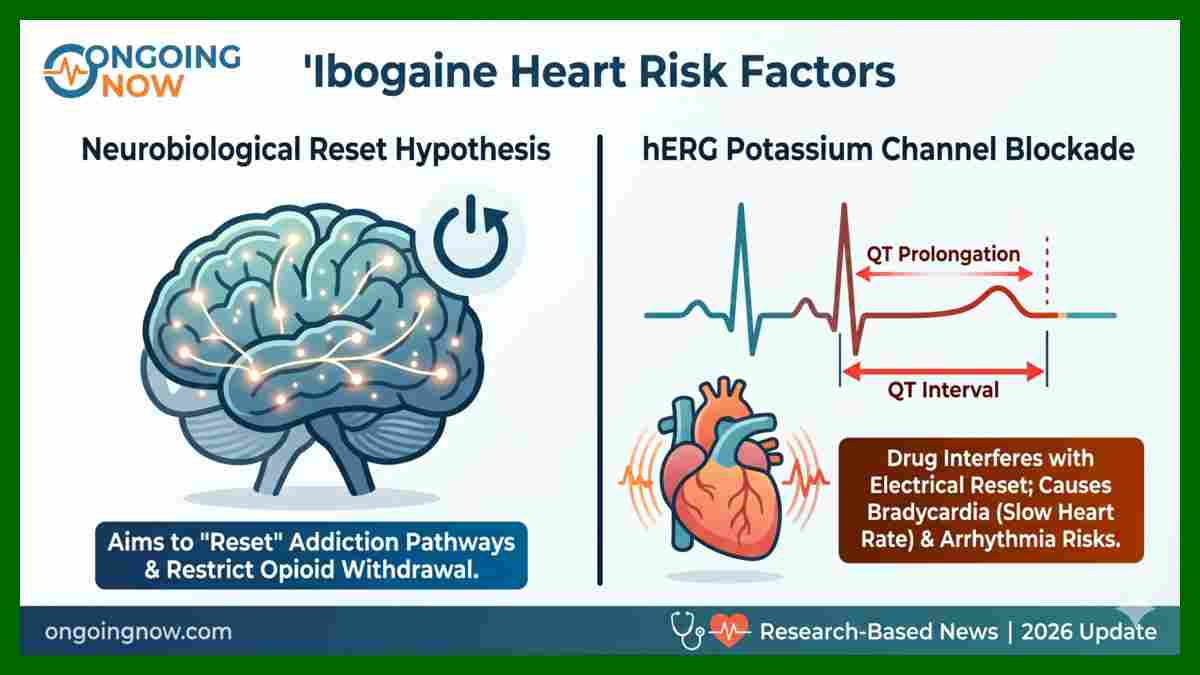
The clinical application of ibogaine for substance use disorders is currently defined by a sharp contrast between its profound efficacy and its significant physiological risks. Research into the neurobiological reset hypothesis suggests that ibogaine facilitates a rapid “clearing of the slate” by modulating multiple neurotransmitter systems, including serotonin, dopamine, and NMDA receptors, which can lead to a dramatic reduction in opioid withdrawal symptoms. However, this therapeutic potential is constrained by ibogaine heart risk factors, specifically its tendency to cause ibogaine QT prolongation and bradycardia (a slowed heart rate). Understanding these risks requires a look at ibogaine pharmacology explained through the lens of the hERG potassium channel blockade, where the drug interferes with the heart’s electrical repolarization. As of 2026, the medical community emphasizes that the cardiotoxic effects of iboga must be managed through strict clinical protocols, including CYP2D6 genotyping and continuous cardiac monitoring, to ensure patient safety.
Within the evolving landscape of psychedelic medicine, clinicians often find themselves comparing ibogaine and ketamine therapy or evaluating ibogaine versus psilocybin treatment to determine the best psychedelic for opioid withdrawal. While natural vs synthetic psychedelics each offer unique benefits, ibogaine remains the most effective addiction psychedelic for rapid detoxification due to its unique mechanism of action addiction treatment pathways. However, the safety profile differs significantly from other substances; for instance, the differences between iboga and ayahuasca involve vastly different cardiovascular stressors, and MDMA vs ibogaine for PTSD research highlights that while MDMA is more predictable, ibogaine offers a deeper structural reorganization of high-beta brain networks. As psychedelic therapy options 2026 expand following recent executive actions in the United States, the focus has shifted toward developing safer analogues and “MISTIC” protocols that use magnesium to mitigate the risk of fatal arrhythmias.
The hERG Mechanism and Cardiovascular Risks
The primary safety concern with ibogaine involves its interaction with the human ether-à-go-go-related gene (hERG) potassium channels. These channels are essential for the repolarization phase of the cardiac action potential, which allows the heart to “reset” between beats. When a hERG potassium channel blockade occurs, the electrical recovery of the heart is delayed, leading to ibogaine QT prolongation. This delay increases the vulnerability to a potentially fatal heart rhythm known as Torsade de Pointes.
Research published in peer-reviewed journals clarifies why ibogaine causes bradycardia and other cardiotoxic effects of iboga. Unlike many stimulants that increase heart rate, ibogaine typically slows it down while simultaneously lengthening the electrical cycle. This combination creates a high-risk environment for patients with underlying conditions or those with specific genetic variations. Specifically, individuals with low CYP2D6 enzyme activity—the enzyme responsible for metabolizing the drug—may experience higher concentrations of ibogaine in their system for longer periods, significantly increasing the likelihood of adverse cardiac events.
The Neurobiological Reset Hypothesis Explained
Despite the risks, the neurobiological reset hypothesis remains a cornerstone of ibogaine research. Unlike traditional treatments that merely manage symptoms, ibogaine is theorized to return the brain’s neurochemistry to a pre-addicted state. This “reset” is not just psychological; it involves the restoration of communication between neurological pathways and changes in neural plasticity.
Evidence from recent observational studies shows that ibogaine can lead to significant improvements in PTSD and depression symptoms by reorganizing high-beta brain networks. In controlled medical settings, researchers have utilized magnesium supplements to stabilize the heart, allowing patients to experience the “reset” without the full weight of the cardiotoxic effects of iboga. This approach has shown sustained benefits for up to 12 months in veterans struggling with traumatic brain injuries and chronic opioid dependence.
Key Evidence: Comparing Psychedelic Safety and Efficacy
The following table compares ibogaine with other prominent psychedelic therapies currently used or researched for addiction and mental health.
| Therapy Type | Primary Use Case | Cardiovascular Risk Level | Duration of Session |
| Ibogaine | Opioid/Cocaine Detox | High (hERG Blockade) | 24–36 Hours |
| Ketamine | Depression / Anxiety | Low to Moderate | 40–60 Minutes |
| Psilocybin | Depression / End-of-Life | Very Low | 4–6 Hours |
| Ayahuasca | Emotional / Trauma | Moderate (MAOI interaction) | 4–8 Hours |
| MDMA | PTSD | Moderate (Stimulant effects) | 3–5 Hours |
Why Ibogaine Causes Bradycardia and Arrhythmia
The pharmacology of ibogaine is uniquely complex. While most psychedelics primarily target the 5-HT2A serotonin receptor, ibogaine acts as a “multitarget” molecule. This approach is why it is considered the most effective addiction psychedelic—it simultaneously interacts with opioid receptors to stop withdrawal and dopamine receptors to restore the reward system.
However, this same complexity is responsible for its dangers. The ibogaine pharmacology explained in medical literature highlights that the drug blocks voltage-gated ionic currents in the heart. This leads to bradycardia, where the heart rate drops significantly. When combined with a prolonged QT interval, the heart can enter a state of electrical chaos. Clinical reports have documented historical deaths related to these factors, emphasizing that treatment must never occur in a non-medical “underground” setting.
Analysis: Comparing Ibogaine with Ketamine and Psilocybin
When comparing ibogaine and ketamine therapy, the differences in patient experience and biological impact are stark. Ketamine acts as an NMDA receptor antagonist, providing rapid but often temporary relief from depression and cravings. It typically requires multiple sessions over several weeks. In contrast, ibogaine is administered as a single, high-dose “flood” intended to provide a long-term shift.
Similarly, ibogaine versus psilocybin treatment reveals a difference in therapeutic depth. Psilocybin is renowned for its ability to induce mystical experiences that change a person’s outlook on life, but it does not possess the same physical “detox” properties as ibogaine. For an individual in the throes of acute opioid withdrawal, psilocybin may offer psychological insight but will not stop the physical symptoms of withdrawal in the way that ibogaine’s interaction with opioid receptors can.
Practical Guidance for Clinical Safety
For those considering psychedelic therapy options 2026, safety must be the non-negotiable priority. Modern medical protocols for ibogaine treatment now include:
Comprehensive Pre-Screening: Full EKG/ECG, stress tests, and blood panels to check liver and kidney function.
Genetic Testing: Identifying CYP2D6 “poor metabolizers” who are at higher risk for toxicity.
Electrolyte Management: Using magnesium and potassium to stabilize the cardiac membrane during treatment.
In-Patient Monitoring: 24/7 medical supervision with emergency equipment on standby.
The differences between iboga and ayahuasca also highlight why medicalization is necessary for the former. While ayahuasca ceremonies are often held in retreat settings, the unique ibogaine heart risk factors necessitate a hospital-grade environment. Ayahuasca primarily affects the serotonin system and, while physically demanding, does not typically carry the same risk of sudden cardiac arrest found with ibogaine.
Broader Public Health Context and Future Directions
The rise of the opioid crisis has led to renewed interest in the drug’s ability to act as a potent interrupter for addiction. The goal for 2026 and beyond is the development of non-hallucinogenic, non-cardiotoxic ibogaine analogues. These synthetic compounds aim to retain the “reset” properties of the original molecule while removing the hERG potassium channel blockade.
Until such alternatives are widely available, the current medical consensus remains firm: ibogaine is a powerful tool for addiction recovery, but only when the heart is protected by rigorous clinical oversight. The benefit-risk ratio suggests that for individuals with severe opioid use disorder who have failed traditional treatments, the risk of a fatal overdose on the street may be higher than the risk of a cardiac event during a medically supervised ibogaine session.
Stay sharp with Ongoing Now!
Source and Data Limitations: This article is based on peer-reviewed research from PubMed, PMC, and bioRxiv (2024–2026), including studies on hERG channel inhibition and the MISTIC protocol for veterans. Cardiovascular risk data is sourced from the Multidisciplinary Association for Psychedelic Studies (MAPS) and the National Institute on Drug Abuse (NIDA). Factual claims regarding QT prolongation and bradycardia are supported by established pharmacological consensus. This content does not constitute medical advice; all psychedelic treatments should be conducted under the supervision of qualified medical professionals.