Hidden Triggers of Culex Mosquito Symptoms Spark New Public Health Warn
Tracking the geographic distribution of Culex mosquitoes and understanding severe neurological signs of West Nile virus transmission.
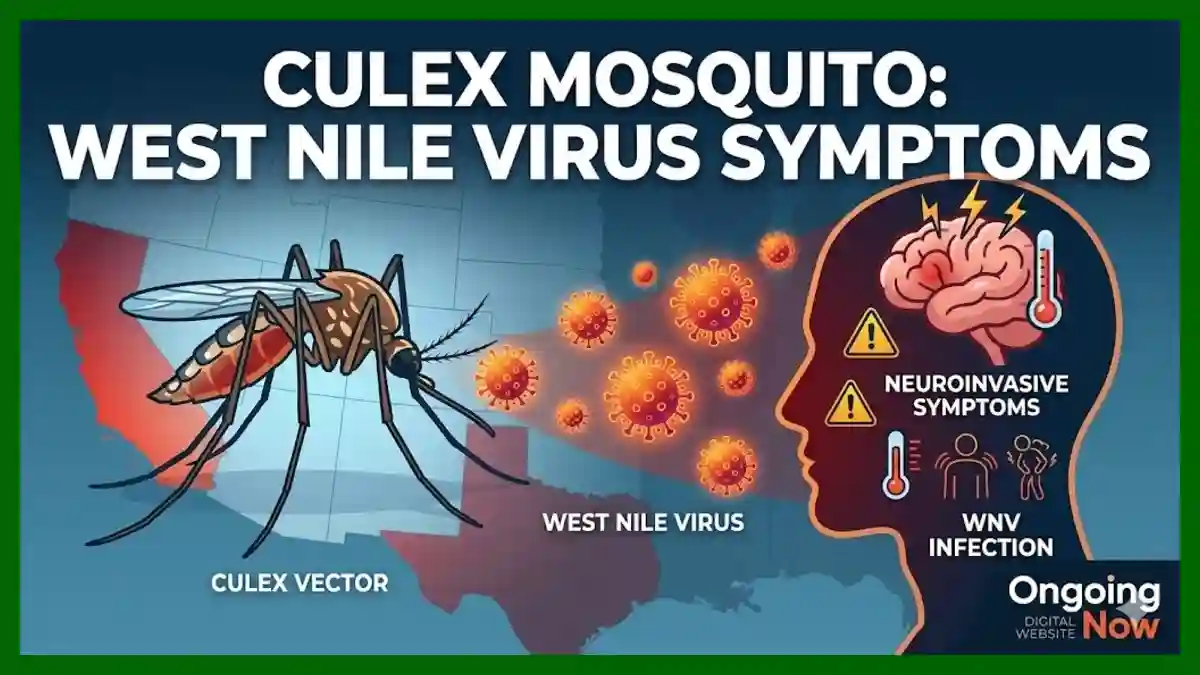
Culex Mosquito West Nile Virus Symptoms
The global landscape of vector-borne infectious disease demands constant clinical and epidemiological surveillance. In the United States, tracking culex mosquito west nile virus symptoms represents a pillar of seasonal public health monitoring. Understanding the physiological effects of West Nile virus (WNV) infection helps differentiate mild, self-limiting febrile illnesses from severe neuroinvasive diseases. Epidemiological data indicates that roughly 80% of individuals infected with WNV remain completely asymptomatic. However, for the remaining 20%, the onset of symptoms can be sudden, marked by fever, headache, body aches, joint pains, vomiting, diarrhea, or rash.
Less than 1% of infected individuals develop neuroinvasive WNV, which manifests as encephalitis (inflammation of the brain) or meningitis (inflammation of the membranes surrounding the brain and spinal cord). The clinical presentation of neuroinvasive disease includes high fever, neck stiffness, stupor, disorientation, coma, tremors, convulsions, muscle weakness, vision loss, numbness, and acute flaccid paralysis. This paralytic syndrome mimics poliomyelitis and can cause rapid, life-threatening respiratory failure. Recovery from neuroinvasive WNV can take several months, and neurological deficits may become permanent.
Current medical protocols focus entirely on supportive care, as there are no specific antiviral treatments or human vaccines available for WNV. For patients with severe cases, clinical management involves hospitalization, intravenous fluids, respiratory support, and prevention of secondary infections. Neurological monitoring is crucial during the acute phase of infection, as cerebral edema and seizures require immediate intervention. Public health agencies emphasize that recognizing early symptoms and understanding individual risk levels remain vital for preventing severe clinical outcomes.
Mosquito Borne Disease Transmission California
The western United States experiences sustained seasonal viral activity, making mosquito borne disease transmission california a primary focus for state and local epidemiologists. The California Department of Public Health (CDPH) works alongside local agencies to monitor viral circulation in wild bird populations, sentinel chicken flocks, and mosquito pools. California’s unique geography, which includes vast agricultural valleys, urban centers, and wetlands, provides ideal breeding environments for vectors. Warm ambient temperatures accelerate the extrinsic incubation period of the virus within the insect, leading to higher transmission rates during the late summer and early autumn months.
Environmental factors significantly influence the amplification cycle of WNV in California. The virus is maintained in a natural transmission cycle between Culex mosquitoes and avian hosts, particularly corvids like crows, jays, and magpies. When environmental temperatures rise, the rate of viral replication inside the mosquito increases, allowing the insect to transmit the virus sooner after feeding on an infected bird. This temperature-dependent acceleration can lead to sudden spikes in human infections, especially in areas where urban developments interface with natural waterways or agricultural zones.
In addition to climate factors, human behavior and infrastructure design play major roles in localized transmission dynamics. Suburban neighborhoods with neglected swimming pools, improperly maintained irrigation systems, or open rain barrels create micro-habitats that support rapid vector reproduction. Public health mapping reveals that socio-economic factors and neighborhood infrastructure age can correlate with higher vectors counts and elevated infection risks. Consequently, state-wide surveillance programs utilize advanced geographic information systems (GIS) to track dynamic risks and deploy resources to high-probability zones before human cases cluster.
St Louis Encephalitis Virus Prevention
While West Nile virus commands significant public health attention, co-circulating flaviviruses also require structured control strategies. Implementing st louis encephalitis virus prevention protocols is essential because St. Louis encephalitis virus (SLEV) shares the same Culex vector species and exhibits a similar clinical spectrum to WNV. Prior to the introduction of WNV to North America in 1999, SLEV was the primary cause of epidemic viral encephalitis in the United States. Because both viruses circulate concurrently in many ecosystems, public health laboratories utilize specialized serological testing, such as plaque reduction neutralization tests (PRNT), to accurately differentiate between WNV and SLEV infections.
Preventing SLEV requires an integrated pest management approach that combines larval control, adult mosquito suppression, and public education. Because Culex mosquitoes are vectors for both SLEV and WNV, suppression efforts designed for one virus effectively mitigate the risk of the other. Public health campaigns focus on encouraging residents to eliminate standing water around homes, repair broken window screens, and avoid outdoor activities during peak vector biting times. On a municipal scale, surveillance involves testing mosquito pools for both viral RNAs using reverse transcription-polymerase chain reaction (RT-PCR) essays.
The clinical differentiation between SLEV and WNV is important for long-term epidemiological tracking, even though individual patient management remains supportive for both diseases. SLEV infections are historically associated with higher rates of neuroinvasive disease in older adults, whereas WNV neuroinvasive disease can occur across a broader age spectrum, though risk increases with age and immunosuppression. Understanding the subtle shifts in viral dominance within local mosquito populations allows municipal health departments to adjust their communication strategies and direct vector control assets to areas showing elevated SLEV activity.
Biological Vector Control Public Health
Modern integrated vector management relies on scientifically sound, environmentally sustainable strategies. Utilizing biological vector control public health methodologies helps suppress vector populations without relying exclusively on chemical adulticides or larvicides. One of the most widespread biological interventions is the deployment of Gambusia affinis, commonly known as mosquitofish. These surface-feeding fish are introduced into self-contained, non-natural water bodies, such as neglected swimming pools, ornamental ponds, and livestock watering troughs, where they consume mosquito larvae before they can mature into biting adults.
+-----------------------------------------------------------------------+
|                INTEGRATED VECTOR MANAGEMENT STRATEGY                  |
+-----------------------------------------------------------------------+
|                                                                       |
|  [ Surveillance ] ----> Detects viral activity in mosquito pools       |
|          |                                                            |
|          v                                                            |
|  [ Biological Control ] --> Employs Gambusia affinis in static water   |
|          |                                                            |
|          v                                                            |
|  [ Source Reduction ] ----> Eliminates localized standing water        |
|          |                                                            |
|          v                                                            |
|  [ Chemical Control ] ----> Targeted adulticiding during high risk    |
|                                                                       |
+-----------------------------------------------------------------------+
Beyond larvivorous fish, public health researchers are increasingly utilizing advanced biological tools, such as the introduction of Wolbachia bacteria into wild mosquito populations. Wolbachia is a naturally occurring bacterium found in many insect species; when introduced into specific vector species, it can interfere with viral replication inside the insect or induce cytoplasmic incompatibility, which significantly reduces the hatching success of mosquito eggs. Additionally, the use of Bacillus thuringiensis israelensis (BTI), a naturally occurring soil bacterium, serves as a highly targeted biological larvicide. BTI produces toxins that specifically destroy the midgut cells of mosquito larvae, leaving non-target aquatic organisms unharmed.
The integration of biological controls into municipal frameworks requires careful ecological oversight to prevent unintended disruptions to local food webs. For instance, Gambusia affinis must never be introduced into natural streams, rivers, or protected wetlands, as they can outcompete native fish and amphibian species. Instead, vector control technicians restrict their use to isolated, artificial water sources. By combining these targeted biological approaches with traditional physical source reduction, public health districts reduce overall chemical reliance, minimizing the selective pressure that leads to insecticide resistance in urban mosquito populations.
How to Prevent West Nile Virus Bites
Individual protective behaviors form the final line of defense against vector-borne pathogens. Educating communities on how to prevent west nile virus bites involves explaining the correct use of insect repellents, wearing protective clothing, and modifying personal environments. The Centers for Disease Control and Prevention (CDC) recommends using repellents registered with the Environmental Protection Agency (EPA) that contain active ingredients verified for efficacy against Culex species. These approved active ingredients include DEET, picaridin, oil of lemon eucalyptus (OLE), para-menthane-diol (PMD), or IR3535.
| Active Ingredient | Recommended Concentration | Average Protection Duration | Key Application Note |
| DEET | 20% – 30% | 5 – 8 Hours | Do not apply under clothing or on broken skin. |
| Picaridin | 20% | 6 – 8 Hours | Odorless, less likely to irritate skin or damage plastics. |
| Oil of Lemon Eucalyptus (OLE) | Pure / Formulated | 4 – 6 Hours | Not recommended for children under 3 years old. |
| IR3535 | 15% – 20% | 4 – 6 Hours | May irritate eyes; safe for fabric application. |
Note: Protection durations vary based on environmental humidity, physical exertion, and individual sweat rates. Reapplication should follow product label instructions precisely.
Proper application techniques are essential for maintaining repellent efficacy. Repellents should be applied evenly to exposed skin and the outside of clothing, avoiding the eyes, mouth, and open wounds. When using sunscreen alongside insect repellent, guidelines state that sunscreen should be applied first, allowed to dry completely, followed by the application of the repellent. To maximize physical protection, individuals should wear loose-fitting, long-sleeved shirts and long pants, as Culex mosquitoes can bite through tight fabrics. Treating outdoor gear and clothing with permethrin provides an additional layer of durable protection that survives multiple wash cycles.
California Mosquito Abatement District Safety
Localized suppression efforts are institutionalized through dedicated regional frameworks. Operating under strict regulatory oversight, a california mosquito abatement district safety protocol ensures that public health interventions do not compromise community safety or environmental health. These specialized districts are public entities tasked with monitoring and controlling mosquitoes within defined geographic boundaries. They employ certified vector control technicians who conduct regular property inspections, manage automated trapping networks, and execute precise larval and adult control measures in compliance with state and federal environmental protection laws.
To ensure safety during chemical applications, districts utilize Ultra-Low Volume (ULV) fogging technologies. ULV applications release extremely fine droplets of adulticide into the air, which remain suspended to contact flying mosquitoes. The droplet size is strictly calibrated—often between 8 and 30 microns—to maximize target insect mortality while minimizing the amount of chemical settling on surfaces or impacting non-target wildlife like honeybees. Furthermore, districts typically schedule these applications during late evening, night, or early morning hours, aligning with the peak flight activity of Culex mosquitoes and minimizing direct human exposure.
       [ Regional Trapping Network ]
                    |
                    v
       [ Mosquito Pool Viral Assay ]
                    |
      +-------------+-------------+
      |                           |
      v                           v
[ Negative Pool ]           [ Positive Pool ]
      |                           |
      v                           v
Continue Surveillance       Deploy Targeted ULV Fogging
Transparency and community communication are foundational elements of modern abatement district operations. Before executing an adulticide application, districts are legally required to provide advance public notification via online maps, email alerts, and local news outlets. This allows residents, particularly those with chemical sensitivities or commercial apiaries, to take basic precautions such as closing windows, turning off outdoor ventilation systems, or covering beehives. Abatement districts also offer free services to property owners, including site inspections to locate cryptic breeding sources and the distribution of biological control agents like mosquitofish.
Geographic Distribution Culex Mosquitoes US
Effective public health infrastructure requires an understanding of vector habitats across large areas. The geographic distribution culex mosquitoes us spans nearly every region of the United States, though different species dominate distinct ecological zones. The two primary vectors of West Nile virus in North America are Culex pipiens and Culex tarsalis. Culex pipiens, often referred to as the northern house mosquito, is widely distributed across the northern and eastern United States, thriving in urban and suburban environments where it utilizes nutrient-rich stagnant water, such as caught basins and sewage systems, for larval development.
In contrast, Culex tarsalis is the dominant vector throughout the western United States, including the Central Valley of California, the Great Plains, and arid southwestern regions. This species is highly adaptable and breeds successfully in agricultural wastewater, irrigated crops, tailwater ponds, and natural freshwater marshes. A third significant species, Culex quinquefasciatus (the southern house mosquito), dominates the southern tier of the country, stretching from Florida through Texas to Southern California. This species exhibits behavioral patterns similar to Culex pipiens, focusing its biting activity on birds and mammals in densely populated urban centers.
Understanding these regional shifts in species distribution is essential for designing effective vector control programs. Culex tarsalis is an aggressive biter that searches for hosts over long distances, frequently flying several miles from its larval development sites into suburban areas. Culex pipiens and Culex quinquefasciatus tend to remain closer to their urban larval habitats, resting in shaded vegetation, carports, and residential doorways during the heat of the day. Mapping these distinct behavioral profiles allows public health agencies to customize their trapping methodologies and adjust the placement of structural barriers or treatment zones.
Medical Cost West Nile Virus Treatment
The financial implications of vector-borne disease outbreaks present a substantial burden to individuals and healthcare systems. Analyzing the medical cost west nile virus treatment reveals that neuroinvasive cases incur severe long-term expenditures that extend far beyond initial hospitalization. Economic evaluations published in peer-reviewed journals indicate that a single case of neuroinvasive West Nile virus resulting in acute flaccid paralysis or severe encephalitis can generate direct medical costs ranging from hundreds of thousands to over one million dollars over a patient’s lifetime.
+------------------------------------------------------------------------+
|                ESTIMATED LIFETIME COST PER PATIENT                     |
+------------------------------------------------------------------------+
|                                                                        |
|  [ Initial ICU Hospitalization ] ---------> $50,000 - $150,000         |
|                                                                        |
|  [ Inpatient Physical Rehabilitation ] ---> $30,000 - $80,000          |
|                                                                        |
|  [ Outpatient Therapy & Equipment ] ------> $20,000 - $50,000 / year   |
|                                                                        |
|  [ Long-Term Lost Productivity ] ---------> Variable ($200k - $500k+)  |
|                                                                        |
+------------------------------------------------------------------------+
For non-neuroinvasive West Nile fever, direct medical expenditures are lower but still significant, often involving emergency department evaluations, extensive diagnostic lab work to rule out other infections, and lost productivity due to prolonged fatigue. However, when the virus breaches the blood-brain barrier, costs escalate due to the need for intensive care unit (ICU) monitoring, mechanical ventilation, prolonged inpatient physical rehabilitation, and long-term outpatient neurological care. These financial realities underscore the cost-effectiveness of public funding for municipal mosquito abatement districts, as the economic investment required for proactive surveillance and larval control is significantly lower than the cumulative medical and societal costs of a widespread human epidemic.
Stay sharp with Ongoing Now!
Source and Data Limitations: This article is based on epidemiological data, public health guidelines, and clinical reports from the Centers for Disease Control and Prevention (CDC), the California Department of Public Health (CDPH), and peer-reviewed journals including The American Journal of Tropical Medicine and Hygiene. Data regarding the geographic distribution and behavior of Culex species reflects established entomological consensus up to 2026. Financial metrics regarding treatment costs are based on peer-reviewed economic evaluations of US West Nile virus outbreaks. This content is for informational and educational purposes only and does not constitute personalized medical advice. Individuals experiencing symptoms should consult a qualified healthcare professional.