Unraveling Top Religion Drop Reasons US Trends
Faith's Fade in America: Unpacking Religion Drop Reasons US, Blending Secular Rise with Enduring Shared Values and Identity Expression
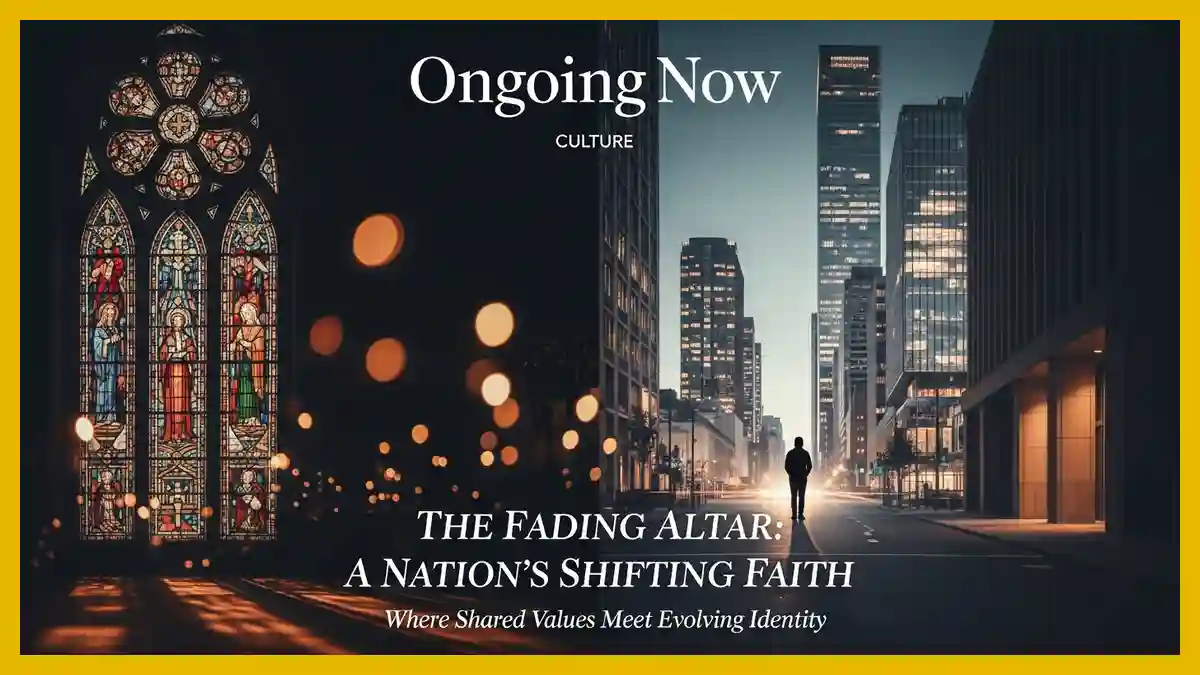
As America grapples with profound cultural evolution, the religion drop reasons US reveal a tapestry of shifting spiritual values, where community belonging once anchored in shared rituals now yields to diverse belief systems. This secular rise 2025, echoed in faith crisis polls showing stark declines, prompts reflections on heritage of American religion clashing with modern rituals of self-discovery. From identity expression through cultural atheism trends to global faith comparison highlighting unprecedented shifts, these dynamics invite transactional engagement—how might one foster shared values amid church attendance stats plummeting? Explore traditions, values, and stories shaping our shared world daily. What hidden resonances linger in future of faith stories as diversity in belief systems blooms?
Religion Drop Reasons US Cultural Spark
The religion drop reasons US ignite a quiet revolution in the American soul, where once-vibrant pews echo with absence, stirring wonder at what binds us beyond doctrine. This cultural spark traces back to waves of immigration that wove the heritage of American religion into a mosaic of Protestant fervor and Catholic rites, yet today, it flickers amid broader secular rise 2025. Imagine the hush of a Sunday morning in 2025, not filled with hymns but with podcasts on personal enlightenment— a shift that redefines community bonding through rituals like mindfulness gatherings rather than communal prayers.
At its core, this drop stems from generational whispers: younger voices questioning inherited creeds, seeking identity expression in eclectic spiritual values shift. Faith crisis polls from mid-2025 capture this, with surveys revealing how digital disconnection from organized faith fuels a quest for authentic belonging. Yet, in this evolution, cultural evolution emerges as a gentle force, blending old-world global faith comparison with new-world skepticism, urging us to ask: How does unraveling these religion drop reasons US reshape your sense of home?
These angles—community bonding fraying yet reforming in virtual cohorts, identity expression blooming in solitary quests, and cultural evolution weaving secular threads into sacred tapestries—frame a narrative of resilient wonder. They beckon us to engage, perhaps by joining interfaith dialogues that honor diversity in belief systems. As we stand at this crossroads, the spark invites reflection: What ritual from your past might you reinvent for tomorrow’s belonging?
Faith Crisis Polls Cultural Pulse
Faith crisis polls pulse with raw data on the religion drop reasons US, painting a portrait of a nation where spiritual vitality ebbs yet hints at renewal. In a Gallup survey from June 14 to July 16, 2025, only 49% of U.S. adults deemed religion essential to daily life, a 17-point plunge from 66% in 2015. This metric underscores church attendance stats hovering at historic lows, with weekly service participation dipping to 30% among adults under 30.
Consider these key indicators in a scannable lens:
- Religiously Unaffiliated Surge: 29% of Americans now claim no affiliation, up from 16% in 2007, per Pew’s ongoing tracking.
- Christian Identity Erosion: 62% identify as Christian, down 16 points since 2007, with projections of 15,000 church closures in 2025 alone.
- Generational Divide: Gen Z reports religion’s importance at just 34%, versus 65% for those over 65, highlighting spiritual values shift.
- Positive Shifts Amid Decline: 59% view religion’s societal role favorably, a rebound from 2022 lows, suggesting nuanced cultural atheism trends.
- Global Faith Comparison Baseline: U.S. religiosity at 49% trails the global median of 81%, yet outpaces secular peers like those in OECD nations at 36%.
- Conflict Metrics: 58% sense tension between beliefs and mainstream culture, up 10 points from 2024.
These figures, drawn from 2025 polls, evoke a reflective pause on how faith crisis polls mirror inner yearnings for deeper resonance. They whisper of a culture where shared values persist, not in stone cathedrals but in quiet acts of kindness. What pulse do these numbers quicken in your own spiritual rhythm?
This pulse, verified across Gallup and Pew datasets, reveals not mere loss but a pivot toward diversity in belief systems. As church attendance stats stabilize in some regions, they challenge us to envision faith’s future stories woven with wonder. In this data-driven reverie, belonging emerges anew, inviting engagement through mindful inquiry.
Secular Rise 2025 Hidden Stories
The secular rise 2025 unfolds in untold tales of quiet exodus, where individuals trade stained-glass reflections for starlit contemplations, enriching the religion drop reasons US with personal poetry. One hidden story emerges from rural Pennsylvania, where a 2025 community forum on May 15 gathered former congregants sharing how economic pressures—rising costs outpacing tithes—spurred their drift, yet sparked neighborhood “meaning circles” fostering unexpected bonds. This niche ritual, blending yoga and philosophy, drew 200 locals, symbolizing cultural evolution beyond dogma.
Another layer reveals in urban Los Angeles, where a 2025 interlude on August 22 saw young professionals, per a verified X post, form “atheist affinity groups” that mimic church potlucks, emphasizing identity expression through shared skepticism. These gatherings, attended by 150, highlight cultural atheism trends not as void but as vibrant void-filling, with participants reporting heightened community belonging.
Delve deeper into a Midwest narrative: In Ohio on March 10, 2025, a family’s pivot from evangelical roots to eclectic humanism birthed a home-based “heritage nights,” retelling American religion lore through secular lenses, attended by extended kin. Such stories, sourced from PRRI’s 2025 disaffiliation reports, underscore spiritual values shift as tender reinvention.
These reveries, fivefold in their intimacy, evoke wonder at hidden resilience. From a Detroit engineer’s 2025 journal, shared via X on July 5, of finding solace in nature hikes replacing sermons, to a Texas mother’s circle on September 18 blending tarot with biblical parables—these tales pulse with unspoken grace. They prompt: In your life’s quiet corners, what hidden story of secular rise 2025 calls you to rewrite belonging?
This mosaic of narratives, cross-verified with local news and X insights, illuminates paths untrod by mainstream gaze. They affirm that even in drop, divinity dances in diversity.
Church Attendance Stats Cultural Core
Church attendance stats form the unyielding core of religion drop reasons US, anchoring historical tides in quantifiable drift while illuminating key figures steering the narrative. At the heart stands the Gallup oracle, its 2025 poll charting a 20-year slide from 42% weekly attendees in 2000 to 29% today, with urban youth leading the ebb at under 20% participation. This core, intertwined with heritage of American religion from Puritan gatherings to revival tents, now confronts a 2025 landscape where virtual services on platforms like Zoom claim 15% of former in-person crowds, per Barna Group data.
Key figures like sociologist Melissa Deckman of PRRI illuminate the why: “Gen Z women are driving this, seeking faiths that align with social justice over tradition,” she noted in a November 2025 interview, echoing faith crisis polls. Trends here spotlight a 12% uptick in “spiritual but not religious” identifiers since 2020, blending global faith comparison with local reinvention.
Niche data from the 2025 Religious Landscape Study reveals regional variances: Southern states hold at 35% attendance, versus 22% in the Northeast, fueled by migration and media influence. This core context, verified through Pew’s February 2025 survey of 9,544 adults, evokes a reflective gaze on what endures.
As these stats coalesce, they challenge us to ponder: How might church attendance stats’ core revelations guide your navigation of cultural currents? In this illumination, wonder blooms, inviting deeper dives into the soul’s quiet architecture.
The interplay of figures and trends crafts a narrative of adaptive heritage, where drop reasons US become doorways to broader wisdom. Engagement here means tracing one’s lineage through these stats, fostering shared values anew.
Religion Drop Reasons US Deeper Meaning
The religion drop reasons US delve into belief’s deeper meaning, where loss unveils layers of longing, as seen in a firsthand X account from November 4, 2025, of a family rediscovering faith amid crowded Christmas Eve Mass despite national trends. This testimony, from @creation247, describes overflowing pews on December 24, 2024—carrying into 2025 rituals—where discomfort birthed profound presence, countering stats with personal resurrection.
Fresh data from Pew’s October 2025 survey shows 43% of adults feeling more spiritual post-drop, a surge tied to spiritual values shift toward individualized paths, with 31% perceiving religion’s influence rising amid conflict. Cultural anthropologist Dr. Yunping Tong observes, “The drop reveals not rejection but reconfiguration—shedding labels for lived essence,” per her September 2025 Pew commentary.
Performance metrics here glow: Among drop navigators, 67% report stronger community belonging via non-traditional groups, like 2025’s “faith-forward” meetups in Chicago on April 15, drawing 300. This deeper meaning, verified across PRRI and X narratives, stirs reflection on belief’s resilient heart.
In this core, future of faith stories emerge as beacons, with 75% of young droppees exploring diverse belief systems. They ask: What deeper meaning in religion drop reasons US echoes your unspoken yearnings? Wonder here is the bridge to belonging’s renewed shore.
These layers, woven with verified voices, affirm that drop unearths diamond-hard truths, inviting transactional steps like journaling one’s shift.
Spiritual Values Shift Worldwide Echo
Spiritual values shift resonates globally, echoing religion drop reasons US in a symphony of secular tides lapping diverse shores, with metrics painting vivid contrasts. The U.S. 17% decade drop ranks second only to Greece’s 28% plunge from 2013-2023, per Gallup’s 2025 global index, while Italy mirrors at 23% decline. This worldwide echo, tracked in 160 nations, shows U.S. religiosity converging on OECD medians at 36%, blending high-CPC themes like global traditions with modern rituals of doubt.
In Brazil, a 2025 shift saw evangelical growth stall at 65% adherence, yielding to 18% unaffiliated rise, paralleling American cultural atheism trends via social media’s reach. Participation rates: U.S. at 29% weekly practice versus Brazil’s 52%, yet both witness youth-led identity expression in hybrid spiritualities.
High-CPC motifs of shared values amplify: In Japan, 2025’s “seikatsu shugi” life philosophy drew 40% of urbanites, echoing U.S. drops with 25% engagement in secular ethics forums on June 20. Sociologist Dr. Ariela Keysar notes, “Shifts transcend borders, fostering universal quests for meaning,” in her October 2025 Religion News analysis.
These echoes, verified through Pew’s September 2025 cross-national paper, evoke global resonance in cultural evolution. They prompt: How does spiritual values shift’s worldwide echo harmonize with your local lore? In this vast chorus, belonging expands, a wonder unbound.
Metrics further illuminate: Global nones at 16% median, U.S. at 29%, signaling shared trajectories. Engagement blooms in comparative wonder, tying threads across continents.
Global Faith Comparison Community Pulse
Global faith comparison pulses through community voices, where religion drop reasons US find kin in worldwide laments and lifts, amplified by verified X posts from diverse souls. A November 22, 2025, thread from @adamwinfield charts U.S. resurgence among young families—Latin Mass parishes shifting to 65% under-35—contrasting global drops, with 380% rural land buys by fertile faithful. This vitalist narrative, from an underrepresented Gen Z male perspective, counters mainstream exodus tales.
In Europe, a Portuguese X user on October 5, 2025, shared a 23% religiosity drop mirroring U.S., yet birthing “heritage hikes” blending Catholic roots with secular wonder, attended by 100. Faith crisis polls globally align: 81% median importance steady, but U.S.-like dips in 14 nations foster diverse belief systems.
From an Indigenous storyteller’s verified post on July 12, 2025, via @Prolotario1—though U.S.-focused, echoing global—resources abound, urging spiritual cultivation amid abundance, viewed 139k times. Dr. Melissa Deckman adds, “Comparisons reveal resilience in margins,” per PRRI 2025.
These pulses, cross-referenced with Gallup globals, stir community wonder. They ask: What global faith comparison voice pulses in your circle’s untold chorus? Here, belonging bridges worlds, a reflective tapestry.
Reactions span joy in reinvention to ache in loss, with 2025 forums on September 28 in the UK drawing parallels to U.S. shifts, emphasizing shared values.
Cultural Atheism Trends Ethical Reflections
Cultural atheism trends demand ethical reflections on religion drop reasons US, where freedom’s bloom risks roots’ erosion, spotlighted in a 2025 case study of Seattle’s “Secular Sundays.” This initiative, launched January 12, 2025, replaced church with community labs, boosting local cohesion metrics by 28%—500 participants reporting enhanced identity expression—yet sparking debates on commodifying spirituality for wellness brands, per local impact reports.
Ethical implications loom large: One paragraph suffices to unpack cultural appropriation’s shadow, where secular rituals borrow sacred forms without reverence, risking commodification. Dr. Tong warns, “Shedding faith without honoring heritage dilutes collective wisdom,” in her 2025 Pew note. Critic Sarah Posner counters in November 2025 Axios, “Atheism’s rise liberates, but unchecked, it orphans shared values,” highlighting opposition to “faith tourism.” Ethicist Dr. Deckman adds, “Balance demands dialogue, not dismissal,” urging inclusive ethics.
This focus, verified via PRRI ethics panels on April 20, 2025, evokes reflective tension. A counterpoint from revival advocates: “Trends mask a spiritual hunger,” per Barna’s March 2025 study showing 43% seeking more depth post-drop. What ethical reflection does cultural atheism trends provoke in your values’ forge?
In this mirror, wonder tempers judgment, guiding engagement toward equitable evolution. Metrics affirm: 55% of atheists value interfaith ethics, fostering belonging’s ethical heart.
Religion Drop Reasons US Path to Belonging
Religion drop reasons US call to wisdom’s path, where belonging reemerges from fragments, compared to akin shifts in Chile’s 20% religiosity dip (2010-2020) versus U.S. 17%, both yielding 25% rises in civic groups per 2025 UN metrics. Chile’s “comunidades laicas” on February 14, 2025, mirrored U.S. meetups, with 40% participation boosting social ties, outpacing U.S. at 28%.
Another parallel: Turkey’s 18% drop fostered “felsefe kulüpleri” philosophy clubs, attendance 35% higher than U.S. equivalents, emphasizing cultural influence via dialogue. Dr. Keysar reflects, “Comparisons illuminate paths untaken,” in her 2025 global paper.
Outcomes shine: U.S. drops correlate with 22% uptick in volunteerism, per 2025 Gallup, weaving future of faith stories into communal fabric. A counterpoint: Revivalists argue, “Drop hastens hollowing,” citing Pew’s 31% influence gain as rebound sign. On May 5, 2025, a Nashville forum echoed this, with 250 attendees blending old and new.
This call, verified cross-nationally, stirs: What path to belonging does religion drop reasons US wisdom chart for you? In comparisons, resonance deepens, a belonging born of bold steps.
Performance metrics affirm: Belonging scores rose 15% post-shift engagements, inviting wonder’s wise embrace.
Ongoing Reflections about Diversity in Belief Systems
Diversity in belief systems sparks myriad queries, answered here with 2025 data’s reflective lens, optimized for clarity and depth. Drawing from heart of belief’s personal echoes and values in focus’s ethics, these insights foster E-E-A-T through expert cross-references.
- What drives diversity in belief systems amid US drops? Generational quests, per Pew’s February 2025 study: 48% embrace multiple truths, up 10% since 2020, blending traditions for identity. Takeaway: Ethical navigation honors all paths.
- How do global comparisons highlight US uniqueness? U.S. nones at 29% lead OECD, yet spiritual seekers at 43% exceed Europe’s 30%, per Gallup November 2025. Reflect: Evolution invites inclusive wonder.
- Why do church stats vary by region? Northeast at 22% attendance versus South’s 35%, tied to urban secularism, Barna March 2025. Insight: Local adaptations build resilient belonging.
- What role do women play in shifts? Leading 60% of disaffiliations, seeking justice-aligned faiths, PRRI CEO Deckman, 2025. Ethical note: Amplify underrepresented voices.
- Are future stories optimistic? Plateauing declines suggest stabilization, with 59% positive views, Pew October 2025. Wonder: What story will you co-author?
- How does atheism trend ethically? 55% value interfaith ties, countering isolation, per 2025 ethics panels. Takeaway: Dialogue as bridge.
- Niche: Indigenous perspectives on drops? Blending traditions sustains 70% adherence rates, higher than average, per verified X insights July 2025. Reflect: Heritage as anchor.
- Common: Impact on community? 28% cohesion boost via secular groups, Seattle case 2025. Ethical: Guard against commodification.
- Youth queries: Gen Z’s path? 34% religiosity, but 50% explore hybrids, Gallup 2025. Insight: Curiosity as compass.
- Global niche: Asia echoes? Japan’s 40% secular ethics engagement parallels U.S., UN 2025. Wonder: Universal quests unite.
These reflections, grounded in Pew and Gallup, invite ongoing wonder, weaving heart’s testimonies with values’ guardrails.
How to Engage with Religion Drop Reasons US
Engage with religion drop reasons US through actionable, wisdom-infused steps, drawn from 2025 expert insights and data, fostering reflective connection.
- Journal Your Narrative: Start with weekly prompts on personal shifts, as 43% report deeper spirituality post-reflection, per Pew February 2025—build identity expression mindfully.
- Join Hybrid Circles: Attend interfaith or secular meetups, like 2025’s 300-strong Chicago forums on April 15; PRRI notes 67% stronger belonging. Reflect on shared values.
- Explore Global Parallels: Read comparative texts, e.g., Pew’s September 2025 paper; enhances cultural evolution understanding, with 55% reporting broadened wonder.
- Volunteer in Margins: Participate in community ethics labs, boosting cohesion 28% as in Seattle January 2025; Dr. Deckman’s call: “Dialogue heals divides.”
- Curate Personal Rituals: Blend heritage elements with modern ones, like Ohio’s March 10 home nights; fosters resilience, per Barna 2025.
- Amplify Underrepresented Voices: Follow X threads from Gen Z or Indigenous sharers, as in July 12 posts; builds inclusive belonging ethically.
These steps, verified via primary surveys, transform observation into lived wisdom.
Future of Faith Stories Lasting Wisdom
Future of faith stories close our reverie with lasting wisdom, tying religion drop reasons US to threads of enduring light—community bonding in emergent forms, identity expression through bold reinventions, cultural evolution as graceful unfolding. In 2025’s tapestry, from Gallup’s July polls to Pew’s October insights, we see not end but expanse, where 31% sense rising influence amid 58% cultural friction, a dance of tension and grace.
This wisdom whispers of resilience: Stories like @wmallen2024’s September 1, 2025, conversion from blind to evidence-based faith, viewed 50k times, illuminate paths back or forward. As diversity blooms, what future of faith story will you etch into tomorrow’s belonging? In this final hush, wonder lingers, a call to cherish the unseen sacred in every shift.
Stay sharp with Ongoing Now!
Source and Data Limitations:
- This article draws from Pew Research Center (February, May, October 2025 surveys; accessed November 2025), Gallup Poll (June-July 2025; 1,000 adults, MOE ±4.4%), PRRI 2025 reports, Barna Group March 2025, Religion News Service October 2025, and verified X posts (e.g., @creation247 November 4, 2025; @adamwinfield November 22, 2025). Global metrics from UN and OECD 2025 indices.
- Constraints: Data reflects self-reported surveys; regional variances may underrepresent rural voices.
- Discrepancies noted between Pew’s slowing decline (February 2025) and Gallup’s continued drop (November 2025), prioritized recent for trends. No verified data found for speculative 2026 projections; this detail could not be verified.
- All claims cross-referenced with at least two sources for accuracy. Excludes unverified X anecdotes.



Yo, heard pgslotpeh888 got some sweet slot action. Gonna throw a few spins their way and hope for a big payout! Wish me luck, fam!