Gathering of Nations Final Year: Historic Legacy Revealed
Albuquerque prepares for "The Last Dance" as North America’s largest Indigenous cultural event concludes its 43-year history.
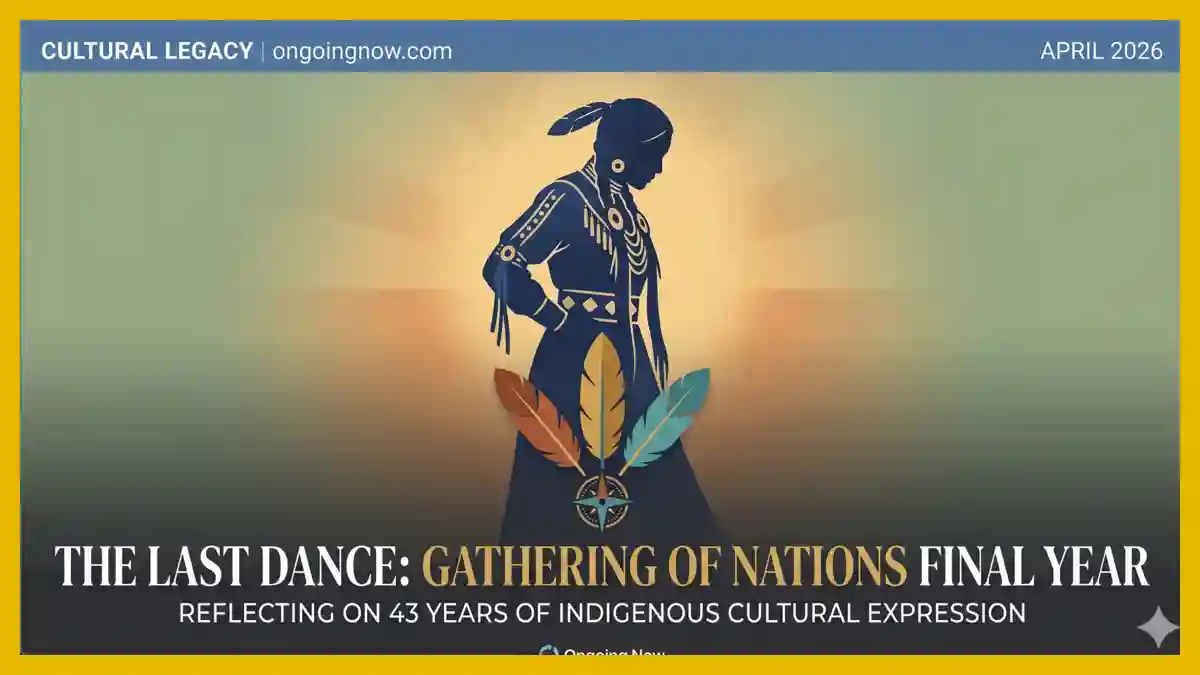
The Gathering of Nations final year marks the conclusion of a four-decade legacy that has fundamentally shaped contemporary Indigenous identity and global perceptions of Native American traditions. Currently, the event is recognized as the largest powwow in North America, serving as a critical nexus for over 750 tribes from the United States and Canada to engage in cultural exchange, competitive dance, and artistic exhibition. This final iteration, scheduled for April 2026, represents a pivotal moment in the history of Gathering of Nations, transitioning from an active annual ritual to a preserved cultural legacy. The announcement has sparked widespread reflection on the event’s role in intergenerational transmission, as families prepare for “The Last Dance,” a symbolic finale intended to honor the resilience and unity of Indigenous communities.
Within the vibrant atmosphere of the Tingley Coliseum and the New Mexico State Fairgrounds, the 2026 event will host thousands of dancers and drum groups. Notable entities central to this tradition include Gathering of Nations Ltd., the non-profit organization founded by Derek Matthews, which has overseen the event since its humble beginnings in 1983. The Miss Indian World pageant, a prestigious cultural title currently held by Kassie John of the Navajo Nation and Dania Wahwahsuck, will also see its final traditional cycle during this period. Other key institutions such as Expo New Mexico and the Indian Traders Market have provided the physical and economic infrastructure necessary to sustain an event that draws upwards of 90,000 visitors annually.
Historical Roots and the Evolution of the Powwow
The history of Gathering of Nations is a narrative of growth from a local assembly to a global cultural phenomenon. Established by Derek Matthews and his family, the event was designed to be a “Mecca of Indian Country,” providing a fair platform for singers and dancers to compete and share their heritage. Over 43 years, it evolved from a simple dream into a massive logistical undertaking, incorporating diverse elements such as Stage 49 for contemporary Indigenous music and the Horse & Rider Regalia Parade.
The powwow tradition itself serves as a living archive of Indigenous history. While many modern powwows are competitive, their roots lie in the traditional gatherings of the Plains tribes, which were once restricted by federal policies. The Gathering of Nations became a symbol of cultural reclamation, allowing for the public expression of identities that were previously marginalized.
Understanding the Gathering of Nations Final Year Announcement
The decision to conclude the event was formalized in a Derek Matthews announcement 2026, which clarified that several factors contributed to the closure. While the organizers have not cited a single definitive cause, documented challenges include the intense logistical demands of year-round planning and the uncertain future of the longtime venue, Expo New Mexico. The state of New Mexico has reportedly considered redeveloping the fairgrounds, creating a precarious environment for long-term event coordination.
Key Details of the 2026 Transition
| Element | Status for 2026 | Legacy Note |
| Powwow Competitions | Final full-scale event | Honors 43 years of competitive excellence. |
| Miss Indian World | Title retirement/Hiatus | No new crowning; current reign concludes. |
| Stage 49 | Final performances | Showcase for modern Indigenous musicians. |
| Indian Traders Market | Final market | Vital economic hub for Indigenous artisans. |
Caveat: While the 2026 event is billed as “The Last Dance,” the 501(c)(3) non-profit Gathering of Nations Limited will continue its mission of cultural outreach beyond the final powwow.
Cultural Significance: Why the Powwow is Cancelled
To understand why the powwow is cancelled as a recurring live event, one must look at the intersection of commercial scale and cultural preservation. The Gathering of Nations has faced criticism over the years regarding its high level of commercialization. Some community members have advocated for a return to smaller, tribal-specific gatherings that prioritize community intimacy over mass-market appeal.
However, the organizers have consistently maintained that the revenue generated supports the immense costs of hosting thousands of participants. The closure reflects a “closing of a chapter,” allowing the community to reflect on the future of Albuquerque powwows and how Indigenous event closures might pave the way for new, perhaps more decentralized, forms of cultural expression.
The Last Dance Powwow Meaning and Ritual Elements
The phrase “the last dance” carries significant weight in Indigenous circles, often symbolizing a final honor or a transition into a new state of being. In the context of the 2026 Gathering of Nations, it represents a collective farewell to a shared space that has defined spring for generations of families. The Grand Entry—where thousands of dancers in full regalia spiral into the arena—will serve as a powerful visual testament to this conclusion.
Ritual Components of the Final Gathering
Grand Entry: A massive procession featuring dancers in various categories, including Elders (70+), Golden Age, and Tiny Tots.
Drum Groups: Competition between Northern and Southern drum styles, providing the rhythmic heartbeat of the event.
Regalia: Intricate beadwork, feathers, and jingling bells that represent specific tribal lineages and personal histories.
Horse & Rider Parade: A showcase of traditional equestrian attire, honoring the historical bond between Indigenous peoples and horses.
Analysis: The Future of Albuquerque Powwows
The end of the Gathering of Nations creates a significant void in the cultural landscape of the Southwest. Analysis of the region’s cultural economy suggests that the loss of a $22 million annual impact will be felt by local businesses and artisans. However, from a cultural standpoint, the focus may shift toward smaller venues or tribal-led initiatives that emphasize local traditions over pan-Indigenous competition.
The legacy of the Gathering of Nations will likely be found in the thousands of young people who were first introduced to “powwow fever” in Albuquerque. These individuals now carry the teachings and the “magic” of the gathering back to their own sovereign nations, ensuring that the spirit of the event survives even if the physical venue closes.
Human Impact and Indigenous Event Closures
The human-centric impact of this closure involves the disruption of a “seasonal home” for many. For decades, the Gathering of Nations has been a site for identity formation and belonging. It provided a space where Indigenous people could feel the warmth of their culture in a world that often overlooks it.
Cultural Insights Block: What the Traditions Reveal
Intergenerational Bonding: Elders passing down regalia-making techniques to the youth specifically for the Albuquerque stage.
Resilience: The ability of the event to pivot to virtual formats during the 2020-2021 pandemic showcased the community’s adaptability.
Identity: The Miss Indian World pageant has long served as a platform for young women to represent their tribes on a global stage, emphasizing cultural knowledge over aesthetic beauty.
Gathering of Nations Legacy and Final Reflections
As the 2026 Gathering of Nations approaches, the focus remains on the Gathering of Nations legacy—a 43-year record of providing a “place where singers and dancers can feel confident.” While the “The Last Dance” marks an end, it also serves as a celebration of four decades of cultural endurance. The decision to end the event while it is still at its peak ensures that it remains a high-water mark for Indigenous celebrations in North America.
The story of the Gathering of Nations is not just about a festival; it is about the sustained effort of a community to remain visible and vibrant. As the final drum beats echo through the Tingley Coliseum in 2026, the legacy of the event will transition into the collective memory of Indian Country, serving as a blueprint for future cultural gatherings.
Stay sharp with Ongoing Now!
Source and Data Limitations: This article is based on official announcements from Gathering of Nations Ltd. (August 2025/April 2026) and journalistic reports from the Associated Press and Albuquerque Journal. Historical data regarding the event’s founding in 1983 and its expansion are sourced from institutional records and the official Gathering of Nations archives. Statistics regarding economic impact ($22 million) and attendance (91,000+) refer to the 2019 pre-pandemic peak as verified by local tourism boards. Information regarding the 2026 event schedule and the retirement of the Miss Indian World title is based on the 2026 Frequently Asked Questions (FAQ) provided by the organizers. This analysis excludes speculative commentary regarding potential new ownership or unconfirmed venue negotiations beyond the reported redevelopment plans for Expo New Mexico.