Holy Week 2026: Why Pope Leo XIV Rejects Global War
Pope Leo XIV addresses the Israel-Iran war impact on religion during Palm Sunday as Jerusalem holy sites face closures.
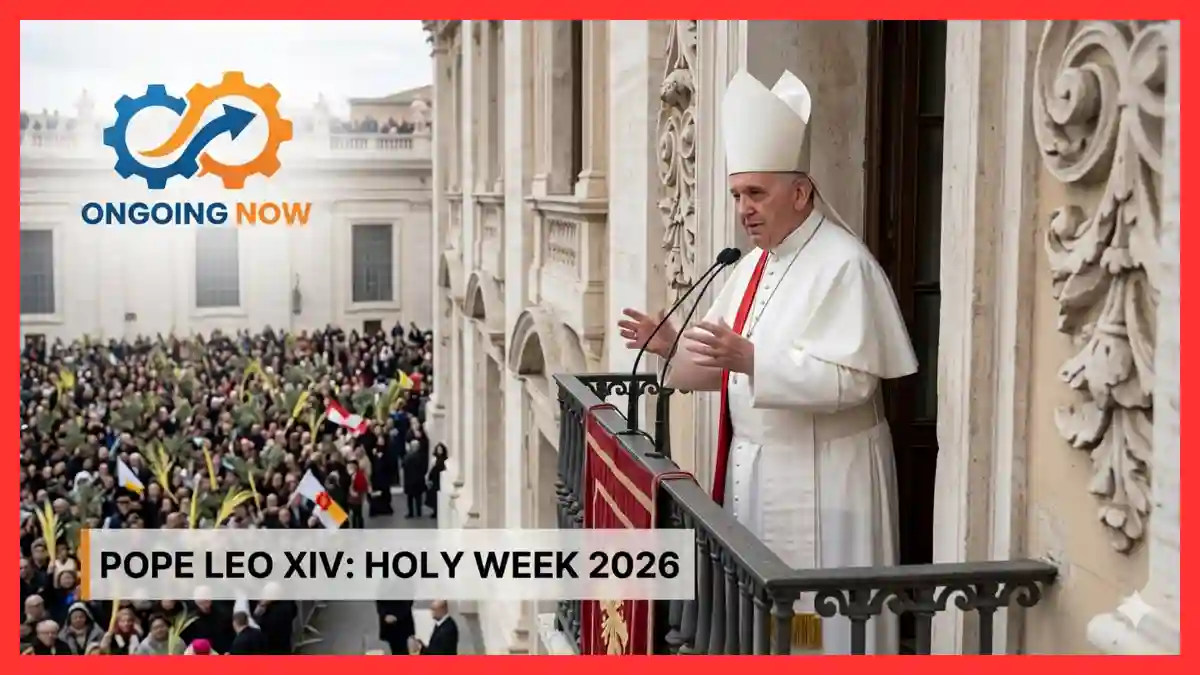
VATICAN CITY — Pope Leo XIV presided over Palm Sunday Mass on March 29, 2026, marking the commencement of Holy Week with a pointed rejection of the use of religion to justify global conflict. Addressing tens of thousands in St. Peter’s Square, the pontiff specifically highlighted the Israel-Iran war impact on religion, noting the severe disruptions to traditional rites in the Middle East.
The celebration, characterized by the traditional procession of palm and olive branches, took place against a backdrop of heightened regional tensions and the closure of major religious landmarks in Jerusalem. Vatican officials confirmed that the Pope’s health remains stable as he enters the most demanding period of the liturgical calendar, following his election in 2025.
Current reports indicate that the St. Peter’s Square attendance reached near-capacity levels, with pilgrims gathering to hear the papal peace message regarding the Iran war. Simultaneously, the Holy Week 2026 schedule faced unprecedented challenges in the Holy Land, where Jerusalem holy sites closed due to Old City security status alerts. Church leaders in the region have expressed concern over the Way of the Cross disruption and restricted Church of the Holy Sepulchre access, citing religious site safety as the primary driver for these measures.
Global Religious Rites Under Security Constraints
The escalation of the conflict between Israel and Iran has significantly altered the landscape of religious observance for the Catholic and wider Christian communities in 2026. For the first time in centuries, the traditional Palm Sunday procession in Jerusalem was canceled, leaving the Old City’s streets largely empty of the usual thousands of international pilgrims.
The Old City security status was elevated following missile fragments being located near holy sites, prompting the Israeli Home Front Command to enforce strict gathering limits. This move effectively shuttered the Church of the Holy Sepulchre and the Al-Aqsa Mosque to the public, impacting the simultaneous observances of Holy Week, Passover, and the aftermath of Ramadan.
Palm Sunday Attendance and Participation
| Location | Observed Event | Estimated Attendance / Status |
| St. Peter’s Square | Papal Mass | Tens of thousands; full capacity |
| Jerusalem Old City | Palm Sunday Procession | Canceled (Security protocols) |
| Holy Sepulchre | Liturgical Rites | Clergy only; closed to public |
| Monaco (March 28) | Papal Visit Mass | 15,000 (Stadium capacity) |
Note: Attendance figures in Vatican City remain consistent with previous years, whereas Holy Land participation has plummeted due to Middle East travel alerts 2026.
Papal Peace Message: A Theological Rejection of War
During his homily, Pope Leo XIV delivered a firm papal peace message concerning the Iran war, asserting that no divine authority can be invoked to sanction violence. “He does not listen to the prayers of those who wage war, but rejects them,” the Pope stated, according to verified transcripts from the March 29 service.
The pontiff’s remarks come at a time when political leaders have increasingly utilized religious rhetoric to frame the ongoing hostilities. By characterizing Jesus as the “King of Peace,” Leo XIV aimed to decouple faith from nationalist agendas, specifically mentioning the suffering of communities in the Middle East who are currently unable to “live the rites of these holy days.”
Analysis: Why Was Palm Sunday Canceled in Jerusalem?
The question of why was Palm Sunday canceled in its traditional home centers on a “manifestly unreasonable” security environment, according to the Latin Patriarchate. While the official reason cited is religious site safety and the prevention of mass gatherings during active missile alerts, the decision has drawn criticism from local religious leaders who view the total closure as a disproportionate measure.
Missile Proximity: Verified reports indicate missile debris fell within hundreds of meters of the Old City walls earlier in March 2026.
Home Front Command Mandates: Limits of 50 people for outdoor gatherings made the traditional procession of tens of thousands legally impossible.
Cross-Border Travel: Flight cancellations and regional travel alerts have reduced the influx of pilgrims, who typically form the bulk of the procession.
Holy Week 2026 Schedule and Security Updates
Despite the regional instability, the Vatican has maintained a full Holy Week 2026 schedule, emphasizing the resilience of the central Church leadership. Following Palm Sunday, the Pope is expected to preside over the Chrism Mass and the Mass of the Lord’s Supper on Holy Thursday, with the traditional Way of the Cross at the Colosseum remaining a key fixture.
In contrast, the Way of the Cross disruption in Jerusalem has forced local faithful to turn to digital and private devotions. The usual path along the Via Dolorosa is currently restricted to local residents and security patrols, with the Church of the Holy Sepulchre remaining under a “clergy-only” protocol.
Key Dates for Holy Week 2026
March 29: Palm Sunday (Mass in St. Peter’s Square)
April 2: Holy Thursday (Chrism Mass and Lord’s Supper)
April 3: Good Friday (Passion of the Lord; Way of the Cross at Colosseum)
April 4: Holy Saturday (Easter Vigil in St. Peter’s Basilica)
April 5: Easter Sunday (Urbi et Orbi Blessing)
Human Impact and the Religious Response to War
The religious response to war in 2026 has been defined by a focus on humanitarian aid and the preservation of community ties. In his address, Pope Leo XIV noted that “health cannot be a luxury for the few,” linking physical well-being and access to care directly to social peace. This human-centric approach seeks to address the “desensitization to the sight of violence” that often accompanies prolonged conflict.
For many Christians in the Middle East, the closure of holy sites is more than a logistical hurdle; it is a profound spiritual loss. Local residents in Jerusalem’s Old City report a sense of “silenced prayers,” as both the tolling of church bells and the call to prayer are overshadowed by the sounds of the ongoing conflict.
Comparative Insight: 2026 vs. Past Disruptions
The current level of restriction in Jerusalem draws direct parallels to the COVID-19 pandemic protocols of 2020-2021. However, analysts note a critical difference: while pandemic closures were based on public health, the 2026 closures are dictated by active military engagement and the Old City security status. This shift introduces a layer of geopolitical complexity that makes the reopening of sites contingent on a formal ceasefire rather than a decline in infection rates.
The Role of Pope Leo XIV in 2026
As the successor to Pope Francis, Pope Leo health 2026 has been a subject of frequent internal Vatican reporting. Having closed the Holy Year and convened multiple summits on global peace within his first few months, Leo XIV has established a pontificate centered on diplomatic intervention.
His decision to maintain a high-profile presence in St. Peter’s Square despite the regional chaos is seen as a signal of stability. By using the Vatican Palm Sunday platform to address the Israel Iran war impact religion, he has positioned the Holy See as a mediator that prioritizes the “Samaritan spirit”—a proactive, supportive stance toward those wounded by conflict, regardless of their nationality or creed.
Stay sharp with Ongoing Now!
Source and Data Limitations: This report is based on verified liturgical schedules and official statements from the Holy See Press Office and the Latin Patriarchate of Jerusalem as of March 29, 2026. Information regarding security closures in the Old City of Jerusalem is derived from Associated Press and Reuters reports on IDF Home Front Command mandates. All references to Pope Leo XIV’s health are based on official Vatican News updates. Limitations include the rapidly changing security environment in the Middle East, which may lead to sudden changes in the Holy Week schedule following the publication of this article. Speculative claims regarding the duration of the conflict or unverified casualties have been excluded to maintain editorial integrity.