WBC 2026 Championship: Venezuela’s Historic Rise
Venezuela secures its first championship with a 3-2 victory over Team USA behind a late Eugenio Suarez RBI double.
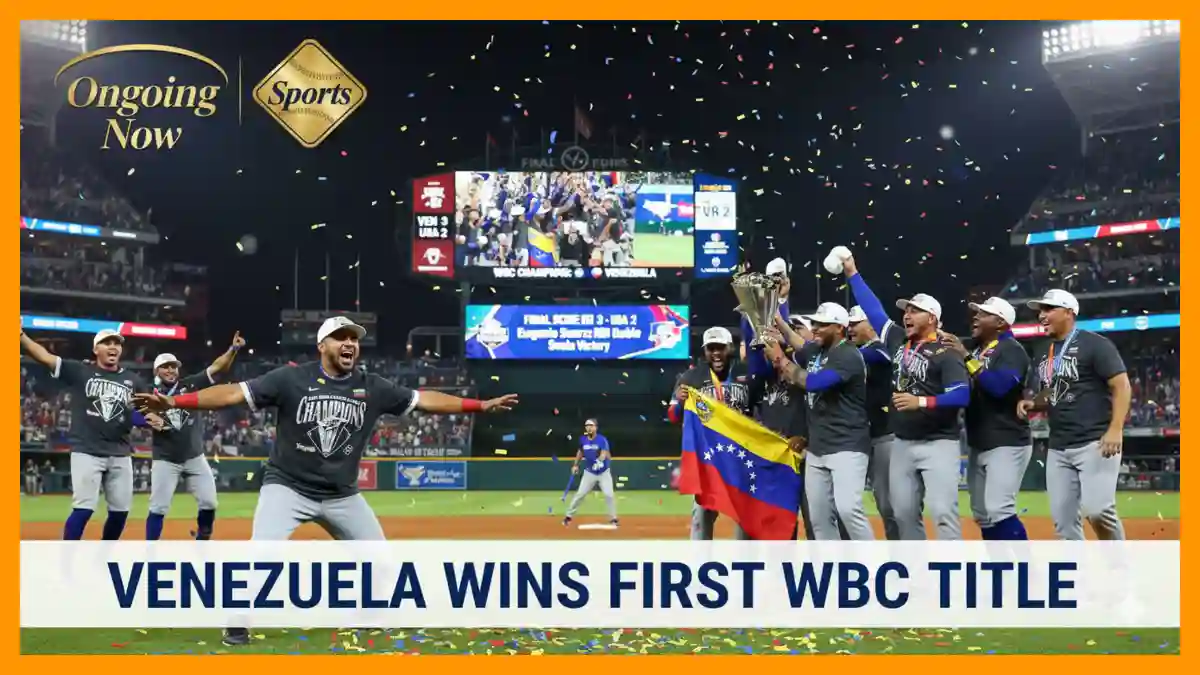
Venezuela became the first South American nation to secure a World Baseball Classic title on Tuesday, defeating the United States 3-2 in a contest defined by elite pitching and late-inning resilience. The victory at loanDepot Park was solidified by an Eugenio Suarez RBI double in the ninth inning, shortly after a dramatic Bryce Harper home run had briefly restored parity for the defending runners-up. This result concludes the WBC 2026 championship highlights with Venezuela joining Japan, the United States, and the Dominican Republic as the only nations to lift the trophy. The Team USA vs Venezuela box score reveals a stark disparity in offensive efficiency, as the Venezuelan staff limited a star-studded American lineup to just three total hits. Venezuela baseball world champions status was further cemented when infielder Maikel Garcia was named the World Baseball Classic MVP 2026 for his consistent performance across the seven-game tournament.
The final played out before a loanDepot Park final attendance of 36,190, a capacity crowd that witnessed a strategic duel between managers Mark DeRosa and Omar López. The Venezuela vs USA baseball results underscore a significant milestone for the “Vinotinto,” who had previously never advanced past the semifinals. For the United States, it marked a second consecutive silver finish after their 2023 loss to Japan. The game’s decisive sequence began in the top of the ninth when Luis Arraez drew a leadoff walk and pinch-runner Javier Sanoja stole second, setting the stage for Suarez’s heroics against reliever Garrett Whitlock.
Strategic Pitching Dominance in the WBC 2026 Championship Highlights
The narrative of the final was largely written by the Venezuelan pitching staff, led by starter Eduardo Rodriguez. Rodriguez, representing the Arizona Diamondbacks, provided 4 1/3 innings of one-hit, scoreless baseball, effectively neutralizing a lineup that included Aaron Judge, Bobby Witt Jr., and Kyle Schwarber. The American offense struggled to find a rhythm, failing to advance a runner past first base through the first seven innings of the contest.
Venezuela’s bullpen continued the suffocation, utilizing a rotation of Eduard Bazardo, José Buttó, and Ángel Zerpa to bridge the gap to the later innings. Although Andrés Machado surrendered the game-tying home run in the eighth, the resilience of the relief corps remained the backbone of the championship run. The United States staff, led by starter Nolan McLean, kept the game within reach, but the persistent pressure from Venezuelan baserunners eventually forced the defensive cracks that led to the deciding run.
Table: Team USA vs Venezuela Box Score Summary
| Metric | Venezuela (Winner) | United States |
| Final Score | 3 | 2 |
| Total Hits | 6 | 3 |
| Home Runs | 1 (Wilyer Abreu) | 1 (Bryce Harper) |
| Starting Pitcher | Eduardo Rodriguez (4.1 IP, 0 ER) | Nolan McLean (4.2 IP, 2 ER) |
| Winning Pitcher | Andrés Machado | Garrett Whitlock (Loss) |
| Save | Daniel Palencia | N/A |
| Total Strikeouts | 9 | 11 |
Note: Data reflects official scoring from the 2026 World Baseball Classic Final at loanDepot Park.
Impact of the Eugenio Suarez RBI Double and Late-Inning Adjustments
The game-winning moment arrived in the top of the ninth inning, following a high-tension eighth that saw the United States find their first signs of life. After pinch-runner Javier Sanoja reached second base via a successful stolen base, Eugenio Suarez faced a 3-2 count against Garrett Whitlock. Suarez connected with a changeup, driving a line drive into the left-center-field gap that allowed Sanoja to score comfortably from second.
Suarez’s contribution was the culmination of a tournament where he provided veteran stability for the Venezuelan lineup. The hit silenced the American section of the Miami crowd and restored a lead that had been erased only minutes prior. “Nobody believed in Venezuela, but now we won the championship today,” Suarez stated in a post-game interview. “This is a celebration for the whole Venezuelan country.” The ability of the Venezuelan hitters to immediately respond to the American comeback highlighted a mental fortitude that had also carried them through an 8-5 quarterfinal upset of Japan.
Bryce Harper Home Run and the American Offensive Struggle
For much of the evening, the United States lineup appeared stagnant, a point later emphasized by manager Mark DeRosa. The breakthrough finally occurred in the bottom of the eighth inning. With two outs and Bobby Witt Jr. on first base following a walk, Bryce Harper connected with a 149.7 km/h changeup from Andrés Machado. The 432-foot blast to center field tied the game at 2-2, providing a momentary surge of momentum for the home fans.
However, Harper’s home run was one of only two hits recorded by the American stars through the first eight frames. Aaron Judge finished the night 0-for-3 with three strikeouts, symbolizing a broader trend of missed opportunities for the U.S. squad. Despite leading the tournament in total strikeouts by a pitching staff (83), the American bats were unable to provide the necessary run support to defend their home turf.
“I’m not going to make excuses,” said Team USA manager Mark DeRosa. “For whatever reason, we just couldn’t get it rolling offensively. Even tonight, you look up in the seventh and they had a two-hit shutout. Hats off to them.”
Maikel Garcia as World Baseball Classic MVP 2026
The individual honors of the tournament belonged to Maikel Garcia, the Kansas City Royals third baseman who served as the offensive engine for Venezuela. Garcia finished the tournament with a .385 batting average, collecting 10 hits across seven games—the highest total of any player in the 2026 edition. His contributions were not limited to the final, as he had previously hit a vital two-run home run in the quarterfinal victory over Japan.
In the championship game, Garcia drove in the opening run with a sacrifice fly in the third inning, scoring Salvador Perez. His ability to produce situational hits in high-leverage moments separated him from a field of more established MLB superstars. Garcia’s MVP selection places him in an elite group of players including Shohei Ohtani (2023) and Marcus Stroman (2017), signaling his emergence as a premier talent on the international stage.
By the Numbers: Maikel Garcia’s Tournament Path
Batting Average: .385 (10-for-26)
Total RBIs: 7 (RBI in each of the final four games)
On-Base Percentage: .393
Slugging Percentage: .577
Key Moment: Go-ahead single in the 7th inning of the semifinal vs. Italy.
Global Standing and the Venezuela Baseball World Champions Legacy
The victory marks a transformative moment for Venezuelan baseball, a nation that has historically produced a high volume of MLB talent but had struggled to achieve collective success in international tournaments. Captain Salvador Perez, a veteran of four Classics, described the win as the pinnacle of his career, comparing the intensity to a World Series Game 7.
The triumph was particularly significant given Venezuela’s difficult path to the trophy. They were required to navigate a “bracket of death” that included victories over the defending champions, Japan, and an overachieving Italian squad. The final victory over the United States serves as a definitive statement regarding the depth of Venezuelan pitching, which was often viewed as a secondary strength behind their formidable hitting.
Attendance and Economic Footprint at loanDepot Park
The loanDepot Park final attendance of 36,190 reflects the sustained growth of the World Baseball Classic as a premier global sporting event. Throughout the 2026 tournament, the Miami venue served as the primary hub for the knockout rounds, hosting a total of 15 games. The atmosphere in the final was described by players as distinct from the standard Major League Baseball environment, characterized by constant percussion and nationalistic fervor.
The tournament as a whole saw a total attendance exceeding 1.3 million spectators, averaging over 28,000 per game across its four host cities. This economic and cultural engagement highlights the successful expansion of the WBC format, which featured 20 teams in 2026. For Miami, the event reinforced its status as the “Gateway to the Americas” for baseball, providing a neutral yet electric ground for the final showdown.
Historic Context of the Venezuela vs USA Baseball Results
By securing the 2026 title, Venezuela has altered the historical hierarchy of the World Baseball Classic. Entering the tournament, Japan remained the only multi-time champion, with the United States and Dominican Republic holding one title each. Venezuela’s ascent to the top of the podium prevents the U.S. from becoming the second nation to win multiple trophies and establishes South America as a championship-caliber region in the WBC era.
The long-term impact on the Venezuelan national team is expected to be profound. The government has already declared a national holiday to celebrate the achievement, and the success of younger stars like Maikel Garcia and Wilyer Abreu suggests a sustainable window of competitiveness for future iterations of the tournament. As the baseball world looks toward 2029, Venezuela enters the cycle not as a perennial underdog, but as the team to beat.
Stay sharp with Ongoing Now!
Source and Data Limitations: This report is based on verified results from the 2026 World Baseball Classic Final held on March 17, 2026. Data sources include official MLB tournament records, WBSC (World Baseball Softball Confederation) match reports, and post-game press transcripts from loanDepot Park. Statistical metrics for players such as Maikel Garcia and Bryce Harper were cross-referenced between CBS Sports and FOX Sports data feeds. Attendance figures are based on official venue statements from the Miami Marlins organization. This analysis excludes speculative reports regarding future player transfers or unconfirmed injuries following the conclusion of the final. Historical comparisons rely on established WBC data from 2006–2023.