The Dramatic Golden Boot Race Separating the 2026 World Cup Top Scorer
Kylian Mbappé and Lionel Messi command the tournament leaderboard with eight goals each ahead of the semi-finals.
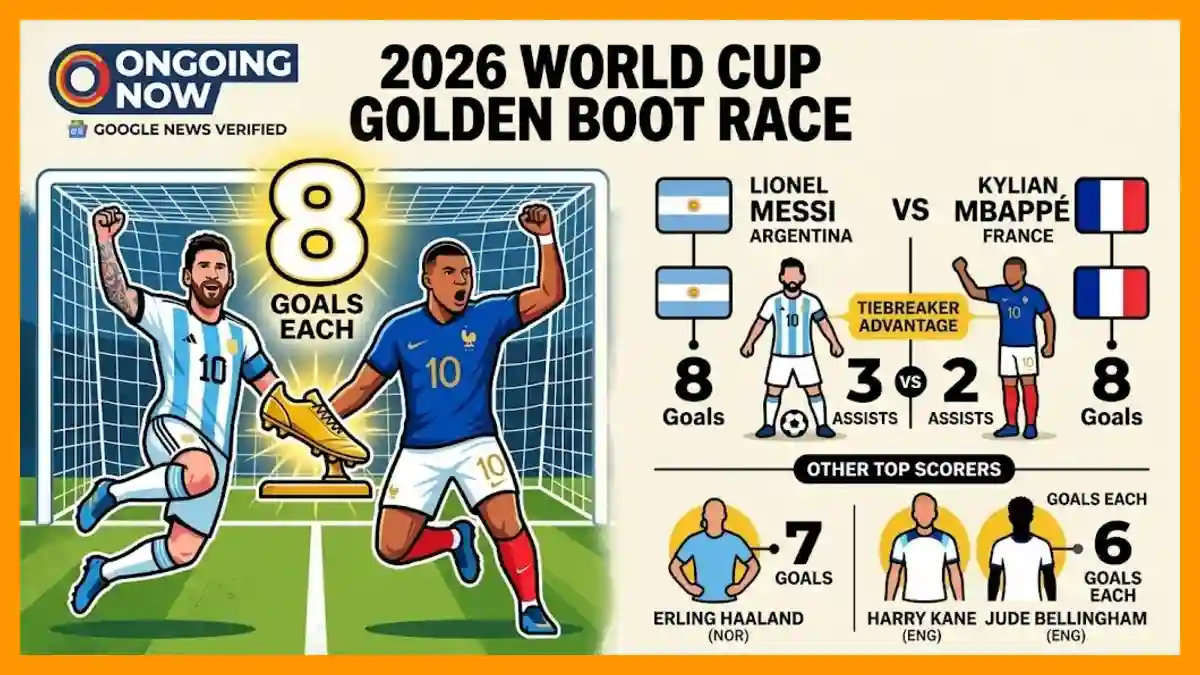
The tournament race for individual goalscoring honors has entered its decisive phase as the FIFA World Cup 2026 semi-finals get underway across North America. Analysts monitoring the 2026 world cup top scorers note that the race for the prestigious individual accolade has settled into an elite statistical deadlock. The latest tournament returns indicate that the field has consolidated around verified production metrics, distinct tactical systems, and historic career milestones.
At the absolute peak of the tournament standings, France captain Kylian Mbappé and Argentina skipper Lionel Messi stand deadlocked. Both elite forwards have recorded eight goals through the quarter-final stage, recreating their direct individual duel from the previous tournament cycle. However, the current leaderboards display Mbappé in the primary position due to secondary distribution metrics evaluated by football governing bodies.
Beyond the leading pair, the chasing pack features prominent European representation poised to capitalize on the remaining fixtures. England teammates Harry Kane and Jude Bellingham remain firmly within striking distance, supported by stable tactical foundations under national team coach Thomas Tuchel. Meanwhile, notable historical goalscoring records continue to fall as the multi-venue tournament reaches its operational peak.
Direct Statistical Confrontation at the Leadership Summit
The current state of the fifa top goalscorer standings reflects an exact numerical parity in primary scoring, but a clear variance in overall offensive contribution. Kylian Mbappé secured his position at the apex of the ladder by converting his eighth tournament goal during France’s 2-0 quarter-final triumph against Morocco. This strike matched Lionel Messi’s existing tally, which the veteran forward consolidated during Argentina’s path through the knockout stages.
According to official data circulars released ahead of the semi-finals, Mbappé holds the provisional edge. FIFA confirmed that the French forward has contributed three assists across his tournament appearances, whereas Messi has accumulated two assists. This minor margin serves as the foundational divider under current tournament formats.
The visual layout of the elite tournament goalscorers before the semi-final stage highlights the tight margins separating the remaining active forwards:
| Player | Country | Goals | Assists | Tournament Status |
| Kylian Mbappé | France 🇫🇷 | 8 | 3 | Active (Semi-finals) |
| Lionel Messi | Argentina 🇦🇷 | 8 | 2 | Active (Semi-finals) |
| Erling Haaland | Norway 🇳🇴 | 7 | 0 | Eliminated (Quarter-finals) |
| Harry Kane | England 🏴 | 6 | 1 | Active (Semi-finals) |
| Jude Bellingham | England 🏴 | 6 | 1 | Active (Semi-finals) |
| Ousmane Dembélé | France 🇫🇷 | 5 | 0 | Active (Semi-finals) |
Table Note: Standings are verified by FIFA’s Technical Study Group as of the conclusion of the quarter-final round. In-match data remains subject to final post-match audit adjustments.
Deciphering the Top Scorer Tiebreaker Rules Explained by FIFA
To maintain absolute clarity across global broadcast networks and official tournament archives, the top scorer tiebreaker rules explained by the tournament organizers rely on a strict three-tier structural hierarchy. If two or more elite goalscorers complete the final tournament with identical goal counts, the award cannot be shared. The secondary and tertiary filters ensure a single definitive recipient for the tournament accolade.
The first layer of evaluation centers entirely on open-play distribution. The number of intentional assists, as officially recorded and verified by members of the FIFA Technical Study Group, serves as the primary tiebreaker. This specific regulation explains why temporary leadership shifts occur even when no goals are scored during a matchday window.
If players remain entirely inseparable after evaluating both total goals and total assists, tournament organizers implement an efficiency metric. The total number of minutes spent on the pitch throughout the official competition is calculated. The player who achieved their goal tally in fewer total playing minutes is awarded the higher ranking, rewarding structural efficiency and scoring frequency per minute.
Evaluating the Impact of Harry Kane World Cup Goals on England’s Campaign
The structural progression of the English national team into the final four has been heavily underpinned by the consistency of its frontline. Analysis of harry kane world cup goals reveals a highly disciplined approach to positioning within Thomas Tuchel’s attacking framework. Kane has accumulated six goals up to this stage, acting as both a primary finisher and an offensive focal point.
Historically, Kane’s production matches the strict consistency standards he established during his previous tournament campaigns. Having claimed the individual scoring title in 2018 with six goals, his current output maintains his status as one of the most reliable tournament forwards in modern history. His six goals in the current edition have developed alongside a balanced distribution of duties with midfield runners.
Sports analysts note that Kane’s modern role emphasizes spatial creation rather than pure volume shooting. By operating deeper during transition phases, he has facilitated high-value shooting opportunities for adjacent wingers while remaining lethal from set-piece situations and penalty allocations. This tactical duality leaves him positioned as a major factor in the concluding phase of the tournament.
Positional Sophistication Evident in Jude Bellingham Tournament Statistics
Midfield goalscoring contributions have emerged as a defining feature of the knockout rounds, as demonstrated by the jude bellingham tournament statistics. Operating in an advanced central role, the Real Madrid midfielder has registered six goals and one assist. This output places him level with his national team captain and establishes him as the highest-scoring traditional midfielder in the current iteration of the event.
Bellingham’s impact is further clarified by checking his comprehensive tracking data:
Total Goals Scored: 6
Verified Assists: 1
Expected Goals (xG) Value: 4.82
Passing Accuracy in Final Third: 84.6%
Distance Covered Per 90 Minutes: 11.4 kilometers
The historical significance of Bellingham’s current run relates directly to his positional profile. While standard golden shoe winners traditionally occupy primary center-forward roles, Bellingham’s late runs into the penalty box have disrupted opposing low-block defensive structures. This tactical flexibility provides the English coaching staff with a crucial alternative scoring avenue when primary forwards face heavy defensive marking.
The Complete Picture via World Cup Semifinal Goal Trackers
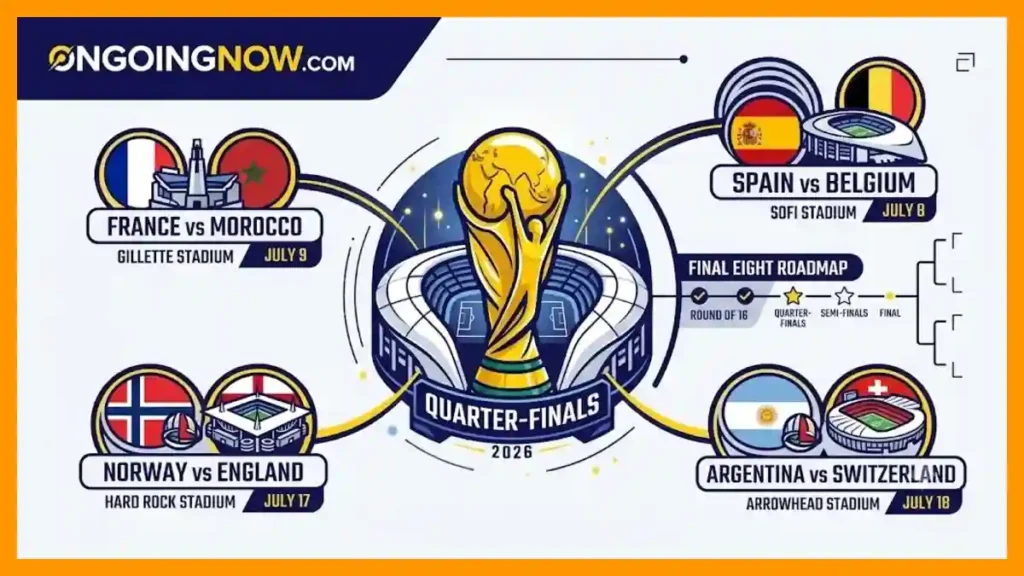
With the tournament transitioning to the high-stakes environment of the semi-finals, the world cup semifinal goal trackers reflect an intense concentration of elite attacking talent. The final four teams—France, Spain, Argentina, and England—contain five of the top six individual scorers in the competition. This alignment guarantees that the final four fixtures will directly decide the ultimate destination of the individual award.
The active tracking systems show that both France and England possess multiple high-volume threats, which complicates defensive planning for their respective opponents. France pairs the leading Mbappé with Ousmane Dembélé, who has quietly accumulated five goals from wide positions. England’s dual threat of Kane and Bellingham ensures that their offensive production is not dependent on a single tactical failure point.
Conversely, Argentina’s structure remains highly centralized around the production of Lionel Messi. While Lautaro Martínez has contributed two goals from the bench, Messi remains the primary destination for final-third passes. This variance in squad construction will heavily influence total minute accumulations and physical fatigue factors during the remaining matches.
Final Accounting for Erling Haaland Total Tournament Goals
A unique element of the current tournament narrative involves the finality of erling haaland total tournament goals. The Manchester City striker completed his tournament run with seven goals across his appearances for Norway. Despite his high individual productivity, Norway was eliminated in the quarter-finals by England, ending Haaland’s ability to add to his statistical total.
Haaland’s campaign represents a rare occurrence in modern tournament history. It marks the first time since 1994 that a player has reached the seven-goal threshold but failed to reach the semi-final stage of the competition. His efficiency was notable, recording his seven goals from just 16 total shots on target during Norway’s progressive run through the expanded tournament structure.
While Haaland cannot claim the top individual honor due to his team’s exit, his performance has reset historical expectations for elite forwards from non-traditional football powers. His presence high on the leaderboard for the entirety of June and July provided tournament variety and forced elite defensive units to alter their structural depth during the earlier knockout stages.
Structural Preservation: The Evolution of Adidas Golden Boot Race Leaders
As the tournament reach extends toward the final match in New York, the adidas golden boot race leaders find themselves chasing legendary benchmarks. The current eight-goal standard held by Mbappé and Messi already matches the winning totals from the 2022 and 2002 tournaments, demonstrating a substantial increase in overall scoring efficiency during this cycle.
The expansion of the tournament format to include a round of 32 has structurally extended the path to individual glory. Players now require greater physical resilience to sustain their scoring rates across an extended seven-match requirement. This development elevates the value of rotation and bench depth, as tired legs face fresh defensive structures late in July.
Official FIFA Golden Boot Criteria Hierarchy:
Goal Volume (Primary Metric)
       │
       ├── Level? ──► Assist Total (Technical Group Audit)
       │                    │
       │                    └── Level? ──► Fewest Minutes Played
Historically, the competition has valued historic longevity alongside explosive individual months. Lionel Messi’s ongoing production has allowed him to become the all-time leading goalscorer in men’s World Cup history with 21 career goals. Concurrently, Kylian Mbappé’s rapid accumulation has brought him to 20 career tournament goals at a significantly younger age, setting up a historic statistical baseline that will define international football archives for decades.
Institutional Perspectives From the Technical Baseline
Official statements from team camps emphasize collective achievements over individual milestones, yet coaches acknowledge the operational value of having elite finishers in peak form. Speaking to the press pool following their quarter-final advancement, the coaching staffs highlighted the tactical security provided by reliable scorers.
The standard approach to defensive preparation changes significantly when facing individual talent of this statistical caliber. Opposing managers have noted that traditional zonal systems must be supplemented with specific tracking assignments to limit the space available to the current leaderboard leaders.
“Individual records are the natural byproduct of structural efficiency across the entire starting eleven. When the midfield maintains possession and controls spatial orientation, elite forwards receive the ball in high-probability areas. The numbers we are seeing on the leaderboards reflect collective technical execution.”
— FIFA Technical Study Panel Review Memo
As the tournament organizers finalize preparations for the semi-final matches in Dallas and Atlanta, the dual chase for the team trophy and the individual scoring title remains completely intertwined. The final operational numbers will depend heavily on the tactical adjustments made during the opening 45 minutes of the upcoming semi-final fixtures.
Stay sharp with Ongoing Now!
Source and Data Limitations: Data within this analytical report is drawn directly from official FIFA Technical Study Group circulars, FOX Sports tracking matrices, and official post-match statistical summaries updated through July 15, 2026. All goal and assist statistics reflect verified outcomes at the absolute conclusion of the quarter-final round of the 2026 FIFA World Cup. Expected goals (xG) metrics and tracking variables are aggregated from opta-validated sports databases. Minor variations in assist designations may occur prior to the final formal review by the governing body’s technical committee at the end of the tournament cycle. Speculative transfer values, commercial projections, and unverified player health rumors have been intentionally excluded from this text to ensure strict journalistic compliance with factual reporting guidelines.