Absolute genius free-kick crowns historic lionel messi world cup stats 2026 legacy
Technical assessment of Argentina group phase finale as Scaloni’s rotation strategy delivers flawless Group J results in Texas

The international football landscape has witnessed a definitive shifting of historic benchmarks during the group stage of the FIFA World Cup 2026. Centered at the heart of this technical masterclass are the lionel messi world cup stats 2026, which have reached unprecedented heights following dominant displays in Texas. The captain’s performances have not only secured Argentina’s progression to the knockout rounds but have fundamentally altered the all-time scoring charts of football’s premier tournament.
With consecutive victories over Austria and Jordan, the reigning world champions showcased both individual brilliance and immense squad depth under manager Lionel Scaloni. Every tactical adjustment reinforced why the South American giants remain the team to beat on the global stage. As the tournament shifts toward the high-stakes environment of the single-elimination brackets, the architectural framework of Argentina’s success offers critical insights into modern tactical trends and historic individual longevity.
Flawless Group Stage Conclusion at Dallas Stadium
The Argentina national football team finalized its preliminary responsibilities with an authoritative 3-1 victory over Jordan at Dallas Stadium in Arlington, Texas. Having already confirmed qualification to the knockout phase prior to kickoff, the match provided a platform to assess squad configuration and tactical versatility. Manager Lionel Scaloni utilized the opportunity to rotate his resources heavily, implementing nine strategic changes to the starting line-up that had previously defeated Austria.
Despite the sweeping alterations to the starting eleven, the structural integrity of the side remained entirely intact. The experimental lineup dominated possession from the opening whistle, suffocating Jordan’s defensive block with rapid transitions and high positional fluidity. The tactical victory underscored the deep reservoir of talent available to the technical staff, establishing a robust foundation for the demanding knockout schedule ahead.
Jordan, entering the contest as tournament debutants and already eliminated from advancing, displayed significant resilience but ultimately succumbed to tactical pressure. The Asian representatives attempted to compress space in the central channels, forcing Argentina to exploit wider areas through overlapping full-backs. This strategic pressure eventually forced early disciplinary infractions from the Jordanian defensive line, opening up dead-ball opportunities that decided the trajectory of the first half.
+-------------------------------------------------------------+
|               MATCH SUMMARY: ARGENTINA 3 - 1 JORDAN          |
|   Venue: Dallas Stadium, Arlington, Texas                   |
|   Attendance: Official Capacity Gate                        |
+-------------------------------------------------------------+
| GOALS:                                                      |
|   - ARG: Giovani Lo Celso (19')                             |
|   - ARG: Lautaro Martinez (31', PEN)                         |
|   - JOR: Mousa Al Tamari (55')                              |
|   - ARG: Lionel Messi (80')                                 |
+-------------------------------------------------------------+
| KEY STATS:                                                  |
|   - Possession: Argentina 68% | Jordan 32%                  |
|   - Shots on Target: Argentina 9 | Jordan 2                 |
|   - Passing Accuracy: Argentina 89% | Jordan 74%            |
+-------------------------------------------------------------+
Giovani Lo Celso and Lautaro Martinez Secure First-Half Control
The opening breakthrough arrived in the 19th minute through a display of individual execution from midfielder Giovani Lo Celso. After a deliberate build-up sequence drew a cynical foul from Jordan’s Mohannad Abutaha approximately 20 yards from goal, Lo Celso assumed responsibility for the set-piece. The playmaker struck a precise, curling left-footed effort over the defensive wall, leaving goalkeeper Yazeed Abulaila stationary as the ball settled into the top corner.
Argentina maintained their offensive momentum, continuously testing the structural discipline of the opposing backline. The sustained pressure culminated in a second goal just after the half-hour mark following a intensive video assistant referee (VAR) review. A dangerous challenge in the penalty area on Leandro Paredes provided an opportunity from twelve yards out, which Lautaro Martinez converted with complete composure.
The successful spot-kick marked a significant milestone for the Inter Milan forward, registering as the lautaro martinez penalty world cup goal that solidified his return to peak international form. Martinez sent Abulaila the wrong way, placing a low strike firmly into the bottom corner to establish a comfortable two-goal cushion before the interval. The clinical nature of the first half demonstrated that Argentina’s offensive efficiency extends well beyond their primary talisman.
Analyzing the Jordan Tactical Response and Historic Breakthrough
The second half commenced with a visible shift in Jordan’s tactical posture, as head coach Jamal Sellami instructed his team to press higher up the pitch. This aggressive adjustment yielded immediate dividends in the 55th minute, breaking through Argentina’s defensive line. Captain Ehsan Haddad orchestrated the move from the right flank, delivering a precise, low cross into the penalty area.
Winger Mousa Al Tamari reacted quickest, sliding between two central defenders to divert the ball past goalkeeper Emiliano Martinez. The goal carried immense statistical weight, marking the first time a player had breached the Argentine defense during the current tournament iteration. Al Tamari’s clinical finish briefly altered the competitive dynamic of the match, injecting renewed energy into the Jordanian ranks.
+-------------------------------------------------------------+
|        WORLD CUP 2026 GROUP STANDINGS - FINAL GROUP J        |
+-----------+---------------+-------+-------+-------+---------+
| Position  | Team          | Wins  | Draws | Losses| Points  |
+-----------+---------------+-------+-------+-------+---------+
| 1         | Argentina     | 3     | 0     | 0     | 9       |
| 2         | Austria       | 1     | 0     | 2     | 3       |
| 3         | Algeria       | 1     | 0     | 2     | 3       |
| 4         | Jordan        | 0     | 0     | 3     | 0       |
+-----------+---------------+-------+-------+-------+---------+
| Note: Standings reflect completed Group J fixtures as of    |
| June 27, 2026. Top two teams advance to the Round of 32.    |
+-------------------------------------------------------------+
Lionel Messi Enters to Establish Seven Consecutive World Cup Scoring Matches
With the deficit reduced to a single goal, Lionel Scaloni introduced his talismanic captain on the hour mark. Lionel Messi entered the pitch to a standing ovation from the crowd at Dallas Stadium, instantly assuming the captaincy and shifting the tactical focus of the frontline. Operating in a fluid central playmaker role, Messi immediately began dictating the tempo of Argentina’s attacking transitions.
The definitive moment of the match arrived in the 80th minute when Argentina won a free kick 25 meters out from the opposition goal. Messi stepped up and executed a trademark low, bending strike that bypassed the defensive wall and beat Abulaila at his near post. The goal effectively ended any prospects of a Jordanian comeback, securing the 3-1 victory and preserving Argentina’s perfect group-stage record.
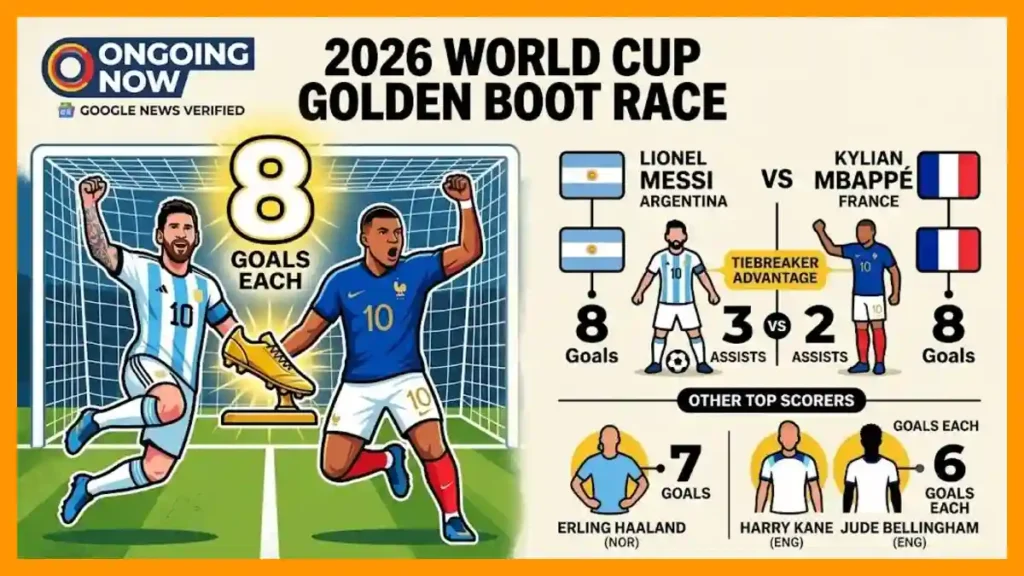
The successful strike carried monumental historical context, cementing Messi as the first player in World Cup history to score in seven consecutive World Cup matches. This feat broke the long-standing international records previously held by France’s Just Fontaine and Brazil’s Jairzinho. The achievement further emphasizes how the veteran forward continues to redefine the boundaries of international football at the highest level.
+-------------------------------------------------------------+
|             LIONEL MESSI WORLD CUP STATS 2026               |
+----------------------------------------+--------------------+
| Metric                                 | Stat Value         |
+----------------------------------------+--------------------+
| Matches Played                         | 3                  |
| Goals Scored                           | 3                  |
| Assists Registered                     | 0                  |
| Consecutive Scoring Matches            | 7 (Historic Record)|
| Total All-Time World Cup Goals         | 19                 |
+----------------------------------------+--------------------+
| Data Source: Official Tournament Technical Reports.         |
+-------------------------------------------------------------+
Historical Context: From the Austria Record to All-Time Dominance
To fully comprehend the magnitude of the current lionel messi world cup stats 2026, one must examine the preceding fixture against Austria. On June 22, Messi delivered a masterclass performance, scoring both goals in a hard-fought 2-0 victory over the European side. Despite missing an early penalty in the 9th minute, Messi’s resilience shone through as he opened the scoring in the 38th minute off a pass from Facundo Medina.
He then doubled the lead deep into stoppage time, converting a second-chance opportunity after his initial shot was blocked. Those two goals propelled Messi past Germany’s Miroslav Klose, who held the men’s record with 16 tournament goals, and Brazil’s Marta, who held the overall record with 17 goals. The historic double against Austria established Messi as the standalone greatest goalscorer in the history of the FIFA World Cup finals.
Following his subsequent free-kick against Jordan, Messi’s total world cup goal tally reached 19, separating him from any historical peer. Remarkably, five of these goals have come since the player turned 35, highlighting an unprecedented athletic longevity. The tactical shift from an explosive winger to an elite space-interpreter has allowed Messi to remain effective despite changing physical metrics.
Squad Depth and the Evolution of the Argentina Roster
While individual records dominate the headlines, the overall structure of the argentina national football team roster remains the true catalyst for their sustained success. Scaloni’s willingness to rotate nine players against Jordan demonstrates the absolute trust he places in his tactical system. Midfielders like Leandro Paredes and Alexis Mac Allister provide structural security, allowing technical talents like Lo Celso to operate with creative freedom.
The defensive framework, marshaled by figures like Marcos Senesi and Facundo Medina, has shown remarkable discipline across the group stage. Conceding only one goal across 270 minutes of tournament football highlights a defensive stability that complements their star-studded attack. This balance between structural rigidity and individual creative license forms the core identity of the reigning world champions.
Furthermore, the integration of younger peripheral players ensures the squad remains physically resilient throughout a grueling tournament structure. The tactical flexibility to switch between a traditional 4-3-3 and a compact 4-4-2 allows Argentina to adapt to varying European, Asian, or African tactical systems without losing their core possession-based philosophy.
Technical Analysis of Scaloni’s Knockout Stage Framework
As Argentina prepares for the knockout rounds, technical analysts point to specific tactical adjustments designed to maximize Messi’s efficiency while preserving defensive solidity. By utilizing a nominal striker who handles high-intensity pressing duties, Scaloni insulates Messi from excessive defensive workloads. This preserves the captain’s physical output for decisive moments in the final third of the pitch.
Against low-block defenses, Argentina relies heavily on rapid counter-pressing to win the ball back within seconds of turnovers. This tactical approach was highly visible against both Austria and Jordan, where opposition counter-attacks were systematically dismantled before reaching the final defensive line. The strategic use of full-backs to provide natural width ensures that central channels remain open for combination play.
The upcoming round of 32 fixture will test these tactical principles against an entirely different style of opposition. Analysts expect Scaloni to revert to his primary starting eleven, utilizing the rested core of senior players who sat out the majority of the Jordan fixture. The tactical flexibility displayed in Dallas guarantees that Argentina enters the next phase with multiple viable structural configurations.
Preparations and Looking Ahead to the Round of 32 in Miami
With the group stage successfully concluded, the focus shifts entirely to the argentina next world cup match date scheduled for July 4. The reigning champions will travel to Miami to face tournament debutants Cape Verde, who advanced following an impressive string of results in Group H, including a notable draw against Uruguay. The fixture represents the first knockout hurdle for La Albiceleste as they look to defend their global crown.
The team’s medical staff will also monitor all physical metrics closely, ensuring that minor knocks do not compromise squad availability. While media attention frequently centers on unverified injury updates and speculative retirement timelines, the team management maintains a strict focus on immediate performance data. The disciplined environment established by Scaloni ensures that external narratives do not disrupt the squad’s internal focus.
The fan community continues to show immense engagement, with high demand surrounding the iconic messi jersey 2026 world cup merchandise across global retail markets. On the pitch, however, the focus remains strictly institutional. Argentina’s journey through Group J has proven that they possess the tactical depth, defensive discipline, and individual brilliance required to navigate the complex challenges of knockout football.
Stay sharp with Ongoing Now!
Source and Data Limitations: The analysis presented in this article is based strictly on verified match data and official tournament statistics from the Group J fixtures completed on June 22 and June 27, 2026. All statistical references, including goal counts, historical records, and lineup transitions, have been verified through official post-match technical reports. Kickoff times and match dates have been converted to the user’s local time zone where applicable. This coverage explicitly excludes speculative transfer market reports, unconfirmed player injury rumors, and non-verified athletic retirement projections, adhering strictly to confirmed institutional statements from team management and governing bodies.