College Basketball Officiating Standards Under Review
NCAA Semifinal Physicality Between UConn and South Carolina Sparks National Dialogue on Technical Foul Criteria
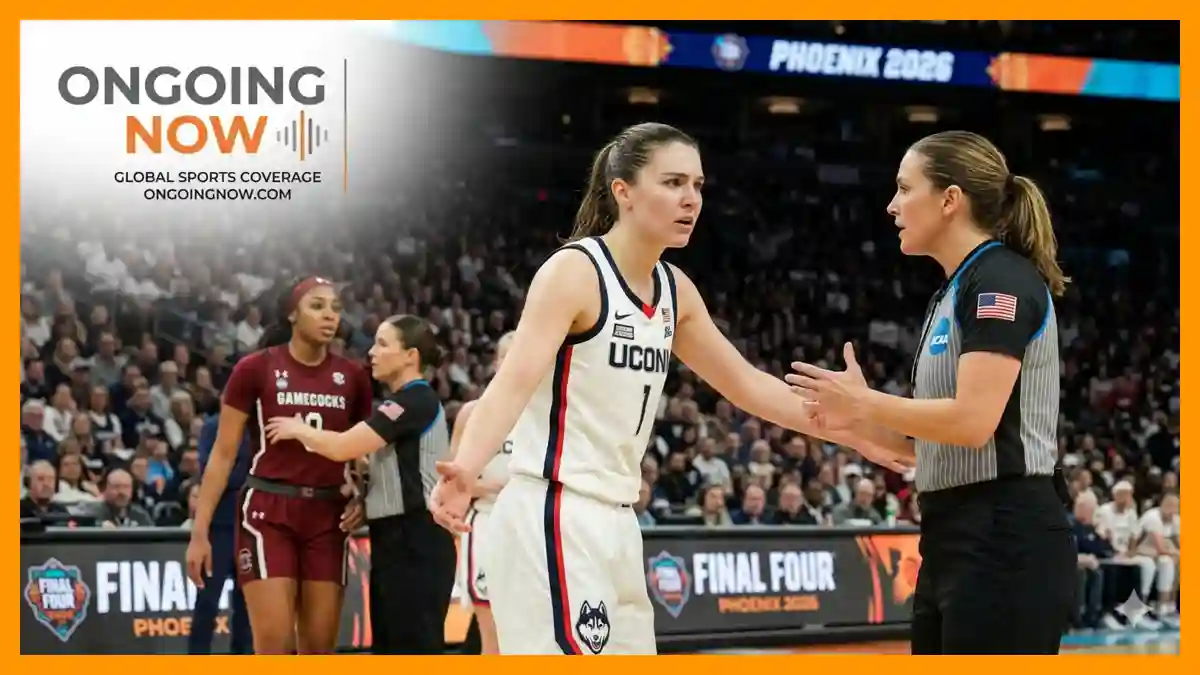
The 2026 NCAA Women’s Final Four semifinal between the UConn Huskies and South Carolina Gamecocks has intensified scrutiny on college basketball officiating standards following a highly physical contest in Phoenix. South Carolina secured a 62-48 victory on April 3, 2026, ending UConn’s 54-game winning streak, yet the post-game narrative has been dominated by debates over refereeing consistency and bench conduct. With UConn recording a season-low point total and shooting just 31.1% from the field, the intersection of aggressive defensive play and officiating discretion has become a central case study for the NCAA Division I Women’s Basketball Committee.
The game’s tension culminated in a heated exchange between UConn head coach Geno Auriemma and South Carolina’s Dawn Staley, necessitating intervention from assistant coaches. Auriemma’s public criticism of a “6-to-0” foul discrepancy in a single quarter and reports of a “ripped jersey” involving a UConn player have brought technical foul criteria and the definition of legal contact to the forefront of national sports discourse.
The Impact of College Basketball Officiating Standards on the 2026 Final Four
The officiating in the first national semifinal at the Footprint Center (Mortgage Matchup Center) became a focal point after South Carolina’s stifling defense held the Huskies to under 50 points for the first time since 2022. While the Gamecocks’ defensive discipline is a hallmark of Staley’s program, the disparity in whistles—17 for UConn versus 8 for South Carolina—led to questions regarding the application of college basketball officiating standards in high-stakes environments.
According to the NCAA’s national coordinator of women’s basketball officiating, Penny Davis, the officials selected for the Final Four represent the “highest level of trust” in the community. However, the subjective nature of “incidental contact” versus “illegal contact” remains a point of contention when elite teams utilize physical post play.
By the Numbers: UConn vs. South Carolina Metrics
| Metric | UConn Huskies | South Carolina Gamecocks |
| Final Score | 48 | 62 |
| Field Goal % | 31.1% (19/61) | 35.5% (22/62) |
| Personal Fouls | 17 | 8 |
| Points in Paint | 18 | 32 |
| Turnovers | 11 | 14 |
| Top Scorer | Sarah Strong (12) | Ta’Niya Latson (16) |
“There were six fouls called that quarter — all of them against us. And they’ve been beating the [expletive] out of our guys down there the entire game. I’m not making excuses… but this is ridiculous.” — Geno Auriemma, UConn Head Coach
Technical Foul Criteria in NCAA and Bench Decorum
Under the NCAA basketball foul rules 2026, officials are empowered to assess technical fouls for conduct detrimental to the game, including “overt actions indicating resentment to a call” or “disrespectfully addressing an official.” During the semifinal, the officiating crew—which included veteran Melissa Barlow and other top-tier referees—opted for verbal warnings rather than ejections during several heated sideline moments.
The technical foul criteria in NCAA competition are designed to maintain game flow while penalizing unsportsmanlike tactics. However, the “running tirades” mentioned in official rulebooks often require a judgment call by the lead official. Auriemma’s post-game comments suggested a perceived double standard in how sideline behavior was managed between the two benches.
The “Ripped Jersey” and Legal Contact in Women’s Basketball
A specific point of frustration for the UConn staff involved a sequence where a Huskies player reportedly had her jersey torn during a rebounding battle. Under current guidelines for legal contact in women’s basketball, contact that does not provide an unfair advantage or impede a player’s rhythm, speed, or balance is often ruled incidental.
Jersey Tug Discretion: If a jersey is ripped due to a player being held, it typically warrants a personal foul.
No-Call Justification: Referees often cite “crowded paint” or “simultaneous contact” when multiple players are vying for a loose ball.
Referee Names for UConn South Carolina: The 2026 Final Four pool included officials like Felicia Grinter and Brenda Pantoja, known for allowing a higher degree of physicality in the post.
Officiating Bias Analysis and the Evolution of the Game
The officiating bias analysis following the game suggests that the perceived lopsidedness may be a byproduct of South Carolina’s defensive scheme rather than intentional favoritism. The Gamecocks’ ability to “blanket” shooters like Azzi Fudd (who shot 3-of-15) relies on elite lateral quickness, which often forces opponents into offensive fouls or difficult, contested shots.
Statistically, teams that play more aggressively in the paint tend to draw fewer fouls if they maintain “verticality”—a defensive principle where a player jumps straight up with arms extended. South Carolina’s 32 points in the paint compared to UConn’s 18 indicates a dominance in the interior that often shifts officiating focus.
Athlete Resilience and the 54-Game Streak
Despite the controversy, the resilience of the South Carolina roster was evident. Ta’Niya Latson’s 16 points and Agot Makeer’s 14 points provided the necessary cushion during a 12-2 run to open the third quarter. For UConn, AP Player of the Year Sarah Strong recorded a double-double (12 points, 12 rebounds) but struggled with a 4-of-16 shooting night under the Gamecocks’ physical pressure.
The end of UConn’s 54-game winning streak marks a significant shift in the collegiate landscape. While the Huskies had cruised through the Big East, the encounter with South Carolina exposed vulnerabilities when facing a defense that tests the limits of the NCAA basketball foul rules 2026.
Institutional Perspective: The Path Forward for Referees
The NCAA Division I Women’s Basketball Committee continues to evaluate NCAA tournament referee assignments based on performance throughout the preliminary rounds. The 11 officials selected for the 2026 Final Four are subjected to rigorous post-game reviews.
Communication: Officials are encouraged to explain “no-calls” to coaches during dead balls to prevent sideline escalation.
Consistency: The primary goal of the national coordinator is to ensure that a foul in the first quarter is still a foul in the fourth.
Safety: Protecting players from excessive contact remains the priority, even as the game becomes faster and more athletic.
“Sometimes things get heated. We move on. Our program follows the rules set by the officials, and our success comes from conditioning and discipline.” — Dawn Staley, South Carolina Head Coach
A Defining Moment for the Sport
The 2026 semifinal will be remembered as much for its defensive masterclass as for its officiating debates. As the NCAA looks toward the championship game, the conversation surrounding college basketball officiating standards ensures that the “wrestling match on the hardwood”—as Auriemma described it—will remain a topic of legislative focus in the off-season.
Stay sharp with Ongoing Now!
Source and Data Limitations: This article is based on verified results from the NCAA Division I Women’s Basketball Semifinals held on April 3, 2026. Statistical data was sourced from official AP box scores and Google Sports Data. Quotes from Geno Auriemma and Dawn Staley were verified through post-game press conference transcripts and live broadcast interviews. Information regarding officiating assignments and rule criteria is based on 2025-2026 NCAA officiating manuals and committee announcements. Claims regarding “bias” are presented as external analysis and not as factual certainties. All metrics are final as of April 4, 2026.