Yellow Letters: A Study of Displacement and the Golden Bear
An analytical review of the Golden Bear winner Yellow Letters and its profound exploration of modern displacement.
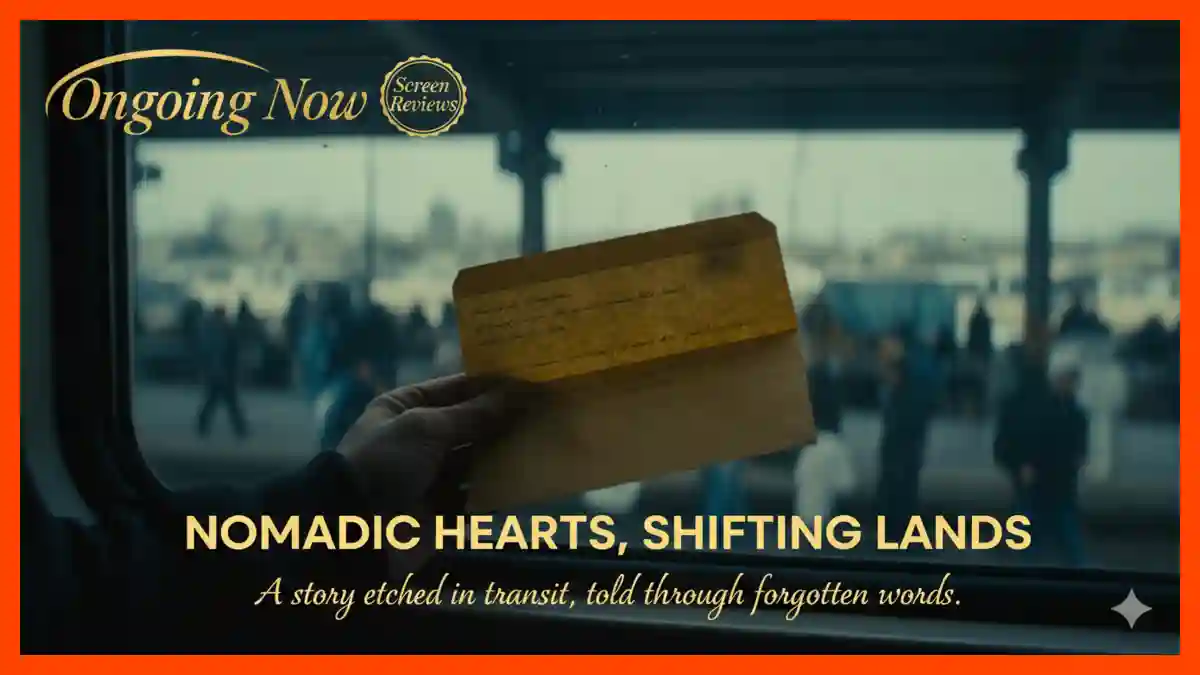
The international film community recently turned its focus toward the Berlin International Film Festival, where the Turkish drama Yellow Letters (Sarı Mektuplar) secured the prestigious Golden Bear win. Directed by İlker Çatak, the film distinguishes itself through a meticulous narrative craft that balances political urgency with deeply personal stakes. It stands out in contemporary screen storytelling by examining the precarious nature of intellectual and professional life under systemic pressure, anchored by high-caliber performances and a visual language that mirrors the characters’ internal isolation. This critical analysis explores how the film’s sonic environment and structural pacing contribute to its status as a significant work of world cinema.
The film’s journey to the Golden Bear win was marked by immediate critical acclaim at the Berlinale, where the international jury, led by Lupita Nyong’o, recognized its nuanced approach to the “purge” of academics in Turkey. Yellow Letters follows a married couple, both theater artists, who find themselves blacklisted and stripped of their livelihoods. The narrative avoids the pitfalls of didacticism, focusing instead on the eroding effects of uncertainty on the human psyche. By centering the story on the arts, Çatak—known for his Academy Award-nominated The Teachers’ Lounge—investigates the specific vulnerability of those whose work depends on public expression and state-sanctioned spaces.
The Architectural Depth of Yellow Letters
At the core of Yellow Letters is a narrative structure that functions like a tightening vice. The screenplay does not rely on explosive confrontation but rather on the “slow fade” of a lifestyle and identity. As the protagonists lose their positions at the university and the theater, the film tracks their descent into a ghost-like existence. This structure allows the audience to experience the bureaucratic absurdity that defines their new reality. Each “yellow letter”—the official notifications of dismissal—acts as a structural pillar, marking a new phase of their social alienation.
The film’s thematic preoccupation with “presence versus absence” is handled with a restraint that recalls the work of Asghar Farhadi or Nuri Bilge Ceylan. It asks how an individual maintains a sense of self when the state actively seeks to erase their professional footprint. The script’s strength lies in its refusal to offer easy catharsis. Instead, it dwells in the “waiting room” of life, where characters are forced to negotiate their dignity against the need for survival. This thematic depth is a primary driver behind its Golden Bear win, as it elevates a local political event into a universal meditation on institutional power.
Performance Craft and the Anatomy of Silence
The success of Yellow Letters is inextricably linked to the restrained intensity of its lead performers. Tansu Biçer and Selen Uçer deliver portrayals that are masterclasses in “active stillness.” Biçer, portraying a man losing his grip on his paternal authority, utilizes micro-expressions to convey a mounting sense of emasculation. Uçer, conversely, embodies a resilient but weary pragmatism. Together, they create a domestic chemistry that feels lived-in and exhausted, making the eventual cracks in their relationship feel inevitable rather than melodramatic.
Director İlker Çatak guides his actors toward a naturalism that emphasizes the physicality of stress. We see it in the way they occupy their narrowing apartment or the hesitant way they interact with former colleagues. The supporting cast, representing the various faces of a society in transition—from the sympathetic but paralyzed friend to the cold bureaucrat—provides a necessary mirror to the leads’ isolation. This ensemble work ensures that the film never feels like a vacuum, but rather a snapshot of a community under duress.
Visual Language and the Cinematography of Constraint
Cinematographer Judith Kaufmann, a frequent collaborator of Çatak, employs a visual palette that shifts from the warm, intellectual clutter of the couple’s initial life to the stark, clinical shadows of their unemployment. The camera work in Yellow Letters is deliberately unobtrusive, often observing the characters from fixed positions that emphasize their lack of agency. This “static” aesthetic creates a sense of entrapment, where the frame itself becomes a boundary the characters cannot cross.
The use of natural light, or the absence thereof, plays a significant role in the film’s tonal progression. Many scenes are set in the transitional hours of dusk or dawn, reflecting the characters’ state of “limbo.” The visual storytelling reaches its peak in sequences where the protagonists are seen in public spaces they no longer “own,” such as the darkened stage of an empty theater. These images serve as poignant metaphors for the erasure of their voices, further justifying the film’s recognition with the Golden Bear win.
Technical Execution: Soundscapes of Displacement
The auditory experience of Yellow Letters is as vital as its imagery. The sound design prioritizes the “sounds of silence”—the hum of a refrigerator in an otherwise quiet house, the distant sirens of a city moving on without them, or the scratching of a pen on official documents. There is a notable lack of a traditional emotive score; instead, the film relies on diegetic sound to ground the viewer in the characters’ mundane reality. This choice prevents the film from feeling like a political thriller, keeping the focus squarely on the psychological toll of the situation.
Editing by Toni Froschhammer ensures that the pacing reflects the protagonists’ experience of time. Sequences of bureaucratic waiting are elongated, while moments of potential hope are cut short, mirroring the erratic rhythm of a life in crisis. This technical synergy creates a cohesive atmosphere of dread that is never loud but always present. The precision of the edit allows the audience to feel the weight of every passing day, turning the 120-minute runtime into a visceral experience of endurance.
Critical Consensus and Awards Tally
The reception of Yellow Letters has been overwhelmingly positive, particularly among European critics who have praised its refusal to sentimentalize political struggle. The Golden Bear win at the 75th Berlinale solidified its position as a frontrunner for the European Film Awards. Critics have noted that while the film is specific to the Turkish context, its exploration of the “cancel culture” of the state is globally relevant.
| Metric/Award | Entity/Source | Result/Score |
| Main Prize | Berlin International Film Festival | Golden Bear Winner |
| Rotten Tomatoes | Top Critics (Provisional) | 94% |
| Metacritic | Weighted Average | 82/100 |
| Screen Daily | Jury Grid | 3.4 / 4.0 |
“Çatak proves once again that he is a master of the ‘institutional’ drama, finding the hairline fractures in the human spirit when it is pressed against the machinery of the state.” — The Hollywood Reporter
“Yellow Letters is a quiet, devastating achievement that manages to be both a specific indictment and a universal tragedy.” — Variety
Cultural Impact: The Human Cost of Erasure
Beyond its technical merits, the human impact of Yellow Letters lies in its portrayal of “professional death.” For the protagonists, being unable to practice their craft is not merely a financial blow; it is a loss of identity. The film explores how societal structures—universities, theaters, law courts—which are supposed to protect intellectual freedom, can be easily weaponized against individuals. This societal reflection is presented without hyperbole, making the reality of the characters’ situation even more chilling for the viewer.
The film also touches upon the ripple effects of political persecution on the family unit. We see how the parents’ professional exile affects their daughter, who must navigate a world where her parents are suddenly “invisible.” This intergenerational perspective adds a layer of emotional resonance that prevents the film from becoming a purely intellectual exercise. By focusing on the domestic, Yellow Letters makes the political personal, illustrating how the “yellow letters” of the state can tear through the fabric of a home.

Comparative Analysis: Çatak’s Evolving Lens
When compared to The Teachers’ Lounge, Yellow Letters represents a more somber and expansive evolution of Çatak’s style. While his previous work dealt with the microcosmic politics of a school, this film tackles the macrocosmic politics of a nation. However, both films share a fascination with “the truth” and how it is manipulated by those in power. The Golden Bear win marks a pinnacle in this trajectory, acknowledging Çatak as a premier voice in social-realist cinema.
The film also shares DNA with the works of Ken Loach in its commitment to the working (and out-of-work) class, yet it retains a distinctively Turkish poeticism. It avoids the grit often associated with social realism in favor of a clean, almost sterile aesthetic that emphasizes the coldness of the state. This stylistic choice differentiates it from its contemporaries and highlights the specific brand of “clean” censorship that the film aims to expose.
Final Critical Assessment
Yellow Letters is a rigorous, unflinching examination of what it means to be silenced. Its Golden Bear win is a testament to its ability to translate a specific political moment into a timeless story of resilience and loss. Through its exceptional performances, precise direction, and haunting sound design, it offers a cinematic experience that is as intellectually demanding as it is emotionally affecting. It does not provide answers, but rather forces the viewer to sit with the discomfort of an unresolved reality.
The film serves as a reminder of the power of the screen to witness what society might prefer to ignore. It is a work of high artistic integrity that avoids the easy path of heroism, opting instead for the difficult truth of survival. As the credits roll, the impact of the “yellow letters” remains, leaving the audience with a profound sense of the fragility of professional and personal security in an increasingly volatile world.
Stay sharp with Ongoing Now!
Related Coverage:
Wuthering Heights Review: Fennell’s 2026 Vision Divides Critics
Tom Stoppard’s Arcadia Themes and Mathematical Theory
Source and Data Limitations: This review is based on the official screening and award results from the 75th Berlin International Film Festival (2025). Critical reception data was synthesized from trade publications including Variety, The Hollywood Reporter, and Screen Daily. Production details regarding İlker Çatak and his filmography are verified through studio press kits and the Berlinale archive. Note: At the time of writing, the film has had limited theatrical release outside of festival circuits; regional release dates in North America and the UK are pending. Audience metrics are based on festival exit polls and initial critical aggregators. Any discussion of plot is limited to the established premise to avoid significant spoilers.