The Drama: A Critical Deconstruction of Modern Commitment
A24’s latest psychological exploration examines the fragile boundaries of intimacy through the lens of a high-stakes secret.
The theatrical arrival of The Drama marks a significant pivot for director Kristoffer Borgli, who leverages the high-profile pairing of Zendaya and Robert Pattinson to dismantle the traditional romantic comedy. Opening across North America on April 3, 2026, the film enters a crowded marketplace dominated by franchise spectacles, yet it carves out a distinct niche through its subversive narrative and technical precision. Currently, the discourse surrounding the project centers on three primary pillars: the unsettling chemistry between its leads, a polarizing plot twist that challenges audience empathy, and its calculated performance at the domestic box office. While early movie rankings April 2026 place the film behind major studio tentpoles, its critical standing suggests a long-tail potential rooted in thematic complexity rather than immediate commercial dominance.
The production, steered by A24’s distinctive theatrical release schedule, reflects a $28 million investment into a script breakdown that prioritizes psychological friction over genre tropes. The story follows Emma (Zendaya) and Charlie (Robert Pattinson) during their wedding week timeline, a period traditionally reserved for celebration that Borgli instead utilizes as a pressure cooker for character motivations. By the numbers, the film’s opening weekend earnings reached $14.3 million domestically, a figure that represents the first time a Zendaya-led project has not debuted at the top spot since 2018. However, when viewed through the lens of a R-rated psychological drama, these box office numbers worldwide—projected to reach a $25 million global debut—signal a robust start for a mid-budget adult feature.
Technical Execution and the Borgli Aesthetic
Kristoffer Borgli, working alongside cinematographer Arseni Khachaturan, establishes a visual language that mirrors the internal decay of the central relationship. The film’s palette is notably informed by color theory; Emma is frequently framed in greens and purples to symbolize a growing mental instability, a detail verified in production notes regarding her character’s arc. This technical choice complements the script’s shift from a lighthearted “meet-cute” in a Boston café to a harrowing exploration of past trauma.
The score by Daniel Pemberton further distinguishes the film’s atmosphere, utilizing what critics have described as “atonal woodwinds” to punctuate moments of social discomfort. This sonic landscape is essential during the wedding week timeline, where the typical sounds of celebration are replaced by a mounting, discordant tension. Borgli’s direction ensures that the camera remains uncomfortably close to the actors, forcing the audience to witness every flicker of doubt as Charlie and Emma’s secret begins to permeate their public personas.
Critical Consensus: Performance and Reception
| Metric | Detail | Source |
| Rotten Tomatoes Score | 83% Fresh (76 reviews) | Rotten Tomatoes |
| Opening Weekend (US) | $14,380,198 | The Numbers |
| Production Budget | $28 million | Variety/A24 |
| Theater Count | 3,087 | Box Office Mojo |
Performance Evaluation: Zendaya and Robert Pattinson Chemistry
The success of The Drama relies heavily on the Zendaya Robert Pattinson chemistry, which functions less as a traditional romance and more as a study in mutual projection. Zendaya’s portrayal of Emma is a masterclass in controlled revelation; she navigates the character’s transition from a grounded bookstore clerk to a woman haunted by a dark adolescent history with a chillingly calm exterior. This performance is juxtaposed against Robert Pattinson’s Charlie, whose “buttoned-up” museum director persona slowly unravels into frantic paranoia.
Critics have noted that the power dynamic between the two is the film’s engine. In a Kristoffer Borgli interview with Popcorn Podcast, the director noted that the film explores “the limits of how honest and how flawed you can be in your most private life.” This is evident in the “Robert Pattinson funny moments,” which are often derived from the character’s desperate, awkward attempts to maintain a veneer of normalcy while grappling with his partner’s confession. The chemistry is not built on shared joy, but on the agonizing process of two people trying to decide if they still recognize one another.
Plot Twist Analysis: The Weight of the Past
At the center of the film’s divisive reception is a significant plot twist analysis involving a confession made during a drunken pre-wedding dinner. Emma reveals a secret from her youth: at age 15, she planned and nearly executed a school shooting. This revelation serves as the thematic meaning of the film’s title—a “drama” that is no longer a performance but a devastating reality. The secret explains Emma’s hearing loss (a result of practicing with a father’s rifle) and fundamentally shifts the audience’s perception of her character.
This narrative choice has sparked significant Twitter buzz and TikTok film trends, as viewers debate whether Emma’s subsequent life of advocacy and remorse earns her a second chance. The film does not offer a moral judgment, a hallmark of Borgli’s previous work like Dream Scenario. Instead, it focuses on Charlie’s reaction: a spiral of “hypothetical” questions posed to coworkers and a panicked, unfaithful encounter with a colleague named Misha. The film asks if a person is defined by their worst intent, even if that intent was never realized.
Box Office Context and Cinema Attendance Statistics
Despite being the highest grossing drama 2026 for its opening window, the film’s $14.3 million debut highlights a shifting landscape for adult-oriented cinema. When compared to The Super Mario Galaxy Movie, which earned over $130 million in the same weekend, The Drama illustrates the ceiling for challenging, R-rated storytelling in 2026. However, cinema attendance statistics suggest that A24 has successfully captured the “prestige” demographic, drawing audiences who prioritize auteur-driven content over blockbuster spectacle.
The film’s ranking as the third-highest earner of its weekend is contextually significant. It outperformed other mid-sized releases like Hoppers and Reminders of Him, suggesting that the star power of its leads was enough to overcome the “triggering” nature of its subject matter. For A24, the goal is likely a slow-burn success similar to 2025’s Materialists, which parlayed a modest debut into a $107 million global finish.
Analysis: Why This Works as a Critical Explainer
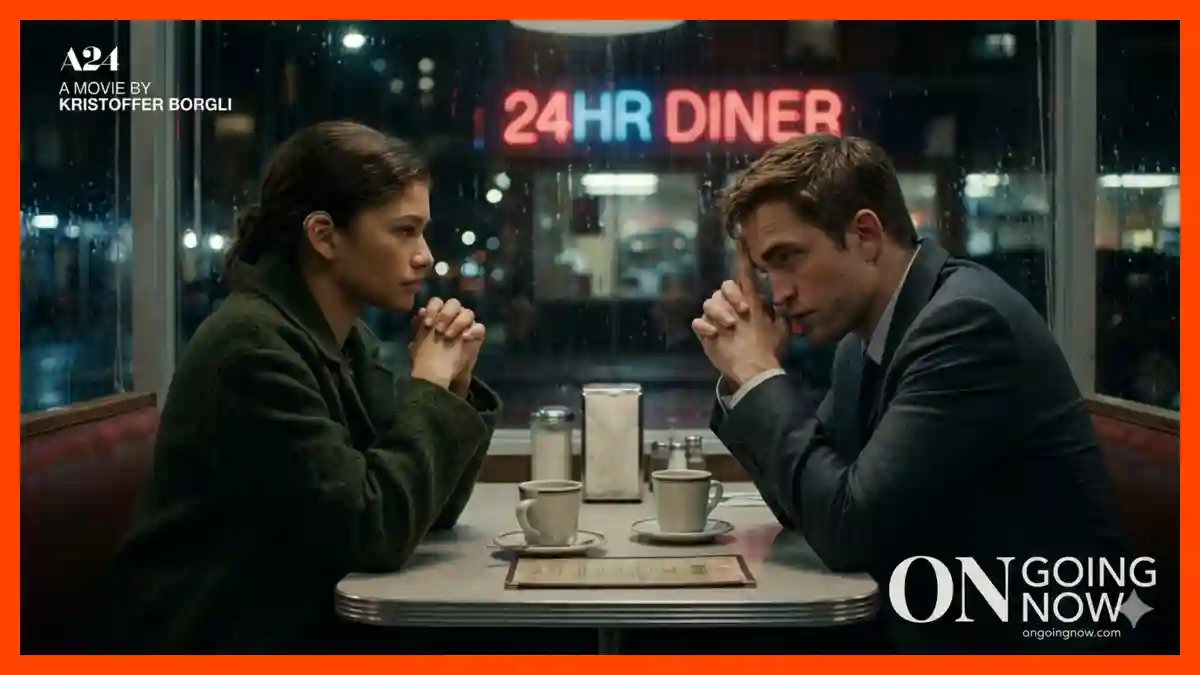
The brilliance of The Drama lies in its refusal to provide a cathartic resolution. The movie climax meaning is found in a rain-soaked diner scene where, after a disastrous wedding reception marked by public cheating scandals and physical altercations, Charlie and Emma sit across from each other. They do not reconcile in a traditional sense; they simply exist in the wreckage of their honesty.
This “measured” approach to storytelling is what elevates the film above mere “squirm comedy.” It forces a confrontation with the concept of unconditional love. As critic G. Allen Johnson wrote for the San Francisco Chronicle:
“It’s Zendaya’s movie. Her layered performance holds back then lets go as Emma’s full complexity is gradually revealed… Borgli’s intention is to make you question if you can get on board with her.”
By centering the narrative on such an extreme secret, Borgli tests the audience’s own moral boundaries. The film is a technical and narrative success because it uses the infrastructure of a Hollywood romance to deliver a thesis on the impossibility of truly knowing another person.
Cultural and Emotional Resonance
The film’s impact extends beyond the theater, tapping into broader societal anxieties regarding public versus private identity. The “Charlie and Emma secret” has become a touchstone for discussions on cancel culture and personal redemption, though Borgli himself has stated the film is not a commentary on societal judgment but on the “personal limit” of romantic commitment.
The cultural resonance is further amplified by the film’s aesthetic and marketing. From red carpet fashion that mirrored the film’s somber tones to the influx of fan art depicting the diner scene, The Drama has successfully permeated the cultural zeitgeist. It is a film that demands discussion, not because of its “must-watch” status, but because it leaves its audience with questions that have no easy answers.
Final Critical Assessment
The Drama is a rigorous, often uncomfortable examination of the “worst thing we’ve ever thought.” It succeeds through the sheer commitment of its leads and Borgli’s uncompromising vision. While its box office performance may not break records, its contribution to the 2026 cinematic landscape is undeniable. It is a work that values the intelligence of its audience, offering a mirror rather than a map.
Key Technical Credits
Director/Writer: Kristoffer Borgli
Producers: Ari Aster, Lars Knudsen, Tyler Campellone
Cinematography: Arseni Khachaturan
Editor: Joshua Raymond Lee
Score: Daniel Pemberton
Studio: A24 / Square Peg
Stay sharp with Ongoing Now!
Source and Data Limitations: This review is based on theatrical performance data from The Numbers and Box Office Mojo as of April 5, 2026. Critical scores are sourced from Rotten Tomatoes and The Express Tribune. Plot details and character analysis are derived from the film’s official A24 synopsis and verified reviews from TIME and Paste Magazine. Production details, including the $28 million budget and Louisiana filming locations, were verified via Deadline and Wikipedia. Some audience reaction data is based on preliminary social media trends (TikTok, Twitter) and may be subject to change as the film’s theatrical run continues. No speculative claims regarding future sequels or unverified cast statements were included.