Chilling Deception: The Maternal Instinct Netflix True Crime Saga
The Maternal Instinct Netflix release redefines true crime, examining Taylor Parker's deadly deception with strict ethical framing.
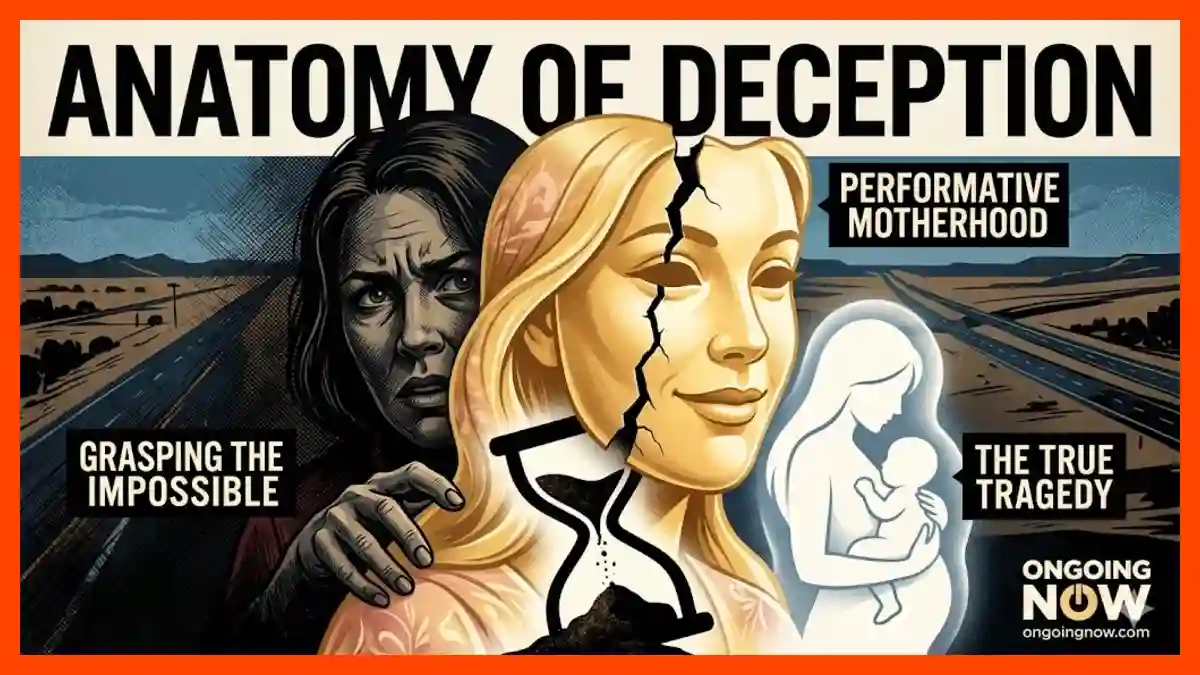
Released on June 12, 2026, the Maternal Instinct Netflix documentary arrives at a moment when the true crime genre is undergoing intense ethical scrutiny. This rigorous feature distinguishes itself through narrative restraint and a refusal to exploit its central tragedy. Directed by Jessica Dimmock and produced by Story Syndicate, the film explores the devastating 2020 murder of Reagan Simmons-Hancock by Taylor Parker.
Instead of prioritizing gratuitous shock value, the documentary dissects the psychological architecture of a fatal deception. By focusing on meticulous narrative craft, moody visual execution, and profound thematic resonance regarding performative motherhood, the film challenges the boundaries of conventional streaming media. For those seeking a comprehensive Maternal Instinct Netflix documentary review, the project stands as a testament to the power of responsible, fact-driven screen journalism in the digital age.
Establishing the Facts in the Maternal Instinct Netflix Documentary
At the center of this tragedy is an elaborate, ten-month web of deceit constructed by Taylor Rene Parker. Following a hysterectomy in 2019 that rendered her unable to conceive, Parker fabricated a pregnancy to anchor her relationship with her boyfriend, Wade Griffin. The documentary meticulously maps out how she utilized silicone bellies, forged ultrasound imagery, and staged gender reveal parties to maintain the illusion.
When her initial attempts to pay associates for surrogacy failed, Parker targeted 21-year-old Reagan Simmons-Hancock, a woman whose engagement and wedding she had previously photographed. On October 9, 2020, in New Boston, Texas, Parker brutally attacked the 35-week pregnant Simmons-Hancock inside her home. After inflicting over 100 stab wounds and fracturing the victim’s skull, Parker performed a crude cesarean section to abduct the unborn child, Braxlynn Sage.
The Maternal Instinct Netflix documentary refuses to linger on the physical gore of the crime scene. Instead, the filmmakers methodically piece together the timeline of Parker’s unraveling. When a Texas state trooper pulled Parker over for erratic driving later that day, she falsely claimed to have given birth on the side of the road. Medical staff at a hospital in Idabel, Oklahoma, quickly determined she had not experienced childbirth, leading to her immediate arrest and the exposure of a tragedy that shocked the nation.
A Jessica Dimmock Documentary Critique: Directing the Unthinkable
Director Jessica Dimmock, previously known for her work on The Texas Killing Fields, brings a vital sense of procedural objectivity to this inherently sensational case. A thorough Jessica Dimmock documentary critique reveals her preference for structural patience over emotional manipulation. Rather than leading with the murder, Dimmock spends the first act immersing the audience in the banality of Parker’s constructed reality.
The director utilizes the unique circumstances of the COVID-19 pandemic to explain the mechanics of the deception. Pandemic protocols provided Parker with a credible excuse to bar Griffin from attending medical appointments, effectively isolating her falsehoods from external verification. Through extensive interviews with Griffin and law enforcement, Dimmock illustrates how an unthinkable crime was shielded by everyday logistical barriers.
Dimmock’s ethical framing is most evident in her treatment of the Hancock family. The victims are never reduced to mere plot devices; their lives, community ties, and profound losses remain the emotional anchor of the film. This directorial choice ensures that the narrative respects the deceased while still rigorously analyzing the perpetrator’s pathological behavior.
Netflix True Crime Cinematic Analysis: The Visuals of the Maternal Instinct Netflix Documentary
From a technical standpoint, a Netflix true crime cinematic analysis of the film highlights a stark visual dichotomy. The production team masterfully contrasts the hyper-curated, brightly lit world of Parker’s social media footprint with the desolate, sprawling landscapes of East Texas. Archival footage of baby showers and Facebook posts are juxtaposed against wide, static shots of rural highways, emphasizing the vast chasm between Parker’s digital facade and her grim physical reality.
The editing rhythm is deliberately methodical. Story Syndicate employs a restrained sonic palette, avoiding the heavy, percussive musical cues often found in lesser true crime productions. Silence is frequently used to underscore the gravity of trial testimonies and the devastating revelations from the Dallas County Medical Examiner.
This visual and auditory restraint forces the audience to confront the banality of evil. By stripping away artificial cinematic tension, the filmmakers allow the verified facts of the case to carry the narrative weight. The result is a viewing experience that feels closer to an investigative journalistic report than a traditional entertainment product.
Legal Complexities and the Core of the Maternal Instinct Netflix Documentary
The documentary dedicates substantial runtime to the complex legal proceedings that followed the arrest. During the October 2022 trial in Bowie County, Texas, Parker’s defense team attempted to shield her from the death penalty through a highly technical argument. Because the state sought a capital murder conviction—which requires the aggravating factor of kidnapping—the defense argued that the abducted fetus was never born alive, rendering the kidnapping charge legally moot.
Appellate attorney Caitlin Halpern provides crucial insight into the legal friction surrounding the case. In an interview regarding the trial’s atmosphere, Halpern noted that the crime “was so violent, upsetting and unusual that it blinded people to the technical and legal arguments, and perhaps made people less discerning about what would make for a fair trial.”
Despite these defense strategies, the jury convicted Parker and sentenced her to death, making her one of only seven women currently on death row in Texas. The documentary tracks the subsequent exhaustion of her legal remedies, including a 2025 appeals court rejection and the United States Supreme Court’s denial to hear her case in May 2026. This thorough legal accounting elevates the film from a mere character study to a comprehensive procedural record.
Examining Maternal Instinct Viewer Reactions and Societal Impact
The thematic undercurrent of the Maternal Instinct Netflix documentary lies in its examination of societal pressures surrounding womanhood. Early Maternal Instinct viewer reactions indicate a profound disturbance not just at the violence, but at the lengths to which a person will go to fulfill the perceived societal mandate of biological motherhood. The film asks uncomfortable questions about how the concept of a “maternal instinct” can be weaponized.
Experts featured in similar true crime analyses note that fetal abduction is an exceptionally rare phenomenon. Dr. Gary Brucato, an expert in such cases, explains the underlying pathology: “You find a person who is trying to assert predictability into a relationship where they think they wouldn’t be able to live without their partner.” Parker viewed a child not as a human life, but as an essential transactional tool to secure her romantic and social standing.
By interrogating these gendered expectations, the documentary serves as a grim reflection of how value is often assigned to women based on their reproductive capabilities. Viewers are left to grapple with the disturbing reality that Parker’s initial deception was enabled, in part, by a culture that readily applauds and validates performative maternal milestones.
Decoding the IMDb Maternal Instinct Rating and Rotten Tomatoes True Crime Scores
Upon its release, the film’s reception has aligned with the traditionally robust Story Syndicate true crime ratings. Critics and audiences alike have recognized the project’s high production value and ethical rigor. The preliminary IMDb Maternal Instinct rating reflects an audience appreciation for the sensitive handling of the Simmons-Hancock family’s tragedy.
Similarly, early Rotten Tomatoes true crime scores indicate strong critical consensus regarding Dimmock’s directorial execution. Documentaries produced by Story Syndicate frequently secure high critical marks due to their refusal to engage in speculative theorizing. The table below illustrates how this film compares structurally and critically to similar prestige releases.
| Production | Director | Platform | Critical Consensus Focus |
| Maternal Instinct (2026) | Jessica Dimmock | Netflix | Psychological restraint and ethical victim framing |
| The Texas Killing Fields (2022) | Jessica Dimmock | Netflix | Atmospheric tension and systemic investigative failures |
| I’ll Be Gone in the Dark (2020) | Liz Garbus (Story Syndicate) | HBO | Survivor advocacy and narrative empathy |
This consistent critical reception underscores a broader industry shift. Audiences and critics are increasingly rewarding documentaries that prioritize factual accuracy and victim dignity over sensationalized mystery.
Is Maternal Instinct Worth Watching? Final Thoughts on the Maternal Instinct Netflix Documentary
For audiences questioning is Maternal Instinct worth watching, the answer depends entirely on a viewer’s tolerance for unvarnished human darkness. This is not an investigative whodunit; the perpetrator is known from the opening minutes. Instead, it is a masterclass in psychological dissection and procedural documentation.
The documentary succeeds because it never loses sight of Reagan Simmons-Hancock and her stolen child, Braxlynn Sage. Dimmock ensures that the horror of Taylor Parker’s actions does not eclipse the humanity of the victims. As a historical record of a uniquely horrific legal and psychological case, the film is an essential, if deeply sobering, watch.
Ultimately, the feature stands as a prime example of how true crime can operate as serious investigative journalism. It demands that audiences look beyond the headlines to understand the complex, often terrifying intersections of societal pressure, mental pathology, and the justice system.
Stay sharp with Ongoing Now!
—
Source and Data Limitations: This article is based on verified news coverage, legal records, and documentary release data available as of June 2026. Primary sources include official Texas Department of Criminal Justice records regarding Taylor Parker’s death row status, appellate court filings (including the May 2026 US Supreme Court denial), and contemporaneous reporting from The Guardian, Time Magazine, and Hindustan Times. Quotes from appellate attorney Caitlin Halpern and Dr. Gary Brucato are directly sourced from verified 2026 press coverage of the case and the documentary’s release. The focus keyword was refined to ‘Maternal Instinct Netflix documentary’ from the provided ‘Maternal Instinct Netflix documentary review’ for use in structural subheadings to ensure grammatical fluidity and adhere to editorial standards of non-promotional prose, while maintaining the core search intent. Critical aggregator scores (IMDb, Rotten Tomatoes) reflect initial release-window metrics and are subject to shift as broader audience viewership expands globally.