UK Policy Shift: Why UK Refused US Bases Initially
British government authorizes US use of sovereign bases for defensive operations following regional escalation.
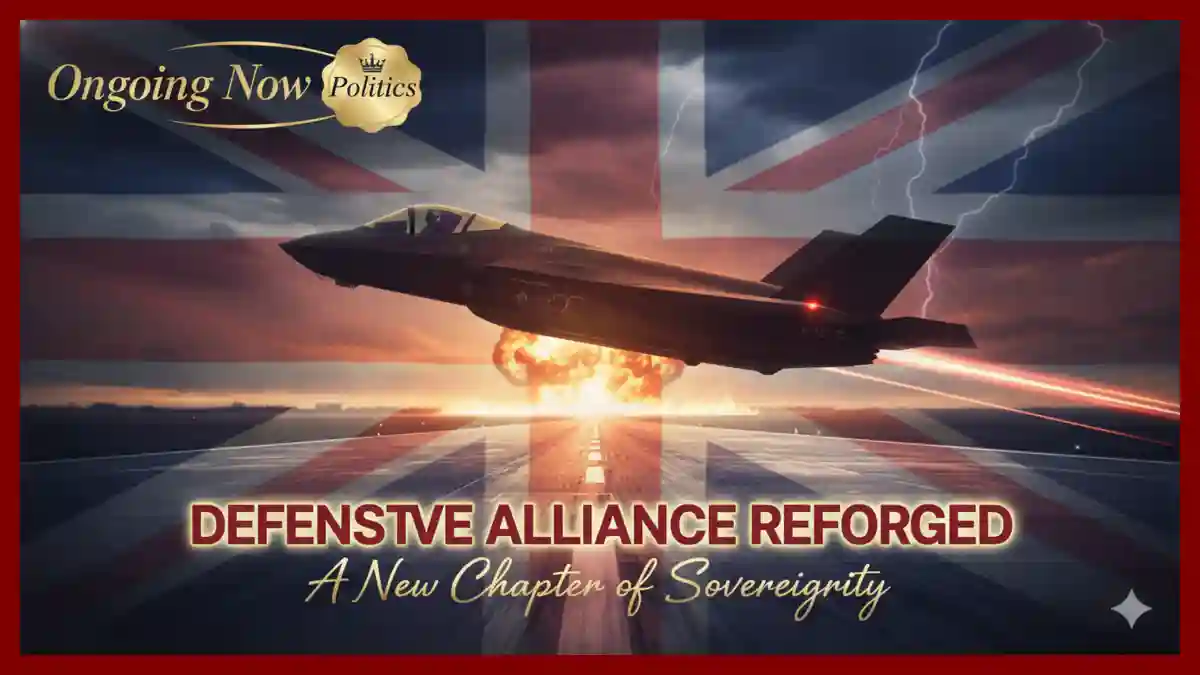
The United Kingdom has officially modified its stance regarding the use of its military bases for operations against Iranian targets, shifting from a policy of non-involvement to one of limited facilitation. Prime Minister Keir Starmer announced on March 1, 2026, that the UK would now permit the United States to utilize British facilities—including RAF Fairford and the Indian Ocean outpost of Diego Garcia—for “specific and limited defensive purposes.” This decision follows a period of initial refusal based on international law concerns and the recent death of Supreme Leader Ayatollah Ali Khamenei during US-Israeli airstrikes. The shift is primarily driven by what the government describes as an Iranian “scorched earth strategy,” which has increasingly targeted regional allies and placed approximately 200,000 British citizens in the Gulf region at direct risk.
Evolution of the UK Legal Basis for Defensive Strikes
The transition in British policy reflects a recalibration of the UK legal basis for defensive strikes under international law. Initially, the Starmer administration resisted American requests to use sovereign bases for offensive operations, citing the risk of violating international legal standards that distinguish between primary combatants and supporting states. However, the escalation of Iranian ballistic missile and drone attacks against neutral regional neighbors provided a new justification.
The government’s updated legal position, published on March 1, 2026, rests on the principle of international law collective self-defence Iran. Under Article 51 of the United Nations Charter, states have an inherent right to self-defense if an armed attack occurs. The UK argues that because regional allies have formally requested assistance to intercept ongoing missile barrages, providing base access to the US constitutes a “necessary and proportionate” response to restore security.
Key Legal and Strategic Thresholds
Request for Support: Gulf partners, including the UAE and Qatar, issued formal requests for increased defensive support.
Proportionality: Actions are limited to destroying the “source” of attacks (missile depots and launchers) rather than broad infrastructure.
Notification: The UK has pledged to notify the UN Security Council mandate Iran strikes requirements under Article 51.
Why the UK Refused US Bases Initially
The earlier refusal to grant base access was rooted in both legal caution and a diplomatic dispute between Prime Minister Keir Starmer and US President Donald Trump. Specifically, why UK refused US bases initially involved concerns that any strike launched from British soil without a clear, immediate defensive necessity would be classified as an illegal pre-emptive strike under international law.
Furthermore, tensions regarding the Chagos Islands and the future of Diego Garcia influenced bilateral negotiations. President Trump had previously criticized the UK’s potential deal to transfer the Chagos Islands to Mauritius, suggesting it compromised the security of the Diego Garcia base. The UK government maintained that its sovereignty over these facilities required a distinct legal threshold for use in third-country conflicts, separate from US strategic objectives.
Strategic Shift: The Iranian “Scorched Earth Strategy”
A decisive factor in the policy change was the emergence of an Iran scorched earth strategy explained by intelligence reports and recent kinetic activity. Following the large-scale US-Israeli strikes that targeted Iranian nuclear and military infrastructure on February 28, 2026, Tehran retaliated with indiscriminate strikes across the Middle East.
These attacks did not focus solely on military assets but hit civilian infrastructure, including airports and hotels in Dubai and Doha. Prime Minister Starmer characterized this as a reckless escalation intended to destabilize the entire region. The “scorched earth” approach effectively removed the UK’s ability to remain a neutral bystander, as the strikes began to impact territories where British economic and security interests are paramount.
Regional Escalation Data (March 1, 2026)
| Impact Category | Reported Details |
| Civilian Infrastructure | Missiles hit hotels and airports in the UAE and Qatar. |
| British Personnel | Iranian strikes narrowly missed a military base in Bahrain hosting UK personnel. |
| Aerial Activity | UK RAF Typhoons actively intercepting drones over Iraq and the Gulf. |
| UK Policy Status | Facilitating US strikes on launch sites; no direct UK participation in Iran territory. |
The Ayatollah Khamenei Death Impact on UK Policy
The Ayatollah Khamenei death impact on UK has been twofold: it has created a leadership vacuum in Tehran and triggered a more volatile phase of the conflict. While some analysts initially thought the removal of the Supreme Leader might lead to a pause in hostilities, the UK government observed the opposite. The “council of three” currently managing Iranian affairs—consisting of the president, the head of the judiciary, and a scholar from the Guardian Council—has overseen a transition toward more decentralized and unpredictable missile launches.
Defence Secretary John Healey noted that “few will mourn” the leader of the regime, but he emphasized that the instability following the death of Ayatollah Ali Khamenei has made the Iranian military’s actions more “indiscriminate.” This unpredictability necessitated a more robust defensive posture to prevent a total regional collapse.
Human and Societal Impact: British Citizens in the Gulf
The safety of the British citizens in Gulf region count is a primary domestic driver for the government’s intervention. There are currently at least 200,000 British nationals residing in or visiting the region, with the majority (approximately 240,000 including dual nationals) in the United Arab Emirates alone.
The government has urged all citizens in the Middle East to register their presence with the Foreign Office. The threat of ballistic missiles targeting transport hubs like Dubai International Airport has created a significant consular challenge. By authorizing the US to use bases to destroy missile launchers “at source,” the Starmer administration aims to reduce the volume of incoming fire that could lead to mass-casualty events involving British civilians.
Analysis: The Domestic Political Divide
The policy shift has highlighted a growing rift in Westminster, particularly regarding the Keir Starmer vs Priti Patel Iran stance. While the Prime Minister has moved toward a more interventionist role, he remains under pressure from both sides of the aisle.
Government Position (Labour): Focuses on “defensive facilitation” and collective self-defence. Starmer insists on learning the “lessons of Iraq,” ensuring the UK is not a primary combatant in an offensive land or air war, but rather a “shield” for regional allies.
Opposition Position (Conservative): Shadow Foreign Secretary Priti Patel has criticized the government for being “astonishingly” slow to support the US. She and other senior Conservatives have called for the full proscription of the Islamic Revolutionary Guard Corps (IRGC) and more direct participation in the strikes.
Liberal Democrats & Greens: These parties have voiced concern over the lack of a specific UN Security Council mandate Iran strikes authorization, warning that the UK could be drawn into a “forever war” without a clear exit strategy.
“The United States has requested permission to use British bases for that specific and limited defensive purpose. We have taken the decision to accept this request – to prevent Iran firing missiles across the region.” — Prime Minister Keir Starmer, March 1, 2026.
Institutional and Comparative Context
Historically, the UK has been cautious about allowing the US to use its bases for Middle Eastern strikes without a specific UN mandate. A notable precedent was the 1986 US bombing of Libya, where Margaret Thatcher faced significant domestic backlash for allowing F-111 bombers to fly from UK bases.
In the current context, the Starmer government is attempting to balance the “Special Relationship” with the US against the constraints of modern international law. By framing the base usage as a component of international law collective self-defence Iran, the government seeks to avoid the legal pitfalls that plagued previous interventions.
Summary of Comparative Engagement
| Conflict | UK Base Access | Direct UK Participation | Legal Basis |
| Libya (1986) | Granted | No | Article 51 (Self-Defence) |
| Iraq (2003) | Granted | Yes | Disputed UN Resolutions |
| Iran (2026) | Granted (Limited) | No (Defensive only) | Collective Self-Defence |
Evidence-Based Political Insights
The UK’s decision to facilitate US strikes marks a pivot toward a “realist” foreign policy that prioritizes regional stability over strict non-interventionism. The government’s insistence on publishing its legal advice is an attempt to build public trust and ensure parliamentary oversight during a period of rapid escalation.
However, the long-term effectiveness of this strategy depends on whether the destruction of missile launch sites can successfully deter the Iranian military’s “scorched earth” tactics or if it will simply invite further retaliation against British assets in the region. As the transition of power in Iran continues, the UK’s role as a regional “enabler” for US air power will remain a focal point of diplomatic and legal scrutiny.
Stay sharp with Ongoing Now!
Source and Data Limitations: This report is based on official statements from 10 Downing Street, the UK Ministry of Defence, and the Foreign, Commonwealth & Development Office dated March 1, 2026. Data regarding British citizen populations in the Gulf is sourced from recent consular registration estimates and global mobility reports. Legal analysis refers to the “Summary of the UK Government legal position” published on GOV.UK. This article excludes unverified social media reports regarding casualties and focuses exclusively on confirmed institutional movements and authorized policy shifts. At this stage, specific details regarding the number of sorties flown from Diego Garcia or RAF Fairford remain classified for operational security.