Juliana Stratton Wins Illinois Primary to Replace Dick Durbin
Lt. Gov. Juliana Stratton secures the Democratic Senate nominee Illinois position following the retirement of Senator Dick Durbin.
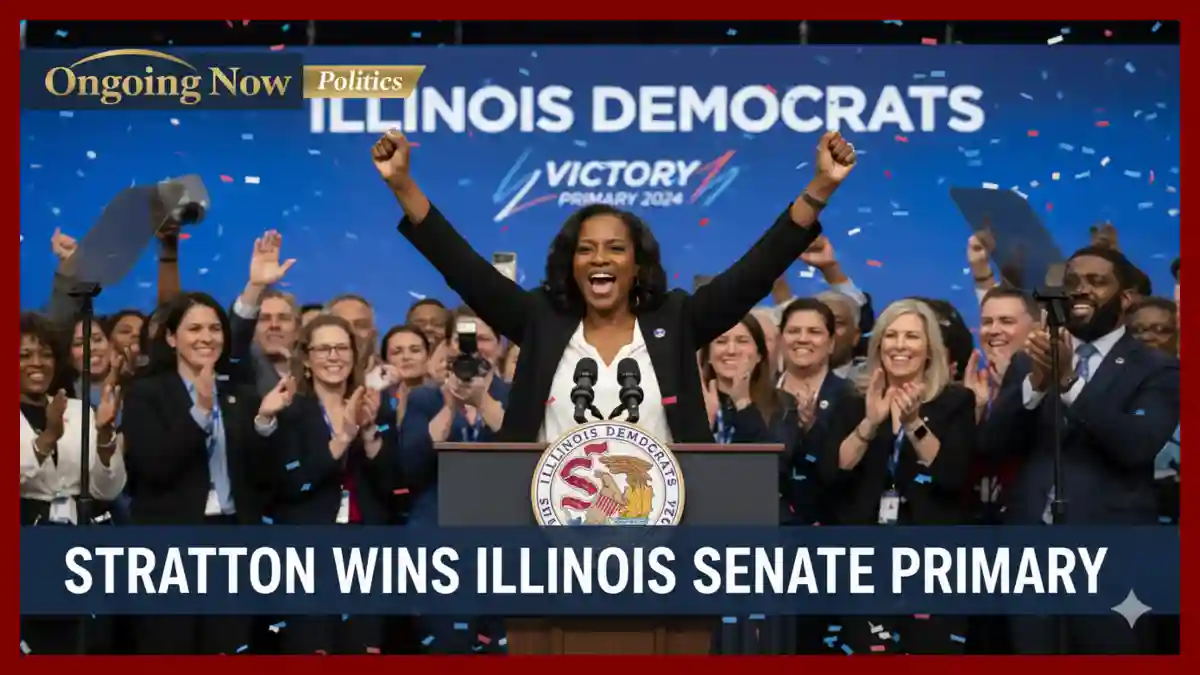
The landscape of Illinois representation in the United States Senate underwent a definitive shift on March 17, 2026, as Lieutenant Governor Juliana Stratton won the Democratic primary for the seat currently held by Senator Dick Durbin. Following the Dick Durbin retirement announcement on April 23, 2025, which ended nearly three decades of service, the 2026 Illinois primary election winners have set the stage for a high-stakes November general election. Stratton emerged victorious from a crowded field of ten candidates, defeating prominent challengers including Representative Raja Krishnamoorthi and Representative Robin Kelly. With Raja Krishnamoorthi concession speeches finalized and Robin Kelly election results confirming a third-place finish, the Democratic Party now looks toward a general election matchup between Juliana Stratton vs Don Tracy, the former Illinois Republican Party chairman.
This transition marks a significant moment in Senate Democratic leadership changes, as Durbin has served as the Senate Democratic Whip since 2005. The vacancy created by the political impact of Durbin retirement has allowed for a generational and demographic shift within the Illinois 2026 election cycle. If successful in November, Stratton would continue the history of Black women in US Senate leadership, following in the footsteps of Carol Moseley Braun.
Primary Outcomes and Vote Distribution
The Democratic primary for the Illinois open Senate seat history was characterized by intense fundraising and distinct ideological platforms. According to projected results from the March 17 primary, Stratton maintained a consistent lead as the Democratic Senate nominee Illinois throughout the night.
Democratic Primary Results (Class II Senate Seat)
| Candidate | Vote Percentage | Total Votes (Approximate) |
| Juliana Stratton | 40.0% | 461,127 |
| Raja Krishnamoorthi | 33.2% | 383,103 |
| Robin Kelly | 18.2% | 210,450 |
| Kevin Ryan | 4.9% | 57,120 |
| Others (7 candidates) | <4.0% Combined | 35,000+ |
Note: Results are based on 90% of precincts reporting as of March 18, 2026.
In the Republican primary, Don Tracy secured the nomination with approximately 40.0% of the vote, defeating Jeannie Evans (22.3%) and Casey Chlebek (11.5%). Tracy, an attorney and former chairman of the Illinois Gaming Board, will represent the GOP in the quest to flip a seat that has remained in Democratic hands since 1997.
Analysis: Factors Influencing the Democratic Nominee Illinois Selection
The victory for Juliana Stratton reflects a combination of executive experience and significant institutional backing. While Representative Raja Krishnamoorthi entered the race with a substantial financial advantage—starting 2026 with over $15 million on hand—the Durbin endorsement for Senate and the support of Governor JB Pritzker proved pivotal.
Pritzker, often discussed as a potential 2028 presidential contender, utilized the “Illinois Future PAC” to bolster Stratton’s campaign. This move drew scrutiny from some members of the Congressional Black Caucus, who were split between supporting Stratton and Representative Robin Kelly. Kelly campaigned on her federal legislative record, emphasizing her ability to deliver for urban, suburban, and rural districts alike. However, Stratton’s platform, which mirrored many of the Pritzker administration’s state-level policies, resonated with a plurality of primary voters.
The “Illinois blueprint” cited by Stratton includes:
Expansion of the Earned Income Tax Credit
Federal implementation of “Birth Equity” initiatives to reduce maternal mortality
Strong opposition to current federal immigration enforcement policies, including calls to abolish ICE
Dick Durbin Career Retrospective and Retirement Context
Understanding why is Dick Durbin retiring requires a look at his 44-year career in federal service. First elected to the House in 1982 and the Senate in 1996, Durbin is currently the longest-serving popularly elected Senator in Illinois history.
“The decision of whether to run for re-election has not been easy… But in my heart, I know it’s time to pass the torch.” — Senator Dick Durbin, April 23, 2025.
Durbin’s legacy is defined by his tenure as Chair of the Senate Judiciary Committee and his role in the Senate Democratic leadership changes. His legislative highlights include the authorship of the original Dream Act in 2001 and leading the confirmation of 235 federal judges, including Associate Justice Ketanji Brown Jackson. His retirement leaves a vacuum in the Senate Class II vacancies that impacts not just Illinois, but the national Democratic strategy for the 120th Congress.
The Path Toward Representation: Black Women in US Senate
The 2026 race is notable for its potential to set a record for the number of Black women in US Senate roles. Illinois has a unique history in this regard, having elected Carol Moseley Braun as the first Black woman senator in 1992. Stratton’s nomination ensures that Illinois remains a focal point for demographic milestones in American governance.
If elected in November, Stratton would join a Senate that recently saw the additions of Angela Alsobrooks (Maryland) and Lisa Blunt Rochester (Delaware) in 2024. This trend represents a broader shift in the Democratic pipeline, moving away from traditional seniority-based transitions toward candidates who represent the party’s diverse base. Both Moseley Braun and current Senator Tammy Duckworth endorsed Stratton, signaling a desire for continuity in the state’s progressive representation.
Regional Impacts and Voter Demographics
The primary results revealed a geographic divide in candidate support across Illinois. Stratton performed strongly in Cook County and the surrounding collar counties, benefiting from high name recognition as Lieutenant Governor. Krishnamoorthi maintained a strong base in the 8th Congressional District (Schaumburg and northwest suburbs), while Kelly performed well in the 2nd District and parts of Southern Illinois.
Regional Performance Highlights
Chicago/Cook County: Stratton secured nearly 45% of the vote here, aided by the endorsements of local leaders and organized labor.
Suburban Ring: Krishnamoorthi’s business-centric platform and “moderate” stance on economic pain points helped him remain competitive in DuPage and Kane counties.
Downstate Illinois: Voter turnout in rural areas favored Republican candidates in their respective primary, but Democratic voters in college towns like Champaign and Bloomington showed a slight preference for Stratton’s progressive policy proposals.
The political impact of Durbin retirement also triggered several House vacancies. For example, in the 8th District, Melissa Bean won the Democratic primary to replace Krishnamoorthi, while Donna Miller secured the nomination for Kelly’s 2nd District seat.
What the Data Shows: Financial and Strategic Analysis
The Illinois primary served as a case study in the efficacy of self-funded vs. PAC-supported campaigns. Krishnamoorthi raised nearly $25 million, the highest in the field, yet was unable to overcome the combined influence of state-level endorsements and targeted media spending.
Comparative Campaign Finance (As of March 2026)
Raja Krishnamoorthi: $24.9M raised / $19.3M spent
Robin Kelly: $2.7M raised / $2.2M spent
Juliana Stratton: $2.1M raised / $1.2M spent (excluding outside PAC support)
Analysis indicates that while Krishnamoorthi dominated the airwaves early, the “infusion of cash” from the Illinois Future PAC in the final weeks leveled the playing field for Stratton. Furthermore, the Illinois primary election winners 2026 data suggests that voters prioritized “executive alignment” with the popular Pritzker administration over federal legislative seniority.
Societal and Policy Implications of a Stratton-Tracy Matchup
As the state moves toward the November general election, the policy differences between Juliana Stratton vs Don Tracy will center on governance philosophy and federal-state relations. Tracy has positioned himself as a check on what he describes as “one-party rule” in Springfield, focusing on economic deregulation and border security. In contrast, Stratton is running on a platform of “Medicare for All” and a $25 per hour federal minimum wage.
The outcome of this race will directly influence the partisan balance of the 120th Congress. Currently, Republicans hold a slim majority in the Senate. With Illinois being a Democratic stronghold, a Stratton victory is widely expected, but the margin of victory will serve as a bellwether for the party’s performance in the Midwest during the 2026 midterms.
Stay sharp with Ongoing Now!
Source and Data Limitations: This report is based on primary election data from the Illinois State Board of Elections, Federal Election Commission (FEC) filings for the 2025-2026 cycle, and official retirement statements from the Office of Senator Dick Durbin. Results for the March 17 primary are based on projections from the Associated Press and CBS News with 90% of precincts reporting. Information regarding candidate platforms was sourced from official campaign websites and verified candidate forums held in early 2026. This analysis excludes speculative 2028 presidential forecasting and focuses strictly on the verified outcomes of the 2026 primary. Historical context for Senate vacancies is derived from the Congressional Research Service.