How One Nation Reshapes the Australian Political Landscape
The 2026 South Australian election results confirm a historic surge in the One Nation primary vote, signaling a shift in voter demographics.
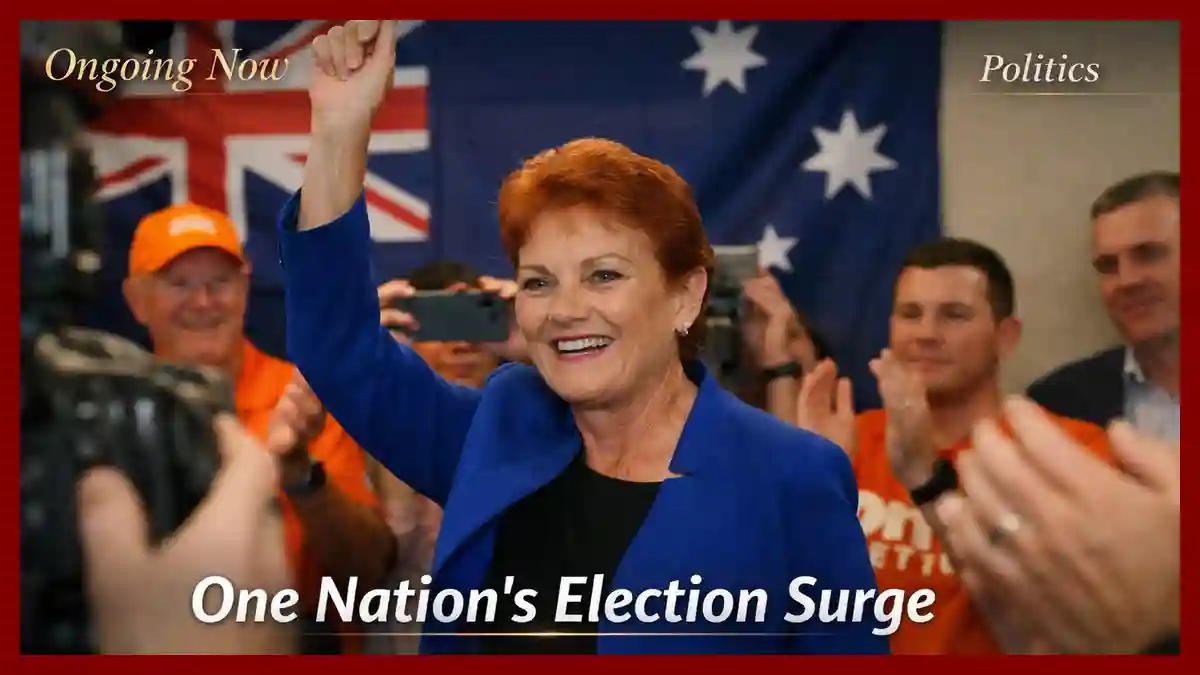
The March 21, 2026, South Australian state election has delivered a definitive shift in the region’s institutional power dynamics, marked by a record-breaking One Nation primary vote that has fundamentally altered the state’s traditional two-party system. While the Labor government under Premier Peter Malinauskas secured a second term with a decisive majority, the election’s most significant outcome was the collapse of the Liberal Party’s primary support to historic lows. This transition saw Pauline Hanson’s One Nation emerge as the second-largest party by primary vote share in several regions, driven by a growing protest vote and a perceived disconnect between major party platforms and suburban and regional concerns. The resulting parliamentary composition, including the election of Sarah Game to the Legislative Council, necessitates a new analytical look at how right-wing populism and changing SA voter demographics are reshaping governance in South Australia.
The 2026 Electoral Realignment: Data and Outcomes
The Electoral Commission of South Australia (ECSA) reported a dramatic redistribution of primary support during the 2026 polls. For the first time in South Australian history, the Liberal Party was outpolled by a minor party in total primary votes across several key metrics. Preliminary data shows One Nation securing approximately 21.6% of the state-wide primary vote, surpassing the Liberal Party’s 18.7%.
This result is not merely a statistical anomaly but a reflection of a broader Liberal party collapse within the state. The Liberal Party, led by Ashton Hurn, faced significant challenges in retaining its traditional heartland seats, particularly in the Adelaide metropolitan area where Labor’s dominance was near-total. The shift suggests that a significant portion of the electorate no longer views the Liberal platform as the primary alternative to Labor, instead turning to One Nation as a vehicle for systemic dissatisfaction.
| Party Affiliation | Primary Vote (%) | Seat Status (House) |
| Australian Labor Party (ALP) | 39.1% | 35 (Leading/Won) |
| Pauline Hanson’s One Nation | 21.6% | 0 (Significant 2nd places) |
| Liberal Party of Australia | 18.7% | 8 (Leading/Won) |
| The Greens | 11.1% | 0 |
| Independents/Others | 9.5% | 4 |
| Data based on 94.8% count progress as of March 22, 2026. Caveat: Final seat counts subject to preference distribution. |
Analyzing the Pauline Hanson SA Impact
The Pauline Hanson SA impact was most visible in the “pincer movement” that decimated the Liberal vote. In metropolitan Adelaide, Labor expanded its reach into traditionally “blue” territory, flipping seats such as Unley and Morialta. Simultaneously, One Nation eroded the Liberal base in regional hubs and outer-northern suburbs. In seats like Elizabeth and Taylor, One Nation’s primary vote reached double figures, positioning the party as the primary challenger in seats where the Liberal Party was once the default opposition.
Analysts point to a growing “representation gap” as the primary driver for why One Nation is popular in 2026. According to YouGov data collected in the week leading up to the election, 52% of One Nation supporters cited a feeling of being “unrepresented by major parties” as their chief motivation. This suggests the 2026 result is less about specific policy endorsements and more about a structural protest vote against the perceived homogenization of the Labor and Liberal platforms.
Regional Shifts and Voter Demographics
The SA voter demographics shift in this election highlights a widening divide between inner-metropolitan Adelaide and the rest of the state. While Labor maintains a high approval rating in the city center—aided by Premier Malinauskas’s personal popularity—regional South Australia showed a distinct preference for alternative representation. In non-metropolitan areas, One Nation’s support surged to 27%, leading both Labor (24%) and the Liberals (21%) in primary preferences.
This regional surge was particularly potent in seats such as Chaffey and Hammond. While these seats may remain in Liberal or Independent hands after preferences are distributed, the high primary vote for One Nation forces a recalibration of how regional policy is developed. The demographic profile of the 2026 One Nation voter includes a significant increase in support from male voters and those in lower-to-middle-income brackets who feel the “cost-of-living” pressures have not been adequately addressed by federal or state incumbents.
Comparative Analysis: One Nation vs Liberal Platform
The 2026 results invite a direct comparison between the One Nation vs Liberal platform. Historically, the Liberal Party has relied on a platform of economic management and conservative social values to anchor its base. However, the 2026 campaign saw the Liberal Party struggle to differentiate itself effectively from a centrist Labor government that has co-opted several traditional Liberal stances on infrastructure and business.
One Nation, conversely, utilized a platform centered on “economic nationalism,” focusing on energy costs, immigration levels, and regional investment. By framing these issues through a populist lens, the party successfully captured a segment of the electorate that previously swung between the two major parties. The One Nation primary vote 2026 indicates that in the absence of a distinct Liberal identity, voters on the right are increasingly comfortable moving toward more insurgent populist options.
“The election was billed as the first test of whether an insurgent One Nation could translate support in opinion polls into votes at the ballot box… One Nation has put meat on the bones of its polling surge.” — Verified Analysis, The Guardian Australia.
Institutional and Legislative Implications
The presence of One Nation in the South Australian Parliament, particularly through the Legislative Council, introduces new complexities to the legislative process. With Labor holding a commanding majority in the House of Assembly, the upper house becomes the primary site for policy scrutiny. The election of Sarah Game and the potential for a second One Nation seat in the Council means the government must navigate a more fragmented crossbench.
This shift mirrors broader protest vote trends in Australia. Recent federal and state polling in Victoria and New South Wales has shown similar surges for One Nation, suggesting that the South Australian result is a harbinger of a national trend rather than an isolated local event. For the Liberal Party, the 2026 South Australian result serves as a critical warning regarding base retention and the need for a more defined ideological alternative to the Labor government.
Why This Matters: The Human Impact
Beyond the tallies and seat counts, the rise of right-wing populism in Australia reflects a community-level desire for more direct advocacy on local issues. In regions like the Barossa Valley and the Riverland, the 2026 vote signifies a demand for policy that prioritizes regional sustainability over metropolitan expansion. Voters in these areas expressed concerns that major-party policies often overlook the specific economic pressures of agricultural and manufacturing communities.
The “human-centric” reality of this election is a state divided not just by party lines, but by expectations of what governance should deliver. For the Malinauskas government, the challenge for the 2026–2030 term will be addressing the grievances of the nearly 30% of regional voters who rejected the major-party status quo.
Evidence-Based Political Insights
The 2026 South Australian election provides three key insights for future electoral cycles:
Primary Vote Fragmentation: The era of the “two-party preferred” dominance is being challenged by a “three-party primary” reality in regional areas.
Leadership Centrality: Labor’s victory was heavily tied to the personal approval of the Premier, masking a slight decline in the party’s own primary support (down to 39.1% from 40% in 2022).
The New Opposition: If current trends persist, the “Opposition” may increasingly consist of a loose coalition of minor parties and independents rather than a single unified major party.
As the final counts are verified by the ECSA, the focus shifts to how the Liberal Party will restructure following its most significant electoral setback in South Australian history and how One Nation will utilize its newfound institutional influence.
Stay sharp with Ongoing Now!
Source and Data Limitations: This report is based on preliminary 2026 South Australian state election data provided by the Electoral Commission of South Australia (ECSA) as of March 22, 2026. Historical comparisons utilize 2022 state election results and 2025 federal election data. Polling data was sourced from YouGov (March 9–17, 2026) and Roy Morgan (February–March 2026). Quotes were attributed to verified post-election analysis from The Guardian and Antony Green’s Election Blog. Note: Seat counts for the Legislative Council are subject to final preference distributions, which can take several weeks to finalize. Unverified claims regarding specific candidate motives or confidential party strategy have been excluded to maintain neutral reporting standards.