How to Protect Investment Portfolio During Geopolitical Conflict
Understand the mechanics of hedging against geopolitical risk and navigating market volatility through diversified assets.

Geopolitical conflicts, such as the tensions involving Iran in 2026, often trigger immediate reactions across global financial markets. Investors frequently see increased volatility in equities and sudden price shifts in energy and precious metals.
This guide explains the fundamental strategies used to manage these fluctuations. We will cover the role of safe-haven assets, the impact of conflict on commodities, and how long-term retirement accounts typically respond to international instability.
Quick Answer
Diversification: Reducing exposure to specific regions or sectors most affected by the conflict.
Safe Havens: Utilizing assets like gold or government bonds that historically retain value during uncertainty.
Long-term Focus: Maintaining a consistent strategy for 401(k) accounts rather than reacting to short-term news cycles.
Disclaimer: This is for informational purposes only and not personalized advice. Consult a qualified professional for your specific situation.
Understanding Geopolitical Risk and Market Behavior
Geopolitical risk refers to the potential for international events—such as wars, diplomatic tensions, or trade embargoes—to impact the value of investments. When conflict arises in the Middle East, markets often price in the “uncertainty factor.”
The primary concern during an Iran-related conflict is the disruption of energy supplies. Because the region is a global hub for oil and gas, any threat to shipping lanes like the Strait of Hormuz can lead to rapid price increases.
Strategies for Hedging Against Geopolitical Risk
Hedging is a risk management strategy used to offset potential losses in one investment by making another. To effectively practice hedging against geopolitical risk, investors often look toward assets that have a low correlation with the stock market.
1. Increase Liquidity and Cash Reserves
Holding a higher percentage of cash provides a buffer. This allows an investor to avoid selling assets at a loss during a market dip to cover immediate financial needs.
2. Utilize Inverse ETFs
Some specialized exchange-traded funds (ETFs) are designed to gain value when a specific index falls. These are complex tools and are generally used for short-term protection rather than long-term holding.
3. Diversify Across Sectors
While some sectors suffer during war, others may remain stable or even see increased demand. Defense, aerospace, and cybersecurity are often viewed as sectors that maintain activity during periods of heightened international tension.
The Role of Precious Metals: Buying Gold During Conflict
Gold is widely considered a “safe haven” asset. Historically, investors have turned to buying gold during conflict because it is a tangible asset with a limited supply that does not depend on a specific government’s ability to pay its debts.
| Asset Class | Behavior During Conflict | Primary Benefit |
| Gold | Often appreciates | Stores value; inflation hedge |
| Silver | Volatile but follows gold | Lower entry price; industrial use |
| US Treasury Bonds | Demand increases | Backed by government credit |
| Cash (USD) | Demand increases | Immediate liquidity |
Gold often experiences a “flight to safety” premium. When investors are nervous about the stability of paper currency or the stock market, the demand for gold bars, coins, and gold-backed ETFs typically rises.
Evaluating Commodity Trading Tips 2026
In 2026, commodities remain a focal point for those looking to offset inflation and war-related supply shocks. When considering commodity trading tips 2026, it is essential to look beyond just oil.
Energy: Crude oil and natural gas are the most direct plays in a Middle East conflict.
Agriculture: War can disrupt supply chains and fertilizer production, impacting the price of wheat, corn, and soybeans.
Base Metals: Copper and aluminum are vital for defense manufacturing and infrastructure, often seeing price support during military buildups.
Managing Retirement Accounts: Protecting 401k from Market Volatility
For many, a 401(k) or similar retirement plan is their largest investment. The goal of protecting 401k from market volatility is different than short-term trading; it focuses on maintaining the integrity of a decades-long plan.
Rebalancing Your Portfolio
If the value of your stocks drops significantly, your portfolio may become “unbalanced,” with too much weight in bonds or cash. Rebalancing involves buying more of the underperforming asset (stocks) while they are “on sale” to return to your target allocation.
Avoiding Panic Selling
Selling during a market crash locks in losses. Historically, markets have recovered from geopolitical shocks. Maintaining a diversified mix of international and domestic stocks, along with bonds, helps dampen the impact of any single event.
Identifying Safe Haven Assets
A safe haven assets list typically includes investments that are expected to retain or increase in value during times of market turbulence.
US Treasury Securities: Considered the lowest-risk investment because they are backed by the US government.
The US Dollar: In global crises, the dollar often strengthens as international investors seek the stability of the world’s reserve currency.
Swiss Franc (CHF): Due to Switzerland’s history of neutrality and a stable banking system, its currency is a traditional safe haven.
Defensive Stocks: Companies that provide essential services, such as utilities and consumer staples (food and household goods), tend to be less volatile.
Developing a War-Proof Investment Strategy
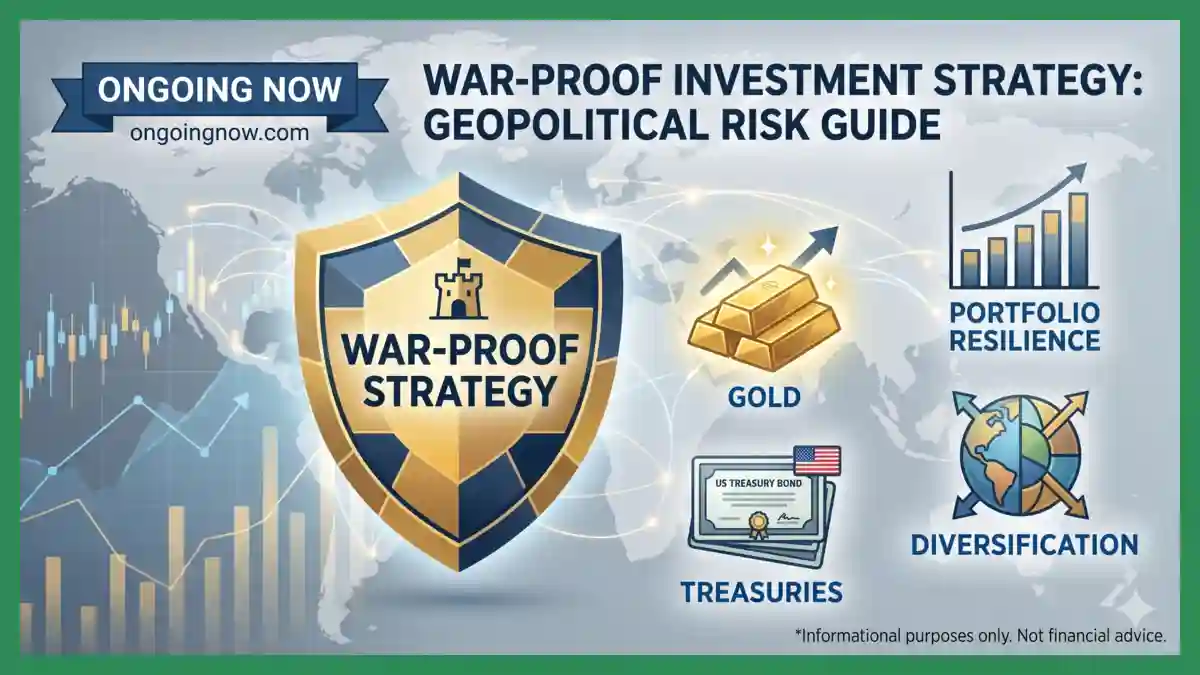
A war-proof investment strategy does not mean avoiding all risk. Instead, it means building a portfolio resilient enough to withstand various outcomes.
Step 1: Assessment of Exposure
Review your current holdings to see how much of your portfolio is tied to emerging markets or companies with heavy supply chain reliance on the affected region.
Step 2: Implement Inflation Protection
Conflicts often lead to higher prices for goods and services. Following an inflation protection guide involves looking at Treasury Inflation-Protected Securities (TIPS) or real estate, which often appreciate as prices rise.
Step 3: Global Diversification
Ensure your investments are spread across different geographic regions. While a conflict in the Middle East affects the whole world, domestic-focused companies in South America or Southeast Asia may be less directly impacted than those in Europe or North America.
Historical Context of Market Recovery
History shows that while the initial “shock” of a war causes a market dip, the recovery often begins shortly after the uncertainty is resolved. For example, during previous conflicts in the Gulf region, the S&P 500 often saw a “V-shaped” recovery once the scope of the conflict became clear.
Key Takeaways
Diversification is Essential: Do not rely on a single asset class or sector during times of war.
Gold is a Traditional Buffer: Gold serves as a store of value when currencies and equities face pressure.
Monitor Energy Exposure: Be aware that oil and gas prices drive much of the market volatility during Middle East tensions.
Maintain Long-Term Perspective: Retirement accounts like 401(k)s are built for long horizons; avoid making emotional decisions based on daily news.
Focus on Liquidity: Having accessible cash prevents the need to sell long-term investments at a discount.
Navigating a portfolio through geopolitical tension requires a balance of caution and consistency. While the natural reaction to conflict is concern, a structured approach—utilizing safe havens, diversifying sectors, and protecting retirement accounts—can help mitigate the financial impact of global instability. By understanding the mechanics of how war influences markets, investors can remain focused on their long-term objectives without being overwhelmed by short-term volatility.
Stay sharp with Ongoing Now!
Source and Data Limitations: This guide is based on historical market trends, economic principles regarding safe-haven assets, and standard financial risk management practices. Data regarding commodity trends and geopolitical impacts reflect general economic consensus as of 2026. This information is high-level and does not account for specific individual financial situations, tax implications, or real-time market shifts that can occur in seconds. The mention of specific asset classes like gold or Treasury bonds is for educational purposes and is not a recommendation to buy or sell. All investing involves risk, including the loss of principal. This is for informational purposes only and not personalized advice. Consult a qualified professional for your specific situation.