Strait of Hormuz: Why Trump Issued a 48-Hour Deadline
The United States has issued a precise 48-hour ultimatum for the full reopening of the Strait of Hormuz, threatening to "obliterate" Iranian power plants if the strategic waterway remains obstructed.

US President Donald Trump announced the deadline on Sunday, March 22, 2026, following a three-week de facto blockade of the world’s most critical energy corridor by Iranian forces. The ultimatum, delivered via Truth Social at 5:14 AM IST, marks a sharp escalation in the ongoing conflict that began on February 28. President Trump stated that if the passage is not opened “without threat,” the US military will target Iran’s largest energy facilities, specifically citing the destruction of power plants as the next phase of Operation Epic Fury. This development occurs as regional tensions reach a boiling point, with Iranian missiles recently striking areas near Israel’s Dimona nuclear facility and Tehran threatening to retaliate against US-linked desalination and IT infrastructure across the Middle East.
Strategic Demands and the 48-Hour Countdown
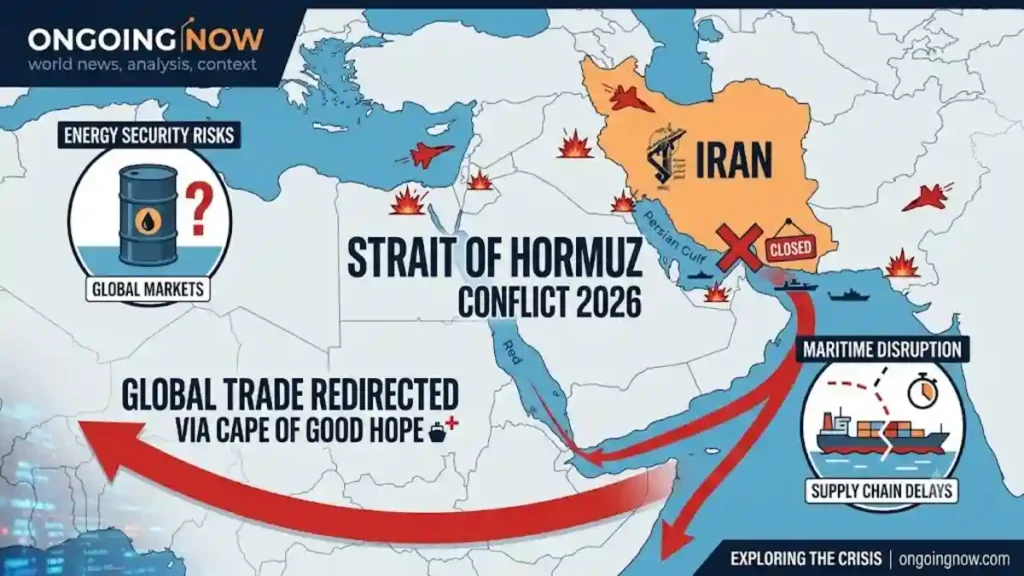
The 48-hour window is set to expire on Monday, March 23, 2026, at approximately 23:44 GMT. The focus keyword of this diplomatic and military push, the Strait of Hormuz, is the transit point for roughly 20% of the world’s daily oil consumption. Iran’s Islamic Revolutionary Guard Corps (IRGC) has significantly disrupted maritime traffic in response to initial US-Israeli strikes, leading to a surge in global oil prices and rationing in parts of Asia.
President Trump’s post specified a tiered approach to the threatened strikes: “The United States of America will hit and obliterate their various POWER PLANTS, STARTING WITH THE BIGGEST ONE FIRST!” Analysts suggest this primary target could be the Bushehr nuclear power plant or the Damavand natural gas facility near Tehran. The administration’s shift toward infrastructure targeting follows claims that Iran’s traditional naval and air defenses have already been “blown off the map.”
Despite the ultimatum, the White House has offered varying signals regarding its long-term objectives. While the President’s social media rhetoric emphasizes total destruction, Treasury Secretary Scott Bessent recently announced a “temporary waiver” for 140 million barrels of Iranian oil already at sea to alleviate global market pressure. This suggests a dual-track strategy of maximum military pressure combined with tactical economic maneuvers to stabilize energy costs.
Iran’s Military Response and Regional Threats
Tehran’s response to the Strait of Hormuz ultimatum has been one of defiance. The Khatam Al-Anbiya Central Headquarters, Iran’s primary military operational command, issued a statement through state media warning that any violation of its energy sector would trigger a “horizontal escalation.”
Specific targets mentioned by Iranian military spokesperson Ebrahim Zolfaqari include:
Energy Infrastructure: US-linked oil and gas facilities across the Persian Gulf.
Information Technology: Regional data centers and communication hubs.
Desalination Plants: Critical water supply infrastructure in neighboring Gulf states.
This counter-threat underscores the “asymmetric” nature of the conflict. While the US possesses superior conventional firepower, Iran’s proximity to vital infrastructure in the UAE, Saudi Arabia, and Bahrain allows it to threaten the economic stability of US allies. The Bahrain Defence Force has already reported responding to over 140 missile and drone attacks since the conflict’s inception, highlighting the existing strain on regional security.
Analysis: The Evolution of the Conflict
“The fact that they are slow going to Hormuz shows that they don’t want to do it or it is more complicated than they thought.” — Anonymous former Israeli security official
The current standoff reflects a transition from high-intensity kinetic strikes to a war of attrition focused on economic leverage. Initially, Operation Epic Fury (US) and Operation Roaring Lion (Israel) targeted leadership and nuclear sites. However, the subsequent closure of the Strait of Hormuz has shifted the burden of the war onto the global economy, forcing the Trump administration to address the blockade more directly.
By the Numbers: Impact on the Strait of Hormuz
| Metric | Verified Value (as of March 22, 2026) | Context |
| Global Oil Flow | ~20% of world total | Daily transit through the Strait |
| Duration of Blockade | 22 Days | Since start of hostilities on Feb 28 |
| Energy Prices | Significant Increase | Driven by supply uncertainty and insurance hikes |
| US Military Assets | 2,200+ Marines | Recently deployed to the Gulf region |
| Missile Attrition | 90% decline in Iranian launch rates | Per US Central Command assessments |
Human and Community Impact: Southern Israel and Iran
The human cost of the escalations preceding the ultimatum is mounting. On Saturday, March 21, Iranian missiles breached air defenses in southern Israel, impacting the towns of Arad and Dimona. According to the Soroka Medical Center in Beersheba, 175 people were injured in these strikes, with several children in serious condition.
“There was a ‘boom, boom!’, my mother was screaming,” 17-year-old Arad resident Ido Franky told AFP. “This town had never seen anything like this.” The strikes caused significant damage to residential apartment buildings, marking one of the most destructive incidents within Israeli borders since the war began.
In Iran, the situation is increasingly isolated. Strict internet regulations have limited the flow of information, though reports indicate that the “blackout” has severely curtailed the ability of civilians to communicate or mobilize. Large-scale displacement has been reported in border regions, and the threat to power plants raises concerns about the potential for widespread civilian hardship if heating, water, and medical facilities lose power during the 48-hour window.
Broader Geopolitical Context
The Strait of Hormuz crisis has forced international players to reconsider their neutrality. While the Gulf Cooperation Council (GCC) has condemned Iranian attacks on infrastructure, nations like Japan have attempted independent diplomacy. Iranian Foreign Minister Abbas Araghchi reportedly held talks with Tokyo about allowing Japanese-vessels passage, though Japanese officials clarified they are not seeking a unilateral deal outside of the broader international framework.
President Trump has also signaled that the responsibility for policing the Strait of Hormuz should not fall solely on the United States. “The Hormuz Strait will have to be guarded and policed… by other Nations who use it—The United States does not!” he wrote on Truth Social. This rhetoric suggests a push for a “burden-sharing” maritime coalition, even as the US maintains a heavy carrier presence in the region.
Comparative Analysis: Historical Maritime Chokepoints
The current situation bears a superficial resemblance to the “Tanker War” of the 1980s, where both Iran and Iraq targeted commercial shipping. However, the 2026 conflict is distinguished by:
Precision Targeting: The use of high-end drones and ballistic missiles against specific land-based infrastructure (desalination and power).
Leadership Impact: The early stages of this conflict saw the reported deaths of high-ranking Iranian officials, creating a leadership vacuum that complicates diplomatic exit ramps.
Global Integration: The world’s reliance on the Strait of Hormuz has grown significantly, making any disruption more volatile for global markets than in previous decades.
Evidence-Based Implications
The 48-hour deadline puts both Washington and Tehran on a collision course. If Iran does not reopen the Strait of Hormuz, the US is committed to a campaign against Iranian power infrastructure, which would likely lead to a total regional energy war. Conversely, if Iran complies, it loses its primary leverage against the US-Israeli military campaign.
The Pentagon is reportedly providing President Trump with “maximum optionality,” including plans for ground forces, though the administration officially maintains there are “currently no plans to send ground forces.” Units from the 82nd Airborne Division and a Marine Expeditionary Unit are currently positioned to respond as the deadline nears.
Why This Matters: The Energy Security Equation
The Strait of Hormuz is not just a geographical feature; it is an economic lifeline. The “obliteration” of power plants would not only cripple Iran’s domestic capability but likely trigger a “tit-for-tat” destruction of infrastructure across the Gulf. This scenario would transition the conflict from a localized war into a global energy emergency, impacting everything from fuel costs in Europe to industrial production in East Asia.
The world now watches the 48-hour clock, as the potential for a decisive military strike on Iran’s energy grid looms. The outcome will determine whether the 2026 Iran War remains a contained military operation or evolves into a broader conflict with the power to reshape the global geopolitical landscape.
Stay sharp with Ongoing Now!
Source and Data Limitations: This report is based on verified news dispatches from March 22, 2026, including reports from AFP, Reuters, and regional outlets like Al Jazeera and The Jerusalem Post. Information regarding the “Truth Social” posts is directly attributed to the President’s verified social media handle. Data on casualties and infrastructure damage in Israel and Iran are subject to a 12–24 hour verification delay common in active conflict zones. Reports of internal Iranian leadership changes and casualties come from various diplomatic and intelligence sources but may be subject to revision as more ground-level data becomes available. Speculative claims about specific upcoming strike targets have been omitted in favor of the President’s stated categories of infrastructure.