Strait of Hormuz Closure Fallout: How It Reshapes Trade
As diplomatic efforts reach a critical juncture, the Strait of Hormuz closure remains the central pivot for global energy security and international maritime law.

The ongoing closure of the Strait of Hormuz has entered a high-stakes phase as international deadlines converge with intensified military activity across the Middle East. President Donald Trump, in a significant Iran speech today, issued a final ultimatum for the reopening of the waterway, warning of expanded strikes on civilian and energy infrastructure. Verified reports confirm Israel strikes Iran bridges and railway links, while Tehran has responded by mobilizing civilians to form Iran human chains power plants in a bid to deter further escalation. With Tehran explosion reports appearing in state media and US Iran tensions April 2026 reaching unprecedented levels, the Iran war latest updates suggest a hardening of positions on both sides. This Middle East conflict live blog analysis explores the multifaceted impact of the current standoff on global trade, regional stability, and humanitarian conditions.
Strategic Impact of the Strait of Hormuz Closure
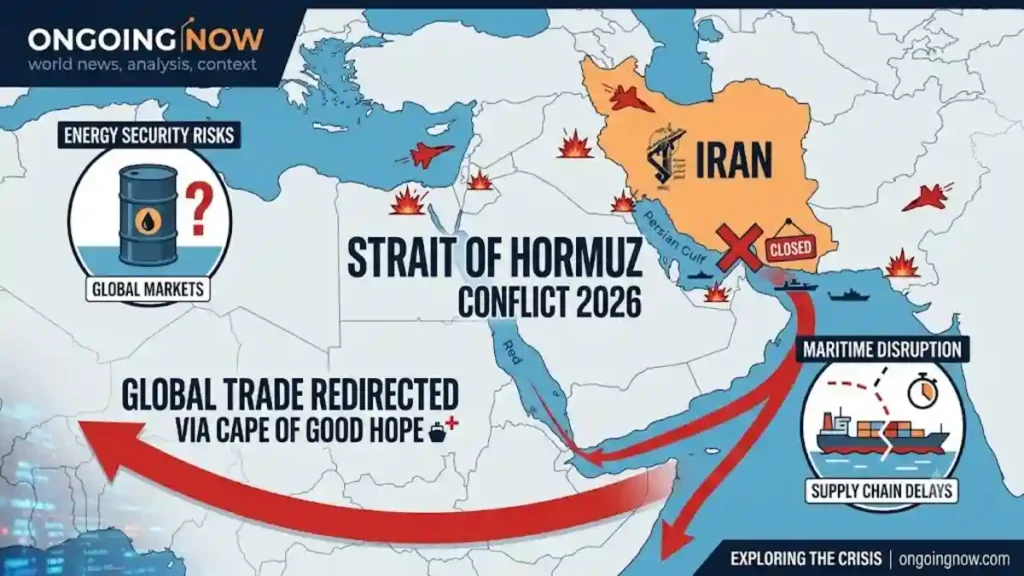
The Strait of Hormuz remains the world’s most sensitive oil chokepoint, with the current blockage halting approximately 20% of the world’s liquid petroleum gas and oil consumption. Unlike previous regional tensions, the current April 2026 standoff has led to a near-total cessation of non-Iranian commercial traffic through the 21-mile-wide passage.
International maritime analysts note that while some Iranian-linked vessels continue to traverse the waters, global shipping giants have rerouted fleets, leading to a sharp rise in insurance premiums and logistical delays. The economic reverberations are being felt most acutely in energy-importing nations across Asia and Europe, where fuel prices have seen double-digit percentage increases since the blockade began.
Infrastructure Targeting and Regional Escalation
Reports from Tuesday, April 7, 2026, indicate a shift in the nature of military operations. Iranian state media (IRNA) and regional officials confirmed that Israeli and U.S. airstrikes have targeted at least 10 critical transportation nodes, including a bridge near the city of Qom and railway infrastructure in Kashan and Zanjan.
Transportation Paralysis: The strikes on the Tabriz-Tehran highway and key railway tracks in Karaj have severely disrupted internal logistics and civilian travel.
Casualty Reports: Regional security officials in Kashan reported at least two fatalities and three injuries following strikes on local infrastructure.
Aviation and Rail Suspensions: Israel issued a specific warning against the use of Iranian railways, prompting the suspension of all train services to and from Mashhad, Iran’s second-largest city.
| Location | Targeted Asset | Reported Impact |
| Qom | Highway Bridge | Structural damage; traffic diverted |
| Kashan | Railway Link | 2 dead, 3 injured; service suspended |
| Zanjan | Overpass Bridge | Highway connection to Tabriz closed |
| Karaj | Power Substation | Localized power outages reported |
| Tehran | Northern Districts | Explosion reports; smoke visible in city |
Note: Infrastructure damage is reported by local authorities; independent verification remains limited due to ongoing hostilities.
Analysis: The Human Shield Strategy and Civil Defense
In response to the threat of strikes on energy facilities, Tehran has launched a nationwide campaign titled “Human Chain of Iranian Youth for a Bright Future.” Alireza Rahimi, an official with the Supreme Council of Youth and Adolescents, appeared in a video statement urging students, athletes, and artists to gather at power plants.
This move is framed by Iranian leadership as a symbolic act of national unity and a protest against what they describe as potential war crimes targeting civilian assets. However, international observers and human rights organizations have expressed concern over the safety of civilians participating in these gatherings near high-risk military targets. The United Nations and several European nations, including France, have reiterated that targeting civilian energy infrastructure is prohibited under international law.
International and Institutional Responses
The global community remains divided over the US-Israeli strategy. While the U.S. administration maintains that operations are a necessary response to the closure of the Strait of Hormuz and are conducted in self-defense, other international bodies are calling for immediate de-escalation.
“Attacks targeting civilian and energy infrastructure are barred by the rules of war and international law. They risk a vicious circle of reprisals that would damage the global economy and humanitarian interests.” — Jean-Noël Barrot, French Foreign Minister
UN Secretary-General António Guterres has also cautioned against the expansion of targets to include power grids and bridges. Meanwhile, regional mediation efforts led by Pakistan continue behind closed doors, though Tehran has recently rejected a 45-day ceasefire proposal, demanding a permanent end to hostilities and security guarantees.
Geopolitical Context: A Deepening Stalemate
The current conflict, which began in late February 2026, has seen the loss of several high-ranking Iranian figures and significant damage to both military and civilian sites. The transition of leadership within Iran, following the reported death of the former Supreme Leader, has added a layer of political complexity to the negotiations.
The U.S. Vice President JD Vance outlined two potential pathways for the resolution of the conflict: one involving Iran’s reintegration into the global commercial system and an end to proxy funding, and another characterized by continued isolation and military degradation. This “all-or-nothing” diplomatic approach has so far met with resistance from the Islamic Revolutionary Guard Corps (IRGC), which maintains “firm and dominant” control over the Strait.
Why This Matters: Global Market Instability
The persistence of the Strait of Hormuz closure has moved beyond a regional security issue to a systemic threat to the global financial order.
Energy Prices: Brent crude has reached levels not seen in a decade, impacting everything from manufacturing to household heating.
Supply Chain Disruption: With shipping routes diverted around the Cape of Good Hope, the cost of consumer goods is rising due to increased transit times.
Regional Isolation: Iran’s counter-strikes on Gulf neighbors hosting U.S. assets have strained regional diplomatic relations, potentially reshaping Middle Eastern alliances for years to come.
As the midnight deadline set by the U.S. administration approaches, the international community remains watchful. The focus shifts now to whether diplomatic channels through neutral third parties can secure a reopening of the Strait before a wider infrastructure war takes hold.
Stay sharp with Ongoing Now!
Source and Data Limitations: This report is based on verified news dispatches from April 7-8, 2026, including reports from IRNA, AFP, Reuters, and official government statements from the US, UK, and Iran. Information regarding casualties and specific strike locations in Iran is provided by regional officials and state media; independent on-ground verification is currently restricted due to the conflict. Military claims from all parties are subject to typical wartime informational delays. This article excludes unverified social media claims regarding the status of nuclear facilities and focuses strictly on documented infrastructure and diplomatic developments