How the Global Slavery Compensation Battle Reshapes UN Diplomacy
Diplomatic shifts at the Next Steps Conference in Accra establish a formal transatlantic framework for reparations.
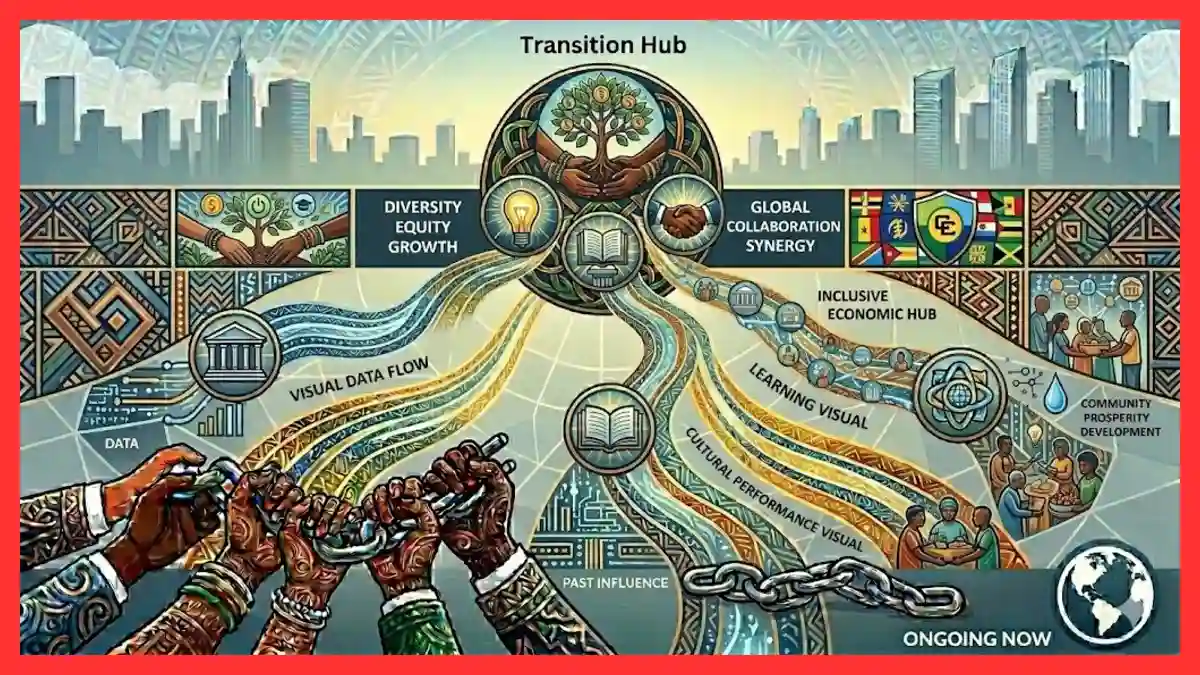
A unified legal and economic front is materializing between African and Caribbean nations to address the enduring structural deficits left by centuries of colonial exploitation. The diplomatic push has gained significant momentum through a comprehensive global reparations framework UN initiative, aimed at codifying the financial and moral accountability of former colonial powers. Moving beyond localized advocacy, this coordinated strategy brings together international bodies, national governments, and civil society to establish structured legal mechanisms for addressing historic wrongs.
The foundation of this current diplomatic movement rests on the landmark UN General Assembly resolution A/RES/80/250, passed on March 25, 2026. This decisive resolution formally categorized the transatlantic slave trade crime against humanity as the gravest in recorded history, shifting the international discourse from symbolic remorse to structured legal obligation. By establishing this global precedent, the resolution provides the necessary statutory weight for developing countries to pursue a comprehensive CARICOM 10 point plan reparations agenda. This framework links historical atrocities directly to modern systemic inequalities, demanding formal accountability from European nations.
The Diplomatic Strategy Formulated in Accra
The operational details of this international legal campaign were solidified during the Next Steps conference Ghana 2026, held in the capital city of Accra. Building directly upon the foundational consensus established at the preceding Accra high level consultative conference, this summit brought together heads of state, legal scholars, and economists to translate multilateral resolutions into a actionable, multi-regional diplomatic agenda. The primary objective of the Accra assembly was to synchronize the efforts of the African Union (AU) and the Caribbean Community (CARICOM), ensuring a single, powerful voice when addressing former enslaving states.
The Accra framework introduces a structured 19-point diplomatic document designed to be formally presented at the next United Nations General Assembly session. This comprehensive agenda actively rejects the traditional framing of development aid as a substitute for historic justice, insisting instead on direct economic restructuring. The collaborative efforts at the conference emphasized that modern transcontinental poverty and infrastructure deficits are the direct results of historical wealth extraction, requiring a formal, institutionalized response rather than discretionary charitable assistance.
Core Economic Directives of the Reparations Plan
The joint framework adopted in Ghana outlines specific, non-negotiable economic mechanisms required to offset centuries of uncompensated labor and systemic exploitation. Rather than relying on unstructured capital transfers, the strategy focuses on long-term institutional stability and debt relief for developing states.
+----------------------------------------------------------------------------+
|                  THE ACCRA REPARATIONS FRAMEWORK DIRECTIVES                |
+----------------------------------------------------------------------------+
|  1. GLOBAL REPARATIONS FUND                                                |
|     Establishment of an international trust to finance major infrastructure,|
|     healthcare, and educational systems across affected regions.           |
+----------------------------------------------------------------------------+
|  2. SOVEREIGN DEBT CANCELLATION                                            |
|     Complete liquidation of foreign debts held by former colonial powers   |
|     to immediately free up national capital for domestic investment.       |
+----------------------------------------------------------------------------+
|  3. CLIMATE JUSTICE FINANCING                                              |
|     Targeted environmental grants to mitigate the acute vulnerability of   |
|     island nations and coastal African states to climate disruptions.      |
+----------------------------------------------------------------------------+
|  4. CULTURAL RESTITUTION                                                   |
|     The unconditional return of looted historical artifacts, ancestral       |
|     remains, and stolen cultural property from Western institutions.        |
+----------------------------------------------------------------------------+
Caveat on Implementation: The execution of these economic directives depends entirely on the willingness of Western financial institutions and former colonial governments to engage in good-faith negotiations. The framework currently lacks an enforcement mechanism to compel compliance outside of voluntary international treaties and sustained diplomatic pressure.
Sovereign Mobilization and Political Leadership
The political momentum driving the demand for slavery compensation European nations accountability is anchored by explicit commitments from key regional leaders. During her address at the Next Steps conference Ghana 2026, Barbados Prime Minister Mia Mottley delivered a highly influential speech emphasizing that the international community must move decisively past passive acknowledgments of historical horrors. The Mia Mottley Accra speech text outlined a strict refusal to compromise on institutional repair, declaring to delegates that “there should be no retreat on repair.” Prime Minister Mottley highlighted the historical gravity of the situation by referencing the 1661 Barbados Slave Code, a brutal legal document that stripped enslaved Africans of human dignity and served as a blueprint for chattel slavery laws across the Americas.
Reinforcing this position, Ghanaian President John Dramani Mahama addressed the assembly to contextualize the intergenerational responsibility of modern states. President Mahama stated clearly:
“None of us gathered in this hall today can be held personally responsible for the atrocities of the transatlantic slave trade. History does not ask us to inherit guilt, but it asks us to inherit responsibility.”
Furthermore, Amma Twum-Amoah, the African Union Commissioner for Health, Humanitarian Affairs, and Social Development, emphasized that the AU’s approach to global slavery compensation encompasses the structural legacies of colonialism, apartheid, and ongoing economic exclusion. The continental body maintains that true justice requires transforming the global financial systems that continue to perpetuate historical inequalities.
International Law and the Technical Challenge of Statutory Limitations
A central component of the diplomatic debate involves navigating complex international law statutory limitations war crimes frameworks. Representatives from several European nations have historically argued that current international legal mechanisms cannot be retroactively applied to centuries-old actions, asserting that statutory limitations bar formal financial liability. Furthermore, some Western governments maintain that the legal structures governing modern crimes against humanity did not exist during the peak of the transatlantic slave trade.
In response, legal experts representing the AU-CARICOM coalition argue that the transatlantic slave trade crime against humanity was an ongoing, state-sponsored system of mass exploitation that transcends conventional statutory boundaries. They assert that because the economic benefits of enslaved labor continue to enrich Western institutions, the injury remains active. The passage of UN General Assembly resolution A/RES/80/250 provides crucial support here, as a significant majority of the global community has now formally declared that these historical systems were inherently unlawful and constitute violations of fundamental human rights that cannot be dismissed due to the passage of time.
Analysis: Comparing Modern Reparations with Past Precedents
To evaluate the feasibility of the global reparations framework UN initiative, economists and historians look to established international precedents where states provided substantial financial compensation for systemic state-sponsored violence and exploitation.
Clean Newsroom Grid Layout
+----------------------------------------------------------------------------------------------------+
| Precedent Case             | Financial Scale              | Key Mechanism        | Legal Status    |
+----------------------------------------------------------------------------------------------------+
| West German Federal        | Initial $845 Million (1952)  | Direct state transfers| Formally ratified|
| Compensation Act           | Bilateral state treaties     | and global trust funds| international    |
| (Israel/Claims Conference) | exceeded $80 Billion total   | for individual victims| treaty framework |
+----------------------------------------------------------------------------------------------------+
| United States Civil        | $1.6 Billion total payout    | Direct compensation  | Federal statute  |
| Liberties Act of 1988      | Approximately $20,000 per    | payments linked with | passed by US     |
| (Japanese-American)        | surviving individual         | a formal state apology| Congress         |
+----------------------------------------------------------------------------------------------------+
| British Slave              | £20 Million in 1837          | Government annuities | Domestic law     |
| Compensation Act           | Equivalent to 40% of the     | funded by taxpayers  | to compensate    |
| (Historical Precedent)     | annual national budget       | to pay *slave owners*| former enslavers |
+----------------------------------------------------------------------------------------------------+
The data shows a profound historical irony: the largest historical precedent for monetary compensation for slavery was organized by the British Empire to compensate the owners of enslaved people for their loss of “property,” rather than the victims of the system. The current AU-CARICOM framework seeks to completely invert this historical paradigm by utilizing established state-to-state trust fund models—similar to the West German agreements—to direct capital toward infrastructure development in the regions that suffered systemic wealth extraction.
Human Impact and Structural Legacies in Affected Communities
The driving force behind the demand for slavery compensation European nations accountability is the visible human and economic reality in formerly colonized territories. In many Caribbean and African nations, modern infrastructure deficits, underfunded public health systems, and high sovereign debt ratios are directly linked to historical exploitation. For instance, the systematic extraction of agricultural wealth left these regions highly dependent on single-crop economies, preventing early industrial diversification.
Local agricultural communities and urban centers in these areas face severe challenges due to underdevelopment. In small island developing states (SIDS) across the Caribbean, the problem is intensified by environmental vulnerability. These nations must constantly borrow capital from international markets to rebuild infrastructure destroyed by severe weather events, trapped in an ongoing cycle of debt. The CARICOM 10 point plan reparations framework treats debt cancellation and public health funding not as external aid, but as the return of wealth that was stolen over centuries of forced labor.
Geopolitical Stances and Future Diplomatic Friction
The upcoming presentation of the Accra framework to the United Nations General Assembly is expected to create significant diplomatic friction between global power blocs. The voting record for UN General Assembly resolution A/RES/80/250 clearly illustrates the current international divide: 123 nations voted in favor of the declaration, while 52 abstained, and 3 nations—the United States, Israel, and Argentina—voted against the measure.
| Geopolitical Bloc | Primary Diplomatic Position | Key Arguments |
| AU-CARICOM Coalition | Demand formal apologies, structural debt cancellation, and institutional monetary compensation for slavery. | Legacy of slavery is an ongoing structural crisis causing modern poverty. |
| Western European Nations | Favor expanding development assistance and symbolic cultural exchanges; resist binding financial liability. | Cite legal statutory limitations and argue against retroactive legal application. |
| Opposing States | Explicitly reject the framework, voting against multilateral resolutions that impose historical financial accountability. | Concerned about open-ended legal liability and domestic political pushback. |
As African and Caribbean states maintain their unified stance, the upcoming UN session will test the structural integrity of international diplomacy. The movement has clearly transitioned from a loose collection of activist campaigns into a highly coordinated, state-led diplomatic strategy. The ongoing debate over international law statutory limitations war crimes will ultimately determine whether the global community can successfully transition from historical recognition to concrete institutional repair.
Stay sharp with Ongoing Now!
Source and Data Limitations: This geopolitical analytical explainer is based strictly on the official text of UN General Assembly resolution A/RES/80/250, recorded diplomatic statements from the Next Steps High-Level Consultative Conference in Accra, Ghana, and the published components of the CARICOM 10-Point Plan for Reparatory Justice. Financial metrics regarding historical precedents are sourced from verified legislative records, including the British Slave Compensation Act of 1837 and the West German Federal Compensation Act of 1952. Readers should note that total monetary evaluations of historical damage vary extensively among international economists, with figures ranging from billions to trillions of dollars depending on the methodology used. This article excludes all unverified speculative projections regarding future legislative decisions by Western governments or the specific outcome of the upcoming UN General Assembly session.