Global Aviation Resilience Amid Gulf Airspace Closures
Middle East flight path changes and airport suspensions impact millions as regional security developments prompt a state-led safety response.

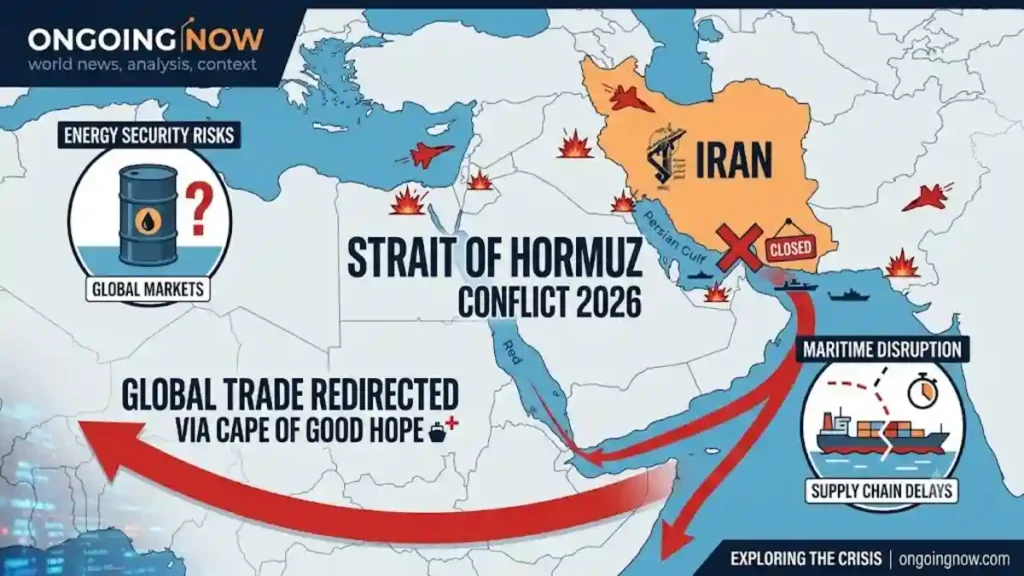
The current status of Middle East flight path changes reflects a significant shift in global aviation logistics following recent regional security developments. On March 1, 2026, the UAE General Civil Aviation Authority (GCAA) and Dubai Airports confirmed that flight operations at Dubai International (DXB) and Al Maktoum International (DWC) were suspended after Iranian missile strikes targeted several locations in the Gulf. This disruption, driven by a surge in regional conflict aviation impact, has forced major carriers like Emirates to ground fleets and reroute hundreds of flights. The UAE Ministry of Interior alerts remains active, advising residents to seek shelter as the national early warning system continues to monitor the security situation.
Within the first few hours of the incident, the United Arab Emirates, the United States, Iran, and Qatar emerged as central actors in the unfolding situation. International bodies, including the Federal Aviation Administration (FAA) and Eurocontrol, have issued urgent bulletins regarding civilian aircraft risk assessment in the region. Humanitarian organizations and the UAE Ministry of Defence (MoD) confirmed that while the majority of threats were neutralized by the UAE national early warning system, falling debris resulted in minor damage at a DXB concourse and four injuries among airport staff.
Understanding Middle East Flight Path Changes
The suspension of operations at DXB and DWC represents a critical node failure in the “connective tissue” of global travel. Middle East flight path changes are not merely localized adjustments; they affect the primary corridor between Europe, Asia, and Africa. With Russian airspace already restricted, the closure of GCC airspace leaves few viable alternatives for long-haul “super-connector” routes.
Aviation experts note that rerouting a single wide-body jet around the Gulf can add several hours to flight times and tens of thousands of dollars in fuel costs. The current NOTAM Dubai airport today indicates a blanket restriction on all commercial arrivals and departures. This decision follows a comprehensive risk assessment by the GCAA, which prioritized “airspace safety and the protection of air sovereignty” above commercial continuity.
Human and Community Impact of Regional Tensions
The immediate human impact of the escalation was felt most acutely by travelers and residents in Dubai and Abu Dhabi. At 8:35 am local time, a UAE mobile alarm reaction spread across the city as the national early warning system sent text alerts. Residents reported hearing “loud booms” as interceptors met incoming projectiles over the Gulf.
“The situation is becoming more frightening by the hour,” said Indian athlete PV Sindhu, who was among those stranded at the airport. “A few hours ago, there was an explosion close to where we were holed up at the airport. My coach had to quickly run out of the area as he was closest to the smoke and debris.”
While the UAE Ministry of Defence confirmed that 132 of 137 ballistic missiles were destroyed, the collateral damage was tragic. A Pakistani resident in Abu Dhabi died due to falling shrapnel, and four airport staff members at DXB sustained injuries. Social media, including Instagram Dubai sirens today and Reddit Dubai missile intercept threads, became primary channels for residents seeking real-time updates, though authorities urged the public to rely only on official UAE Ministry of Interior alerts.
By the Numbers: Aviation and Security Metrics
The scale of the disruption is underscored by verified data from the first 24 hours of the incident.
| Metric | Verified Data (March 1, 2026) |
| Total Interceptions | 132 Ballistic Missiles; 195 Drones |
| DXB Flight Cancellations | 716+ within 24 hours |
| Injuries (Airport Staff) | 4 (DXB Concourse Area) |
| Civilian Casualties | 1 confirmed (Abu Dhabi) |
| Airspace Status | Closed/Restricted (UAE, Qatar, Kuwait) |
Caveat: Data is subject to change as GCAA and Dubai Airports conduct further safety assessments.
International and Institutional Responses
The global response to Middle East flight path changes has been one of extreme caution. The FAA reissued a Level 2 travel advisory, urging “increased caution” in the UAE due to the threat of missile and drone attacks. Similarly, the Eurocontrol Gulf conflict bulletin highlighted the region as “high-risk” for civilian aviation, prompting European carriers like Lufthansa and British Airways to suspend services to the Gulf hubs indefinitely.
In a statement, the UAE Ministry of Defence strongly condemned the “blatant attack,” affirming the nation’s right to protect its territory and citizens. This sentiment was echoed by regional neighbors; Qatar and Kuwait also implemented temporary airspace closures after experiencing similar missile trajectories. The coordinated effort to ground civilian traffic prevented a larger-scale humanitarian disaster, according to a civilian aircraft risk assessment conducted by international aviation safety boards.
Analysis: Why Middle East Flight Path Changes Resonate Globally
The current crisis highlights the vulnerability of global “choke points” in aviation. DXB alone handled over 95 million passengers in 2025. When such a hub goes offline, the ripple effect is felt in London, Singapore, and New York.
The Economic Dimension
The suspension of cargo operations at Al Maktoum International (DWC) disrupts just-in-time supply chains for electronics and pharmaceuticals. The aviation sector is a cornerstone of the Dubai economy, and prolonged Middle East flight path changes could lead to increased war-risk premiums for insurers, ultimately driving up ticket prices for global travelers.
The Geopolitical Context
This escalation is viewed by analysts as a “Truthful Promise 4” operation by Iran, following strikes by the United States and Israel. The targeting of civilian infrastructure, specifically aviation gateways, marks a departure from previous patterns of conflict, where hubs like Dubai were often treated as neutral ground.
Comparing the 2026 Incident to Past Disruptions
The current scale of Middle East flight path changes is reminiscent of the 2022 closure of Russian airspace and the 2024 Red Sea tensions. However, the direct targeting of airport concourses represents an unprecedented challenge to the “safe haven” status of the UAE.
2022 Russian Airspace Closure: Impacted Europe-Asia routes, but Gulf hubs remained open.
2024 Red Sea Conflict: Impacted maritime trade and prompted minor flight adjustments.
2026 Gulf Escalation: Direct impact on the world’s busiest international airport, requiring total airspace closure.
Evidence-Based Implications for Future Travel
For travelers, the immediate future involves navigating a complex web of flight cancellations Dubai today. Emirates has offered free rebooking or full refunds for passengers affected through March 3, 2026. However, restoring full capacity will depend on a verified cessation of missile activity and a new Dubai aviation safety protocol.
Safety remains the “absolute priority” for the GCAA. Until a “clear sky” status is achieved, the Middle East flight path changes will remain in effect, forcing the aviation industry to adapt to a more fragmented and costly global map.
Stay sharp with Ongoing Now!
Source and Data Limitations: This report is based on verified statements from the UAE General Civil Aviation Authority (GCAA), Dubai Airports, and the UAE Ministry of Defence as of March 1, 2026. Data regarding flight cancellations and interceptions are provided by official government media offices and corroborated by Reuters and AFP. There is a inherent delay in verifying the exact cause of “minor damage” at DXB due to ongoing security investigations. Claims of Burj Khalifa being targeted were investigated and confirmed as fraudulent. This analysis excludes speculative forecasts regarding future military retaliations and focuses strictly on the reported aviation and civilian impacts.