After Policy Friction, Trump NBC Interview Ends With Abrupt Walkout
An in-depth analysis of the institutional tension, policy disputes, and administrative disagreements that cut the Meet the Press taping short.
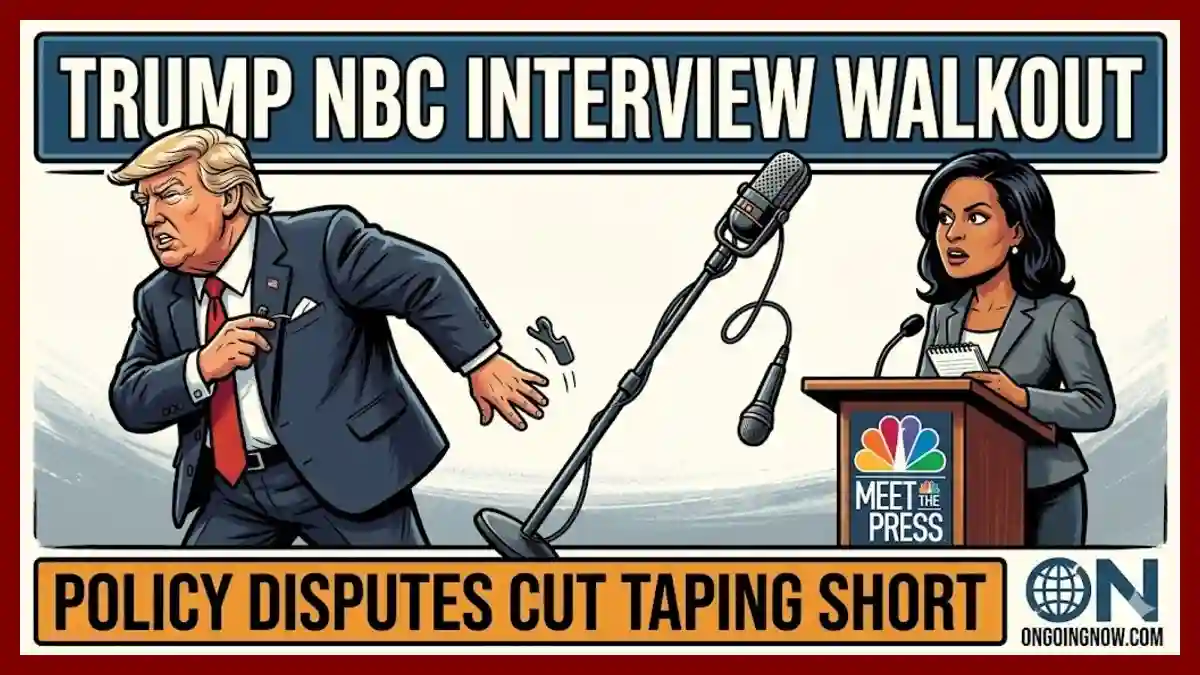
President Donald Trump abruptly concluded an interview with NBC News anchor Kristen Welker during an broadcast segment taped in Chippewa Falls, Wisconsin. The Donald Trump Meet the Press exchange, filmed on Friday, June 5, 2026, and aired on Sunday, June 7, 2026, concluded with the president removing his microphone after a series of institutional policy disputes.
The conversation spanned nearly 50 minutes inside an agricultural facility, but fractured in its final moments during discussions concerning federal funding allocations and state electoral administrative timelines. The abrupt departure occurred after a sequence of precise journalistic challenges regarding executive initiatives and statutory state ballot procedures.
The interaction underscores the ongoing institutional friction between the executive branch and traditional press formats. The discourse focused heavily on two distinct policy arenas: the status of a disputed multi-billion dollar executive compensation fund and the legal counting procedures governing state primary processes.
Key Institutional Developments
The final segment of the broadcast highlighted direct policy disagreements regarding the administration’s proposed fiscal programs and current state administrative laws. The primary points of dispute are detailed below:
Executive Compensation Fund Disagreements: The host pressed the president regarding the status of a proposed $1.8 billion fund intended to compensate individuals claiming to be victims of politicized federal prosecutions. The Department of Justice (DOJ) previously withdrew from implementing the fund following judicial challenges and opposition from within Congress.
Eligibility Thresholds: A central point of contention involved whether individuals who entered guilty pleas for assaulting law enforcement officers during the Capitol security breach on January 6, 2021, would qualify for these taxpayer-funded disbursements.
State Election Tallies: The president criticized the administrative timeline of the June 2026 California primary elections, characterizing the standard multi-day ballot verification process as structural malfeasance. State election administrators previously affirmed that long-duration counting is a statutory requirement under California election law.
The Policy Dispute Over the Executive Compensation Fund
The primary policy friction during the Kristen Welker Trump interview June 2026 centered on the structural viability of the administration’s $1.8 billion “anti-weaponization” fund. The fiscal initiative was initially conceived to settle legal actions concerning internal revenue and federal investigative practices. However, administrative execution halted after extensive legislative resistance and adverse federal court rulings.
When asked if the administration would formally abandon the fund following declarations from Acting Attorney General Todd Blanche, the president expressed continued personal commitment to the concept. He stated that the program remains a valid framework for supporting individuals affected by federal agency actions, despite the formal legal pauses enacted by department officials.
The discussion escalated when the inquiry shifted to specific spending parameters, precisely whether taxpayer resources would reach individuals convicted of violent offenses against federal or local police forces. The executive branch maintains that many individuals accepted plea agreements under duress, whereas oversight agencies have verified that explicit statutory violations occurred.
Statutory Parameters of California Election Administration
A second flashpoint during the broadcast involved current ballot-counting operations in western states. The president claimed that because final outcomes remained unverified four days after the primary, systemic irregularities were occurring, explicitly stating that “they are cheating on the election.”
State administrative records confirm that California relies heavily on a comprehensive mail-in voting framework, which comprises approximately 80 percent of all ballots cast in recent cycles. Under California statutory code, mail-in ballots remain fully valid if they are postmarked by Election Day and arrive at county processing centers within seven days.
Furthermore, California mandates a thorough signature verification and “curing” process, allowing citizens up to several weeks to correct minor administrative discrepancies on their ballot envelopes. This prolonged procedure is an established statutory design intended to ensure full enfranchisement rather than an indication of logistical breakdown.
Analysis of Media Interaction Dynamics
The conclusion of the broadcast illustrated a familiar institutional pattern regarding executive press relations. After being repeatedly requested to provide documentary evidence for claims regarding state primary processes, the president chose to conclude the conversation early, stating, “Let’s call it quits because I’ve had enough.”
The interaction reflects a broader dynamic where public officials utilize direct visual media appearances to bypass traditional editorial verification, while standard news programs attempt to enforce real-time factual benchmarks. The president defended his exit by citing the duration of the interview and challenging the institutional credibility of the network.
The following data outlines the timeline and operational parameters of the specific interview session conducted in Wisconsin:
| Interview Metric | Operational Detail | Institutional Relevance |
| Total Taping Duration | Approximately 50 minutes | Allowed broad discussion on agricultural and foreign policy before fracturing. |
| Final Segment Length | 4 to 6 minutes | Focused exclusively on the compensation fund and state primary tallies. |
| Environmental Context | Heavy rain in a Wisconsin agricultural barn | Cited by the president as a contributing factor to localized operational fatigue. |
| Factual Disputes | 3 distinct policy/legal topics | Involved DOJ funding, Capitol prosecution records, and state statutes. |
Societal and Public Trust Implications
The institutional friction documented during the broadcast has immediate effects on public perception regarding electoral integrity and judicial independence. When federal leaders publicly characterize statutory state administrative timelines as fraudulent, it can alter voter confidence in local civic infrastructure.
Local election administrators from both major political parties have frequently noted that processing millions of paper mail-in ballots requires careful physical handling and multi-stage verification to protect the franchise. Public characterizations that equate methodical administrative accuracy with systemic fraud create significant challenges for non-partisan civil servants managing local polling places.
Similarly, the debate over compensating individuals convicted of federal offenses affects broader public discussions regarding the rule of law and judicial accountability. The conversation highlights a deep philosophical division concerning whether federal law enforcement actions represent neutral institutional enforcement or politically motivated agency behavior.
Evidence-Based Political Insights
Political scientists and media analysts view the interaction as a clear signal of the communication strategies defining the current governance cycle. By directly challenging traditional journalism platforms during live sessions, executive figures can reinforce messaging to specific voting blocks while minimizing exposure to structured counter-arguments.
The persistence of disputes over the 2020 presidential election and ongoing primary cycles indicates that election administration remains a highly politicized policy topic. This environment requires reporting organizations to rely strictly on statutory text, certified vote counts, and recorded judicial findings rather than rhetorical assertions.
Ultimately, the event demonstrates that structural policy debates—whether concerning federal department budgets or the exact duration permitted for signature verification—frequently become subsumed by arguments over media fairness and institutional authority. Factual clarity remains essential for understanding how these high-level disputes influence actual state and federal operations.
Stay sharp with Ongoing Now!
—
Source and Data Limitations: This analysis is based entirely on the official broadcast and transcript of the NBC News program “Meet the Press” aired on June 7, 2026, alongside verified administrative details from the California Secretary of State’s office and official reports from the U.S. Department of Justice Inspector General. It excludes unverified social media assertions, anonymous political leaks, and partisan commentary regarding the personal motivations of the participants. All details concerning state election laws reflect current statutory codes as of June 2026.