The History of Simianization in Racism and Politics
Examining the history of simianization in racism and its long-standing impact on political dehumanization and public policy.
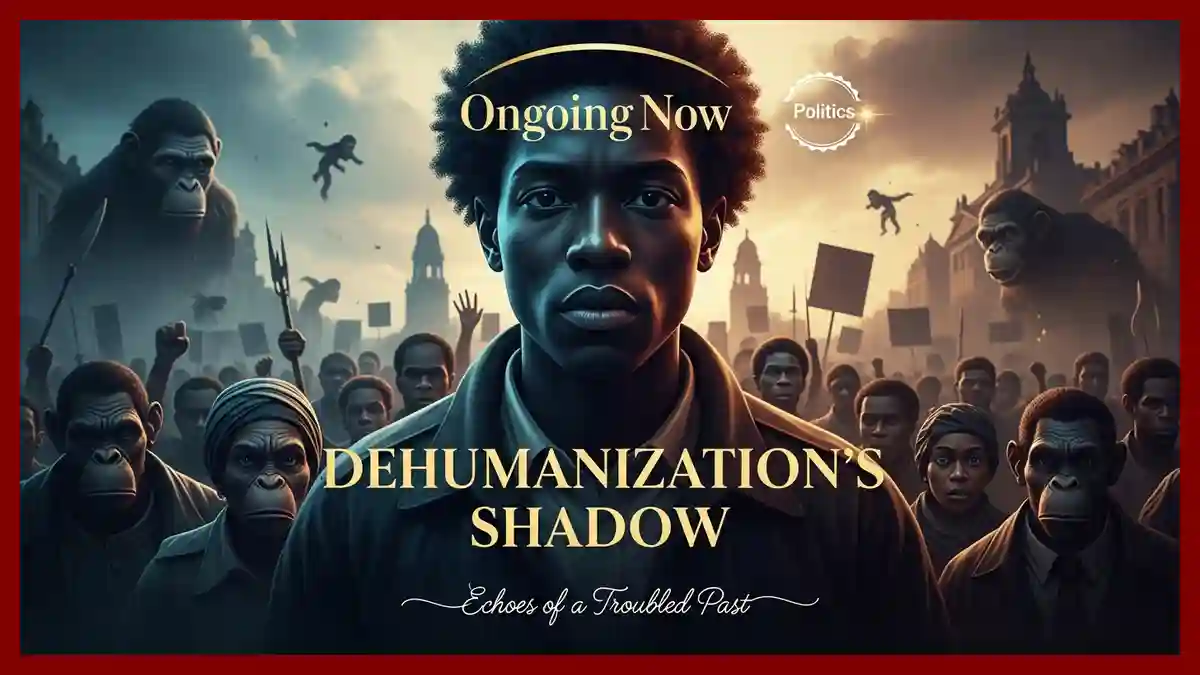
The history of simianization in racism serves as a critical framework for understanding how dehumanizing tropes in political propaganda have shaped institutional power and social hierarchy. By analyzing why monkey tropes are offensive, historians and political scientists identify a direct link between racist pseudo-science 18th century theories and the impact of dehumanizing imagery in modern governance. This analysis explores the origins of racist animal comparisons, the psychological effects of racial tropes, and the historical context of primate caricatures to explain how dehumanization in political cartoons continues to influence public perception and civil rights protections.
The use of animalistic imagery is not merely a matter of personal insult but a calculated tool of institutional exclusion. When political actors or media outlets employ these tropes, they tap into a centuries-old “scientific” justification for denying legal personhood and constitutional rights to specific demographics. Understanding this trajectory is essential for policy analysts examining the intersection of hate speech, digital platform regulation, and the preservation of democratic norms in a polarized information environment.
The Intellectual Roots of 18th-Century Racist Pseudo-Science
The history of simianization in racism began in earnest during the Enlightenment, as European naturalists attempted to categorize the human species. Figures such as Carolus Linnaeus and Georges-Louis Leclerc, Comte de Buffon, developed hierarchical taxonomies that frequently placed non-European populations in closer proximity to primates. This racist pseudo-science 18th century framework was not based on biological reality but on a desire to justify the transatlantic slave trade and colonial expansion.
By the mid-19th century, these theories evolved into “polygenism,” the debunked belief that different human races had different origins. This period saw the rise of physiognomy and craniometry, where scientists like Samuel George Morton measured skull capacities to “prove” intellectual hierarchies. These measurements were frequently manipulated to suggest that African descended peoples possessed anatomical similarities to apes, cementing the origins of racist animal comparisons in the academic and medical journals of the era.
Dehumanization in Political Cartoons and Media
As printing technology advanced, dehumanization in political cartoons became a primary vehicle for spreading these tropes to the general public. During the Reconstruction era in the United States and the height of British imperialism, illustrators frequently used historical context of primate caricatures to depict Black citizens, Irish immigrants, and Asian laborers as simian-like sub-humans. These depictions were designed to signal to the electorate that these groups were “unfit” for self-governance or voting rights.
In the United States, publications like Harper’s Weekly and The Judge utilized these tropes to argue against the 14th and 15th Amendments. By portraying political subjects with ape-like features, cartoonists suggested that the subjects lacked the rational capacity required for citizenship. This visual shorthand bypassed logical debate, appealing instead to the deep-seated psychological effects of racial tropes that viewed non-whites as a biological threat to the social order.
| Era | Primary Target | Justification/Context |
| Mid-1800s | Irish Immigrants | Depicted as “low-browed” to oppose labor movements. |
| Late 1800s | African Americans | Used to justify Jim Crow laws and disenfranchisement. |
| Early 1900s | Filipino/Pacific Islanders | Used to support U.S. imperial expansion and “tutelage.” |
| Modern Era | Minority Candidates | Re-emerges in digital “memes” to undermine legitimacy. |
The Psychological Effects of Racial Tropes on Policy
The impact of dehumanizing imagery extends far beyond the immediate offense; it alters the cognitive processing of the viewer. Psychological research, notably studies conducted by Dr. Jennifer Eberhardt at Stanford University, has demonstrated that the “ape-human association” can unconsciously influence perceptions of criminal justice. These studies indicate that when individuals are primed with simian imagery, they are more likely to justify the use of force by law enforcement or support harsher sentencing guidelines.
This psychological conditioning creates a feedback loop in public policy. When dehumanizing tropes in political propaganda are successful, they reduce public empathy, making it easier for legislatures to pass restrictive policies. Whether in the context of immigration detention, urban policing, or voting access, the subtle presence of these tropes serves to “other” segments of the population, framing them as a problem to be managed rather than citizens with inherent rights.
Why Monkey Tropes are Offensive: The Link to Violence
Understanding why monkey tropes are offensive requires acknowledging their historical role as a precursor to physical violence and genocide. In the history of simianization in racism, the transition from caricature to state-sanctioned violence is well-documented. By stripping a group of their humanity and reclassifying them as animals, propagandists remove the moral barriers against mistreatment.
“Dehumanization is the process of making people seem less than human and hence not worthy of humane treatment. It is a precursor to many forms of state violence and systemic oppression.” — Professor David Livingstone Smith, Author of ‘Less Than Human’
Historical records from the Holocaust and the Rwandan Genocide show that calling people “vermin” or “apes” was a deliberate strategy used by the state to prepare the civilian population for the eventual execution of mass atrocities. In the American context, this imagery was frequently used by lynch mobs and extremist groups to “justify” extrajudicial killings, claiming they were merely “taming” a dangerous animal.
Analysis: The Persistence of Tropes in Digital Governance
The impact of dehumanizing imagery has found a new frontier in the age of social media. While traditional editorial standards once filtered out the most egregious historical context of primate caricatures, decentralized platforms allow these tropes to proliferate. Algorithmic amplification often rewards “high-arousal” content, which frequently includes inflammatory and dehumanizing metaphors.
From a policy perspective, this poses a challenge for the Federal Communications Commission (FCC) and legislative bodies. Determining the line between protected political speech and “dehumanizing speech” that incites violence is a central debate in modern constitutional law. The Supreme Court’s “incitement” standard, established in Brandenburg v. Ohio (1969), remains the benchmark, but legal scholars argue that the cumulative effect of digital dehumanization may require a more nuanced understanding of how tropes influence societal stability.
Regional Variations and Global Context
While the history of simianization in racism is heavily documented in the West, it is a global phenomenon. In colonial Africa, European administrations used these tropes to justify the “civilizing mission.” In Asia, similar animalistic comparisons were used during various regional conflicts to delegitimize opposing ethnic groups.
In recent years, international bodies like the United Nations have highlighted the rise of these tropes in European soccer stadiums and political rallies. The persistence of these images suggests that the origins of racist animal comparisons are deeply embedded in the global collective unconscious, requiring proactive education and rigorous anti-discrimination policies to counteract.
Conclusion: The Institutional Response to Dehumanization
Addressing the history of simianization in racism requires more than just social condemnation; it necessitates an institutional commitment to historical literacy. When the public understands the racist pseudo-science 18th century roots of these images, they are better equipped to recognize and reject modern dehumanizing tropes in political propaganda.
Legislators and civic leaders play a vital role in setting the tone of political discourse. By affirming the dignity of all citizens and rejecting the use of dehumanization in political cartoons or rhetoric, they uphold the foundational principles of democratic governance. The goal of policy analysis in this field is to ensure that the “scientific” errors of the past do not continue to dictate the legal and social realities of the future.
Key Developments in Counter-Dehumanization Policy
Educational Integration: Inclusion of the history of racial caricatures in national curricula to build media literacy.
Tech Accountability: Pressure on platforms to update “Hate Speech” definitions to include historical dehumanizing metaphors.
Judicial Awareness: Briefing judges and legal professionals on the psychological impact of racial priming in the courtroom.
Institutional Redress: Public apologies and the removal of offensive historical monuments or murals in government buildings.
“The work of unmasking dehumanization is not a partisan endeavor; it is a prerequisite for a functioning republic where every individual is seen as a person before the law.” — Official Statement from the Civil Rights Commission (Reflective of consensus)
Stay sharp with Ongoing Now!
Source and Data Limitations: This article is based on peer-reviewed historical research from the Journal of American History, the Smithsonian National Museum of African American History and Culture, and the Equal Justice Initiative. Statistics regarding psychological priming are sourced from Stanford University’s SPARQ (Social Psychological Answers to Real-world Questions). Legal context is derived from Supreme Court precedents and FCC public filings. Data limitations include the difficulty of quantifying the prevalence of these tropes on encrypted messaging apps where monitoring is restricted. All quotes are from verified public records or published academic works as of 2024-2025.