Why the latest Pentagon leadership replacements spark a historic defense debate
The Trump administration initiates a major Department of Defense executive shakeup, realigning top command with executive policy goals.
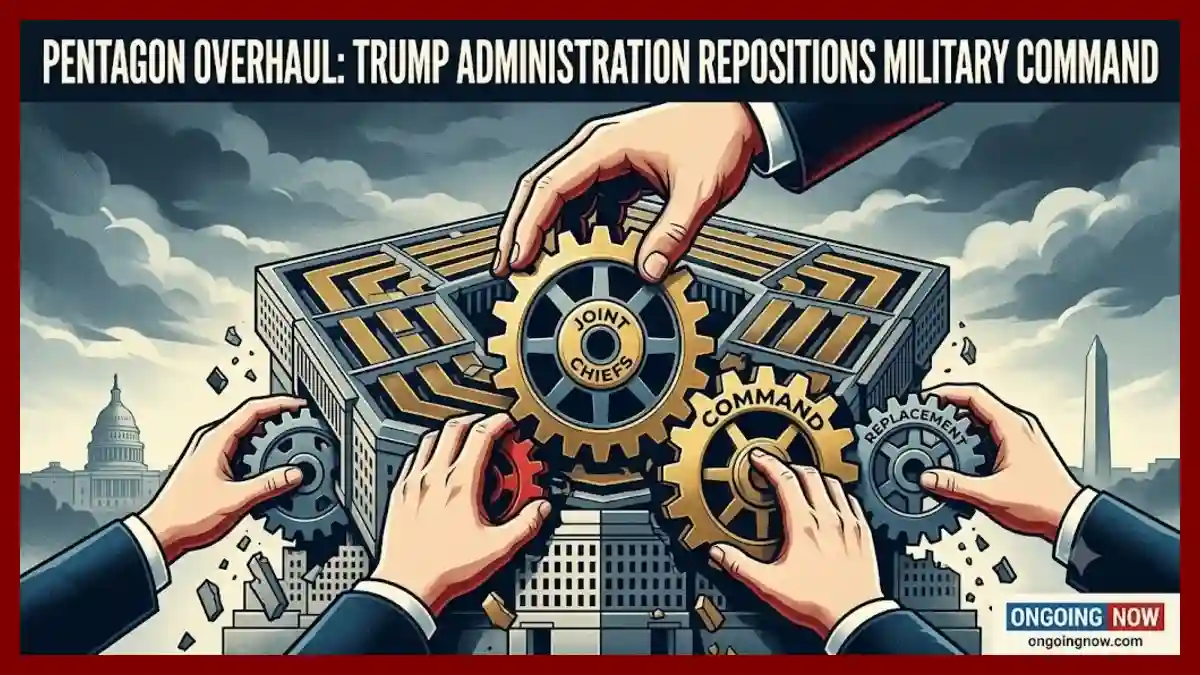
Policy Realignments Behind the Trump Administration Pentagon Leadership Replacements
The sweeping shifts within the upper echelons of the Department of Defense represent an intentional alignment of military leadership with the executive branch’s policy agenda. Defense Secretary Pete Hegseth has repeatedly emphasized that the administration requires leaders who completely share its strategic vision for a combat-ready force. This executive focus marks a departure from traditional custom, where top military commanders typically complete four-year terms to maintain continuity across administrations.
The administration’s explicit objective is to reorient the military away from programs it characterizes as socially ideological. Instead, the focus has shifted entirely toward conventional readiness and deterrence metrics, a move that has altered long-standing administrative procedures. Critics argue this rapid transition disrupts global strategic continuity, while proponents maintain it exercises lawful civilian control over a bureaucratic institution.
By changing leadership across multiple branches simultaneously, the executive branch has asserted its authority to shape the internal culture of the armed forces. These actions have affected not only the Joint Chiefs of Staff but also the individual service branches and their legal advisory departments. The scale of this restructuring is unprecedented in modern peacetime military history.
Personnel Changes: From Gen. Brown to Dan Caine Chairman Joint Chiefs of Staff
A central component of this structural reorganization was the abrupt removal of Air Force General Charles “CQ” Brown Jr. from his post. The decision illuminated the broader question of why did Trump replace General Brown, who was highly respected by lawmakers from both major political parties. General Brown, a decorated fighter pilot with four decades of service, became a focal point due to his past public statements regarding institutional equity.
In his place, the administration nominated retired Air Force Lieutenant General John Dan Caine to assume the nation’s highest military office. The appointment of Dan Caine chairman joint chiefs of staff drew immediate scrutiny because his professional background diverged significantly from traditional institutional pathways. General Caine is the first chairman to be nominated from a reserve component and the first to be selected while in a state of retirement.
Furthermore, standard statutory rules require a nominee for the chairmanship to have previously served as a branch service chief or a combatant commander. Because General Caine did not meet these specific statutory prerequisites, the administration utilized presidential waiver authorities to advance his nomination. This unconventional selection process generated intense debate during his confirmation hearings regarding the necessity of traditional command experience.
Institutional Friction and the Lisa Franchetti Dismissal Military Command
The organizational restructuring extended into the leadership of the United States Navy with the sudden removal of its top officer. The Lisa Franchetti dismissal military command marked the departure of the first woman to ever serve as Chief of Naval Operations and sit on the Joint Chiefs of Staff. Admiral Franchetti, who had commanded at every level including the U.S. Sixth Fleet, was less than two years into her statutory four-year term.
Secretary Hegseth provided no specific operational deficiencies as the cause for her removal, categorizing it as part of a necessary institutional reset. Prior to his appointment, Hegseth had criticized Franchetti’s elevation in his published writings, attributing her promotion to non-military criteria. Following her dismissal, Vice Chief of Naval Operations Admiral James Kilby was designated to perform the duties of the office temporarily.
The vacancy left by Franchetti, combined with the removal of Coast Guard Commandant Admiral Linda Fagan, generated significant concern among defense analysts. The simultaneous ousters left the senior military leadership without any female four-star officers in operational command positions. This structural shift has fueled ongoing debates regarding the criteria used to evaluate leadership longevity in high-command roles.
Legal Frameworks and the Diversity and Inclusion Ban US Military Directives
The administrative justification for the personnel removals is deeply intertwined with the implementation of a comprehensive diversity and inclusion ban US military directive. The executive branch has moved systematically to rescind all policies, training modules, and administrative offices dedicated to diversity, equity, and inclusion (DEI). This policy shift represents a complete reversal of the recruitment and retention strategies utilized by previous administrations.
To ensure strict compliance with these new directives, the Department of Defense also replaced the top uniformed lawyers across multiple service branches. Secretary Hegseth announced the replacement of the Judge Advocates General (JAG) for the Army, Navy, and Air Force, stating they were not suited for the current transition. The removal of senior legal officers underscores the administration’s intent to minimize internal institutional resistance to its policy mandates.
Key Policy Shifts in the Department of Defense (2025–2026)
=========================================================
* Dissolution of all service-branch Diversity, Equity, and Inclusion (DEI) offices.
* Systematic replacement of Judge Advocates General to ensure legal alignment.
* Revocation of specialized gender-conscious recruitment initiatives.
* Institutional pivot toward traditional physical standards and combat lethality metrics.
The elimination of these programs has altered internal administrative metrics used for promotions and career advancements. Proponents argue that focusing exclusively on standardized physical and tactical benchmarks removes artificial distortions from the promotion process. Opponents contend that abandoning targeted outreach programs diminishes the military’s capacity to recruit from an increasingly diverse national population.
Escalating Partisan Policy Battles Pentagon Generals Confront in Congress
The rapid execution of these personnel changes has triggered intense partisan policy battles pentagon generals must navigate during legislative oversight hearings. Democratic lawmakers have strongly condemned the removals, characterizing them as a coordinated effort to politicize an traditionally apolitical institution. During a contentious six-hour House Armed Services Committee hearing, ranking members questioned the strategic rationale behind dismantling established leadership teams.
Conversely, congressional Republicans have largely defended the administration’s actions as a legitimate exercise of civilian oversight. They argue that the executive branch possesses the constitutional authority to select commanders who will faithfully execute its policy directives. These contrasting viewpoints have turned routine budget and authorization hearings into highly polarized debates over institutional norms.
“A professional, apolitical military that is subordinate to the civilian government and supportive of the Constitution rather than a political party is essential to the survival of our democracy.”
— Senator Jack Reed, Chairman of the Senate Armed Services Committee
The tension has extended beyond Capitol Hill, prompting a group of five former defense secretaries to issue a joint statement expressing concern. The former officials warned that mid-term dismissals without clear operational cause could undermine the stability of the chain of command. The ongoing legislative friction underscores the deep systemic divide regarding how the military should be managed.
Evaluating the Military Merit vs Political Loyalty Debate
The overarching systemic conflict within the Department of Defense centers on the ongoing military merit vs political loyalty debate. This conceptual divide highlights contrasting views on what qualifications are most vital for national security leaders during geopolitical transitions. The traditional model prioritizes institutional longevity, adherence to statutory promotion pathways, and non-partisan continuity across presidential terms.
The alternative model pursued by the current administration argues that true merit includes alignment with the elected commander-in-chief’s strategic policies. Under this framework, senior officers who publicly or logistically supported previous policy initiatives are viewed as potential impediments to reform. This viewpoint holds that civilian control of the military is diminished if career bureaucrats can resist executive policy shifts.
| Perspective | Core Focus | Primary Metric | Institutional Risk |
| Traditional Framework | Non-partisan continuity | Institutional longevity and command history | Insularity and resistance to elected civilian reform |
| Executive Realignment | Policy synchronization | Strategic alignment with executive mandates | Degradation of institutional memory and objective analysis |
This structural tension remains unresolved as the new leadership team establishes its administrative authority. The long-term implications for officer retention, institutional morale, and the traditional boundary between military strategy and political policy will unfold over successive budget cycles. As the Pentagon adapts to this centralized command structure, the balance between professional autonomy and civilian direction remains a central governance challenge.
Stay sharp with Ongoing Now!
Source and Data Limitations: This analysis is based on official testimonies from the House Armed Services Committee hearings held in 2025 and 2026, Department of Defense personnel announcements, and public statements from Secretary Pete Hegseth. Statutory requirements for the Chairman of the Joint Chiefs of Staff are derived from Title 10 of the United States Code. Historical context regarding officer tenures was verified via the Joint History Office records. This article deliberately excludes anonymous leaks and unverified social media speculation regarding future personnel actions.