Israeli Election October 2026 Candidates and New Blocs
Institutional shifts and voter realignment redefine the race as Netanyahu, Bennett, and Lapid prepare for the 2026 national vote.
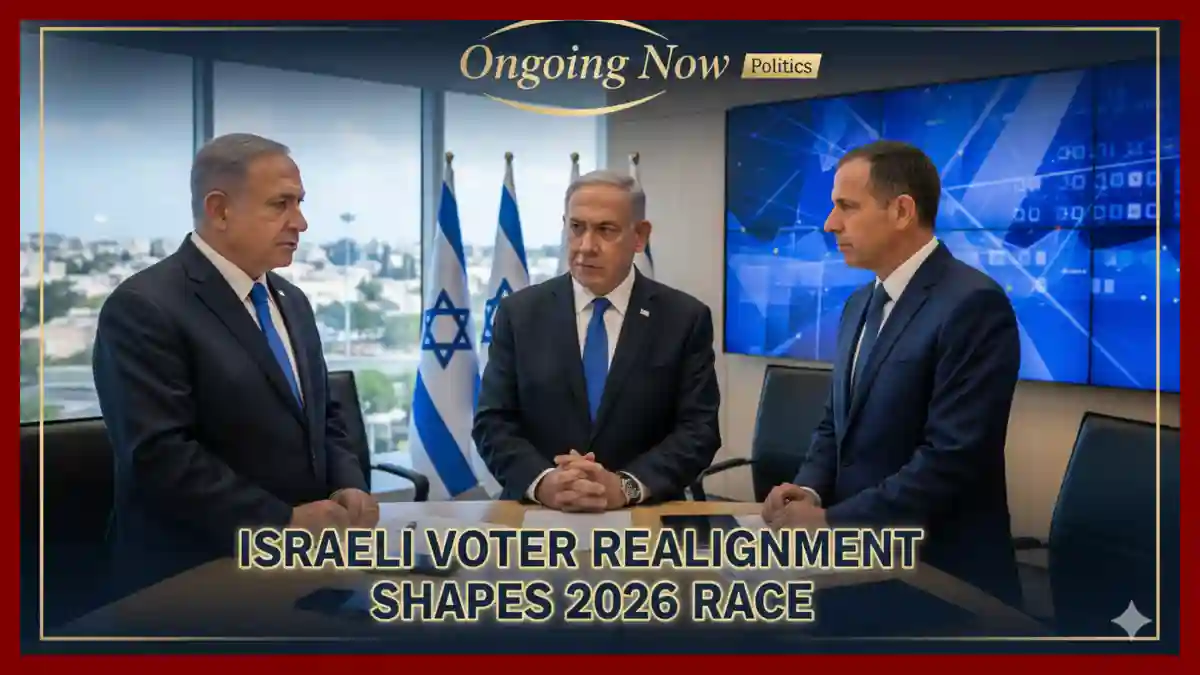
The landscape for the Israeli election October 2026 candidates has entered a phase of high-stakes institutional realignment, as verified polling data and party registrations signal a fundamentally altered political map. Current data reveals that while Prime Minister Benjamin Netanyahu remains a central figure, the emergence of a “Bennett 2026” party and the consolidation of the “Democrats” under Yair Golan have disrupted traditional bloc math. The upcoming vote serves as a critical referendum on security doctrine, civil-military relations, and the future of the nation’s social contract following the transformative events of recent years.
Institutional Framework and the 2026 Electoral Timeline
The Israeli Supreme Court has established the definitive legal window for the next national vote, ruling that the 26th Knesset elections must occur no later than October 27, 2026. This decision followed constitutional debates regarding the four-year term cycle, effectively setting the clock for a standard electoral season unless a coalition dissolution occurs earlier. Legislative activity remains focused on the 2026 state budget, which represents a significant institutional hurdle; under Israeli law, a failure to pass the budget by March 31 typically triggers an automatic dissolution of the Knesset.
The 120 seats of the Knesset are elected through a closed-list proportional representation system in a single nationwide constituency, with a strict 3.25% electoral threshold. This threshold has become a focal point for strategic planning among the Israeli election October 2026 candidates, as smaller factions like Bezalel Smotrich’s Religious Zionism and Benny Gantz’s Blue and White face polling data suggesting they are at risk of falling below the minimum requirement.
Key Political Figures and Established Blocs
As of March 2026, the political landscape is divided into three primary competitive sectors: the incumbent right-wing coalition, the traditional centrist opposition, and a resurgent right-center alternative. Benjamin Netanyahu continues to lead the Likud party, which maintains a stable core of approximately 31–32 seats in recent projections. His coalition remains anchored by the ultra-Orthodox parties Shas and United Torah Judaism, alongside the far-right Otzma Yehudit.
Benjamin Netanyahu (Likud): Focusing on a “Victory” doctrine and security sovereignty.
Yair Lapid (Yesh Atid): Positioned as the leader of the “liberal camp,” emphasizing governance and secular values.
Naftali Bennett (Bennett 2026): Re-entering the arena with a platform of “active security” and national unity.
Yair Golan (The Democrats): Leading a merger of the Labor and Meretz parties to consolidate the Zionist-left.
| Party/Bloc | Primary Leader | Projected Strategy |
| Likud | Benjamin Netanyahu | Security sovereignty and judicial stability. |
| Yesh Atid | Yair Lapid | Secular-liberal governance and diplomatic reform. |
| Bennett 2026 | Naftali Bennett | Right-wing pragmatism and military service equality. |
| The Democrats | Yair Golan | Civil protest integration and social democracy. |
The “Bennett Factor” and Right-Center Realignment
The formal registration of the “Bennett 2026” party in April 2025 marked a significant shift in the Israeli election October 2026 candidates’ roster. Former Prime Minister Naftali Bennett has positioned himself as a bridge for voters who identify with right-wing security principles but seek an alternative to the current government’s domestic policies. Polling from early 2026 suggests that a Bennett-led list could potentially become one of the largest factions in the Knesset, drawing support from disillusioned Likud voters and centrist blocks.
Bennett’s platform emphasizes the implementation of an “active security doctrine” and the integration of all citizens into the economic and security burden of the state. This specific focus on “sharing the burden” addresses a core societal friction point: the military draft exemptions for the ultra-Orthodox community. This issue has become a central pillar of the 2026 campaign, influencing how the Israeli opposition peace strategy is communicated to a public exhausted by extended reserve duty.
Strategic Shifts in the Liberal Opposition
Yair Lapid, serving as the Leader of the Opposition, has issued recent warnings regarding the fragmentation of the “liberal bloc.” In February 2026, Lapid noted that internal competition between centrist and left-wing factions could inadvertently secure a majority for the incumbent coalition. The “liberal coalition Israel” model is currently undergoing a stress test as parties debate whether to run as a single unified list or as distinct ideological units.
The Yair Golan protest movement has successfully transitioned from street activism into formal politics. By merging the Labor and Meretz parties into “The Democrats,” Golan has created a structured home for the anti-government protest movement that has persisted since 2023. This new entity seeks to institutionalize the demands for a state commission of inquiry into past security failures and a renewed commitment to democratic checks and balances.
Comparative Polling: Gantz vs Netanyahu Approval Ratings
A notable development in the 2026 cycle is the shifting suitability ratings for the premiership. While Benny Gantz held a significant lead in approval during the initial phases of the 2023–2024 conflicts, his ratings have faced a downward trend following his departure from the emergency war cabinet. Conversely, Netanyahu has seen a recovery in his “suitability to serve” metrics, often polling significantly higher than his closest rivals in direct head-to-head comparisons.
The Gantz vs Netanyahu approval ratings indicate a complex voter sentiment where Netanyahu is often viewed as the more experienced hand for security crises, while Gantz’s Blue and White party struggles to maintain its identity outside of a unity government context. Some projections suggest Blue and White could fall as low as 0.6% of the vote if the current trend continues, potentially removing a major centrist player from the 2026 Knesset.
Societal Impact and Voter Sentiments
The 2026 election is increasingly viewed by analysts at institutions like Chatham House as a referendum on the “social contract.” Beyond the high-level politics of the Israeli election October 2026 candidates, the daily reality for Israeli citizens is defined by the economic weight of a multi-front conflict and the demand for more equitable national service.
Reserve Duty Exhaustion: Hundreds of thousands of Israelis have served multiple tours of duty, leading to a demand for policies that alleviate the civilian economic burden.
The Draft Crisis: The legal and social tension surrounding Haredi enlistment is no longer a peripheral issue but a decisive factor for “soft-right” and centrist voters.
Economic Resilience: High-tech sectors and small businesses are looking for a governance model that prioritizes stability and global investment.
Analysis: Why This Matters
The 2026 election represents more than a change in leadership; it is an institutional recalibration. For the first time in over a decade, the “anyone but Bibi” sentiment is being replaced by a more nuanced competition over specific security and social doctrines. The “Bennett 2026” movement suggests that the most effective challenge to the current government may come from its right-flank rather than the traditional left or center.
Furthermore, the consolidation of the Arab parties into a unified “Joint List” for the 2026 race introduces a potential “kingmaker” dynamic. While centrist leaders like Lapid and Lieberman have historically been cautious about forming coalitions with Arab factions, the razor-thin margins projected for both the pro- and anti-Netanyahu blocs may force a re-evaluation of traditional political taboos.
What the Data Shows: Polling Trends (March 2026)
Recent data from Zman Yisrael and other leading agencies indicates a persistent stalemate between the two major blocs. Neither side currently commands a clear 61-seat majority without the support of non-aligned or Arab parties. This parity suggests that the post-election negotiation phase in late 2026 will be as critical as the campaign itself.
Stay sharp with Ongoing Now!
Source and Data Limitations: This report is based on party registration records from the Israeli Parties Registrar, Supreme Court rulings regarding the October 27, 2026 election date, and verified polling data from The Times of Israel (Zman Yisrael), Chatham House, and the Israel Democracy Institute. Polling figures reflect snapshots from February and March 2026 and are subject to change as the official campaign season begins. Claims regarding “secret studies” mentioned by political figures were excluded unless corroborated by secondary statistical evidence. Historical seat data is based on the 2022 25th Knesset results.