Why the Federal Shield Law Battle Changes Investigative Journalism Forever
Congress evaluates statutory protections against compelled disclosure to secure reporter source confidentiality.
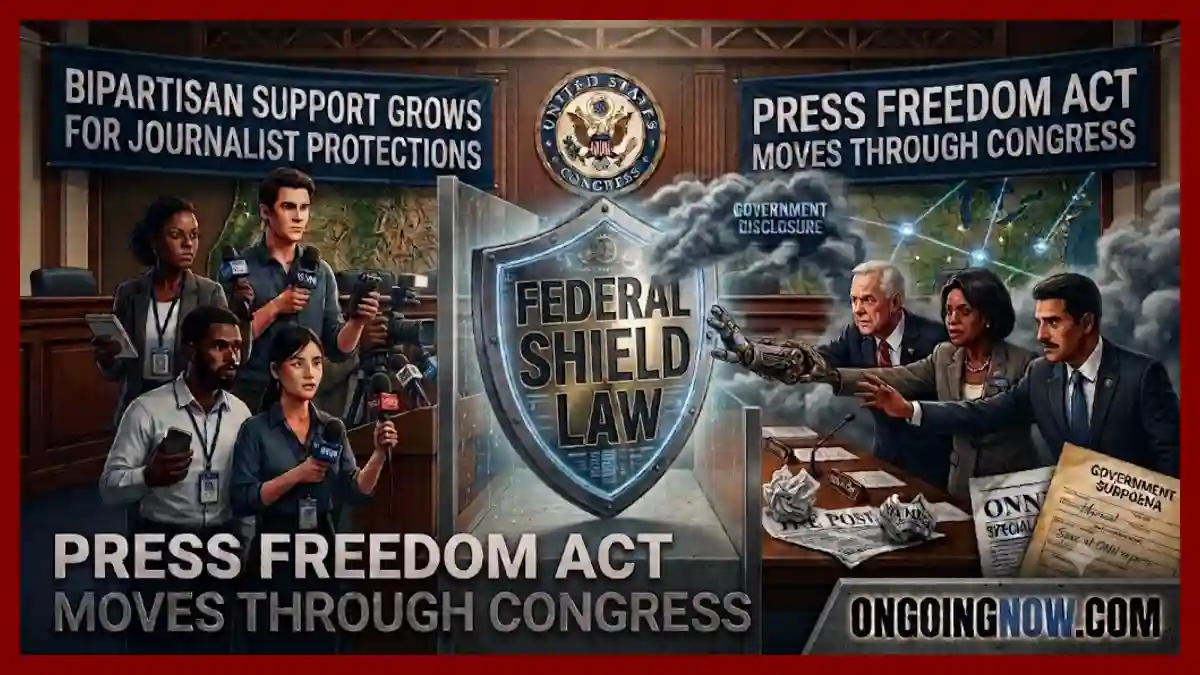
The debate surrounding the pass the press act congress status remains a focal point in Washington as lawmakers review bipartisan federal shield law updates. Designed to protect investigative journalists legislative action has intensified following high-profile court orders targeting reporter confidentiality. Currently, the senate judiciary committee press protection efforts are closely aligned with whistleblower protection law amendments to ensure source security. Backed by sustained freedom of the press foundation advocacy, observers are closely monitoring the congressional shield law vote schedule. Proponents argue that establishing a clear statutory protection against compelled disclosure is essential for maintaining independent accountability within federal institutions and preventing the targeting of alternative and independent reporting outlets nationwide.
The legislative trajectory of this policy reflects deep institutional debates within the United States Congress regarding the balance between national security and the public’s right to know. While the United States House of Representatives previously approved the framework with unanimous bipartisan support, the measure faced procedural hurdles in the United States Senate before the conclusion of the previous legislative session. The current legislative calendar has revived these discussions, driven by recent judicial rulings that media advocates argue expose gaps in existing legal frameworks.
Current Policy Landscape and Legal Realities
The lack of a unified federal framework means that journalists operating at the national level face a patchwork of legal standards. While 49 states and the District of Columbia maintain some form of shield law or recognized reporter’s privilege, these provisions do not bind federal courts or federal law enforcement agencies. Consequently, a reporter who is fully protected under state statute can still be subpoenaed by a federal grand jury or a federal administrative agency.
This jurisdictional divergence was underscored by a series of high-profile legal challenges involving independent and corporate media figures alike. Federal prosecutors and civil litigants have increasingly turned to third-party subpoenas, targeting telecommunications giants and internet service providers to obtain the communication logs of journalists without their direct knowledge. The proposed statutory framework seeks to close this loophole by explicitly restricting the federal government from compelling third parties to surrender a journalist’s data, except under extremely narrow emergency exceptions involving imminent physical harm.
Key Developments and the Catherine Herridge Precedent
The urgency surrounding the legislative push has been amplified by the ongoing legal battle of veteran investigative reporter Catherine Herridge. In a closely watched case, a federal district judge held Herridge in civil contempt for refusing to reveal her confidential sources regarding stories published in 2017 about a scientist investigated by the Federal Bureau of Investigation (FBI) who was never charged with a crime.
The legal mechanisms of the case reached a critical point in mid-2026 when a Washington, D.C. appeals court declined to halt an $800-per-day fine imposed on Herridge. Shortly thereafter, the Supreme Court of the United States denied an emergency application to stay the fine, with only Justice Brett Kavanaugh noting support for granting the stay. Media advocacy groups argue that the daily accumulation of financial penalties highlights the vulnerability of independent journalists who lack the backing of multi-billion-dollar corporate legal departments.
Institutional and Legislative Context
The current iteration of the legislation aims to establish a definitive legal barrier against government overreach. Historically, federal protections for journalists have relied almost entirely on internal Department of Justice (DOJ) guidelines. While the DOJ under Attorney General Merrick Garland updated its guidelines to heavily restrict the surveillance and subpoenaing of journalists, policy analysts note that administrative guidelines can be unilaterally rescinded or amended by subsequent administrations.
The following table outlines the structural differences between existing state-level protections, administrative policies, and the proposed federal statute:
Legal Precedent Note: In the foundational 1972 case Branzburg v. Hayes, the Supreme Court ruled 5-4 that the First Amendment does not grant journalists an absolute privilege against testifying before a grand jury. However, the court explicitly noted that Congress retains the authority to create a statutory privilege, a power that lawmakers are currently evaluating.
Human and Societal Impact on Information Flow
The implications of federal shield legislation extend beyond the legal field into the broader dynamic of civic transparency. When federal agencies or civil courts successfully compel the disclosure of sources, the immediate consequence is often described by researchers as a “chilling effect.” Potential whistleblowers within federal agencies, corporate boards, or municipal systems become significantly less likely to share evidence of waste, fraud, or abuse if they believe their identities cannot be protected.
According to research compiled by the Freedom of the Press Foundation, federal law enforcement agencies have improperly acquired reporters’ records on numerous occasions over the past two decades under various presidential administrations. On multiple occasions since 1990, journalists have faced home confinement or active incarceration for refusing to comply with disclosure orders. This enforcement mechanism impacts local and regional communities by delaying or preventing the publication of investigative findings concerning public safety, environmental hazards, and institutional corruption.
Analysis: The Constitutional and National Security Balance
A primary point of discussion within the Senate Judiciary Committee involves the exact boundaries of national security exemptions. Critics of an absolute privilege, including some national security analysts and lawmakers, argue that a completely unchecked privilege could impede federal investigations into espionage, terrorism, or the unauthorized disclosure of classified operational details.
To address these concerns, the drafted legislation includes specific carve-outs. The federal government would still be permitted to compel disclosure if a court determines that the information is necessary to prevent an act of terrorism or to avert an imminent threat of death or significant bodily harm. The legal burden, however, shifts to the government, which must convincingly demonstrate to a federal judge that the information sought is critical and cannot be obtained through any alternative investigative means.
Seth Stern, Chief of Advocacy for the Freedom of the Press Foundation, emphasized the stakes of this legislative compromise:
“Every journalist who depends on confidential sources to inform the public should be alarmed that a reporter has been ordered to pay almost $1,000 a day for not burning her sources. Sources come forward at great personal and professional risk to expose government abuse and corruption because they believe journalists can protect them.”
Historical Context of Federal Shield Efforts
The ongoing legislative effort represents the culmination of decades of advocacy. Similar bills have been introduced in nearly every congressional session since the mid-2000s, often passing committees only to stall on the floor of either chamber due to late-stage objections or packed legislative calendars.
In previous decades, opposition frequently centered on the challenge of defining who qualifies as a journalist in the digital age. Early drafts struggled to accommodate the rise of digital media, blog networks, and independent substack platforms. The modern legislative text addresses this by defining journalism functionally rather than institutionally—focusing on the act of gathering and disseminating news to the public rather than employment at a traditional mainstream media corporation.
What the Data Shows Regarding Public Accountability
Data from legal monitoring groups suggests that third-party digital subpoenas have surpassed direct reporter subpoenas as the primary mechanism for source identification. Because modern journalism relies heavily on digital communication, the ability to track metadata—such as call logs, IP addresses, and location data—allows investigative paths to be reconstructed without ever serving papers to a physical newsroom.
Legal scholars emphasize that without clear statutory protection, federal courts will continue to apply highly inconsistent balancing tests across different federal circuits. While some appellate circuits recognize a qualified common-law privilege for reporters, others reject it entirely, creating a landscape where geography dictates the safety of investigative reporting. The passage of a federal statute would create a uniform nationwide baseline for all federal proceedings.
Stay sharp with Ongoing Now!
Source and Data Limitations: This analysis is based strictly on public congressional records from the 118th and 119th Congresses, formal orders and opinions from the U.S. District Court for the District of Columbia, and the Supreme Court of the United States’ order history through June 2026. Legal data regarding historical precedents incorporates the Supreme Court’s decision in Branzburg v. Hayes (1972) and public tracking data from the Freedom of the Press Foundation and the Reporters Committee for Freedom of the Press. This report excludes all speculative claims regarding pending vote outcomes, unconfirmed Department of Justice investigations, or non-public administrative discussions.