How Evolving Election Administration Policy Changes Alter the 2026 Vote
An in-depth analysis of state voter validation adjustments, absentee regulations, and the mechanical shifts shaping the next electoral cycle.
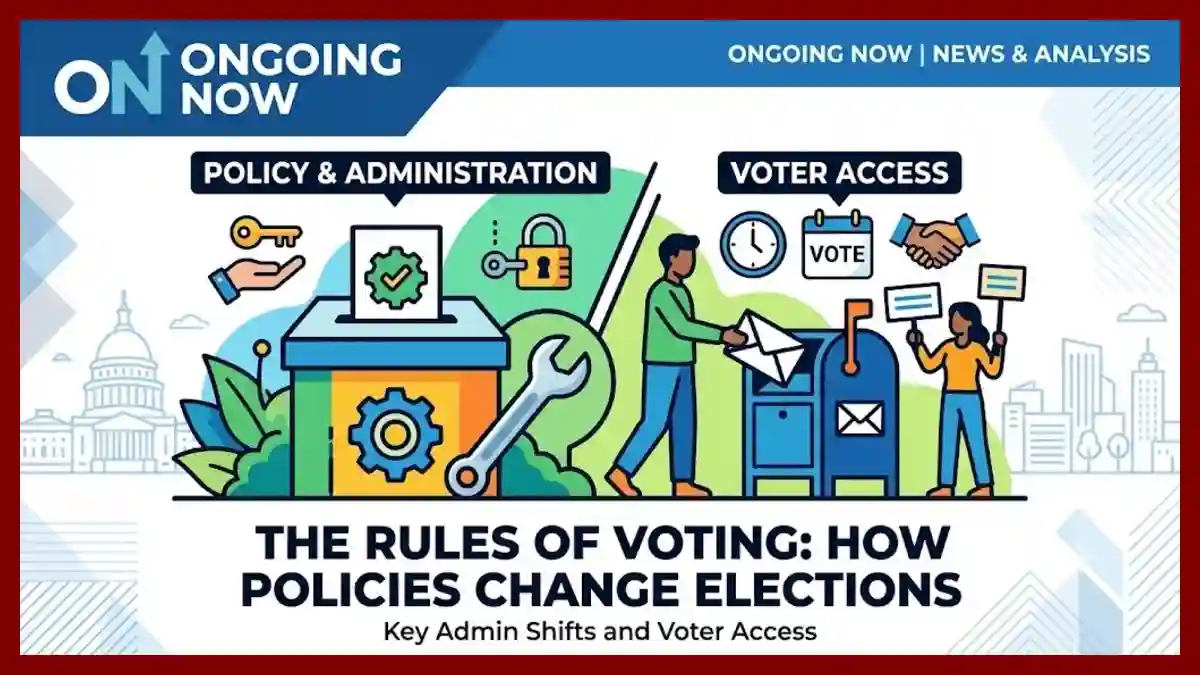
Current shifts in election administration policy changes shape the architectural foundations of American democracy ahead of the next cycle. Understanding how these developments steer midterm election voter turnout impact remains essential for both political parties and local administrators. Across the country, updated mail-in ballot delivery guidelines and changing absentee voting regulations by state redefine how individuals participate in federal contests. These shifting legal frameworks require an adapted voter mobilization strategy 2026 to navigate intensifying partisan voting access battles. Simultaneously, strict new mail ballot validation procedures enforced locally intersect with updated federal election protection programs designed to guarantee national security.
The intersection of state legislation and federal oversight has transformed the mechanics of casting a ballot. In Washington, debates over measures like the Safeguard American Voter Eligibility (SAVE) Act highlight a push for documentary proof of citizenship during registration. Meanwhile, individual states continue to exercise their constitutional authority to alter registration deadlines, drop box availability, and signature cure periods. This creates a complex regulatory environment where an administrative shift in one jurisdiction can result in entirely different voter experiences across state lines. For election directors, the priority is maintaining operational stability amid constant legislative modifications.
Federal Safeguards and the Infrastructure of Modern Balloting
The federal government plays a structured role in protecting the integrity of the vote while ensuring eligible citizens maintain access. Through coordinated federal election protection programs, agencies like the Cybersecurity and Infrastructure Security Agency (CISA) and the Department of Justice work alongside state officials to secure voting systems. These initiatives focus primarily on defending critical infrastructure against external digital interference and enforcing federal voting rights statutes.
However, federal legislative efforts often face steep resistance in Congress, leading to a decentralized approach to rule-making. The lack of a uniform national standard means that core voting procedures are largely left to state capitols, leading to divergent legal interpretations. This regulatory fragmentation can create confusion for voters who move across state lines or rely on uniform federal guidelines. Observers note that while federal programs provide essential cybersecurity support, they rarely dictate the day-to-day mechanics of local ballot processing.
As Rachel Orey, director of the Bipartisan Policy Center’s Elections Project, noted regarding rapid policy changes:
“We don’t recommend that states or the federal government implement election administration policy changes in a federal election year, let alone a policy change that would be as significant as this.”
The warning underscores a fundamental tension: while lawmakers often seek immediate statutory adjustments, election administrators require prolonged lead times to update technology, train temporary staff, and educate the public effectively.
Navigating the Patchwork of Absentee Voting Regulations by State
The decentralized nature of American elections is most visible when analyzing absentee voting regulations by state. Dictating whether a voter needs a specific reason to request a mail-in ballot varies dramatically across the country. Some jurisdictions have embraced permanent no-excuse mail voting lists, while others have tightened requirements, demanding specific medical or travel justifications.
+---------------------------------------------------------------------------------+
|                        REGULATORY VARIATION BY REGION                           |
+----------------------+--------------------------+-------------------------------+
| State Category       | Excuse Required?         | Core ID Requirement           |
+----------------------+--------------------------+-------------------------------+
| Universal Mail-In    | No                       | Signature Match / State ID    |
| No-Excuse Absentee   | No                       | Drivers License or Last 4 SSN |
| Excuse-Required      | Yes                      | Notarization or Witness Sign  |
+----------------------+--------------------------+-------------------------------+
Note: Individual state statutes are subject to ongoing litigation and legislative updates ahead of local registration deadlines.
These structural differences directly shape how campaigns allocate resources and how civil rights organizations plan their outreach. In states with universal mail-in systems, the logistical burden shifts toward ensuring the postal infrastructure can handle the volume. Conversely, in strict excuse-required states, the focus remains on helping voters navigate the multi-step application process before deadlines pass. This legal variance means that a single national narrative regarding ballot access is rarely accurate.
The Mechanical Reality of Mail Ballot Validation Procedures
Once a ballot is cast, it must pass through rigorous mail ballot validation procedures before it can be officially counted. These procedures are designed to verify the identity of the voter and prevent double voting, but they have also become a central focal point in partisan voting access battles. The reliance on automated signature verification software, for instance, has sparked debate over error rates and demographic disparities in ballot rejections.
To mitigate these risks, several states have implemented statutory “cure periods,” which allow voters to correct minor administrative errors, such as a missing signature or an unverified identification number, within a set number of days following an election. However, the availability of these cure windows is far from universal.
| State Type | Typical Cure Window | Verification Method |
| Standardized Cure | 3 to 7 days post-election | Text, email, or in-person affidavit |
| Limited Cure | Ends on Election Day | In-person confirmation only |
| No Statutory Cure | Validated on receipt | Immediate rejection if non-compliant |
Sean Morales-Doyle, director of the voting rights and elections program at the Brennan Center for Justice, has highlighted the impact of hyper-technical validation rules:
“When you add complex, multi-tiered identification steps to the mail-in process, you inevitably increase the rate of administrative rejections among eligible, lawful voters who simply missed a line on a form.”
How Shifting Procedures Shape Midterm Election Voter Turnout Impact
Every adjustment to the voting process carries a measurable midterm election voter turnout impact. Historically, midterm contests suffer from lower participation rates than presidential years, making marginal changes to ballot access highly consequential. When a state restricts the number of available drop boxes or shortens the window for requesting an absentee ballot, the operational friction often falls disproportionately on specific segments of the population.
Conversely, policies that streamline registration—such as automatic voter registration at motor vehicle departments or expanded early in-person voting windows—tend to stabilize participation. Political scientists emphasize that turnout is rarely driven by a single factor; rather, it is the cumulative result of a voter’s motivation balanced against the institutional ease of the process.
Data Insight: Comparative institutional studies indicate that states implementing strict administrative modifications within 180 days of an election see a correlated increase in provisional ballot utilization and localized polling place delays.
Architecting a Modern Voter Mobilization Strategy 2026
Faced with a constantly shifting regulatory landscape, political committees and non-partisan advocacy groups are forced to overhaul their traditional playbooks. A successful voter mobilization strategy 2026 cannot rely solely on generic messaging or broad television campaigns; it must incorporate granular, localized legal education. Campaigns must explicitly teach voters how to navigate the specific rules of their jurisdiction.
This operational reality requires heavy investment in data infrastructure and localized tracking systems. Mobilization teams must know exactly when mail-in ballots are scheduled to ship, what the precise mail-in ballot delivery guidelines are for the United States Postal Service, and how long a voter has to return their completed envelope.
Early Education Pipelines: Initiating contact months before the traditional campaign window to ensure voters have updated photo identifications that match state databases.
Tracking and Tracking Applications: Deploying digital tools that allow voters to follow their ballot from the printing facility to the local clerk’s office.
Direct Support Infrastructure: Establishing dedicated, localized hotlines staffed by legal experts to assist voters navigating complex validation challenges in real time.
The Evolving Landscape of Election Administration Policy Changes
The long-term trajectory of American governance depends heavily on how these structural changes stabilize over time. While the public focus often remains on high-profile candidates and debates, the quiet evolution of administrative rules dictates who can participate in selecting those leaders. Striking a sustainable balance between rigorous security protocols and accessible path-to-ballot infrastructure remains the primary challenge for modern lawmakers.
As jurisdictions finalize their preparations for upcoming cycles, the clarity of local communication will be the ultimate deciding factor in preventing widespread voter confusion. When rules are transparent, consistent, and well-publicized, public trust in the final outcome increases. When policies shift abruptly or vary wildly between neighboring counties, institutional credibility faces significant pressure. The ongoing work of election administration is not merely a technical challenge—it is the foundational work of maintaining an inclusive, functioning representative system.
Stay sharp with Ongoing Now!
—
Source and Data Limitations: This analysis is compiled from public legislative records, state election department manuals, and formal policy briefs published by the Bipartisan Policy Center, the Brennan Center for Justice, and the National Conference of State Legislatures (NCSL). Documented statutes reflect enacted laws and active administrative guidelines as of July 2026. This explainer deliberately excludes ongoing, unverified litigation claims, partisan fundraising projections, or speculative polling data concerning unannounced candidates.