The Fallout of the Instructure Data Leak: How Student Privacy Laws Are Changing
Analyzing the legal fallout of the May 2026 Instructure security breach and the resulting litigation landscape.
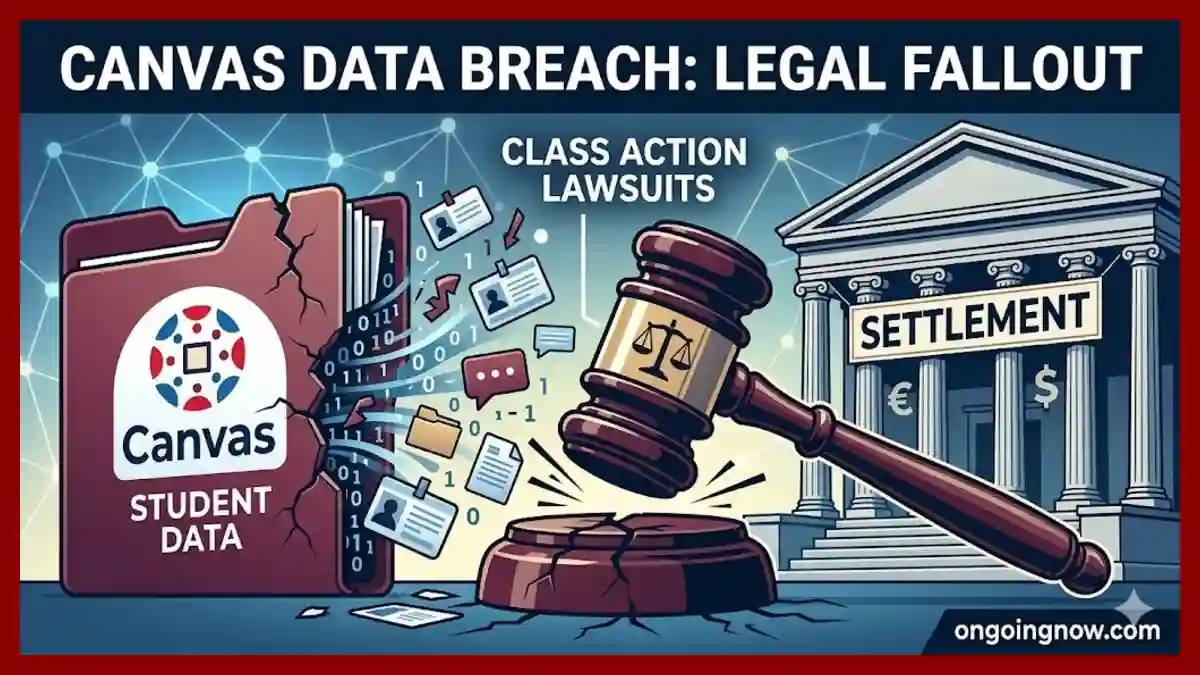
The May 2026 cybersecurity incident involving Instructure, the parent company of the Canvas learning management system (LMS), has triggered widespread legal scrutiny and a flurry of initial privacy violation lawsuits. Current reports confirm that the breach, claimed by the threat actor group ShinyHunters, may have compromised the data of approximately 275 million individuals across nearly 9,000 educational institutions. Legal experts and class action lawyers data breach specialists are currently evaluating whether Instructure maintained “reasonable” security measures as required by various state and federal statutes. This developing legal situation centers on three critical areas: the potential for a Canvas data breach settlement, the statutory grounds to sue Instructure for negligence, and the enforcement of mandatory breach disclosure legal requirements.
Within the first week of the incident, major public institutions including Rutgers University, James Madison University (JMU), and the University of Nevada, Reno, confirmed their involvement. These entities are now navigating the complex intersection of the Family Educational Rights and Privacy Act (FERPA) and state-level consumer protection laws. As of May 7, 2026, the Federal Bureau of Investigation (FBI) and the Cybersecurity and Infrastructure Security Agency (CISA) have been alerted to the breach, which involves an alleged 3.65 terabytes of exfiltrated data, including student names, ID numbers, and private messages.
The Legal Basis for Claims Against Instructure
The primary focus of emerging litigation is whether the company’s security protocols were sufficient to protect sensitive learner data. Plaintiffs’ attorneys are expected to argue that the May 2026 event, occurring only eight months after a separate Salesforce-related breach in September 2025, establishes a pattern of inadequate data governance. To sue Instructure for negligence, plaintiffs must typically demonstrate that the company owed a duty of care to the students, breached that duty through insufficient security, and that this breach directly caused the exposure of personal information.
The legal framework for these claims often relies on the “reasonableness” standard. Courts will examine whether Instructure adhered to industry-standard encryption, multi-factor authentication (MFA) mandates, and regular vulnerability patching. If the breach was facilitated by a known but unpatched vulnerability, as suggested by early reports from institutions like JMU, the legal argument for negligence strengthens significantly.
Key Legal Vulnerabilities Under Review
Data Minimization: Whether the company retained student messages and identifiers longer than legally or operationally necessary.
Notice Delays: Whether the timeline from discovery (May 1) to public disclosure met state-specific mandatory breach disclosure legal windows, which in some jurisdictions are as short as 72 hours.
Recurring Lapses: How the September 2025 social engineering incident influenced the company’s subsequent security investments.
Consumer Protection and Student Privacy Rights
The breach has intensified the focus on student data privacy rights, which are governed by a patchwork of laws depending on the age of the users and the location of the institution. While FERPA traditionally focuses on educational records, recent consumer protection lawsuits 2026 have increasingly utilized the Federal Trade Commission (FTC) Act to penalize companies for deceptive or unfair security practices.
In the United States, several states have recently enacted comprehensive privacy laws (such as the CCPA/CPRA in California) that provide consumers with a private right of action for certain types of data breaches. This means individuals may not need to prove specific financial loss to seek statutory damages—merely the fact of the unauthorized access may be sufficient to proceed.
By the Numbers: The Scope of the May 2026 Incident
| Data Point | Reported Metric |
| Total Records Claimed | 275 Million |
| Institutions Impacted | ~8,809 |
| Volume of Exfiltrated Data | 3.65 Terabytes |
| Primary Data Types | Names, Emails, Student IDs, Private Messages |
| Alleged Ransom Deadline | May 12, 2026 |
Legal Note: The figures above are based on claims by the threat actor ShinyHunters and preliminary university disclosures. Official verification of the total impact remains part of the ongoing forensic investigation.
Mandatory Disclosure and Regulatory Scrutiny
The legal consequences of data leaks extend beyond civil litigation into the realm of regulatory enforcement. Under GDPR fines for Instructure, European data protection authorities could potentially levy penalties of up to 4% of the company’s annual global turnover if it is found that the breach resulted from a failure to implement “technical and organizational measures” to ensure a level of security appropriate to the risk.
Furthermore, the U.S. Securities and Exchange Commission (SEC) requires publicly traded companies to disclose “material” cybersecurity incidents within four business days of determining the incident is material. Instructure’s disclosure on May 1 initiated this clock, and subsequent filings will be scrutinized for transparency regarding the risk to the company’s financial standing and operational integrity.
Filing a Data Breach Claim
For individuals seeking to protect their rights, filing a data breach claim typically begins with documenting the notification received from their educational institution or Instructure. These notices are critical legal documents that establish a person’s “standing” in a class action.
Preserve Evidence: Save all emails, letters, and screenshots related to the breach notification.
Monitor Identity: Track any unauthorized attempts to access linked accounts, as these provide evidence of “actual harm” in some jurisdictions.
Legal Consultation: Engage with firms specializing in edtech privacy to determine eligibility for potential Canvas data breach settlement funds.
Analysis: Why This Case Differs from Standard Leaks
This incident is distinct because it involves “bilateral communication” data—private messages between students and educators. Unlike a simple leak of email addresses, the exposure of private messages significantly heightens the risk of social engineering and psychological harm. Legal scholars argue this elevates the case from a standard data breach to a profound privacy violation lawsuit that may redefine “harm” in the context of digital education.
Precedent and Comparative Litigation
The 2026 Instructure litigation follows in the footsteps of the Blackbaud and Chegg settlements, where educational service providers faced multi-million dollar payouts for failing to secure student and donor information. However, the scale of the Canvas platform—serving tens of millions of K-12 and higher-ed users globally—makes this potentially one of the largest edtech settlements in history.
Societal Impact: The Trust Deficit in EdTech
The societal implications of this breach are significant, as Canvas has become a “utilities-grade” service for modern education. When a platform of this scale fails, it doesn’t just risk data; it disrupts the educational process itself. At Texas State and JMU, finals were delayed or halted, demonstrating how digital security is now inextricably linked to the fundamental right to education.
From a legal perspective, the impact on minors is of particular concern. Many users of the Canvas platform are under the age of 18, bringing the Children’s Online Privacy Protection Act (COPPA) into play. Regulators will be looking to see if Instructure took “extraordinary” care to protect this vulnerable demographic, or if student data was treated with the same protocols as standard enterprise data.
Moving Toward a Canvas Data Breach Settlement
While it is early in the litigation cycle, the trajectory of similar massive breaches suggests a structured path toward a Canvas data breach settlement. Typically, such settlements include:
A Common Fund: A designated pool of money to compensate victims for time spent or financial losses.
Injunctive Relief: Court-mandated changes to Instructure’s security architecture.
Credit Monitoring: Multi-year subscriptions to identity theft protection services for all affected users.
Current class action lawyers data breach investigations are focusing on the “interconnectivity” of the Canvas API, which may have allowed the threat actors to pivot through various school systems. This technical detail will be central to determining the “gross negligence” threshold often required for punitive damages.
Evidence-Based Legal Insights
The legal community views the May 2026 breach as a watershed moment for “Duty of Care” in the cloud-computing era. If the courts find that Instructure’s September 2025 breach should have served as a definitive warning to overhaul its Salesforce and API integrations, the company may face higher liability.
Jurisdiction Matters: Plaintiffs in California or the EU may have stronger statutory claims than those in states with limited consumer privacy protections.
Damages for Private Messages: A key legal battleground will be the valuation of “privacy loss” concerning private messages, which do not have a direct market value but hold high personal and professional sensitivity.
This is informational only and not legal advice. Consult a licensed attorney for your situation.
Stay sharp with Ongoing Now!
Source and Data Limitations: This report is based on public disclosures from Instructure (dated May 1–6, 2026), official security alerts from Rutgers University, James Madison University, and the University of Nevada, Reno, and investigative reporting by BleepingComputer and Malwarebytes. Claims regarding the volume of data (3.65 TB) and number of records (275 million) originate from the threat actor ShinyHunters and have not been independently verified by a third-party forensics firm as of May 7, 2026. This article excludes speculative rumors regarding the specific entry point of the breach pending the release of the official forensic report by Instructure’s third-party investigators.