The Epic Late-Night Legacy: How Paul McCartney SNL Return Redefined the Finale
Sir Paul McCartney returned as the musical guest for the season finale, delivering a rare multi-era retrospective.
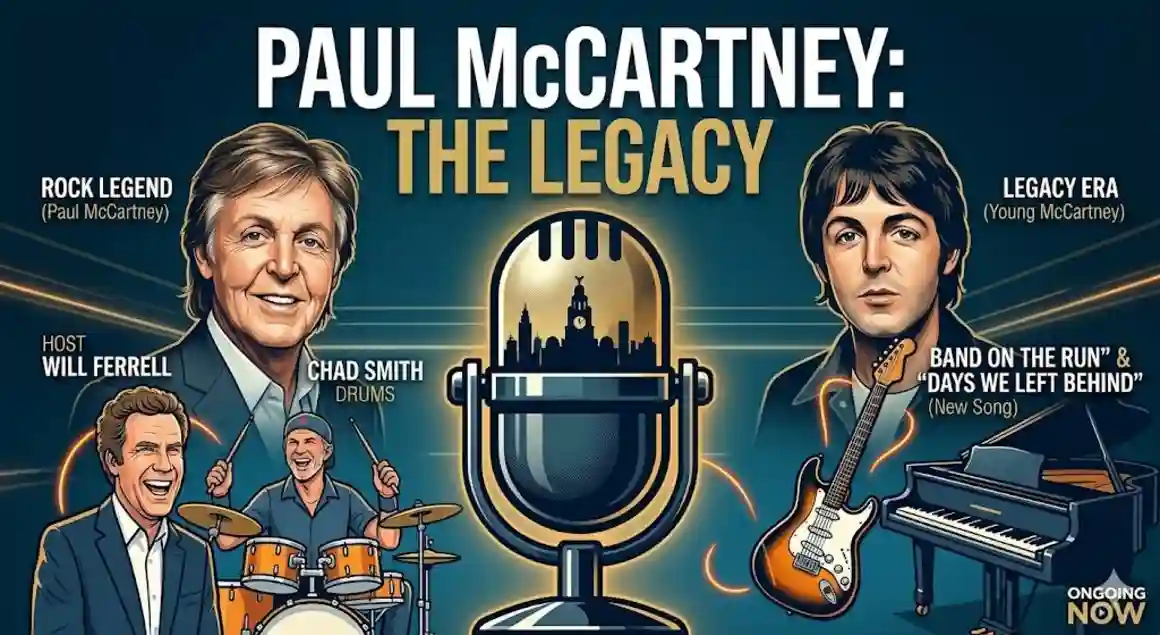
The long-running NBC late-night sketch comedy program Saturday Night Live concluded its 51st season on May 16, 2026, featuring a multi-generational performance by rock legend Sir Paul McCartney. Serving as the evening’s musical guest alongside host and series alumnus Will Ferrell, McCartney utilized his appearance to balance contemporary promotion with deep historical callbacks. The 83-year-old songwriter delivered the television debut of his latest solo material, revived seminal 1970s stadium rock, and concluded the broadcast with an unannounced encore during the traditional closing credits sequence.
McCartney’s performance contextually mirrors the promotional cycle for his upcoming studio album, The Boys of Dungeon Lane, scheduled for release on May 29, 2026, via Capitol Records. By blending historical catalog pieces with unreleased selections, the broadcast highlighted his ongoing collaborative presence inside Studio 8H, spanning more than four decades of late-night television history. Supported by a temporary rhythm section arrangement featuring Red Hot Chili Peppers drummer Chad Smith, the appearance consolidated McCartney’s standing as one of the most recurring high-profile legacy performers in public broadcasting history.
The Structural Breakdown of the Studio 8H Performance
The broad promotional strategy for the evening relied on distinct creative eras, mapping McCartney’s legacy across solo, Wings, and contemporary formats. For his first formal set, McCartney introduced “Days We Left Behind,” the lead single from his forthcoming LP. The performance leaned into a reflective arrangement, featuring understated piano foundations and guitar textures accompanied by a background visual montage of archival photographs from his pre-Beatles youth in Liverpool along the Mersey shoreline.
The second performance shifted toward his mid-career catalog with the 1973 Wings centerpiece “Band on the Run.” The multi-part composition, originally tracking to the Grammy-winning album of the same name, altered the room’s energy from introspective folk-pop to structured rock orchestration. To close the entire television broadcast, showrunner Lorne Michaels granted McCartney a rare production privilege: performing an unexpected third song, “Coming Up,” directly over the end credits as the cast and host assembled for their traditional farewell wave.
Analyzing the Collaborative Dynamics and Skit Involvement
Beyond his strict duties as a musical performer, McCartney participated directly in the episode’s comedic blocking. During Will Ferrell’s opening monologue, a long-running cultural meta-joke regarding the physical resemblance between Ferrell and drummer Chad Smith was staged. Smith initially walked out claiming to be the host, prompting Ferrell to emerge and dismiss him. McCartney then engaged from the studio audience, staging a mock intervention where he humorously misidentified the individuals involved.
Later in the broadcast, viewers could watch Paul McCartney snl skit segments that integrated his deadpan comedic delivery into a traditional character format. In a sketch featuring Ferrell, Marcello Hernández, Mikey Day, and Ashley Padilla, McCartney portrayed an eccentric British automotive mechanic named Nigel. His lines relied on an exaggerated caricature of British slang terminology:
“Your tipsy-wipsy’s all dangly-doodly, and the spiggly-wiggly’s gone crumpet. The whole car is knackered.”
Statistical Overview: McCartney’s Historical SNL Tracking
The May 16, 2026, broadcast officially marked McCartney’s fifth credited appearance as the primary musical guest on Saturday Night Live, alongside two notable appearances on anniversary specials. His history with the show reveals an intentional reliance on solo and Wings material over standard Beatles arrangements during traditional promotional cycles.
Paul McCartney SNL Musical Guest Episodes and Repertory
| Broadcast Date | Host | Featured Songs Performed | Primary Product Promoted |
| May 17, 1980 | Steve Martin | “Coming Up” (Music Video Premiere) | McCartney II |
| Feb. 13, 1993 | Alec Baldwin | “Biker Like an Icon”, “Get Out of My Way” | Off the Ground |
| Dec. 11, 2010 | Paul Rudd | “Jet”, “Band on the Run”, “A Day in the Life” / “Give Peace a Chance” medley, “Get Back” | Good Evening New York City |
| Dec. 15, 2012 | Martin Short | “My Valentine” (with Joe Walsh), “Cut Me Some Slack” (with Nirvana members), “Wonderful Christmastime” | Kisses on the Bottom / Sound City |
| May 16, 2026 | Will Ferrell | “Days We Left Behind,” “Band on the Run,” “Coming Up” | The Boys of Dungeon Lane |
Note: Table excludes brief uncredited cameos and his standard live performances during the 40th and 50th Anniversary Special broadcasts.
Contextualizing the Rhythm Section Adjustment
A significant variable in the performance’s reception was the composition of McCartney’s backing band. Regular longtime touring drummer Abe Laboriel Jr. was absent for the evening, requiring Red Hot Chili Peppers member Chad Smith to step behind the percussion kit for the entirety of the live set. This substitution served a dual purpose, fulfilling the script requirements for the monologue skit with Paul McCartney Will Ferrell snl interactions while maintaining technical stability for the complex tempo shifts within “Band on the Run.”
The choice to leverage Smith highlighted a professional flexibility common among high-tier industry session musicians. Smith’s heavy, pocket-centered classic rock timing provided a stiffer driving rhythm to the track arrangements compared to Laboriel’s characteristically fluid, vocal-harmony-driven drumming style. This instrumental pivot gave the 1973 track a noticeable sonic weight that coordinated with the live room acoustics of Studio 8H.
Comparative Assessment: Legacy Acts on Late-Night Platforms
McCartney’s return to late-night variety television at 83 offers an operational benchmark for how legacy rock artists approach modern multi-platform media. Rather than treating the television studio purely as a nostalgia vehicle, McCartney’s team structured the evening around a standard two-pronged release strategy: introducing new creative intellectual property to streaming-focused audiences while validating core catalog assets.
Catalog Balance: Historically, McCartney’s solo-to-Beatles song ratio on SNL favors his post-1970 output (9 solo songs, 3 Wings tracks, vs. 7 Beatles compositions across all appearances).
The Credits Honor: The choice to play through the goodnights is an editorial exception inside NBC. Typically, the program runs a pre-recorded instrumental track by the Saturday Night Live Band; giving a musical guest live authority over the final three minutes is a designation reserved almost exclusively for artists of historical significance to the network.
Why the Studio 8H Landscape Matters for Aging Icons
The cultural resonance of the paul mccartney saturday night live finale performance rests primarily on its structural preservation. In an era where legacy performers increasingly rely on pre-recorded tracks, heavily mixed arena monitors, or avatar-driven residency models, the constraint of a live network broadcast demands an unadorned, human-centric presentation.
The audience reception metrics across digital streaming syndication the morning following the broadcast indicated a distinct split in public interest. While technical reviewers noted predictable structural changes in vocal range inherent to an octogenarian performer, consumer engagement spiked significantly around the unscripted nature of the “Coming Up” encore. By returning to the precise composition he used to debut his solo career on the very same stage 46 years prior, McCartney constructed an intentional narrative loop that emphasized creative longevity over corporate nostalgia.
Stay sharp with Ongoing Now!
Source and Data Limitations: This entertainment analysis relies on verified broadcast data from NBC’s live transmission of Saturday Night Live on May 16, 2026, alongside historic production logs archived via the Saturday Night Live Wiki and Capitol Records press statements. Streaming availability references correspond directly to NBC’s Peacock platform in the United States region. Studio personnel tracking excludes uncredited stagehands and assumes standard union musical representation parameters. Critical reception analysis is derived from aggregated post-broadcast publication data from industry trades including Variety, Deadline, and Stereogum available as of May 17, 2026.