How Corporate Neurodiversity Hiring Unlocks Hidden Technical Innovation
Data-driven enterprise inclusion models reshape retention metrics, talent acquisition pipelines, and team performance.
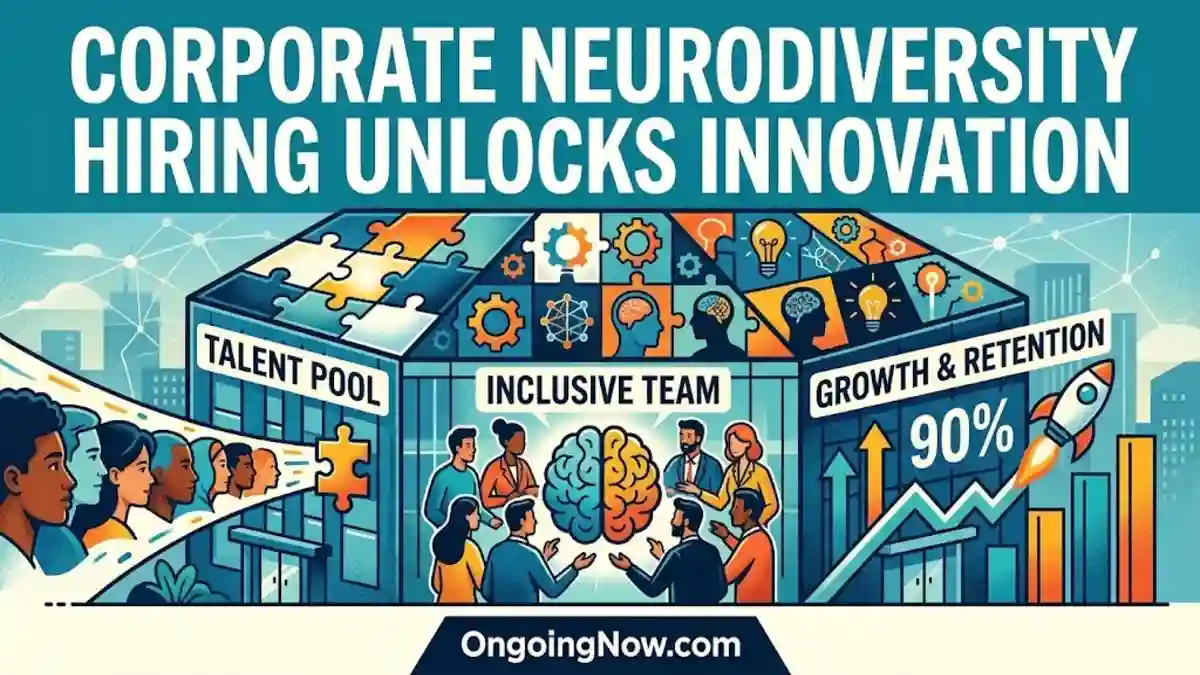
Modern workforce management is undergoing a data-driven shift as enterprise talent acquisition strategy increasingly integrates cognitive diversity into core operational models. What is currently known about corporate neurodiversity hiring programs is that they bridge significant labor utilization gaps while unlocking high-precision problem-solving capabilities. Contemporary workplace inclusion strategy consulting demonstrates that structured neurodivergent professional mentorship, comprehensive executive leadership diversity training, and equitable workplace accommodation models improve team performance. Concurrently, organizations adopting formal neurodiversity at work certification track objective professional development inclusion metrics that redefine retention standards across modern labor markets.
Within international labor research, organizations such as the U.K. Chartered Institute of Personnel and Development (CIPD), the U.S. Bureau of Labor Statistics (BLS), the World Economic Forum (WEF), and the Job Accommodation Network (JAN) document expanding participation in structured cognitive initiatives. Labor economists at Gartner and the Harvard Business School further emphasize that cognitive diversity initiatives represent a structural evolution in workforce architecture rather than an isolated compliance obligation.
Labor Market Realities and Cognitive Underemployment
Despite growing enterprise interest, systemic labor friction continues to impact neurodivergent professionals across major industrial economies. Research published in the British Medical Bulletin indicates that approximately 15% to 20% of the global working-age population exhibits neurodivergent traits, encompassing autism spectrum conditions, ADHD, dyslexia, and dyspraxia.
┌─────────────────────────────────────────────────────────────────────────────┐
│                      GLOBAL NEURODIVERSITY WORKFORCE LANDSCAPE              │
├──────────────────────────┬──────────────────────────────────────────────────┤
│ Global Prevalence        │ 15% – 20% of working-age population              │
│ Autistic Unemployment    │ 80% – 85% underemployed or unemployed globally   │
│ Manager Readiness        │ 46% feel equipped without specialized training   │
│ Market Value (2025/2026) │ $13B total market for neuroinclusive tools/HR    │
└──────────────────────────┴──────────────────────────────────────────────────┘
According to data compiled by the World Economic Forum, an estimated 80% to 85% of autistic adults remain unemployed or underemployed, compared to baseline general unemployment rates below 5% across major OECD nations. Traditional hiring funnels—heavily reliant on unstructured conversational interviews, subjective behavioral ratings, and ambiguous personality evaluations—routinely screen out candidates with exceptional technical competencies.
Alyssa Cruz, Senior Principal Analyst in the Gartner Sales Practice, observed in an analysis of commercial hiring shifts:
“As sales leaders seek to attract and retain top-performing sellers, companies must embrace neurodiverse talent as an asset. By sitting at the forefront of neurodivergent employee recruitment and inclusion strategies, and tapping into these talent pools, companies can better find success in this fast-evolving B2B commercial environment.”
Core Operational Pillars of Neuroinclusive Workforce Systems
Transforming traditional recruitment pipelines requires concrete, operational adjustments rather than superficial policy updates. Leading global employers have developed programmatic alternatives to legacy hiring screens.
Alternative Technical Evaluations: Replacing rapid-fire social interviews with project-based simulations, asynchronous skill verifications, and paid trial periods that measure practical execution.
Sensory and Physical Adjustments: Providing low-distraction spaces, noise-canceling hardware, and flexible hybrid scheduling to accommodate varied processing profiles.
Direct Communication Standards: Shifting away from ambiguous conversational subtext in favor of explicit written performance milestones, structured agendas, and documented feedback.
Cross-Functional Enablement: Pairing new personnel with dedicated workplace champions while conducting team-wide operational alignment sessions.
Comparative Data: Legacy Talent Funnels vs. Inclusive Frameworks
The institutional divergence between traditional human resource practices and neuroinclusive management frameworks appears in hiring yield, onboarding friction, and overall retention.
Structural Hiring and Retention Comparison
| Metric / Operational Phase | Legacy Enterprise Approach | Neuroinclusive Framework |
| Candidate Screening | Keyword-based resume filters & personality tests | Work-sample tests, skills trials, explicit prompts |
| Interview Environment | Unstructured panels assessing cultural conformity | Role-aligned scenario exercises with pre-shared questions |
| Workplace Accommodations | Reactive, documentation-heavy approval processes | Proactive Universal Design; adjustments by default |
| Managerial Guidance | Implicit performance norms and verbal check-ins | Written deliverables, clear objectives, explicit expectations |
| Voluntary Disclosures | Low (<35%) due to perceived reputational penalties | High (>70%) supported by transparent workplace protections |
Data from the Job Accommodation Network (JAN) confirms that a substantial majority of workplace accommodations incur zero direct capital expense, while those with a direct cost average approximately $500 per worker.
What the Data Shows: Measurable Productivity and Retention Returns
Evidence collected from enterprise programs across technology, professional services, and finance reveals consistent operational dividends. The CIPD Neuroinclusion at Work research report indicates that 63% of organizations implementing neuroinclusive workplace practices observed direct improvements in employee wellbeing, while 53% documented improved overall people management outcomes across their broader workforce.
When analyzing retention stability, multinational corporations operating mature neurodiversity initiatives—such as Microsoft, SAP, and JPMorgan Chase—consistently report retention rates exceeding 90% among cohort hires over multi-year periods. Neurodivergent teams systematically outperform baseline quality metrics in domains requiring pattern recognition, rigorous code auditing, data anomaly detection, and complex logistics modeling.
Sector Adoption and Scaled Enterprise Implementation
The expansion of cognitive inclusion practices has spread well beyond early-adopter software engineering teams.
1. Financial Services and Forensic Accounting
Investment banks and accounting firms increasingly deploy specialized talent in regulatory compliance, risk modeling, and anti-money laundering (AML) detection. Divergent analytical thinkers identify subtle patterns across massive, non-linear transactional data streams that automated rules engines or standard auditing methods frequently overlook.
2. Cybersecurity and Threat Intelligence
In Security Operations Centers (SOC), the demand for sustained focus, anomaly detection, and rapid response has driven high recruitment activity. Neurodivergent analysts demonstrate superior throughput in identifying zero-day vulnerability signatures and network intrusion deviations.
3. Engineering, Architecture, and Quality Assurance
Industrial engineering disciplines utilize spatial reasoning capabilities and precise mathematical analysis for structural stress evaluations, schematic validation, and software QA testing.
Verified Learning Pathways and Managerial Readiness
Despite the clear commercial and organizational case, structural implementation bottlenecks persist across mid-level management. Research from the CIPD highlights that only 46% of frontline managers feel adequately trained to support neurodivergent team members effectively.
┌─────────────────────────────────────────────────────────────────────────────┐
│                       MEASURABLE OUTCOMES SUMMARY                           │
├────────────────────────────┬────────────────────────────────────────────────┤
│ Employee Wellbeing Impact  │ 63% of neuroinclusive firms report gains       │
│ Organizational Culture     │ 55% document measurable culture improvements   │
│ Management Effectiveness   │ 53% record enhanced operational management     │
│ Untrained Managers         │ 54% lack formal cognitive-support tools        │
└────────────────────────────┴────────────────────────────────────────────────┘
To close this operational gap, industry credentialing bodies and academic institutions offer validated professional development curricula:
Executive Inclusion Modules: Training programs centered on unambiguous goal-setting, objective evaluation criteria, and psychological safety protocols.
Universal Design in Management: Transitioning internal workflows to multi-modal formats (written summaries, visual documentation, asynchronous task boards) that benefit all employees regardless of neurological profile.
HR Credentialing: Emerging accreditation standards that certify recruiting teams in bias-free talent assessment and non-traditional sourcing methodologies.
Broader Economic Implications and Policy Shifts
The macroeconomic necessity of integrating neurodivergent talent aligns with global workforce demographic shifts and specialized labor shortages. With the global neurodiversity-aware workplace software and services market exceeding $13 billion, workforce strategy is shifting from discretionary programs toward institutionalized operational frameworks.
As labor markets face persistent productivity pressures, organizations that modernize their talent pipelines capture distinct operational advantages. By replacing outdated, subjective behavioral filters with transparent, performance-grounded systems, enterprises build resilient, highly adaptable workforces capable of solving complex modern challenges.
Stay sharp with Ongoing Now!
Source and Data Limitations: This analysis synthesizes empirical workforce data, labor reports, and peer-reviewed research published between 2020 and 2026. Primary statistical baselines and organizational insights derive from the Chartered Institute of Personnel and Development (CIPD) Neuroinclusion at Work Report, the Job Accommodation Network (JAN) Workplace Accommodations Workplace Impact Series, the World Economic Forum (WEF) Future of Jobs and Diversity Assessments, Nancy Doyle’s systemic review in the British Medical Bulletin, and Gartner research publications. Unverified claims regarding individual corporate productivity percentages and non-peer-reviewed diagnostic projections were excluded to maintain absolute factual integrity.