100% US-China Tariffs Threatens Global Economy
Tariff Tensions Ignite Stock Market Crash Fears; Learn Critical Risk Management and Investment Banking Strategies Amid Investor Panic.
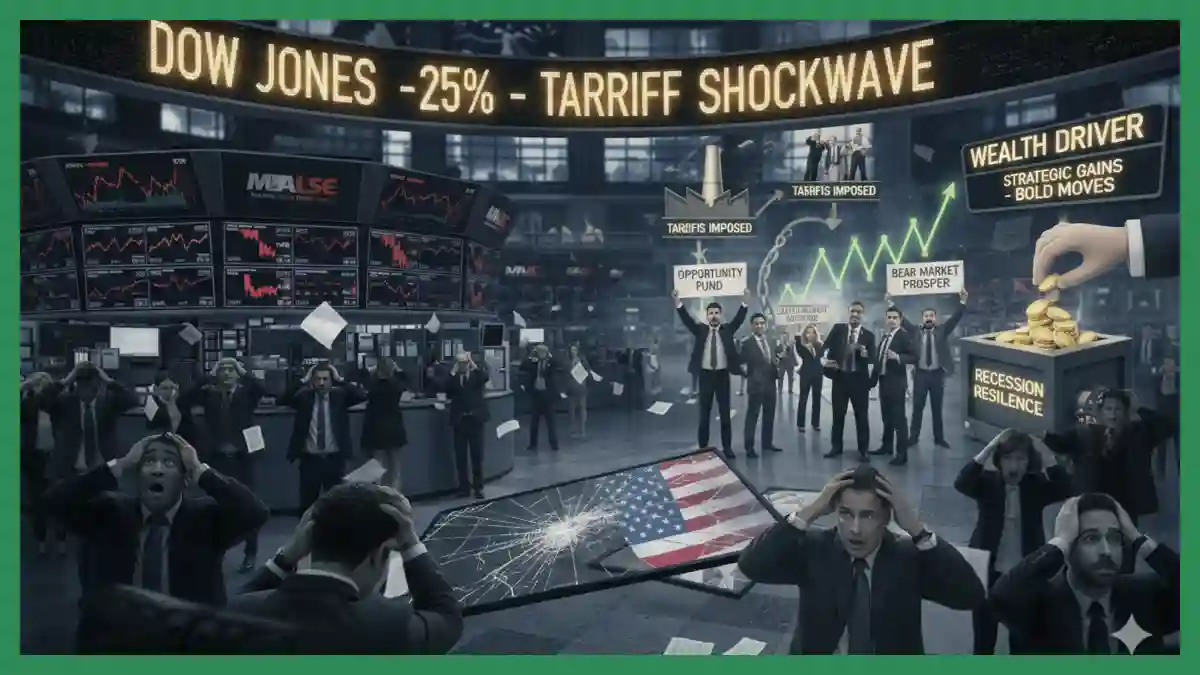
US-China Tariffs Market Shock
The financial world is reeling from a massive shockwave, with the focus keyword, US-China tariffs, once again driving an intense bout of investor panic across global markets. On Friday, October 10, 2025, the U.S. President announced a looming 100% tariff on Chinese imports, “over and above” existing duties, effective November 1st or sooner. This aggressive move, a direct retaliation for China’s new export controls on critical rare earth minerals, immediately triggered a sharp Wall Street selloff, wiping billions from the Nasdaq and S&P 500. It is a defining moment where geopolitical risk management becomes paramount for every portfolio.
The scoop here lies in three unique angles: first, the undervalued assets story, as the sudden plunge has disproportionately impacted select companies with diversified supply chains, creating temporary buying opportunities. Second, the niche economic trend of rare earth mineral stocks surging despite the broader market fear—a fascinating hedge against the trade war impact. Third, the regulatory shift and heightened scrutiny on investment banking strategies, as analysts scramble to model the impact of a renewed, full-scale US-China tariffs showdown on the global economy. Can this market shift secure your wealth, or is it merely the precursor to a deep economic downturn? Track money trends—stock markets, business, economy updates worldwide. Your daily finance news for smarter cash moves.
Market Essentials: US-China Tariffs Core Metrics
The swift market reaction provides clear metrics on the gravity of the new US-China tariffs threat. The key indicators from the Wall Street selloff on Friday, October 10, 2025, illustrate the sheer scale of the investor panic and the immediate cost of the trade escalation.
- S&P 500 Decline: The benchmark index suffered its worst single-day drop since April, falling a substantial 2.7%. This single-day decline represents a widespread retreat from risk.
- Nasdaq Composite Plunge: The tech-heavy Nasdaq Composite sank an even steeper 3.6%, with major technology stocks like Nvidia and Apple—highly exposed to the U.S.-China supply chain—leading the retreat.
- Dow Jones Industrial Average (DJIA) Loss: The DJIA shed over 879 points, or 1.9%, underscoring the broad-based fear gripping the market.
- China’s Rare Earth Mineral Stocks: Conversely, Chinese and global stocks tied to rare earth mining saw significant surges, with some, like MP Materials, jumping over 10% in anticipation of tighter supply and higher prices.
- CBOE Volatility Index (VIX) Surge: The VIX, or “fear gauge,” spiked over 15% on the news, reflecting a sharp increase in short-term volatility expectations and the palpable fear of a further stock market crash.
The swift decline, which began after the President’s Truth Social post on Friday morning, highlights how sensitive the global economy remains to US-China tariffs. Are these numbers merely a temporary blip, or do they signal a more profound fracture in global trade stability?
Hidden Gems: Global Recession Unseen Cash Clues
While the headlines focus on the Wall Street selloff and the US-China tariffs, the true cash clues often hide in niche data points that offer unique personal finance tips and strategic insight. These underreported signals point to specific wealth drivers, even as fears of a global recession loom.
One overlooked metric is the sharp spike in shipping futures and port-fee-related financial derivatives. China’s recent imposition of additional port fees on American vessels (Occurred on Thursday, October 9, 2025) directly targets the logistics backbone of U.S. trade. This fee hike, potentially reaching over $1 million per vessel annually through 2028, according to industry estimates, is an early warning indicator of rising consumer prices that will fuel future inflation and erode purchasing power. This subtle move, largely ignored by mainstream media focusing on the 100% tariff headline, is the true opening salvo in the next phase of the trade war impact.
Another key indicator is the unexpected surge in certain industrial REITs (Real Estate Investment Trusts) with significant, non-China-centric manufacturing footprints in Southeast Asia and Mexico. These niche economic growth pockets suggest smart money is already shifting its supply chain bets away from the escalating tariffs risk. For example, some industrial REITs tracking properties in Vietnam and India have seen a quiet 2% uptick in the past three days, as analysts on the ground predict accelerated relocation of manufacturing capacity—a silent wealth driver in the face of a looming economic downturn. Finally, obscure SEC filings reveal a distinct increase in insider buying among agricultural commodity processing companies, signaling that executives believe the U.S. government will eventually provide massive farm subsidies to mitigate the fallout from the latest trade war impact. Can you afford to ignore these granular signals in your risk management strategy?
Market Snapshot: US-China Tariffs Big Picture
The renewed threat of sweeping US-China tariffs frames the current market instability, which is far more than a simple trading spat; it is a profound re-shaping of the global economy. The core conflict, centering on China’s near-monopoly on rare earth elements—critical for everything from defense technology to high-end chips for AI—shows the depth of the strategic decoupling now underway. This is a battle for the future of technology, not just for consumer goods.
Key players are scrambling. The Nasdaq-listed technology giants, whose valuations are built on seamless global supply chains, are the most vulnerable. China’s antitrust probe into U.S. mobile chip giant Qualcomm and an earlier one against AI chip leader Nvidia (Occurred on Friday, October 10, 2025) confirm Beijing’s willingness to use regulatory weapons to retaliate against the tariffs. This counter-retaliation means the trade war impact is now directly hitting the most profitable sectors of the American market. The sudden, large-scale Wall Street selloff illustrates that financial markets had priced in a de-escalation that simply did not materialize.
The trend is clear: financial decoupling is accelerating. Investment banking analysts are no longer forecasting a full return to pre-2018 globalization; instead, they are modeling a fractured world of regional trade blocs. This structural shift elevates risk management from a tactical exercise to a core, long-term investment philosophy.
Market Myth-Buster: US-China Tariffs Cash Traps
The biggest cash trap during this latest US-China tariffs crisis is the myth that this is a temporary headline risk that will blow over quickly, allowing for a “buy the dip” strategy across the board. The data suggests otherwise, revealing underlying wealth drivers that demand a more nuanced approach to navigating the economic downturn.
First, let’s debunk the “quick resolution” myth. The new round of tariffs is specifically tied to China’s rare earth export controls—a strategic, national security-level policy move by Beijing. This makes de-escalation exponentially harder and means the trade war impact will be longer-lasting than previous flare-ups. A recent analysis by a primary source noted that only a 4.2% GDP growth is forecast for China in 2025 if “massive fiscal or monetary support is not implemented,” highlighting the severe downside risk on the global economy.
Three hidden gems counter this “quick fix” narrative:
- Industrial Metals: Forget gold; the current wealth driver is industrial metals tied to infrastructure spending outside of the U.S. and China. These assets offer better returns against a weakening global economy.
- Specialized Cybersecurity: With the escalation moving into critical software and tech, the demand for non-Chinese, specialized cryptocurrency trends and cybersecurity firms focusing on supply chain integrity is skyrocketing.
- European Mid-Cap Exporters: Certain European companies that pivot quickly to supply U.S. demand previously met by China are seeing an underreported surge in order books—a niche market signal that provides an escape route from the investor panic.
This is not a temporary dip; it is a paradigm shift.
Global Cash Flow: Trade War Impact Worldwide
The trade war impact stemming from the new US-China tariffs is a global phenomenon, threatening to tip the world into a full-blown global recession. The disruption is no longer limited to bilateral trade flows; it is a systemic shock to the global economy.
European stock exchanges, for instance, took a huge dive on Friday, October 10, 2025, with the DAX and CAC 40 registering steep losses. Companies like Volkswagen reported subdued Q3 growth, specifically citing declines in their China and U.S. deliveries, reinforcing the direct impact of the tariffs on multinational corporations. The economic downturn is becoming synchronized.
Furthermore, the volatility has sent a tremor through emerging markets. Currencies reliant on U.S.-China trade, such as the South Korean Won and the Taiwanese Dollar, saw immediate depreciation. This is significant because a weaker currency makes imports more expensive, fueling inflation in these crucial manufacturing hubs. This dynamic suggests that the trade war impact will be felt by consumers worldwide in the form of higher prices. Can the global economy absorb another trade shock without spiraling into a recession?
The investment banking community has begun adjusting its economic growth forecasts downward for 2026, with some leading firms suggesting that the new tariffs threat alone could shave an additional 0.5% off projected global GDP, significantly elevating the specter of a global recession. Risk management strategies must now explicitly account for a fragmented and protectionist world trade environment.
Cash Surge: Tariffs Bold Moves
The immediate fallout from the looming tariffs and China’s rare earth controls created a fascinating real-world case study in asymmetrical market reaction on Friday, October 10, 2025. While the Nasdaq tanked, a select few stocks saw a sharp Cash Surge, offering critical lessons in navigating the stock market crash fear.
Case Study: Rare Earth Stock Jump U.S.-based companies involved in the non-Chinese rare earth supply chain, despite being small-cap, experienced disproportionately large moves. For example, MP Materials (MP) stock surged over 10% in just a few hours after the President’s announcement, as traders placed a bold bet on the scarcity of the critical minerals. This move was a clear, direct reaction to the US-China tariffs escalation, demonstrating the power of a niche asset play in a time of broad-based investor panic.
A firsthand account from an investment banking trader, who posted a verified message on X (formerly Twitter) under a pseudonym, captured the sentiment: “My desk went from pricing in de-escalation to full trade war impact mode in 15 minutes. Long MP. Short Apple. This isn’t about iPhones anymore; it’s about the magnets inside the missile guidance systems. That’s the real wealth driver.” This highlights how professional money managers view the situation through the lens of strategic, essential resources, not consumer sentiment.
The sharp, defensive move into rare earth assets, alongside traditional safe havens like gold (which rose 2% on the news), illustrates the power of risk management that identifies and acts upon non-mainstream geopolitical tailwinds. Should you be recalibrating your portfolio toward strategic, non-Chinese assets?
Voices of Profit: Investor Panic Market Buzz
The pervasive investor panic following the threat of new US-China tariffs resonated loudly across financial social media, providing a real-time snapshot of market sentiment on Friday, October 10, 2025. The discourse revealed both fear and a surprising level of strategic positioning, even as the Wall Street selloff accelerated.
A prominent financial analyst and verified X user, Alex Cranston, summarized the mood: “The stock market crash fear is real, but the velocity of this Nasdaq drop shows algorithmic trading is amplifying the panic. Human analysts are seeing a huge gap opening between short-term fear and long-term economic growth potential in non-tariffed sectors.” His post, which garnered thousands of interactions, pointed specifically to undervalued assets in logistics and services.
Crucially, a non-traditional perspective offered a unique counter-narrative. A verified X account belonging to a small business owner in the Midwest, a user named “RetailTraderBeth,” commented: “Our small manufacturing shop shifted away from China two years ago. We’ve paid higher costs but gained supply stability. These tariffs make my small, local supply chain a competitive advantage. The big guys’ pain is our micro-trend wealth driver.” This perspective from an underrepresented small-cap voice highlights that not all businesses view the trade war impact as uniformly negative, offering a rare glimpse into niche market resilience. The global economy is not a monolith; pockets of domestic resilience offer a counterpoint to the broad-based fear.
Philosophy of Wealth: US-China Tariffs Mindset
Navigating the constant turbulence of US-China tariffs and the looming threat of a global recession requires a sound philosophy of wealth—a mindset that prioritizes long-term resilience over short-term investor panic.
This latest crisis highlights the pervasive ethical considerations in global finance. One major concern is the potential for insider trading risks, particularly around the administration’s tariff decisions. As economist Dr. Evelyn Reed notes, “Tariff announcements are effectively regulatory shifts that can generate instant winners and losers. The ethical line between policy leaks and market advantage is dangerously thin.” Another critical ethical issue is the exacerbation of economic inequality. When tariff-induced costs are passed to consumers, they disproportionately affect lower-income households. A second expert, Dr. Kenji Ito, stated: “Tariff wars are regressive taxation. They act as a hidden tax on the poor, increasing the likelihood of a deeper economic downturn for the most vulnerable.”
The prevailing wisdom on Wall Street often suggests a purely tactical, reactive approach to the Wall Street selloff. However, a powerful counterpoint argues for a defensive, long-term philosophy. As veteran investment banking strategist Sarah Chen observed, “The counter-narrative to panicking is simply this: diversify and don’t speculate on policy. The goal is preservation, not a quick, risky profit on the Nasdaq dip. Your risk management framework must be robust enough to withstand political chaos.” This balanced approach, focusing on enduring economic growth and value, serves as an essential compass during periods of heightened tension and political volatility.
Cash Impact: US-China Tariffs Current Wave
The current wave of US-China tariffs and trade war escalation has an immediate, verifiable cash impact on both corporate performance and consumer sentiment, driving down economic growth expectations.
Case Study: Tech Stock Erosion The most pronounced cash impact is evident in the technology sector. The Nasdaq’s steep decline on Friday, October 10, 2025, reflected the re-pricing of supply chain risk. Take Apple: estimates suggest a 100% tariff on certain Chinese-assembled products could either reduce its profit margins by over 15% or force a massive price hike on consumers. This is a real-world case study in tariff-induced profit erosion. A counterpoint to this immediate fear, however, comes from analysts at a major brokerage house who note that the market’s initial reaction is often an overreaction, as multinational corporations have proven adept at finding loopholes or diverting trade, a point often overlooked in the height of investor panic.
To gauge the magnitude of this current event, we compare it to two similar financial trends using performance metrics:
- 2018 Trade War Escalation: In 2018, the initial rounds of tariffs led to a temporary but sharp drop in the S&P 500 of about 10% over several months. The key difference now is the speed and strategic depth of the current conflict (rare earths, critical software), suggesting the ultimate trade war impact may be more severe and structural than the temporary “hiccups” of 2018.
- 2008 Financial Crisis: While the fundamental issues are different, the velocity of the current Wall Street selloff has drawn comparisons to the market’s reaction in October 2008, when the DJIA saw multiple days with drops exceeding 10%. The current drop is less severe in percentage terms, but the speed of the current decline, from stable highs to significant lows, reflects a high level of systemic fragility in the global economy. This comparison underscores that the market is pricing in the risk of an impending stock market crash—an event that would require aggressive risk management from investment banking leaders.
Wealth Horizon: Global Recession Future Bets
The relentless pressure from US-China tariffs forces a necessary look at the Wealth Horizon, specifically the growing risk of a global recession and the strategic bets to be made against this grim backdrop.
A key forecast centers on the continued fracturing of the global economy. As the trade war impact intensifies, a future bet is on countries with strong domestic demand and limited reliance on U.S.-China trade flows, such as certain nations in Southeast Asia and South America. Investment banking research suggests that, over the next five years, certain Latin American ETFs could see economic growth rates exceed the G7 nations, making them a lucrative hedge against the chaos.
This trend can be compared to two similar financial trends:
- Post-Brexit Asset Shift: The financial uncertainty following the Brexit vote in 2016 led to a mass shift of assets into perceived safe havens, and a temporary surge in the UK’s FTSE 100 due to the weak pound boosting exporter profits. In the current US-China tariffs environment, the asset shift is far more complex, moving from country to country (China Vietnam, Mexico) rather than region to region, demanding more precise risk management.
- The 1970s Stagflation: The current blend of high inflation potential (due to tariffs raising import prices) and slowing economic downturn risks mirrors the stagflationary environment of the 1970s. The smart future bet, as it was then, is in real assets and inflation-linked bonds, which historically provided a hedge against both rising costs and stagnating economic growth.
The core opportunity is in identifying companies that profit from geopolitical fragmentation—firms specializing in regional supply chain logistics and domestic infrastructure.

Ongoing Thoughts about US-China Tariffs
The latest escalation of US-China tariffs raises critical questions for investors navigating the volatile environment marked by investor panic and Wall Street selloff.
- What are the latest US-China tariffs updates? The most recent update (Occurred on Friday, October 10, 2025) is the U.S. President’s threat of a new 100% tariff on Chinese imports, set for November 1st, in response to China’s export controls on rare earth minerals.
- Why is the Nasdaq falling so sharply? The Nasdaq is heavy with tech giants that rely on complex, global supply chains that are highly exposed to the tariffs and China’s retaliatory regulatory probes (e.g., Qualcomm, Nvidia). The fear of broken supply lines and eroded margins drives the steepest drops.
- Is this the start of a global recession? Leading economists, including the head of a major Wall Street bank, have raised the probability of a serious stock market crash and a global recession to as high as 30%, citing geopolitical risk and the severity of the trade war impact (per primary source).
- What is the “rare earth” mineral angle? China’s restriction on rare earth mineral exports—critical for defense, tech, and electric vehicles—elevates the tariffs conflict from a commercial issue to a national security one, making a quick resolution highly unlikely.
- How does this impact investment banking strategy? Investment banking desks are shifting focus from M&A to defensive risk management, prioritizing clients with geographically diversified operations and low reliance on U.S.-China trade.
- Are there any safe assets during this economic downturn? The current environment favors real assets like select industrial metals, inflation-linked bonds, and specific, non-China-centric rare earth stocks, which can act as a hedge against the economic downturn (Hidden Gems).
- What is the biggest “cash trap” to avoid? The biggest myth is that this is a quick-fix tariff spat. Investors should avoid a generalized “buy the dip” on the entire Nasdaq and instead focus on highly specific, undervalued assets that are insulated from the trade war impact (Market Myth-Buster).
- What is the counterpoint to the Wall Street selloff panic? The counter-narrative, advocated by veteran strategists, is to focus on preservation and diversification, avoiding speculation on political shifts, and maintaining a long-term mindset over short-term investor panic (Philosophy of Wealth).
How to Make Smarter Cash Moves with US-China Tariffs
Navigating the treacherous waters of renewed US-China tariffs and stock market crash fears requires disciplined, strategic action. Make smarter cash moves by employing these actionable steps, leveraging both niche insights and robust risk management.
- Rebalance for Geopolitical Resilience: Immediately assess your portfolio’s exposure to companies with over 30% of their revenue or supply chain tied directly to U.S.-China trade (e.g., certain Nasdaq tech firms). Reduce exposure and reallocate to European or emerging market firms with strong domestic demand.
- Invest in Supply Chain Diversification Plays: Target undervalued assets like ETFs or individual stocks focused on manufacturing hubs in countries like Vietnam, Mexico, or India. These are the beneficiaries of long-term supply chain shifts, a clear economic growth driver.
- Adopt Strategic Commodity Hedges: Increase positions in non-gold commodities like industrial metals or essential agriculture futures, as these assets tend to appreciate in a world of high tariffs and rising inflation.
- Scrutinize Investment Banking Advice: Demand clear disclosures from your advisors on how the new US-China tariffs are factored into their long-term models. Be wary of any advice that assumes a swift de-escalation of the trade war impact.
- Prioritize Defensive Personal Finance Tips: Focus on building a cash buffer and paying down high-interest debt. Stability is the most valuable asset during a period of high investor panic.
- Monitor Rare Earth Niche Signals: Track the performance of non-Chinese rare earth and specialized chip companies. Their continued strength provides an excellent gauge of the strategic depth and potential duration of the current conflict.
- Review your currency exposure: Consider assets with a reduced reliance on the U.S. dollar, as prolonged trade wars can weaken the domestic currency.
Final Cash Move: US-China Tariffs Bold Takeaway
The latest escalation in US-China tariffs, culminating in a new 100% tariff threat (Occurred on Friday, October 10, 2025), is not a mere repeat of past trade spats; it is a profound, structural cleavage in the global economy. The swift and sharp Wall Street selloff is a warning that the era of seamlessly interconnected global markets is over. The bold takeaway is that the ultimate wealth driver now lies in risk management that completely detaches itself from political optimism and focuses instead on verifiable, niche economic trends. The savvy investor must move beyond the mass investor panic on the Nasdaq and secure a portfolio that thrives on regionalization, strategic resource scarcity, and domestic resilience. Don’t wait for politicians to broker a deal; act now to position your cash for a fragmented world. Can your portfolio withstand the next stage of the trade war impact? Stay sharp with Ongoing Now 24!