Kevin Warsh Fed Chair Nomination: The Policy Pallout
Senate Banking Committee advances Trump nominee Kevin Warsh to succeed Jerome Powell, signaling a potential shift in monetary policy and balance sheet strategy.
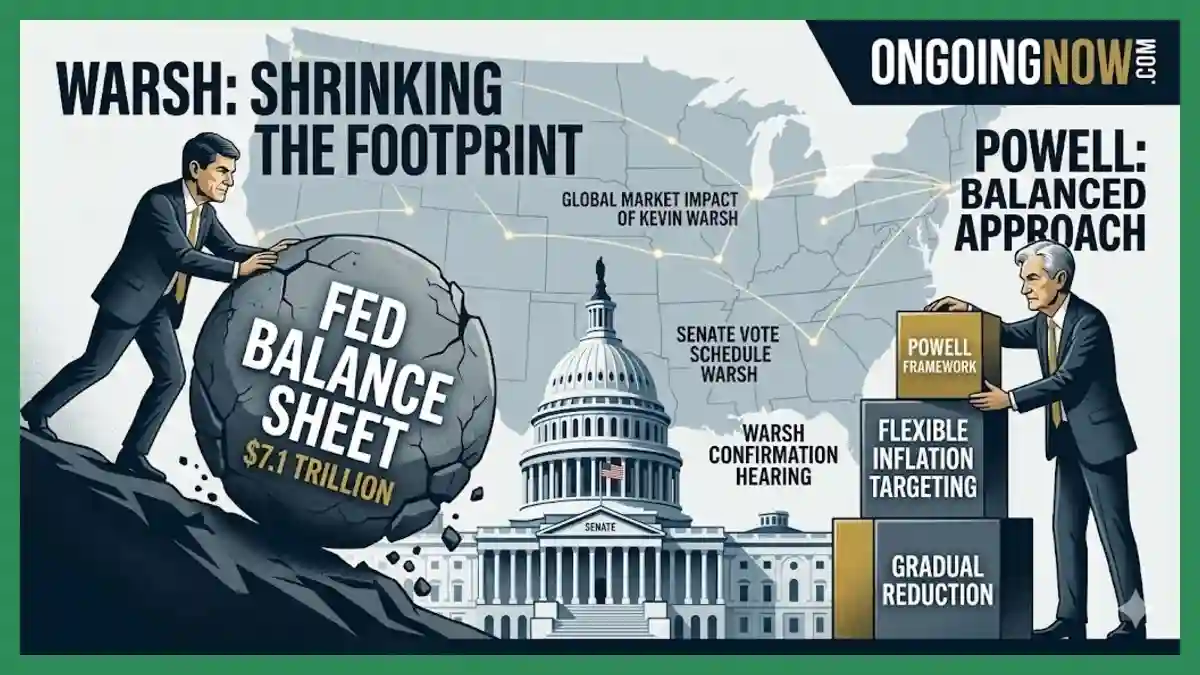
The Kevin Warsh Fed chair nomination officially moved to the full Senate floor on April 29, 2026, following a 13-11 party-line vote by the Senate Banking Committee. This pivotal advancement occurs as Jerome Powell prepares for his scheduled retirement on May 15, 2026, concluding an eight-year tenure marked by pandemic-era interventions and a historic tightening cycle.
The transition period has been defined by a significant focus on Fed independence under Warsh, particularly following the Department of Justice’s decision to drop a criminal investigation led by U.S. Attorney Jeanine Pirro into Chair Powell regarding headquarters renovation costs. As the Warsh confirmation hearing concluded, market participants are now parsing his stated intentions to overhaul the central bank’s inflation framework and accelerate the reduction of the $7.1 trillion balance sheet.
The Path to Confirmation: Senate Timelines and Political Hurdles
The legislative path for the Trump Fed chair pick was cleared after a period of intense political friction within the Senate Banking Committee. Senator Thom Tillis (R-NC) had previously placed a hold on the nomination, citing concerns over the “politicization of the DOJ” regarding the Jeanine Pirro Powell probe. That investigation, which centered on a $600 million cost overrun in the renovation of the Federal Reserve’s Martin and Eccles buildings, was formally closed on April 24, 2026, after a federal judge quashed the department’s subpoenas.
With the blockade lifted, the committee vote proceeded, and the full Senate vote schedule Warsh is now expected to culminate in a final confirmation vote by the end of next week. This timeline ensures a leadership transition before Powell’s term expires in mid-May. Ranking Member Elizabeth Warren (D-MA) remains the most vocal opponent, arguing during the Warsh confirmation hearing that the nominee lacks the requisite independence from the executive branch, labeling him a “sock puppet” for the current administration’s desire for lower interest rates.
Market Snapshot: Federal Reserve Leadership Transition (April 2026)
| Metric | Detail | Status/Value |
| Nominee | Kevin Warsh | Committee Approved (13-11) |
| Incumbent | Jerome Powell | Term ends May 15, 2026 |
| Benchmark Rate | Fed Funds Rate | 3.5% – 3.75% |
| Balance Sheet Size | Total Assets | ~$7.1 Trillion |
| April Inflation (CPI) | Annual Rate | 3.3% |
| Confirmation Status | Next Stage | Full Senate Floor Vote |
Analysis: Warsh vs Powell Policy Frameworks
A comparative look at Warsh vs Powell policy reveals a fundamental difference in how the central bank may approach its dual mandate of price stability and maximum employment. While Powell’s tenure was characterized by “flexible average inflation targeting,” Warsh has advocated for a stricter, more transparent inflation mandate.
During his testimony, Warsh signaled a desire to move away from “unconventional tools” like forward guidance and quantitative easing. Instead, he proposed a Warsh monetary policy views framework that emphasizes:
Mandate Narrowing: Returning the Fed’s focus strictly to price stability and employment, excluding secondary considerations like climate-related financial risks.
Productivity Adjustments: Integrating AI-driven productivity gains into the Warsh interest rate forecast, suggesting that a supply-side boom could allow for lower rates without fueling inflation.
Governance Reform: Shifting the power dynamic of the Federal Open Market Committee (FOMC) to allow for more dissenting views and less “groupthink.”
Balance Sheet Strategy and the “Bloated” Portfolio
Perhaps the most significant departure from the current regime lies in the Warsh balance sheet strategy. Warsh has frequently characterized the current $7 trillion portfolio as “bloated” and a legacy of a “bygone crisis era.” His proposed strategy involves a more aggressive runoff of Treasuries and mortgage-backed securities (MBS).
“The Fed’s balance sheet was designed to support the biggest firms during a crisis,” Warsh noted in a recent policy paper at the Center for Financial Economics. “That largesse can be redeployed in the form of lower interest rates to support households and small businesses by shrinking the Fed’s footprint in the capital markets.”
Economists at institutions like Goldman Sachs and JPMorgan are closely monitoring this stance. A rapid reduction in the balance sheet—often referred to as Quantitative Tightening (QT)—could put upward pressure on long-term yields even if the front end of the curve (the Fed Funds Rate) is lowered. This creates a complex market impact of Kevin Warsh, as investors weigh the benefits of potential rate cuts against the liquidity withdrawal of an accelerated QT program.
The Closing Chapter: Jerome Powell Retirement Plans
As the confirmation process nears its end, Jerome Powell retirement plans have entered their final phase. Powell presided over his final FOMC meeting on April 29, 2026, where the committee voted to hold interest rates steady at 3.5% to 3.75%. The decision was largely expected, given that March CPI data showed inflation remains stubbornly above the 2% target at 3.3%.
The upcoming Powell exit speech, traditionally a moment for a departing chair to reflect on the institution’s long-term health, is expected to emphasize the importance of central bank autonomy. Powell has faced unprecedented pressure during his second term, including the aforementioned DOJ probe and public criticism from the White House.
Why This Matters: The Human Impact
The transition at the Fed has direct consequences for the American consumer. Currently, mortgage rates are hovering near 6.39% for 30-year fixed loans, a direct reflection of the Fed’s high-for-longer stance.
Housing Market: High rates have chilled the housing market, leading to a “lock-in” effect where homeowners are reluctant to sell and move.
Business Investment: Small businesses are currently facing the highest borrowing costs in nearly two decades, impacting hiring and expansion plans.
Pension Funds: Higher yields have benefited savers and pension funds, providing a stable return on fixed-income assets that was absent for much of the 2010s.
What the Numbers Show: Economic Indicators at the Transition
The following data represents the economic backdrop as Warsh prepares to take the helm.
| Indicator | April 2026 Data | 1-Year Trend |
| Real GDP Growth | 2.1% (Q1 Est.) | Stable |
| Unemployment Rate | 3.9% | Slightly Rising |
| Core PCE Inflation | 3.1% | Decelerating |
| 30-Year Mortgage | 6.39% | Elevated |
| S&P 500 P/E Ratio | 22.4x | Above Average |
Note: Data sourced from Bureau of Labor Statistics (BLS) and Federal Reserve H.15 releases.
Global Market Implications and Fed Independence
The market impact of Kevin Warsh extends far beyond U.S. borders. The U.S. dollar remains the world’s primary reserve currency, and any perceived erosion of Fed independence under Warsh could lead to volatility in international currency markets. Central banks in London, Frankfurt, and Tokyo are watching the Senate proceedings closely, as a more hawkish or “Trump-aligned” Fed could force a shift in their own monetary paths.
“Institutional credibility is the Fed’s most valuable asset,” says Sarah Ketterer, CEO of Causeway Capital Management. “The concern among global investors isn’t necessarily Warsh’s personal views, but the precedent set by the political pressure surrounding the vacancy.”
The Senate Banking Committee‘s approval marks the penultimate step in what has been one of the most contentious Fed transitions in modern history. Should the full Senate confirm him, Warsh will be tasked with navigating an economy undergoing a structural shift driven by AI, rising geopolitical trade barriers, and a massive federal debt load.
Stay sharp with Ongoing Now!
Source and Data Limitations: This report is based on official transcripts from the Senate Banking Committee confirmation hearings held on April 21 and April 29, 2026. Financial metrics regarding the Federal Reserve balance sheet and interest rates are sourced from the Federal Reserve Board’s H.4.1 and H.15 releases as of April 2026. Details regarding the Jeanine Pirro probe are based on official Department of Justice statements and court filings from the District of Columbia. While market analysts from Goldman Sachs and JPMorgan are referenced for context, their projections are subject to change. This article excludes speculative social media rumors regarding the “true” reasons for the DOJ probe closure, sticking strictly to the official “cost overrun” explanation provided in regulatory filings.