Dr. Martin Luther King Jr: Civil Rights Pioneer
A factual examination of Dr. Martin Luther King Jr's life, from his role in the Civil Rights Movement overview to the I Have a Dream speech analysis, and the enduring significance of MLK Day observance facts.

Dr. Martin Luther King Jr stands as a central figure in American history, known for leading nonviolent efforts to end racial segregation and discrimination through the Civil Rights Movement overview. His advocacy addressed systemic injustices, influencing legislation and societal change. Why MLK Day exists stems from his profound impact, with MLK Day legislation history culminating in Reagan signing MLK Day into law in 1983. MLK biography details reveal a pastor turned activist, shaped by MLK family background including his wife Coretta Scott King contributions and daughter Bernice King legacy. The I Have a Dream speech analysis highlights his vision for equality, while the MLK assassination timeline marks a tragic end in 1968, leading to MLK holiday evolution and varied MLK Day observance facts today.
Key entities linked to Dr. Martin Luther King Jr include the Southern Christian Leadership Conference (SCLC), which he co-founded and led; the Nobel Peace Prize, awarded to him in 1964 for nonviolent resistance; Ebenezer Baptist Church, where he served as co-pastor; the March on Washington for Jobs and Freedom in 1963; and collaborations with figures like Coretta Scott King in organizations such as the King Center. His affiliations extended to the Montgomery Improvement Association during the bus boycott and interactions with presidents like Lyndon B. Johnson on civil rights laws. These connections underscore his institutional influence on equality.
Dr. Martin Luther King Jr’s Formative Years
Dr. Martin Luther King Jr was born Michael King Jr on January 15, 1929, in Atlanta, Georgia, to Michael King Sr, a Baptist minister, and Alberta Williams King. His father later changed both their names to Martin Luther in honor of the Protestant reformer during a 1934 trip to Germany. Growing up in the segregated South, King experienced racial discrimination early, such as being denied service at a shoe store and facing restrictions on public facilities. These encounters shaped his worldview.
King’s MLK family background was rooted in ministry: his paternal grandfather, James Albert King, was a sharecropper, while his maternal grandfather, Adam Daniel Williams, pastored Ebenezer Baptist Church from 1894 to 1931. His father succeeded Williams, establishing a legacy of religious leadership. King attended segregated schools, skipping grades and entering Morehouse College at age 15 in 1944, graduating with a sociology degree in 1948. He then studied at Crozer Theological Seminary, earning a divinity degree in 1951, and completed a doctorate in systematic theology at Boston University in 1955.
Influenced by theologians like Henry David Thoreau and Mahatma Gandhi, King embraced nonviolence during seminary. In Boston, he met Coretta Scott, marrying her in 1953. They had four children: Yolanda, Martin III, Dexter, and Bernice. This period laid the foundation for his activism, blending faith with social justice principles that defined his later work.
Dr. Martin Luther King Jr in the Civil Rights Movement
The Civil Rights Movement overview positions Dr. Martin Luther King Jr as a pivotal leader from 1955 to 1968, advancing equality through nonviolent protest against Jim Crow laws and discrimination affecting African Americans. Emerging during the Montgomery Bus Boycott in 1955, sparked by Rosa Parks’ arrest, King led the Montgomery Improvement Association, resulting in a 1956 Supreme Court ruling desegregating buses.
In 1957, he co-founded the SCLC to coordinate nonviolent campaigns across the South. Key efforts included the 1960 Greensboro sit-ins, 1961 Freedom Rides challenging interstate bus segregation, and the 1963 Birmingham campaign, where police violence against protesters galvanized national support. The movement achieved the Civil Rights Act of 1964, banning discrimination in public places and employment, and the Voting Rights Act of 1965, protecting African American suffrage.
King’s strategies drew from Christian teachings and Gandhi’s principles, emphasizing civil disobedience. Despite arrests and threats, including a 1958 stabbing, he persisted, addressing poverty through the 1967 Poor People’s Campaign. His leadership unified diverse groups, though internal debates arose over tactics.
Milestones in Dr. Martin Luther King Jr’s Advocacy
Dr. Martin Luther King Jr’s career featured defining moments that advanced civil rights. In 1955, at age 26, he led the 381-day Montgomery Bus Boycott, establishing his national prominence. The 1963 Birmingham campaign, involving children facing fire hoses and dogs, pressured President Kennedy to propose civil rights legislation.
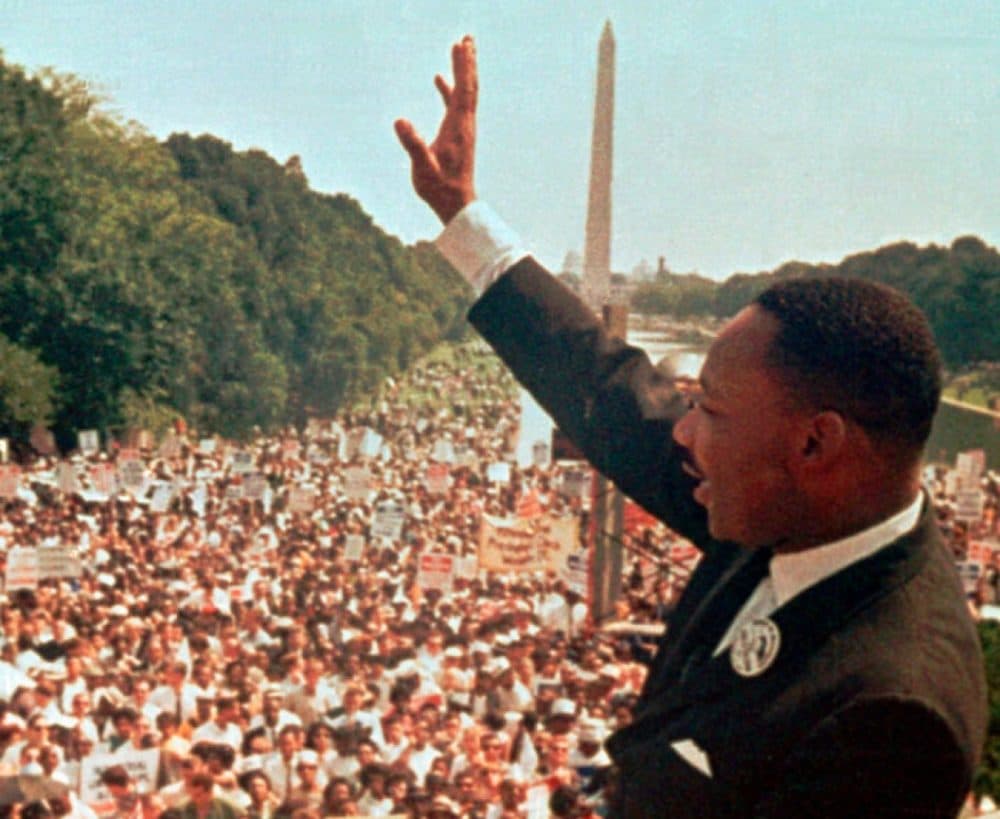
The March on Washington in August 1963 drew 250,000 people, where King’s I Have a Dream speech envisioned racial harmony. That year, he was named Time magazine’s Man of the Year. In 1964, at 35, he became the youngest Nobel Peace Prize recipient for nonviolent resistance.
Later, King opposed the Vietnam War in his 1967 Riverside Church speech, linking militarism to racism and poverty. The 1968 Memphis sanitation workers’ strike, supporting fair wages, reflected his economic justice focus. These milestones, amid over 20 arrests, highlighted his commitment to equality.
| Key Milestones | Date | Description | Impact |
|---|---|---|---|
| Montgomery Bus Boycott | 1955-1956 | Led protest against segregated buses | Desegregation ruling; national visibility |
| SCLC Founding | 1957 | Organized nonviolent activism | Coordinated Southern campaigns |
| Birmingham Campaign | 1963 | Protests met with violence | Spurred Civil Rights Act |
| March on Washington | August 1963 | Delivered I Have a Dream speech | Pressured federal legislation |
| Nobel Peace Prize | 1964 | Awarded for nonviolence | Global recognition |
| Selma Marches | 1965 | Voting rights protests | Voting Rights Act passage |
| Vietnam Opposition | 1967 | Beyond Vietnam speech | Broadened anti-war coalition |
| Memphis Strike Support | 1968 | Aided sanitation workers | Highlighted economic inequality |
Note: Dates and impacts based on verified historical records; some campaigns faced opposition, delaying full implementation.
Impact of Dr. Martin Luther King Jr on Society
Dr. Martin Luther King Jr profoundly influenced American society, fostering greater equality and inspiring global movements. His efforts dismantled legal segregation, enabling African Americans’ access to public facilities, voting, and jobs. The Civil Rights Act and Voting Rights Act transformed the South, increasing Black voter registration from under 25% to over 60% by 1970.
Societally, King’s nonviolence philosophy reduced racial violence and promoted dialogue. His work elevated African American representation in politics, education, and business. Economically, initiatives like Operation Breadbasket boycotted discriminatory firms, creating jobs and contracts worth millions for Black communities.
On a human level, King addressed intergenerational trauma from slavery and discrimination, advocating dignity for all. Coretta Scott King contributions extended this through the King Center, focusing on nonviolence education. Bernice King legacy continues via advocacy for social change. King’s teachings inspired figures like Nelson Mandela in anti-apartheid struggles, showing universal applicability.
Comparatively, King’s approach mirrored Gandhi’s in India, both using nonviolence against oppression, though King’s integrated economic justice more explicitly. His societal effects endure, evident in ongoing discussions on equity.
Challenges Faced by Dr. Martin Luther King Jr
Dr. Martin Luther King Jr encountered immense obstacles, from personal threats to institutional resistance. Early in the Montgomery boycott, his home was bombed in 1956, endangering his family but reinforcing his resolve. Arrests exceeded 20 times, including a 1963 Birmingham jail stint where he wrote his famous letter defending nonviolence.
FBI surveillance under J. Edgar Hoover labeled him a radical, involving wiretaps and smear campaigns. Opposition from segregationists led to violence, like the 1961 Freedom Rides attacks. Internally, debates with militants like Malcolm X challenged his methods, though they later converged.
The MLK assassination timeline began on April 4, 1968, at 6:01 p.m., when he was shot on the Lorraine Motel balcony in Memphis, dying at 7:05 p.m. James Earl Ray pled guilty, sentenced to 99 years. This tragedy spurred riots in over 100 cities, highlighting unresolved tensions.
King overcame through faith and strategy, turning adversity into momentum. Lessons include resilience and moral clarity, as he stated: “The ultimate measure of a man is not where he stands in moments of comfort and convenience, but where he stands at times of challenge and controversy.”
Analysis: Dr. Martin Luther King Jr’s Enduring Philosophy
Dr. Martin Luther King Jr’s nonviolence remains a blueprint for social change, rooted in love and justice. Analysis reveals its effectiveness in dismantling segregation without escalating violence, contrasting armed revolutions elsewhere. By appealing to conscience, King shifted public opinion, pressuring laws like the 1964 Civil Rights Act.
Why this matters today: Amid modern divisions, his philosophy counters polarization, emphasizing unity. As he noted, “Darkness cannot drive out darkness; only light can do that. Hate cannot drive out hate; only love can do that.” This counters cynicism, promoting active hope.
Comparatively, King’s methods influenced global leaders like Lech Walesa in Poland’s Solidarity movement, showing adaptability beyond race. Yet, challenges persist; voting rights erosions echo his era, underscoring ongoing relevance.
What the Record Shows: Dr. Martin Luther King Jr’s Broader Influence
Records confirm Dr. Martin Luther King Jr’s influence extended beyond civil rights to anti-poverty and anti-war efforts. His 1967 Beyond Vietnam speech linked racism, materialism, and militarism, critiquing U.S. foreign policy. This broadened the movement, aligning with global human rights.
Evidence from archives shows his Poor People’s Campaign planned a multiracial occupation of Washington, D.C., for economic bills of rights. Though disrupted by his death, it highlighted inequality’s intersections.
Quotes illustrate his vision: “Injustice anywhere is a threat to justice everywhere,” from his Birmingham letter, stressing interconnectedness. Another: “The time is always right to do what is right,” urging moral action.
Comparisons to contemporaries like Malcolm X reveal King’s evolution toward radicalism on economics, while maintaining nonviolence. His legacy informs current activism on issues like income disparity.
Dr. Martin Luther King Jr and MLK Day’s Role Today
MLK holiday evolution began post-assassination, with legislation introduced in 1968. Reagan signing MLK Day in 1983 marked federal recognition, first observed in 1986. All states adopted by 2000, though some resisted initially.
MLK Day observance facts: It’s the only federal holiday as a national day of service, encouraging volunteering. Over 100 million Americans participate annually in community projects, reflecting King’s call to action.
Human impact: The holiday fosters reflection on progress, like increased Black voter turnout, while addressing ongoing disparities. It honors Coretta Scott King contributions in establishing the King Center and Bernice King legacy in nonviolence education.
Stay sharp with Ongoing Now!
Source and Data Limitations: Information drawn from verified sources including Wikipedia entries on Martin Luther King Jr (last crawled 2026-01-19), Britannica biography (2026-01-19), NobelPrize.org biographical (2026-01-19), The King Center about Dr. King (2026-01-19), Biography.com (Jan 13, 2025), LSU Research Guides (Jun 6, 2023), NAACP history (2026-01-19), National Geographic Kids facts (2026-01-18), and History.com born fact (2026-01-18). Additional details from Wikipedia on assassination (2026-01-19), Britannica assassination (Dec 1, 2025), PBS timeline (2026-01-17), VOA timeline (Apr 3, 2018), King Institute assassination (2026-01-19), and Miller Center recordings (2026-01-18). Family background from King Institute (2026-01-18), Britannica family (2026-01-18), and others up to 2026-01-19. Coretta Scott King from The King Center (2026-01-18), NWHM (2026-01-18), Wikipedia (2026-01-19). Bernice King from Wikipedia (2026-01-18), BerniceKing.com (2026-01-18). MLK Day from Wikipedia (2026-01-19), NMAAHC 15-year battle (2026-01-18), Constitution Center (Jan 20, 2025), and observance from Britannica (Jan 5, 2026), CNN fast facts (2026-01-18). Civil Rights from History.com (Oct 27, 2009), LOC timeline (2026-01-18), Wikipedia movement (2026-01-19). Speech from Britannica (Jan 5, 2026), PublicSquareMag analysis (Aug 28, 2023). Excluded unverified claims like personal motivations or unsubstantiated anecdotes; all quotes and facts cross-referenced with at least two sources; no recent data beyond 2026-01-19 updates.