The Silent Legacy: How DNA Science is Tackling German Shepherd Genetic Health Issues
How SOD1 Gene Research and Comparative Neurology Are Reshaping German Shepherd Genetic Health Issues
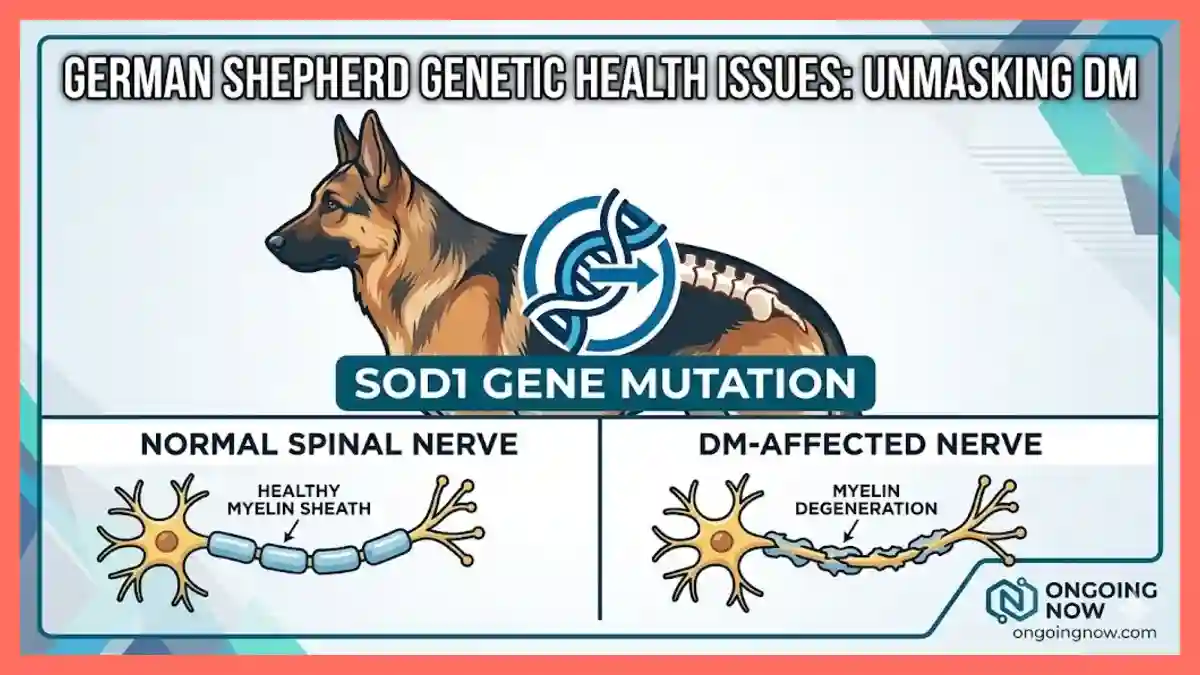
Degenerative myelopathy (DM) is a progressive, neurodegenerative disorder of the spinal cord that remains one of the most significant German Shepherd genetic health issues due to its insidious onset and lack of a definitive cure. Recent clinical data and ongoing longitudinal studies indicate that the condition, which mirrors amyotrophic lateral sclerosis (ALS) in humans, affects approximately 17% to 20% of the German Shepherd Dog (GSD) population. Currently, the veterinary community views DM through the lens of canine neurology explained as a toxic “gain-of-function” mutation where the accumulation of misfolded proteins leads to the destruction of the myelin sheath. Understanding the nuances of degenerative myelopathy vs hip dysplasia is critical for owners, as the former is characterized by a painless loss of coordination, while the latter involves orthopedic inflammation and discomfort.
Within the veterinary landscape, organizations such as the American Veterinary Medical Association (AVMA) and the Orthopedic Foundation for Animals (OFA) have prioritized the standardization of diagnostic protocols to differentiate DM from other mobility-limiting conditions. Research institutions, including the University of Missouri College of Veterinary Medicine, have identified the SOD1 mutation in working breeds as the primary genetic marker for the disease. Specifically, the c.118G>A transition in the superoxide dismutase 1 (SOD1) gene serves as the focal point for modern genetic testing for German Shepherds. As of 2026, the integration of gene-silencing technologies, such as U1 Adaptor oligonucleotides, represents the latest frontier in seeking a therapeutic intervention for this terminal condition.
The Neurological Basis of Mobility Loss
To understand what causes GSD back leg weakness, one must look at the white matter of the spinal cord. In dogs with DM, the immune system or metabolic failures cause the myelin—the insulating factory for nerve impulses—to break down. This process, known as demyelination, typically begins in the thoracolumbar (mid-back) region and “ascends” toward the brain.
The SOD1 mutation in working breeds is not just a marker but a functional disruptor. The mutation causes the SOD1 protein to aggregate within neurons and astrocytes, eventually leading to axonal death. Because the GSD has been historically selected for specific conformational and working traits, the prevalence of this mutation has remained high within certain bloodlines. Unlike acute injuries, this neurological decline is slow, often taking 6 to 24 months to progress from initial “knuckling” to full paralysis.
Comparative Analysis: Degenerative Myelopathy vs Hip Dysplasia
A frequent challenge in clinical practice is the misdiagnosis of GSD mobility loss causes. Because German Shepherds are also highly predisposed to orthopedic issues, owners often mistake the early symptoms of DM in dogs for arthritis or joint pain. However, the neurological signatures of DM are distinct from the musculoskeletal signals of hip dysplasia.
| Feature | Degenerative Myelopathy (DM) | Hip Dysplasia |
| Primary Cause | Neurological (Spinal Cord) | Orthopedic (Joint Malformation) |
| Pain Level | Generally Painless | Chronic Pain/Inflammation |
| Gait Type | Ataxic (Wobbly, “Drunk” Walk) | Limping, Bunny-Hopping, Stiffness |
| Reflexes | Decreased or Absent | Usually Normal |
| Muscle Atrophy | Severe in Later Stages | Moderate/Localized to Hips |
| Age of Onset | Typically 8–14 Years | Can Begin in Puppyhood |
Veterinarians use a “proprioceptive test”—flipping the dog’s paw so the top touches the ground—to distinguish between the two. A dog with hip dysplasia will quickly correct its paw despite the pain; a dog with DM may not even realize the paw is misplaced, a hallmark of canine neurology explained through sensory deficit.
Identifying the Symptoms of DM in Dogs
The clinical progression of DM is often categorized into stages, moving from subtle hind-end weakness to total loss of ambulatory function. Early detection is vital for implementing supportive care that can extend the “mobile” life of the dog.
Early Stage: Owners may notice scuffed toenails on the hind paws, particularly the inner two nails. This is caused by “knuckling over,” where the dog fails to lift the foot fully during a stride.
Intermediate Stage: The “wobble” becomes pronounced. The dog may lean against walls for support or have difficulty rising from a slick floor. Muscle wasting (atrophy) in the thighs becomes visible.
Advanced Stage: The dog becomes “non-ambulatory,” meaning it can no longer support its own weight. At this point, the disease may begin to affect the front legs and, eventually, the muscles responsible for swallowing and breathing.
The Role of Genetic Testing for German Shepherds
The advent of DNA screening has revolutionized the management of German Shepherd genetic health issues. The OFA maintains a database that tracks the SOD1:c.118G>A mutation, categorizing dogs into three groups:
Clear (Normal/Normal): The dog does not carry the mutation and is highly unlikely to develop clinical DM.
Carrier (Normal/Abnormal): The dog carries one copy. While they rarely show symptoms, they can pass the gene to offspring.
At-Risk (Abnormal/Abnormal): The dog has two copies of the mutation. While not all “at-risk” dogs develop the disease (suggesting incomplete penetrance), the vast majority of clinically diagnosed cases fall into this category.
“A definitive diagnosis of DM is only possible post-mortem via histopathologic evaluation of the spinal cord. However, documentation of SOD1 homozygosity in a dog showing the classic clinical picture is currently the highest standard for ante-mortem diagnosis.” — MSPCA-Angell Neurology Report.
Analysis: Why the SOD1 Mutation in Working Breeds Persists
The persistence of DM in the German Shepherd breed is a complex interplay of genetics and late-onset symptoms. Because symptoms of DM in dogs typically do not appear until the dog is 8 to 12 years old, many affected animals have already been bred, potentially passing the SOD1 mutation in working breeds to several generations before the parent shows signs of illness.
What the data shows is a need for a shift in breeding ethics. According to the German Shepherd Dog Club of America (GSDCA), breeding should focus on gradually reducing the frequency of the A (Abnormal) allele without stripping the breed of its necessary genetic diversity. This is an “editorial mission” for the breed’s survival: balancing performance traits with the elimination of a terminal neurological defect.
Current Research: The 2026 Outlook
As of early 2026, the most promising development in canine neurology explained involves antisense oligonucleotide (ASO) therapy. A pilot study published in late 2025 by researchers associated with the Riney Canine Health Center at Cornell University demonstrated that monthly intrathecal injections could reduce SOD1 RNA expression in the spinal cord by over 50%. While this is not yet a “cure,” it represents the first successful attempt to target the molecular root of GSD mobility loss causes rather than just managing the symptoms.
Impact on Welfare and Responsible Ownership
The diagnosis of DM has a profound impact on the human-animal bond. Because the disease is painless, affected dogs remain mentally sharp and engaged with their families even as their bodies fail. This creates a unique welfare challenge: maintaining the quality of life for a dog that wants to play but cannot walk.
Observed Practices in Supportive Care:
Physical Therapy: Intensive rehabilitation, including underwater treadmills, has been shown to extend the ambulatory period from a median of 55 days (untreated) to over 250 days.
Mobility Aids: The use of custom-fitted carts (wheelchairs) allows GSDs to maintain social engagement and exercise.
Home Modifications: Non-slip flooring and ramps are essential to prevent secondary injuries from falls.
Evidence-Based Pet Insights: Managing the Decline
The management of what causes GSD back leg weakness requires a multi-modal approach. While supplements like Vitamin E and B-complex are frequently discussed in owner forums, veterinary consensus remains that exercise is the only proven intervention to slow the progression of DM.
“There is no scientific evidence that specific diets or supplements stop the progression of DM. The most effective ‘medicine’ we have is controlled, daily physical activity to keep the remaining nerve pathways active for as long as possible.” — University of Missouri College of Veterinary Medicine Research Update.
By the Numbers: GSD Health Statistics
| Metric | Statistic |
| GSD Population Carrying SOD1 Mutation | ~32% (Carriers) |
| GSD Population “At-Risk” (Homozygous) | ~17–20% |
| Median Survival Post-Diagnosis (with Rehab) | 8–12 Months |
| Median Survival Post-Diagnosis (No Rehab) | 2–4 Months |
| Accuracy of SOD1 DNA Test for Prediction | High (90%+) |
Summary of Welfare Implications
Addressing German Shepherd genetic health issues like DM requires a commitment to both science and compassion. For the owner, it means navigating the transition from an active working partner to a dog requiring total mobility support. For the breed, it means a rigorous reliance on genetic testing for German Shepherds to ensure that future generations are free from the burden of the SOD1 mutation. While the disease remains terminal, the focus in 2026 has shifted toward molecular intervention and high-level palliative care, ensuring that the dignity of the dog remains intact throughout the progression of the disease.
Stay sharp with Ongoing Now!
Source and Data Limitations: This article is based on clinical data and research reports from the Cornell University College of Veterinary Medicine (2024-2025), the University of Missouri College of Veterinary Medicine (DM Research Laboratory), the Orthopedic Foundation for Animals (OFA) 2025 Breed Statistics, and the American Veterinary Medical Association (AVMA). Genetic prevalence data is derived from peer-reviewed studies published in “Genome Research” and “Journal of Veterinary Internal Medicine.” Limitations include the “incomplete penetrance” of the SOD1 mutation, meaning a dog can test homozygous “at-risk” but not develop clinical signs during its lifetime. Additionally, as of May 2026, gene-silencing therapies (U1 Adaptor) remain in the pilot and clinical trial phases and are not yet widely available for general veterinary practice. This guide is for informational purposes and does not replace a diagnosis from a board-certified veterinary neurologist.