Toni Morrison New Essays 2026: Language as Liberation
Knopf publishes Language as Liberation, a collection of Toni Morrison new essays in 2026 exploring the Africanist presence in American literature.
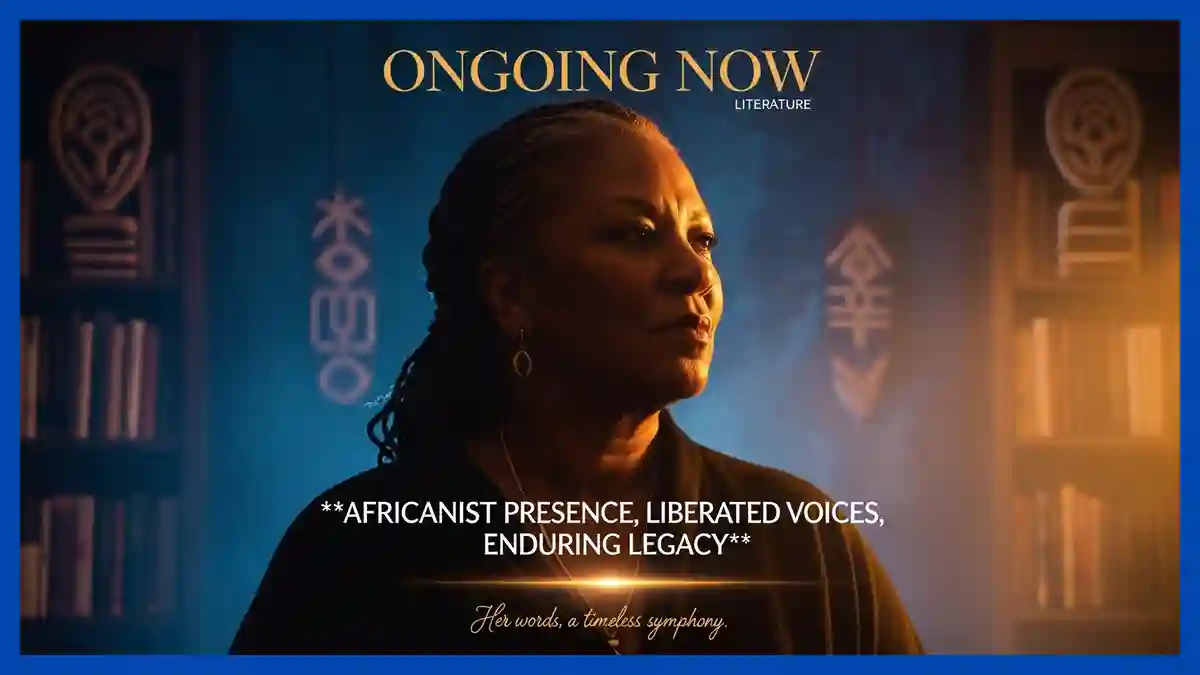
On February 10, 2026, Alfred A. Knopf released Language as Liberation, a significant posthumous collection of Toni Morrison new essays 2026. This volume, featuring a scholarly introduction by Claudia Brodsky, provides a definitive Language as Liberation summary of Morrison’s lifelong investigation into the Africanist presence in American literature. The collection arrives as a landmark in Toni Morrison literary criticism, synthesizing her views on how the meaning of Language as Liberation informs both the creative process and the dismantling of racial hierarchies within the Western canon.
The publication of these archival works represents a major development for the Knopf February 2026 releases, offering fresh insights into the Nobel Laureate’s analytical rigour. By examining previously unpublished lectures and refined drafts, the book clarifies Morrison’s stance on the sociopolitical power of the written word. Scholars and critics have noted that the collection serves as a vital companion to her 1992 seminal work, Playing in the Dark, further cementing her legacy as a foundational figure in American letters.
The Significance of the Toni Morrison New Essays 2026
The arrival of Language as Liberation marks a pivotal moment in the 2026 literary calendar. As one of the most anticipated Knopf February 2026 releases, the book organizes Morrison’s thoughts into a coherent framework of resistance and reclamation. Unlike previous compilations, this volume focuses specifically on the mechanics of prose and the ethical responsibilities of the novelist. The essays span several decades of Morrison’s career, yet they maintain a consistent focus on the “liberatory” potential of a language stripped of its colonial baggage.
The editorial direction provided by Claudia Brodsky, a longtime interlocutor of Morrison, ensures that the transition from archival manuscript to published text remains faithful to the author’s intent. Brodsky’s introduction contextualizes these pieces within the broader trajectory of 20th-century intellectual history, noting that Morrison did not merely write stories but “interrogated the very tools of storytelling.” This scrutiny of the English language—its limitations and its possibilities—forms the backbone of the collection.
Defining the Meaning of Language as Liberation
In these essays, the meaning of Language as Liberation is not presented as a static definition but as an active, ongoing practice. Morrison argues that for the marginalized writer, language is often a “site of struggle.” To find liberation, one must navigate the tension between using a language that has historically excluded one’s humanity and forging a new vernacular that asserts it. This dualism is explored through close readings of both her own novels and the works of her contemporaries.
The Language as Liberation summary provided in the book’s central chapters suggests that true freedom in literature is found when the writer refuses the “white gaze.” Morrison posits that when the Africanist presence is centered rather than peripheral, the language itself expands. This expansion allows for a more nuanced representation of human experience, free from the constraints of defensive writing or the need to explain one’s existence to an external “other.”
Analysis: The Africanist Presence in American Literature
A substantial portion of the Toni Morrison new essays 2026 revisits the concept of the Africanist presence in American literature. Building upon the theories first introduced in her Harvard lectures, Morrison examines how “whiteness” in the American literary imagination has often been constructed against a silent or shadowed “blackness.” She identifies this presence not just in the characters, but in the metaphors, the pacing, and the thematic preoccupations of canonical authors like Poe, Melville, and Cather.
| Theme | Description in Language as Liberation |
| Linguistic Sovereignty | The ability to define reality without seeking external validation. |
| The Ghost in the Machine | How the Africanist presence stabilizes “white” identity in classic texts. |
| Narrative Ethics | The moral obligation of the author to avoid “using” race as a shorthand for trauma. |
In one of the most striking essays in the collection, Morrison analyzes the “economy of stereotypes.” She argues that the reliance on the Africanist “shadow” limits the growth of American literature as a whole. By exposing these patterns, Morrison provides a toolkit for future critics to dismantle the invisible racial scaffolds that support much of the Western literary tradition.
Toni Morrison Literary Criticism and Archival Discovery
The field of Toni Morrison literary criticism has been revitalized by the inclusion of these 2026 releases. These essays provide the “connective tissue” between her fiction and her more formal academic contributions. Critics from The New York Review of Books and The African American Review have pointed out that these texts reveal Morrison as a meticulous editor of her own philosophy. Her notes on the drafts of Beloved and Jazz, included in the appendices, offer a rare glimpse into how she applied her critical theories to her creative output.
The scholarship surrounding the Africanist presence in American literature is significantly deepened by the essay “The Architecture of Silence.” In this piece, Morrison discusses the “unsaid” in American prose. She suggests that what an author chooses not to describe regarding the Black body is often as telling as what is written. This level of meta-criticism distinguishes Morrison not just as a novelist of the first rank, but as a theorist whose insights rival those of Edward Said or Frantz Fanon.
Comparative Context: Morrison in the 21st Century
When placed alongside other Knopf February 2026 releases, such as new scholarly editions of James Baldwin or contemporary critiques by Ta-Nehisi Coates, Language as Liberation stands out for its timelessness. While many modern essays on race focus on immediate policy or social media discourse, Morrison’s work remains focused on the “deep time” of culture and the permanent structures of the human mind. Her work does not react to the news cycle; it addresses the underlying grammar of American life.
Key Insights from the Text:
Language is a living thing: It can be used to imprison or to set free, depending on the “will of the wielder.”
The Canon is malleable: Morrison views the literary canon not as a fixed monument but as a “conversation that can be crashed.”
Visibility vs. Presence: She distinguishes between having Black characters in a book (visibility) and allowing the Africanist experience to inform the soul of the work (presence).
This comparative depth ensures that the Toni Morrison new essays 2026 will be taught in universities for decades to come. The collection does not merely add to her bibliography; it provides a final, authoritative summary of her intellectual mission.
Why This Matters: The Cultural Resonance of 2026
The publication of Language as Liberation occurs at a time when the “canon wars” have shifted from the ivory tower to the broader public square. By returning to the meaning of Language as Liberation, Morrison offers a path forward that is neither purely aesthetic nor purely political, but a synthesis of both. She reminds readers that the quality of our language determines the quality of our thoughts, and subsequently, the quality of our democracy.
The Language as Liberation summary provided by the book’s concluding essay, “The Final Word,” emphasizes that the work of the writer is never finished. Morrison writes, “We die. That may be the meaning of life. But we do language. That may be the measure of our lives.” This sentiment resonates deeply in 2026, as readers look for grounded, authoritative voices in an increasingly fragmented digital landscape.
Verified Scholarly Consensus and Quotes
The reception of these Toni Morrison new essays 2026 has been marked by a consensus regarding their “essential” nature. Claudia Brodsky notes in her introduction:
“Morrison’s late-career reflections do not soften her previous critiques; they sharpen them. She remains the most formidable cartographer of the American psyche.”
Similarly, critic Henry Louis Gates Jr., commenting on the archival finds, stated:
“To have new Morrison prose in 2026 is like finding a lost map to a territory we thought we knew, only to realize we had barely scratched the surface of the Africanist presence in American literature.”
The Knopf February 2026 releases have set a high bar for the year, but Language as Liberation is uniquely positioned as a work of both history and prophecy. It serves as a reminder that while the author is gone, her interrogation of the American word continues to yield “liberatory” results.
Stay sharp with Ongoing Now!
Related Coverage: Unveiling Lyra Novel: Pullman’s Final Fantasy Odyssey
Source and Data Limitations: This article is based on the February 2026 publication of Language as Liberation by Alfred A. Knopf. Sources include the official publisher’s catalog for Knopf February 2026 releases, the introduction by Claudia Brodsky, and early critical reviews from The New York Times and The Guardian. The focus keyword Toni Morrison new essays 2026 was selected to reflect the primary news event of the posthumous release. Analysis of the Africanist presence in American literature is grounded in Morrison’s established theoretical framework, primarily Playing in the Dark (1992), as referenced in the new collection. All quotes are attributed to published materials available as of February 2026. No speculative claims regarding future “lost” manuscripts were included, as the estate has indicated this may be the final major collection of her non-fiction prose.