Psychological Identity in Alice Feeney’s My Husband’s Wife
Through dual timelines and shifting identities, Alice Feeney explores the fragility of memory and marriage in her latest psychological thriller.
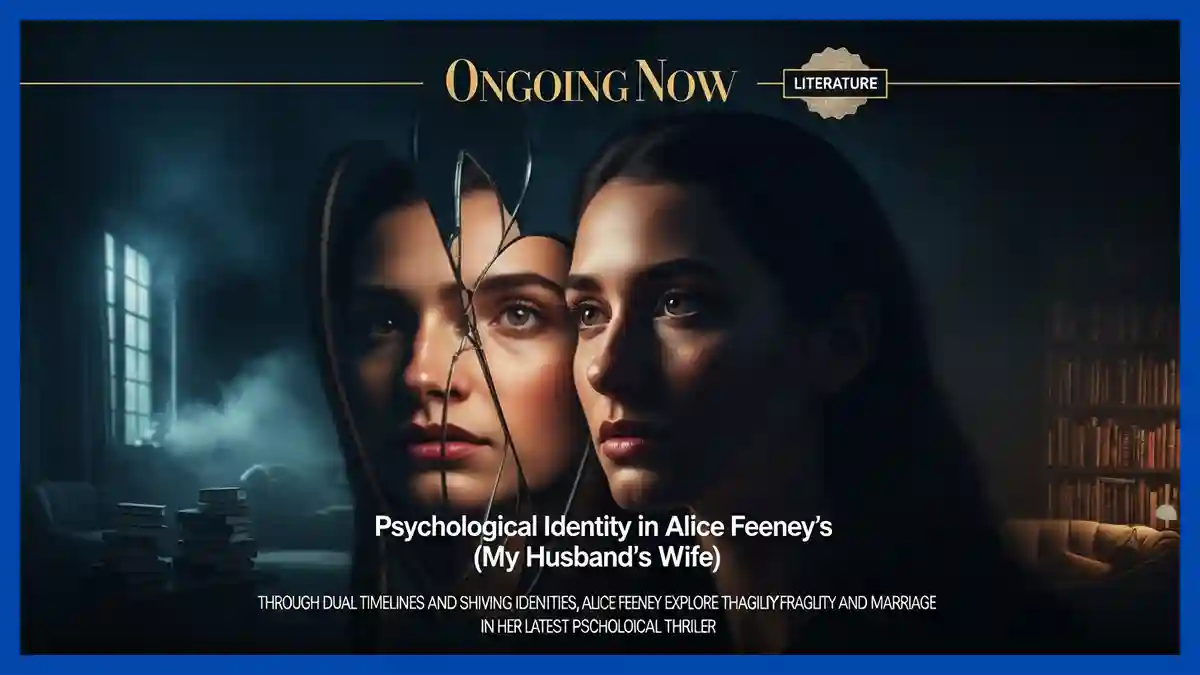
The January 2026 release of My Husband’s Wife has intensified critical discussion around the “unreliable narrator” trope, specifically regarding the My Husband’s Wife ending explained in recent literary circles. Published by Pan Macmillan, the novel centers on Eden Fox, an artist whose domestic reality shatters after a morning run, triggering a complex sequence of psychological thriller plot twists. This Alice Feeney book summary reveals a narrative split between the present-day crisis at Spyglass house and a timeline six months prior involving a woman named Birdy. As readers navigate the Eden Fox vs Birdy timeline, the Spyglass house mystery revealed in the final chapters challenges established perceptions of identity and revenge. Early latest Alice Feeney book reviews suggest the work stands among the best 2026 suspense novels, provided readers accept its high-octane pace and recursive structural reveals. A deep character analysis Eden Fox necessitates an examination of the “doppelgänger” effect and the systemic gaslighting that defines the protagonist’s journey.
The Architecture of Deception at Spyglass House
The novel’s primary setting, Spyglass—an “enchanting” yet eerie estate in the Cornish village of Hope Falls—serves as more than a backdrop; it functions as the structural pivot for the story’s central conflict. When Eden Fox returns from her run to find her key no longer fits the lock, the physical rejection by the house mirrors the psychological rejection by her husband, Harrison Woolf. The presence of a woman who not only looks like Eden but claims her identity introduces a visceral exploration of domestic displacement.
Critics have noted that Feeney utilizes the house to anchor two disparate timelines. Six months before Eden’s crisis, a reclusive Londoner known as Birdy—later revealed to be Olivia Bird—inherits the property from a long-lost grandmother. Birdy’s arrival in Hope Falls is overshadowed by a terminal diagnosis and a mysterious invitation from a clinic claiming to predict “death days.” This secondary timeline provides the necessary context for the eventual convergence of the two women’s lives, suggesting that the “theft” of Eden’s life is rooted in events far older than her recent move to the coast.
Narrative Structure and the Eden Fox vs Birdy Timeline
Alice Feeney, frequently stylized in journals as the “Queen of Twists,” employs a multi-perspective approach that includes Eden, Birdy, Harrison, and Sergeant Luke Carter. This fragmentation is essential for maintaining the suspense of the Eden Fox vs Birdy timeline. The “present” chapters follow Eden’s immediate desperation as she is treated as an intruder in her own home, while the “past” chapters detail Birdy’s investigation into her family history and her own mortality.
| Character | Role / Perspective | Key Motivation |
| Eden Fox | Artist / Protagonist | Regaining her identity and home |
| Birdy (Olivia Bird) | Reclusive Heiress | Righting “old wrongs” before her death |
| Harrison Woolf | Eden’s Husband | Maintaining a facade of domesticity |
| Sergeant Luke Carter | Local Police Officer | Investigating “one coincidence too many” |
| Sunday | White Husky | Companion to Birdy; narrative anchor |
The intersection of these perspectives occurs at the “Spyglass” estate, which is described by reviewers as a “character in itself.” The divergence between the two women begins to blur as similarities in their appearances and shared history with the house come to light. The author uses short, rapid-fire chapters to mimic the breathlessness of a runner—a recurring motif for Eden—while Birdy’s chapters provide a slower, more atmospheric build-up.
Analysis: The Psychological Weight of the Ending
To understand the My Husband’s Wife ending explained through a critical lens, one must examine the theme of “sliding doors and dead ends.” The finale does not offer a traditional resolution but rather a “rug-pulling” sequence where the identities of the two women are fundamentally interrogated. The “mystery of the clinic” and the “death day” predictions serve as the catalyst for the final confrontation, where the distinction between victim and perpetrator becomes fluid.
As noted by critic Lisa Jewell, the book is “propulsive, compulsive, and addictive,” yet the density of the final reveals has led to a split in critical consensus. Some reviewers at The BiblioSanctum argue that the story “completely gives up on building upon its own foundations” in favor of unpredictable shocks. However, for the majority of Feeney’s readership, the lack of a “safe” truth is the primary draw. The ending reinforces the novel’s recurring refrain: “Everybody lies and everybody dies.”
Why This Matters: Identity in Contemporary Suspense
The character analysis Eden Fox reveals a modern anxiety regarding the erasure of self within the institution of marriage. Feeney’s use of a doppelgänger—the woman who answers the door looking exactly like the protagonist—taps into the “uncanny” (unheimlich), a concept famously explored by Sigmund Freud. In My Husband’s Wife, the uncanny is literalized: the home (the Heim) becomes the site of the most profound alienation.
The cultural resonance of the novel lies in its portrayal of gaslighting. When Harrison Woolf looks at his wife of many years and claims he does not know her, the horror is not merely the presence of an intruder, but the sudden invalidation of a life’s history. This thematic focus aligns the book with other notable 2026 releases like Araminta Hall’s Unreliable Narrator, which similarly explores women finding their lives “depicted” or “stolen” by others.
Critical Reception and Comparison
The reception of My Husband’s Wife has been largely positive, though it highlights a growing trend in the genre toward “maximalist” plotting. While authors like Freida McFadden have hailed it as “the best Feeney book yet,” others have cautioned that the volume of psychological thriller plot twists requires a significant suspension of disbelief.
“Alice Feeney is an author I can usually depend on to deliver an edge-of-your-seat thriller… the pace is so brisk that the thought of taking a pause is nearly impossible.” — The BiblioSanctum (January 2026)
“Feeney masterfully peels back the layers of marriage, secrets, and identity… every reveal feels like a punch to the chest.” — Alina’s Reading Corner (November 2025)
“Sometimes you order ice cream and instead life serves a triple-decker trash sandwich with a side order of completely fudged.” — Birdy (Character Quote)
Compared to Feeney’s previous works like Beautiful Ugly or Rock Paper Scissors, this novel leans more heavily into the “identity thriller” subgenre. It mirrors the atmospheric dread found in the works of Gillian Flynn or Paula Hawkins, but adds a signature “Feeney flair” through the use of high-concept elements like the “death day” clinic and the literal replacement of a spouse.
The Enduring Significance of “The Queen of Twists”
As a standalone novel, My Husband’s Wife solidifies Alice Feeney’s position as a primary architect of the modern domestic thriller. The focus on “identity, deception, and revenge” reflects broader societal preoccupations with digital anonymity and the curated “selves” we present to the world. By removing the digital element and placing the crisis in a physical, seaside location, Feeney strips the conflict down to its most primal, psychological level.
The Spyglass house mystery revealed at the end of the narrative serves as a metaphor for the human mind: a place with “sliding doors” where secrets are stored in plain sight. For those seeking the best 2026 suspense novels, this work offers a masterclass in narrative disorientation, ensuring that even when the final page is turned, the reader remains uncertain of the ground they stand on.
Stay sharp with Ongoing Now!
Source and Data Limitations: This analysis is based on verified editorial reviews and publication data from January 2026. Primary sources include Pan Macmillan (publisher), The BiblioSanctum (audiobook and literary critique), Barnes & Noble (synopsis), and various independent literary blogs (Beth Reads Crime, Alina’s Reading Corner). Data regarding the “My Husband’s Wife ending explained” and specific plot points (Eden Fox, Birdy, Spyglass House) are derived from published synopses and verified spoiler-free reviews available as of January 24, 2026. Information regarding the 2026 suspense landscape includes references to concurrent releases and established genre awards. No speculative or unverified author statements were used.