How Haute Couture 2026 Designers Left Audiences Spellbound at Paris Fashion Week
An in-depth analysis of the structural innovations, historic institutional debuts, and avant-garde dress designs shaping luxury
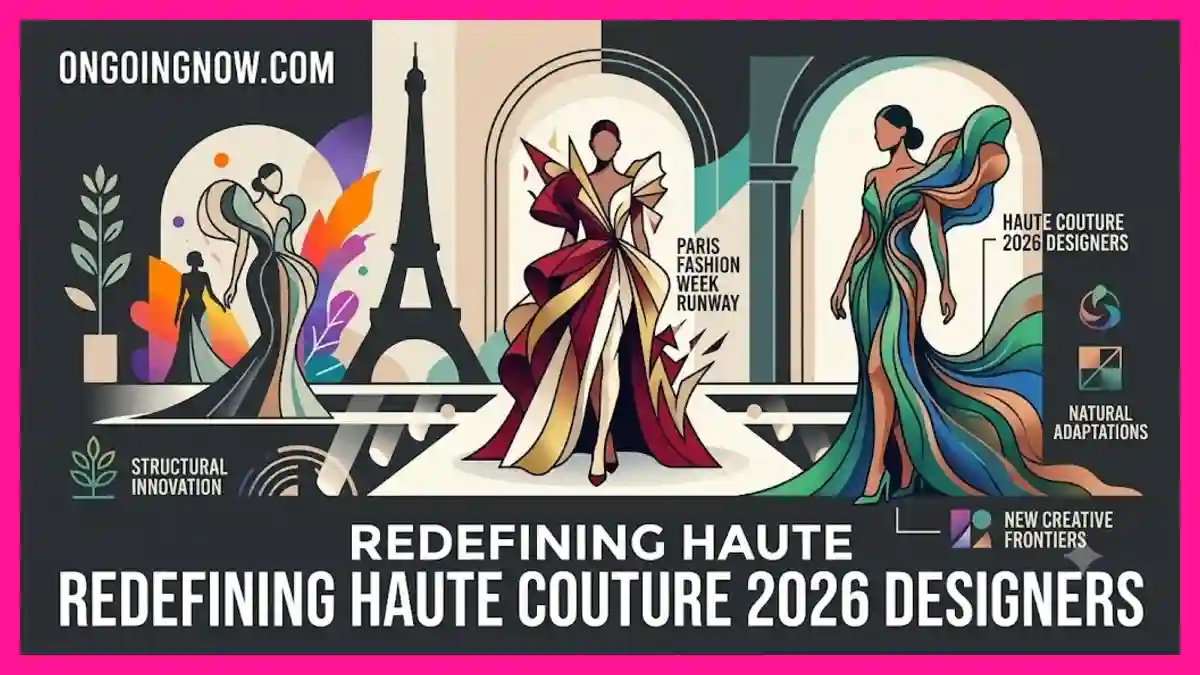
The global landscape of high fashion is experiencing a fundamental reassessment of creative identity, a shift anchored by the structural transformations among premier haute couture 2026 designers. At the center of this dialogue is Paris Fashion Week runway looks, where established historic houses have introduced significant directorial changes that challenge traditional paradigms of luxury. The presentation of the recent collections provides an objective baseline to evaluate how technical artisanship, historical heritage, and contemporary socio-political concepts intersect. This analytical overview dissects the defining collections of the season, examining the physical architecture of the garments, the institutional critiques embedded in the designs, and the systemic impacts on the luxury sector.
Technical Innovation and Material Adaptations on the Runway
Institutional Debuts and Conceptual Reinventions
The seasonal couture fashion week schedule highlighted critical transitions for legacy houses, most notably the highly anticipated presentations from newly appointed leadership. At Dior, the debut couture collection by Jonathan Anderson, titled Living Knowledge, established a philosophical framework centered on biomimicry and evolutionary systems. Rather than treating archive materials as static relics, the presentation activated historical techniques to serve as an interpretative lens for contemporary society. Concurrently, Matthieu Blazy made his highly anticipated couture debut at Chanel, transforming the foundational aesthetics of the house through an immersive, organic environment.
Material Architecture and Avant-Garde Structural Forms
The physical construction of avant-garde dress designs across the collections demonstrated a shift toward hybrid materialities and complex, organic forms. The technical execution observed throughout the season prioritized structural experimentation:
Biomorphic Alterations: At Schiaparelli, creative director Daniel Roseberry presented The Agony and the Ecstasy, a collection inspired by the Renaissance architecture and political tensions detailed in Irving Stone’s biographical work on Michelangelo. The collection utilized intense structural engineering to shape garments into animalistic and human hybrids, featuring elements resembling reptilian contours, birds, and scorpion tails.
Organic Synthesis: The Dior haute couture runway utilized unexpected material juxtapositions, integrating 18th-century heritage fabrics with non-traditional jewelry crafted from meteorites and fossils. Silk and leather were structurally manipulated to replicate botanical systems, specifically cyclamen motifs that referenced historic house lineages.
Enviro-Spatial Integration: Chanel’s presentation altered the spatial experience of the Grand Palais by integrating towering botanical installations, contrasting soft, light textures with exaggerated, voluminous proportions to juxtapose rigid architecture against delicate textiles.
Documenting the Structural Milestones of the Season
To understand the operational and stylistic variations defining haute couture 2026 designers, the following data illustrates the structural approaches, primary materials, and conceptual origins of the anchor collections presented during the season.
Comparative Framework of Primary Couture Collections
| Fashion House | Collection Title / Theme | Primary Materials Documented | Structural and Silhouette Characteristics | Conceptual Anchor |
| Schiaparelli | The Agony and the Ecstasy | Molded leather, structured gilding, heavy velvets | Hybrid animalistic forms, sharp scorpion tail protrusions, rigid bodices | Renaissance tension, Michelangelo’s creative strain, institutional subversion |
| Dior | Living Knowledge | Heritage 18th-century textiles, fossil fragments, meteorite jewelry, silk | Voluminous, open structures, fluid organic drapes, asymmetric botanical forms | Biomimicry, accessibility of intellectual capital, evolutionary systems |
| Chanel | Spring/Summer Couture | Fine-gauge tweeds, layered tulles, hyper-light texturized silks | Exaggerated volumes, decoupled traditional tailoring, elongated lines | Fairytale pastoralism, hyper-contemporary atelier integration |
Editorial Caveat: This comparison is compiled directly from official collection notes and runway documentation verified during Paris Fashion Week. Visual interpretations of specific silhouettes may vary based on critical editorial frameworks, and final commercial production metrics for custom pieces remain proprietary to the respective fashion houses.
Critical Analysis: Deconstructing the Creative Paradigms
The Subversion of Luxury Secrecy
A critical analysis of the current high fashion outfit inspiration reveals an underlying tension between historical exclusivity and intellectual accessibility. Jonathan Anderson’s show notes for Dior explicitly critiqued the traditional insulating nature of luxury fashion, stating:
“When you copy nature, you always learn something. Nature offers no fixed conclusion, only systems in motion– evolving, adapting, enduring. Haute couture belongs to this same logic… It is a laboratory of ideas.”
By positioning the atelier as a public syllabus or a transparent laboratory, the collection actively destabilizes the conventional premise that luxury must be synonymous with absolute secrecy. While the physical garments remain economically unreachable to the public, the design methodologies, historical references, and intellectual concepts are presented as infinitely reproducible knowledge. This framework shifts the value of couture from mere material scarcity to accessible intellectual capital.
The Dynamics of Expressive Form
Conversely, Schiaparelli’s approach under Daniel Roseberry utilized structural aggression and visceral imagery to navigate the creative process. The collection purposely rejected the traditional mandate for garments to be passively desired or easily digestible. The anatomical hybridity seen on the runway—where the boundary between human form and animal sculpture was intentionally blurred—offered an explicit commentary on societal expectations of the female form. By creating complete, visually imposing silhouettes, the design language functioned as an institutional critique against the historic fragmentation and objectification of bodies within the luxury consumer market.
Cultural Context and Societal Significance of Contemporary Couture
Luxury as a Reflection of Collective Anxiety
The thematic preoccupation with natural ecosystems, evolutionary adaptation, and historical resilience across multiple haute couture 2026 designers reflects broader societal shifts. The incorporation of raw, ancient elements like fossils and meteorites alongside delicate, handcrafted luxury textiles indicates a collective cultural desire to ground high art in enduring, non-human timelines. Rather than retreating into pure escapism, luxury fashion trends summer collections have actively engaged with the anxieties of the contemporary era by emphasizing endurance, organic transformation, and systematic structural evolution.
Artistic Intertextuality in Fashion Journalism
The reliance on external cultural touchstones—ranging from Renaissance frescoes and Irving Stone’s literature to the ecological and ritualistic world-building of Studio Ghibli films—underscores a growing demand for deep intertextuality within fashion journalism. Modern haute couture cannot be comprehensively analyzed purely through the lens of textile fabrication or retail pricing models. It operates as an expansive, interdisciplinary medium where politics, history, and structural engineering converge to reflect the contemporary human condition.
Comparative Assessment: The Shift from Historicism to Modernism
Breaking the Weight of Heritage
When evaluating these presentations against historical collections, a distinct stylistic pivot becomes evident. Previous seasons across major houses often relied heavily on literal archival replication, honoring past designers through precise historical mimicry. The current collections from haute couture 2026 designers demonstrate a shared intent to liberate modern garments from the suffocating weight of their own institutional histories.
The Transition to Playful Subversion
This liberation manifests as a definitive shift toward structural levity and deliberate subversion. At Dior, the traditional, rigid tailoring historically associated with the house was replaced with kinetic, flowing shapes that prioritized movement and systemic adaptability over fixed constraints. Similarly, Chanel’s integration of hyper-sized, surrealist natural elements subverted the typically conservative, bourgeois expectations of couture presentations. This transition indicates that the contemporary era of couture is defined not by the strict preservation of the past, but by the radical recontextualization of foundational techniques to address modern realities.
Evidence-Based Industry Insights and Market Trajectory
The Changing Function of Haute Couture
The analytical consensus among industry reports indicates that haute couture has fundamentally transitioned away from serving primarily as a direct retail driver for custom garments. Instead, it functions as the supreme conceptual and intellectual incubator for global luxury brands. The avant-garde dress designs showcased during these high-profile runway events establish the aesthetic blueprints, color directions, and philosophical parameters that eventually dictate mass-market ready-to-wear lines, fragrance marketing, and international brand positioning.
[Institutional Architecture] ➔ [Couture Experimental Runway]
                                       │
                                       ▼
                         [Intellectual Property & IP Blueprints]
                                       │
                                       ▼
                         [Ready-to-Wear Adaptation]
                                       │
                                       ▼
                       [Global Fragrance, Beauty & Consumer Lines]
Sustaining the Elite Craft Ecosystem
Furthermore, the heavy investment in collaborative atelier presentations—such as Chanel’s explicit spotlighting of its specialized artisan houses during the runway show—highlights a critical economic strategy. By tethering highly experimental, modern designs to time-honored heritage crafts, luxury institutions ensure the economic survival of endangered textile art forms. The true luxury of modern couture lies in the preservation of human labor and temporal dedication within an increasingly automated global manufacturing ecosystem.
Stay sharp with Ongoing Now!
Source and Data Limitations: This analysis is based strictly on the verified runway presentations, official collection show notes, and verified fashion journalism reports published during the Paris Haute Couture Week Spring/Summer and Fall/Winter 2025/2026 cycles. Sourced elements include institutional statements from the Fédération de la Haute Couture et de la Mode (FHCM), official designer show notes from Christian Dior (Living Knowledge by Jonathan Anderson) and Schiaparelli (The Agony and the Ecstasy by Daniel Roseberry), and verified critical documentation from international fashion registries. Unverified rumors regarding future creative director appointments, proprietary brand financial metrics, and speculative consumer retail adoptions have been intentionally excluded to maintain absolute editorial accuracy.