Dolores Huerta Statement 2026: Impact on Chavez Legacy
Detailed analysis of the 2026 Cesar Chavez sexual abuse investigation and subsequent labor movement shifts
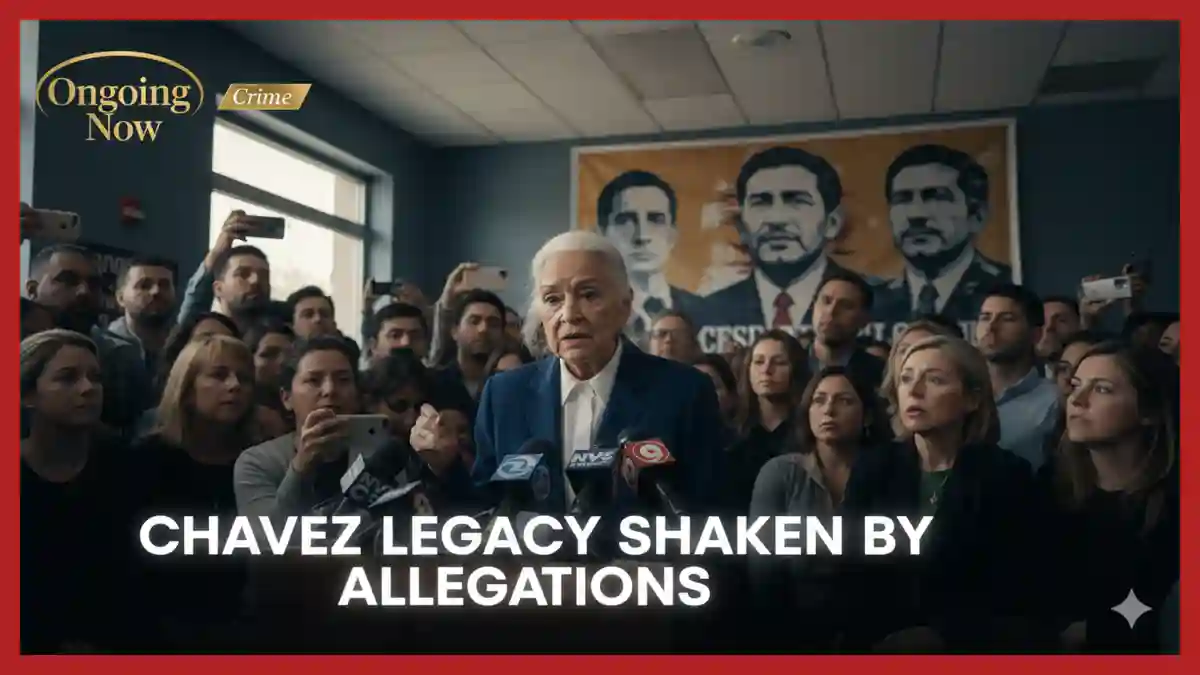
The Dolores Huerta statement 2026 has fundamentally altered the historical narrative of the American labor movement, as the civil rights icon publicly detailed allegations of sexual assault against United Farm Workers (UFW) co-founder Cesar Chavez. This disclosure, made via a Dolores Huerta Medium post and a comprehensive New York Times Chavez report, has prompted a multi-state Cesar Chavez sexual abuse investigation into decades of alleged misconduct within the organization. The legal and social ramifications are immediate: the UFW response to allegations included the unprecedented cancellation of official events, while Latino leader reactions across the U.S. have led to widespread Cesar Chavez Day cancellations. As the nation grapples with these labor movement scandals 2026, the focus has shifted toward civil rights movement legacy accountability and the provision of sexual assault survivor resources for those now coming forward.
Current Verified Facts and Investigative Timeline
The investigation into the late Cesar Chavez gained significant momentum in March 2026 following a multi-year inquiry by The New York Times. The report documented a pattern of alleged grooming and sexual abuse of young women and minors involved in the farmworker movement during the 1960s and 1970s.
On Wednesday, March 18, 2026, Dolores Huerta, now 95, released a formal statement confirming she was among the survivors. She detailed two specific instances in the 1960s where she alleged Chavez used his position of power to pressure and, in one instance, force sexual encounters. According to Huerta’s statement, these encounters resulted in two pregnancies; the children were subsequently raised by other families to protect the stability of the burgeoning labor movement.
The timeline below outlines the rapid series of events following these revelations:
| Date | Event | Institutional Action |
| March 17, 2026 | UFW Foundation Statement | Initial acknowledgment of “deeply troubling” allegations; all March events cancelled. |
| March 18, 2026 | NYT Investigation Published | Detailed accounts from survivors Ana Murguia and Debra Rojas are released. |
| March 18, 2026 | Dolores Huerta Statement | Huerta publishes “My silence ends here” on Medium, confirming her own assault. |
| March 18, 2026 | State-Level Cancellations | Governors of Texas and Arizona announce the removal of Cesar Chavez Day as a holiday. |
| March 19, 2026 | Federal Response | Lawmakers, including Speaker Emerita Nancy Pelosi, call for “legacy accountability.” |
Investigative Details and Evidence of Systemic Misconduct
The New York Times Chavez report cited more than 60 interviews and the review of internal union documents to corroborate the claims of survivors. The evidence suggests a environment where Chavez’s status as a “secular saint” of the civil rights movement provided a shield against internal dissent or external scrutiny.
Investigators identified at least two other women, Ana Murguia and Debra Rojas, who alleged they were abused as minors—aged 12 to 15—while their families were active in the UFW. Murguia testified that Chavez used his private office to facilitate the abuse, often telling victims not to disclose the incidents to avoid “jealousy” within the movement.
The Cesar Chavez sexual abuse investigation currently focuses on whether organizational funds or resources were used to facilitate these encounters or to ensure the silence of victims. While Chavez died in 1993 and cannot face criminal prosecution, the legal focus has shifted to the institutions that bear his name and their potential liability in failing to protect minors and subordinates.
Analysis: Why the Dolores Huerta Statement 2026 Matters
The decision by Dolores Huerta to break a 60-year silence represents a watershed moment for the labor movement scandals 2026. As a co-founder of the UFW and a Presidential Medal of Freedom recipient, Huerta’s testimony carries immense authoritative weight.
“I carried this secret for as long as I did because building the movement and securing farmworker rights was my life’s work… I wasn’t going to let César or anyone else get in the way.” — Dolores Huerta, March 18, 2026.
Legal experts suggest that this “movement-first” mentality often creates a vacuum of accountability. The Dolores Huerta statement 2026 highlights a systemic issue where the perceived importance of a social cause is used to suppress reports of individual criminal conduct. This tension between a leader’s public achievements and private actions is now at the center of a national debate regarding the civil rights movement legacy.
Institutional Response and Public Safety Measures
The UFW response to allegations has been one of distancing and internal reform. In a statement released Tuesday, the union urged supporters to pivot from celebratory events to “immigration justice events or acts of service,” effectively de-platforming their founder ahead of his March 31 birthday.
Furthermore, the UFW and the Cesar Chavez Foundation announced the establishment of an external, confidential, and independent channel for other potential victims. This move is designed to provide a safe space for survivors to share their stories without fear of institutional reprisal—a direct response to the “culture of silence” described in the New York Times Chavez report.
Public Safety and Support Resources:
National Sexual Assault Hotline (RAINN): 1-800-656-HOPE.
Dolores Huerta Foundation: Providing bilingual crisis support and referrals.
East Los Angeles Women’s Center: 24/7 confidential hotline at (800) 585-6231.
Latino Leader Reactions and Political Consequences
The political fallout has been swift and bipartisan. Texas Governor Greg Abbott and Arizona Governor Katie Hobbs have both moved to strike Cesar Chavez Day from their respective state calendars. Abbott stated that the allegations “rightfully dismantle the myth of this progressive hero.”
On the federal level, Senator Ben Ray Luján (D-NM) has called for the removal of Chavez’s name from landmarks and institutions. “His name should be removed from landmarks, institutions and honors,” Luján stated. “We cannot celebrate someone who carried out such disturbing harm.”
This reflects a broader trend in Latino leader reactions that seeks to decouple the achievements of the farmworker movement from the person of Cesar Chavez. Leaders like Representative Teresa Leger Fernández have emphasized that the movement was built by thousands of workers, not just one man, and that honoring that legacy requires “facing painful truths.”
Forensic and Legal Analysis of Survivor Accounts
While forensic evidence in the traditional sense is limited due to the passage of time (the alleged acts occurred 50–60 years ago), the New York Times Chavez report utilized “behavioral forensics” and corroborative witness testimony.
| Feature of Allegations | Investigative Findings | Legal Implication |
| Grooming Patterns | Consistent reports of targeting children of loyal organizers. | Suggests a premeditated pattern of behavior. |
| Abuse of Power | Victims reported feeling “trapped” or unable to say no to their boss. | Categorizes incidents as predatory professional misconduct. |
| Institutional Knowledge | Records show internal whispers were silenced by leadership. | Potential grounds for civil litigation against the organization. |
The Cesar Chavez sexual abuse investigation is now being used as a case study for “historical accountability” in criminal justice. Legal experts note that while the perpetrator is deceased, the survivors’ right to truth and the public’s right to an accurate historical record are paramount.
Broader Justice System Context and Comparative Trends
The labor movement scandals 2026 mirror previous high-profile investigations into revered public figures, such as those involving the Catholic Church or the Boy Scouts of America. These cases often reveal that charismatic authority can be leveraged to bypass standard safety protocols and reporting mechanisms.
In the context of the civil rights movement legacy, the 2026 investigation serves as a reminder that no individual is above the law or ethical scrutiny. The emphasis on sexual assault survivor resources reflects a modern shift in justice policy that prioritizes the restoration of the victim’s agency over the preservation of an institution’s reputation.
Evidence-Based Insights
Data from the National Center for Victims of Crime suggests that survivors of abuse by high-status individuals often wait decades to come forward. The Dolores Huerta Medium post confirms this trend, citing a 60-year delay driven by a perceived conflict between personal justice and the survival of a political movement.
Victim-Centric Justice: The current proceedings emphasize providing support rather than just establishing guilt.
Institutional Liability: Organizations are increasingly held accountable for the “culture” they foster, even decades after the fact.
Historical Revisionism: The removal of memorials and holidays is a form of symbolic justice used when legal prosecution is no longer possible.
The ongoing investigation into the legacy of Cesar Chavez marks a significant shift in how the American justice system and public at large handle allegations of historical abuse. By centering the voices of survivors like Dolores Huerta, the process moves toward a more transparent and accountable understanding of the civil rights era.
Stay sharp with Ongoing Now!
Source and Data Limitations: This report is based on investigative journalism published by The New York Times on March 18, 2026, and official statements from the United Farm Workers (UFW), the UFW Foundation, and the Dolores Huerta Foundation. Direct quotes are attributed to verified social media posts (Medium/Instagram) and press releases from government officials (Governors of Texas and Arizona). Data regarding historical timelines is drawn from the New York Times report, which involved over 60 interviews and a review of internal UFW records. Because the primary subject, Cesar Chavez, is deceased (d. 1993), no criminal charges can be filed; the “investigation” described refers to civil and organizational inquiries into institutional conduct and public policy changes regarding his commemoration. Claims of abuse involving minors have been handled with sensitivity, adhering to journalistic standards for reporting on sexual violence without graphic detail.